The best 7 books I read this year* – 2015 edition

I have eight categories in my reading rotation (see that whole neurotic system here). Here’s the best book I read in each category this year.**
Literature

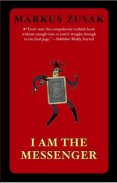
My book club had a selection from Young Adult (YA) books, and we chose I am the Messenger by Markus Zusak (best known for The Book Thief). This was a delightful read. I wonder if the YA genre would do better with a different name, or if more people realized that these books aren’t just good for young adults. It was probably our book club’s most-enjoyed book of the year.

The structure of the book was enjoyable, the protagonist was real and likable, it made me laugh out loud several times, and it was hard to put down. A fun book with lots to discuss.

Two Honorable Mentions:

Mosquitoland by David Arnold – David is a good friend, so I wasn’t sure I could give this my honest, unbiased “best book.” But I can say it was the most fun and funny book I read this year, yet also gets into several serious issues. Since I’m biased, check out the gushing reviews from the likes of USA Today, Wall Street Journal, Entertainment Weekly, and lots of Best-of 2015 accolades. (Though it’s called a YA book, read a bit before you run get it for your 12 year old.)

The Picture of Dorian Gray by Oscar Wilde – The rest of my book club loathed this book, but I enjoyed it. Wilde’s irony makes me smile. Even though they didn’t like it, we had a lot to discuss because the book is packed with important themes. You can see why it’s considered a classic.
Bible

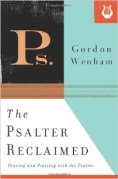
I under-appreciate the psalms and was looking for some help. The Psalter Reclaimed by Gordon Wenham was an excellent solution.

If you’re not familiar with canonical reading of Scripture, you should be. That kind of reading has opened a different and better world for my approach to the Bible. Wenham focuses on a canonical reading of the psalms. He gives penetrating insights to difficult psalms, like the psalms of lament and imprecatory psalms (all those psalms that sound like bitter complaints or that even call down curses on others).

This book should deepen your appreciation for the psalms and also provide an easy entry for anyone interested in canonical interpretation.
Philosophy, Psychology, and Other Religions

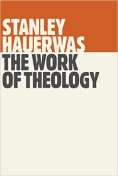
I interviewed Stanley Hauerwas earlier this year about his newest book, The Work of Theology. It goes here because most of Hauerwas’s books go in the broader “ethics” category. I thoroughly enjoyed the book.

Hauerwas reflects on, defends, and extends a lot of the work he has done. When I’m able to follow him, Hauerwas makes brilliant points and is very funny. For someone looking for an intro to Hauerwas, this could be a good start. His chapter on theology and ministry was outstanding. I wish more pastors would understand the points he’s making about ministry and the essence of the church. His chapter on retirement was also very good.

Honorable mention: The Autobiography of Malcolm X as told to Alex Haley – Rarely do you find a book where the author (or person featured, in this case) has a serious change of beliefs near the end, and yet preserves most of the book with their previous belief system intact. This was a fascinating account.
center-churchPractical Theology

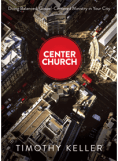
Tim Keller is so good. He’s an excellent writer and an excellent thinker. Center Church puts all of that on display with a systematic approach to ministry in cultural contexts.

Keller is great at providing categories. He gives helpful handholds for considering theology, church and culture interactions, and the tensions between movement and institution. His calls to the city and church-planting are compelling.

Keller’s Reformed influence comes out occasionally. This can tinge or water down some of his perspectives. His version of “sanctification” is weak, and I think he could see cities with more positive eyes if he were working with a solid doctrine of prevenient grace. Regardless, I’ve recommended this widely.
Denominational Works

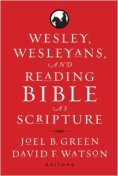
Another great introduction to canonical and theological reading is Wesley, Wesleyans, and Reading Bible as Scripture, edited by Joel Green and David Watson.

John Wesley revered Scripture as “a man of one book” but never laid out a clear doctrine of Scripture. Because of that, some people hijack his approach to make him a fundamentalist––affirming a modern version of inerrancy and a sola scriptura that rejects all other sources for the church’s belief and practice. Others make him a liberal by misunderstanding and overstating his use of “experience.”

This book provides a better and multifaceted perspective on Wesleyan reading of Scripture. It helps to understand Wesley’s approach in context and also suggests belief and practice for Wesleyans today. Even if you’re not a Wesleyan, read it for its take on canonical and theological reading. It’s uneven, as all essay books are, but worth reading.
starfish-spiderSocial Sciences

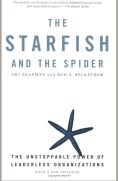
I chose social sciences for my special category this year (next year: biographies). The list this year included several excellent books on leadership. The most interesting and useful was The Starfish and the Spider by Ori Brafman and Rod Beckstrom.

What happens when you cut off a spider’s head? It dies. Cut off a starfish’s leg, and it grows a new one––and the leg likely grows a whole new starfish. The book helped me think about movements vs. institutions, especially in an age of new possibilities thanks to the networking power we have now. I wrote “The Rise and Fall of the Great Denomination” largely based on insights from here.

Most clear: creating a starfish organization requires letting go of some control. But it also has greater spreading power. This is a great systems-thinking book for people in business, ministry, or movement-making.

Other

This category covers a broad range of books that don’t fit anywhere above. I decided to reread Mortimer Adler’s classic, How to Read a Book.

Adler says that if we walk away from a practical book and don’t do anything different, either it was a bad book or we were bad readers. I was a bad reader the first time––thinking it interesting, but not implementing much. This time, I decided to read books the way Adler suggests. My quick testimonial: that change has upgraded the quality of my reading tremendously. It may not be too much to say that it has doubled my comprehension and retention.

———-

See my 2013 edition and 2014 edition here

* Okay, technically this isn’t the best eight books I read. It’s the best book in each of eight categories. That title didn’t have the same ring, though.

** I only listed seven books for this year. I decided not to include anything from Doctrinal Theology. I thought about including Pelikan’s The Emergence of the Catholic Tradition (100-600), volume 1 of his esteemed series on The Christian Tradition. There were some brilliant parts, but just too many parts that I had to trudge through, or where I couldn’t follow his prose. I know I’ve already lost credibility in some of your eyes. Sorry. I’m still planning to read volume 2 next year.

Next year’s reading list will be about half from this category because of a research focus. So I’ll surely have something to recommend here then.

Rocket fuel for personal growth

rocketWhat prevents us from growth in life and faith? I wonder if the deadly sin of sloth is most often at root.
This isn’t the same as laziness. You can be a workaholic and exhibit sloth. Because sloth is about neglecting the most important things––love of God and neighbor. (I wrote a full post on sloth here: “Sloth isn’t what you think it is––or, The workaholic sloth.”)

Usually it’s about neglecting those things because there’s something uncomfortable required. So let me offer a simple prescription for rapid personal growth in life and faith:  Do one uncomfortable thing every day.

Some possibilities:

• Have a hard conversation with someone.

You know you’ve needed to, but you’re avoiding it because… you’re normal. And these conversations are uncomfortable. But your relationship is lacking a level of truthfulness because you’re avoiding this conversation.

It’s time to address that unresolved conflict or tension. Time for you as a boss to talk to that employee about performance problems. Time to share that bit of unwelcome information/observation with a friend or family member.

Have lots of grace in these conversations. (Pro tip: if you raise your voice, fail to listen, use sarcasm, or make personal attacks, you’ve missed some opportunities for grace.) But also get those hard truths out there.

See more on grace and truth in “A third way in the church’s ethics debates.”

• Volunteer for something outside your “comfort zone.”

Two volunteer opportunities that I’ve seen go from uncomfortable to rewarding for several people: children’s ministry and homeless ministry.

Our church has a once-a-week overnight homeless ministry. We constantly have difficulty finding “host men” to stay the night. Want to hear a grown man produce a long list of excuses? Ask him to stay overnight with a group of homeless men.

It was the same for me. The first time I stayed overnight, it was with quite a bit of trepidation. But most of my fears were unfounded, and a few were just selfish. Now that I’ve gotten over my fears and selfish concerns, the whole ministry has become a real blessing to me and our family.

• Confess something and ask for forgiveness/accountability.

This is a slightly different take on the “hard conversation” above. This could be about apologizing. I’ve found the “five elements of apology” suggested by Gary Chapman and Jennifer Thomas especially helpful:

* Express Regret – “I’m sorry.”
* Accept Responsibility – “I was wrong.”
* Make Restitution – “What can I do to make it right?”
* Genuinely Repent – “Here’s how I’m going to be sure I don’t do that again.”
* Request Forgiveness – “Will you please forgive me?”

Try to use all five. Or especially the one that feels most uncomfortable. It’s probably the one most needed.

Or you could confess a personal sin and ask for accountability. Of all the things we hate doing, confessing personal sin may be the worst. But if you want change, there’s nothing better than having someone else’s prayers and accountability.

• Fast.

I have never looked forward to fasting. I rarely enjoy it. I often wimp out about it last-minute. Because I really like to eat.

Actually, there are times I have an accidental 18-hour fast. I get wrapped up in other things and forget to eat. My wife has no understanding of this. But this reveals something even deeper… I’m capable of fasting without noticing. What I especially reject or dread is not having the option to eat if I’d like to.

We resent suffering the mild discomfort that comes from an empty stomach. Really, we resent being denied anything we want. Richard Foster says it well in his brilliant book, Celebration of Discipline: “Our human cravings and desires are like rivers that tend to overflow their banks; fasting helps keep them in their proper channels.”

• Go screen-free for a day.

Use your phone as a phone, and nothing more. No computers or tablets or TV.

For many of us, solitude is a foreign experience. What do we do to kill 5 minutes in a waiting room? Pull out the phone. To kill 15 seconds at a stoplight? Same thing. We are never alone.

Because of this, we’re missing small opportunities and large––to notice other people and things around us, to pray, to meditate on Scripture. William Wilberforce, who led England’s abolition movement, writes about reciting Psalm 119 (the longest psalm in the Bible) as he walked to Parliament. I would be more likely to check my mail and read my Feedly. He got much more out of his walks than I’m getting out of mine.

• Give away something you would really like to keep.

Richard Foster again: “Because we lack a divine Center, our need for security has led us into an insane attachment to things. We really must understand that the lust for affluence in contemporary society is psychotic. It is psychotic because it has completely lost touch with reality. We crave things we neither need nor enjoy.”

Find something you have that someone else would need or enjoy more. Then give it away. It could be that shirt you haven’t worn in two years. It could be money. You could do like the couple I know who gave away one of their cars, not because they weren’t using it, but because they knew someone who needed it more.

• Deal with pain in your past.

Do you have something in your past that you actively avoid thinking about? It might be time to deal with it. It would probably be good to have someone else guide you through that process, too. I’d recommend going to your pastor and possibly also a licensed social worker or counselor.


Those are just a few suggestions. You can probably identify several other uncomfortable things you could do today. Pick one, get up the gumption (better, pray for it), and then do it. Then do something else uncomfortable tomorrow. It’s the antidote to sloth. It’s rocket fuel for growth.

Is salvation conditional? And more on pastors’ pay — Q&A, pt. I

I’ve been receiving various questions from readers. I promised to try to answer some of them in a series of posts. I chose two questions that are poles apart for part I. I’ll have several more to get to in part II. And please feel free to email me yours.

“My question is 3-fold:

1) Do you personally believe our salvation is conditional according to the Scriptures?

2) In your view, what Scriptures support this stance?

3) How to maintain our salvation then?”

Someone who says she has “just been persuaded of this position” sent that question. As a result, she said she joined the Methodist Church last week.

Yes! I do believe our salvation is conditional. In fact, I think that’s good news. This is a place where I disagree with my Reformed/Calvinist friends. (And yes, they are friends. We can disagree without animosity.)

No small amount has been written on this subject. Rather than write a whole booklet, as Wesley did, or an entire book, like this from Walls and Dongell, let me give you my simple version.

We start here:

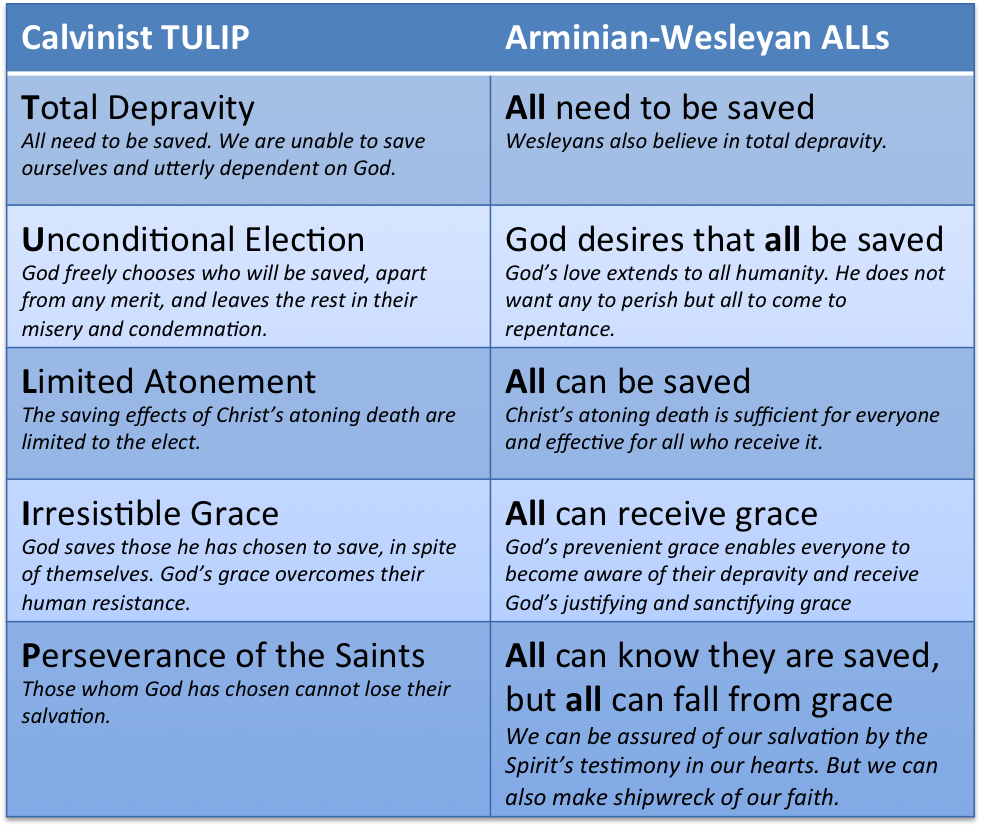
TULIP - ALL1. God “desires everyone to be saved and to come to the knowledge of the truth” (1 Timothy 2:4).

My Calvinist friends begin to object here. They want to qualify that “everyone.” In their framework, God gets whatever God desires. It doesn’t make sense to them that an Almighty God could desire something that doesn’t happen. So they claim “everyone” means every people group, not every individual. But the same Calvinist friends also say that if you read the Bible at face value, you have to agree with them. So let’s acknowledge at the start that we’re all qualifying certain statements in Scripture. And to qualify “all” and “everyone” is no minor nuance.

2. Everyone can be saved. We have a mediator, Christ Jesus, “who gave himself a ransom for all” (1 Timothy 2:6) “so that by the grace of God he might taste death for everyone” (Hebrews 2:9). His atoning death is sufficient for all to be saved.

More of that pesky “all” and “everyone” language. See my note above.

3. Not everyone is saved. The biblical witness is clear on this.

I believe this is what has run aground several of my Calvinist friends. By their logic, God would save all whom he desires to save. That leads them to two options: universalism (everyone will be saved) or limited atonement (Christ did not die for everyone).

4. Everyone who believes is saved. Christ’s atoning death is effective for all who accept it.

That is to say, Christ’s atoning death is universally sufficient (see #2) but conditionally effective. 

Here’s how Paul put that condition: “If you confess with your lips that Jesus is Lord and believe in your heart that God raised him from the dead,” [a break to note that this is, by definition, a conditional clause] “you will be saved” (Romans 10:9).

Paul lays out the conditions of salvation plainly in Acts 20:21: “turn to God in repentance and have faith in our Lord Jesus.” If we accept that much, we should spend some serious time looking into repentance and faith. What do those words mean in Scripture and the Christian tradition? I said “everyone who believes is saved” above. Please don’t accept that for the simple, “Sure, I believe in Jesus” faith common in our culture. Repentance and faith mean much more.

That’s a start. I could point to many more passages, along with most of the Christian tradition, on these points. My Calvinist friends will, of course, have opposing verses to share. I’ll not attempt a full defense of those here. They don’t deny #3 above, and I believe their arguments against #1 and #2 are strained. I believe the witness of Scripture, the Christian tradition, and our own experience all favor a view of salvation as conditional.

To your final question about how we maintain our salvation… Be alert, on guard, disciplined! Because the devil prowls like a roaring lion, looking for someone to devour. Practically, I’d especially encourage those means of grace encouraged throughout Scripture and church history: participate in the life of the Church and its sacraments, search the Scriptures, pray and fast.

The notion that we could lose our salvation may scare people. But it shouldn’t need to instill more than a healthy fear. God is good, and God is faithful. The faithful married person, for instance, doesn’t go around in constant fear that their loving spouse will leave them. But they also know that they’re not guaranteed security in that relationship if they’re unfaithful. Just as the devil can entice you to be unfaithful to your spouse, he can entice you to be unfaithful to your God. Both of those infidelities can lead to shipwreck. We need to be vigilant! But we needn’t be afraid.

“You’ve written several things about pastors’ salaries and talked about being paid part-time. But you also have a coffee shop where I assume you make money. For full-time UMC pastors, that’s not an option. Do you think that difference should be part of the equation?”

That’s a good point. I hear this has been a conversation for some pastors in my conference, so I think it’s best for me to be transparent. I know this kind of public discussion of personal finances can seem distasteful, so I’ve hesitated to do it. If it’s in bad taste to you, you might just stop now.

I am a partner in a coffee shop here in Lexington––a fun little venture. Two quick notes about your question, though: 1) I’ve been talking and writing about pastors’ salaries since before that shop existed, and 2) I’m not an employee. The UMC prohibits full-time pastors from working other jobs, but they don’t prohibit pastors from being partners. So that particular venture hasn’t influenced what I’m saying, and it’s a possibility for other UMC pastors, too.  I’d encourage it for more pastors, actually. It has been a good learning opportunity and a different way to bless the community and be involved in it.

As for finances, between the church, the coffee shop, and a few other small sources of income, my total income is about $21,000 less than our conference’s minimum package.[note]That number will decrease next year––my church is giving me a generous raise.[/note] That coffee shop might be able to replace my income one day, and I’d celebrate that. But for now, it’s just a nice supplement.

I could stop there, but I should also acknowledge our family has had other advantages. Our parents have been very good to us––we rarely pay for babysitting, get to go on family trips that we don’t pay for, regularly receive clothes and other things for the kids, and even got our first mini-van from them. When we went to Spain, 40% of our cost for the year was covered by the generosity of our church, family, and friends. I was also able to work the whole time I was in seminary and paid as I went. No seminary debt has been a huge advantage.

We have a number of advantages and unique circumstances. In all, though, I don’t think our situation prevents me from being able to speak about clergy pay.

Note that I’ve never called anyone else to receive less than full-time minimum or claimed that our minimum-paid pastors are making too much. I have asked, for the sake of integrity, that we quit acting like our pastors live like paupers. Even our minimum-compensation pastors are in the top 27% of all U.S. income earners,[note]That figure includes their housing, as I’ve argued it should.[/note] with a very generous retirement and insurance plan on top. The average pastor in Kentucky is in the top 14%, and our director-level positions are in the top 8%. I would venture that never in Methodism’s history have our pastors been so highly compensated relative to our society.[note]I haven’t run all the numbers on this, but see the chart in my interview with Wesley Sanders for a representative sample.[/note]

Our pastors are good people. They work hard and have hard jobs. In the business world, many of them might be highly compensated for their work and talent. But the church is a different entity, and the church’s offering is no ordinary source of revenues. If John Wesley himself were among our highest-paid UMC pastors, I would be questioning his pay. Though I doubt I would need to. I think his voice on this issue would make mine sound weak and soft.

—————