In what we call the Beatitudes, Jesus calls nine groups of people blessed. Several of those are groups we wouldn’t typically call blessed. They’d be unlikely to throw a #blessed onto the end of a social media post. They include the destitute, the broken-hearted, the powerless, and the persecuted.
Those Beatitudes don’t necessarily wish these states upon others. We don’t pray for mourning or persecution. We don’t hope someone will end up impoverished or powerless. But Jesus claims here that when people find themselves in those states, they can also expect God’s presence.
If you’ve gone through a particularly hard time in life, I wonder if you might relate to this.
For the thirteen weeks leading up to Advent, I asked members of our church to share their testimonies. When most people hear testimony, they think about a conversion story, the time when someone first came to faith. We asked for something different this time. We asked people to share what God had been doing in their lives in the past year.
The stories we heard over those thirteen weeks were a beautiful, raw mixture of struggle and celebration. In a few, we cheered with people who had been growing in their faith in good times.
But in the majority of the testimonies, we heard about hardship. We heard things like, “This has been the hardest year of my life,” and, “It probably would have been easy for me to turn away from my faith in those days.” In those testimonies, people talked about leaning on their faith and church community to make it through the hard times. They talked about coming out of these times stronger and bolder in their faith, reassured of God’s presence and goodness.
We had just asked people to share what God had done in their lives over the past year. Take whatever direction you please. What a surprise, then, that the majority were based in hardship, often without a nice bow to tie on the top.
Though none of us would ask for these times or seek them, they might be the ones that stand out when you look back at your life and consider when you especially knew God’s presence––perhaps even an unusual kind of joy in it.
Jesus’ Beatitudes aren’t commands, they’re announcements. He doesn’t command that we mourn or be powerless, or even that we be merciful or make peace. But he announces God’s special presence and blessing for anyone they would apply to. Contrary to the popular and unbiblical phrase “God helps those who help themselves,” Jesus announces here that God helps those who can’t help themselves.[note]This, and possibly much more beyond my realization, comes from the brilliant insights of F. D. Bruner, whose 2-volume Matthew commentary you should read in its entirety for the sheer delight of it.[/note] This seems to be part of the pattern of God’s world.
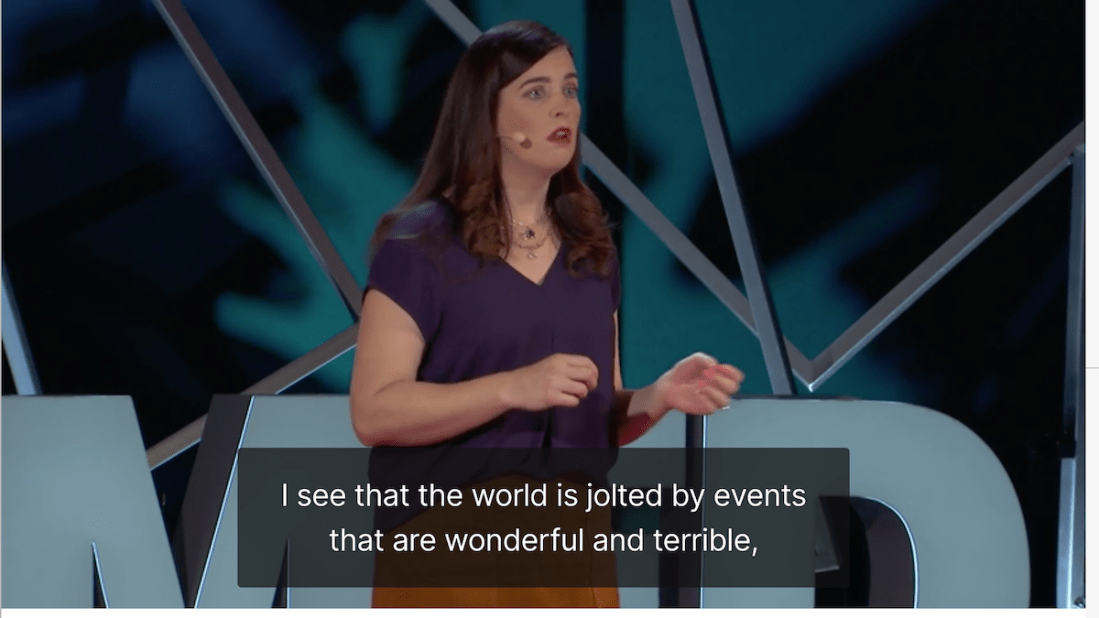
Kate Bowler’s TEDMED talk in 2018 illustrates this. She was 35 years old, had a one year-old child, and had been diagnosed with stage IV cancer. Her talk is worth watching / listening in full.
(See here if the video above doesn’t load.)
The part that especially stood out to me, as it relates to the above.
“The other day, I was reading the findings of the Near Death Experience Research Foundation, and yes, there is such a thing. People were interviewed about their brushes with death in all kinds of circumstances: car accidents, labor and delivery, suicides. And many reported the same odd thing: love. I’m sure I would have ignored it if it hadn’t reminded me of something I had experienced, something I felt uncomfortable telling anyone: that when I was sure that I was going to die, I didn’t feel angry. I felt loved. It was one of the most surreal things I have experienced. In a time in which I should have felt abandoned by God, I was not reduced to ashes. I felt like I was floating, floating on the love and prayers of all those who hummed around me like worker bees, bringing me notes and socks and flowers and quilts embroidered with words of encouragement. But when they sat beside me, my hand in their hands, my own suffering began to feel like it had revealed to me the suffering of others. I was entering a world of people just like me, people stumbling around in the debris of dreams they thought they were entitled to and plans they didn’t realize they had made. It was a feeling of being more connected, somehow, with other people, experiencing the same situation.
And that feeling stayed with me for months. In fact, I’d grown so accustomed to it that I started to panic at the prospect of losing it. So I began to ask friends, theologians, historians, nuns I liked, “What am I going to do when that loving feeling is gone?” And they knew exactly what I was talking about, because they had either experienced it themselves or they’d read about it in great works of Christian theology. And they said, “Yeah, it’ll go. The feelings will go. And there will be no formula for how to get it back.” But they offered me this little piece of reassurance, and I clung to it. They said, “When the feelings recede like the tides, they will leave an imprint.”
And they do. And it is not proof of anything, and it is nothing to boast about. It was just a gift. So I can’t respond to the thousands of emails I get with my own five-step plan to divine health and magical floating feelings. I see that the world is jolted by events that are wonderful and terrible, gorgeous and tragic. I can’t reconcile the contradiction, except that I am beginning to believe that these opposites do not cancel each other out. Life is so beautiful, and life is so hard.
Life’s beauty and life’s hardship are more paradox than polar opposites, more complement than contradiction. This is one of the great mysteries of God’s activity and design. In the moments when people might expect to feel most unfortunate or accursed, they frequently experience joy, love, and gratitude at depths they had never before known.
Blessed are the destitute and downcast and downtrodden. Not in a way that we would ever wish these things upon ourselves or others. But in a way that we can expect God’s presence particularly in those times.
———–


 teddy ray