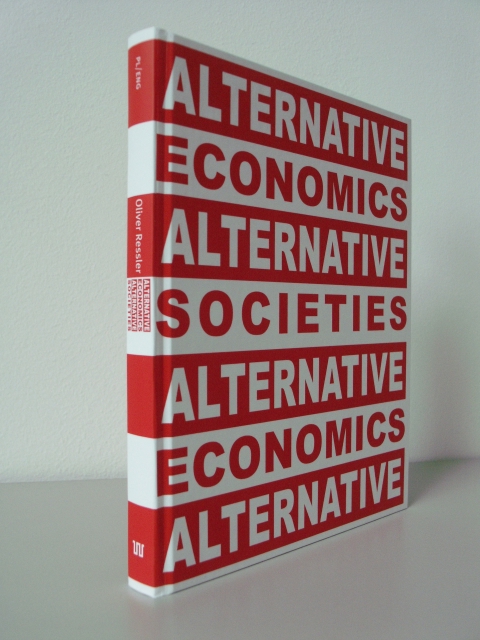
Christians, Capitalism, and Ayn Rand [Re-blog]

This post has just gotten a lot of hits, apparently from a prominent Facebook share. It (and Jesus and Politics) seemed especially appropriate four days before election, so I’m re-blogging.

Teddy Ray's avatarteddy ray

cap-socIf you pay any attention to politics, you’ve been deluged with economic talk for the past, oh, four years. We’ve seen the rise of the Tea Party, Occupy Wall Street, the return of Gordon Gekko, and polarized political views about how to fix a slumping economy. And that barely scratched the surface of what you’ll get in the next three months.

In the midst of it all, I’ve spent a lot of time wondering what is an appropriate Christian stance and response.

Capitalism and Christian Economics

Let’s look first at the ardent capitalists. Ayn Rand’s fame has soared in the past few years. People like Edward Conard are writing about how growing income inequality is a sign that our economy is working (see this long but interesting interview with him).

So far as the goal is to increase the number of middle-class people and to increase their purchasing power, I…

View original post 830 more words

Trust, Money, and the Guaranteed Appointment

guaranteed

guaranteedThe United Methodist Church’s Judicial Council just nullified a decision at GC2012 to do away with guaranteed appointment. I’m not going to get into all of the legislative technicalities here. Let’s look at the bigger picture.

The guaranteed appointment issue is about trust – on all sides. Those worried that a Bishop won’t continue a worthy person’s appointment are ultimately saying they don’t trust our Bishops. They believe they need protection from Bishops who might make an ill-informed, prejudiced, or punitive decision.

Some will say this is about a check and balance. The Board of Ordained Ministry determines who will serve; the Bishop determines where they will serve.

Either way, United Methodists commonly hold up the importance of submission in our system. Elders submit to the Bishop’s authority and submit to go where they are sent. Are we saying elders are willing to submit to the Bishop regarding where they go, but not whether they go anywhere or not? This seems backward from the New Testament appointment of elders, which appears to be a submission regarding whether one served as an elder, not where.

If people are willing to submit to where, but not whether they are appointed, I wonder if this is really about a guaranteed income (with benefits), not a guaranteed appointment. We don’t just guarantee appointments to elders. We guarantee them appointments to full-time jobs, where they must be provided a minimum salary, housing, health insurance, and a pension. And as more and more churches face budget crunches in the coming years, there will be concern about whether we can provide all of those guaranteed incomes.

[Major edit: Wesley Sanders notes in the comments that GC2012 passed a petition to allow appointment of elders for less than full-time, and the Judicial Council didn’t nullify that petition. See it here. This is a big deal. It moves everything I’ve said below from hypothetical to realistic. We have effectively done away with guaranteed full-time appointment. In my mind, this is more important than doing away with guaranteed appointment.]

Some will say, “No, I’m concerned about having a place to serve as a pastor, not the income.” That’s a great attitude. I hope it’s true. And what if that’s how we approached guaranteed appointment? What if we stopped guaranteeing a full-time income and benefits to our elders? Guarantee that they’ll have a place to serve, but it might be a part-time position.

Why have we mandated that ordained elders receive a full-time income from the church? Some will claim that ministry requires full-time attention, and that needs to be protected. But then they’ll need to explain all of the part-time local pastor appointments throughout our connection.

Get rid of the guaranteed full-time paid position, and I think many of our other problems go away. I hear concerns over whether to ordain people who don’t speak English fluently. “They can be great in a Hispanic (or Korean, or French-speaking Congolese…) congregation, but we only have four of those in our Conference. What if we have more ordained Spanish-speakers than positions?” That’s only an issue if it’s about a guaranteed full-time income.

But if you thought there was a lot of consternation over removing guaranteed appointments, just wait until you see what happens when guaranteed full-time incomes are threatened. Due to our current financial situation and the further budgetary strains coming, it’s an issue we’ll have to broach sooner or later.

See more United Methodist posts on my UMC posts page.

“Keeping the lights on” vs “Giving to missions”

lights on

lights onIt’s a lot more fun to give to missions than giving to keep the lights on. I hear that a lot in my position.

And I get it. It really is more fun to think about all the great work being done by [fill in your favorite outreach center / missions agency] than to think about paying the church’s utility bills.

But do you know what almost every outreach center / missions agency has to do when they receive that money? They pay to keep their lights on.

Is there a better way to think about our giving? Can we acknowledge that all those mundane things – like keeping lights on – are an important part of the extraordinary ministry happening in any setting?

Perhaps we shouldn’t be so quick to ask whether we want to pay to keep lights on or to pay for something that sounds more glamorous. I wonder if I’ve ever been a bit selfish in wanting my giving to go only to the actual work – not to mundane things like lights and administration. It’s as if I thought, “Someone else’s money can pay for the mundane, I want to feel like my giving went to something special.” And at that point, it’s really about me, isn’t it?

We’re well-intentioned in this, please don’t get me wrong. But do you think we’ve taken an approach that isn’t really fair or best?

Is the charitable organization you’re giving to being wise and faithful with money? Do you believe in their mission? Do you believe in their faithfulness to that mission? Then give generously to them, knowing that part of what they’ll do is pay the utilities bills.

Is the charitable organization you’re giving to being wasteful? Are they choosing luxury and extravagance to the detriment of the mission? Has bureaucracy overtaken mission? You’ve seen some questions I’ve raised about salaries and buildings. Then you should probably talk to them about it or stop giving. I’d strongly recommend talking first. There’s a chance you don’t have the full picture.

If you’re giving to a church, I think it’s important to ask how much that church is giving beyond itself. How much is going purely to provide care and activities for its own? How much is the church actively sending out to support other outreach centers and missions agencies, to support the extended proclamation of the gospel across the world?

I’ve been really proud to see my church trying to take next steps toward this. Just last night, our Council affirmed a decision to immediately send 25% of all giving out the door – 10% to support outreach and missions, 15% to our denomination. We hope to do more, but I’m happy with the movement in this direction.

Where I’ve come to in it all… If I believe a church/center/agency is doing something good, I want to give to them freely. Yes, some of that will go to keeping the lights on. But I’m glad they have the lights on so they can keep doing the extraordinary work they’re doing. I don’t want to hamstring them by requiring my money to go for something extraordinary and telling them to find someone else to keep their lights on.