Rob Bell vs. Tim Tennent

rob bellI haven’t read Rob Bell’s newest book, What We Talk About When We Talk About God, and I honestly don’t expect to anytime soon. Too many others on the stack that I need to get to.

The book is currently ranked #10 in Christian Theology on Amazon, though (behind 3 books on heaven, 5 books on apologetics, and an end-of-the-world book — oh my…), so I can assume a number of people are reading it or will be soon.

I did read Tim Tennent’s unflattering review of the book. Tennent has me worried that Rob has gone even further down a path I’ve feared for years he might be heading down — toward a New Age spiritualism with plenty of grace but very little cost. Toward a faith that seems to rely on or embrace the great, ancient Christian faith no more than it would any other religion or spirituality.

I wrote not long ago about what a profound, positive influence Bell has had on me. I defended him early on (and I believe rightly, at that time) against attacks from people who just seemed angry and narrow-sighted. I later squirmed when I heard him explain some difficult Old Testament passages as perhaps things that people just thought were a revelation from God, but really used to justify their own actions. And when I read Love Wins, I found myself frustrated because a lot of the argument just wasn’t well-conceived.

But I stuck with Rob, because I still was convinced this was someone intently pursuing orthodox Christian faith. Bell has always embraced a pretty wide orthodoxy, and I do, too, so I wasn’t concerned that he come down exactly where I did everywhere. I just wanted to know he was taking me down the paths he had taken in that pursuit.

My problem is that the things I’ve seen recently from Bell are making me wonder whether he’s really still taking me and others down that path, or whether he has veered off the path that pursues the heart of the ancient Christian faith — the path pursuing orthodox belief and life. Has he veered to pursue a more bland version of spirituality that gives precedence to an inward “stillness” over the ancient faith?

I haven’t read the book, but I would guess some of you have. Can you help me? Is Tennent right? Is this the path Rob is more consistently taking here?

It will be pretty upsetting to me if the person who helped me see much more depth, richness, and nuance in the Christian faith ends up offering a “less nuanced, more simplistic, more pluralistic expression of Christianity,” as Tennent suggests he’s doing.


The book link is an affiliate link. Feel free to buy wherever you choose.

Why I love Wesleyan theology

I’ve received requests to use this post in some people’s church newsletters or websites. Please feel free to use it as you see fit. Please just include that you found it here.
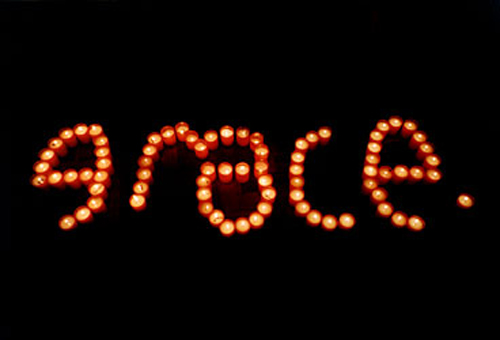
grace

My last post ended up circulating pretty widely beyond my little Methodist world. And because I concluded it by mentioning how I believe Wesleyan theology is “better and truer, richer and deeper” than Reformed theology, I’ve received questions from non-Wesleyans asking me to say more about Wesleyan theology. Just what do Wesleyans believe that is so true and rich and deep?

For updates, and to join the conversation, click “Like” on the link to my Facebook page, over on the right.

First, I should note there are a number of beautiful aspects in Reformed theology – many that Wesleyans and others seem to have lost and need to find a way to recover. By no means do I think it should all go!

The best nutshell version of distinctively Wesleyan theology I’ve heard (first at John Meunier’s blog) is that we have 4 Alls:

1 – All need to be saved.

We believe that all of humanity is totally depraved. We are all sinners, and our only hope is the grace of God. Even the best of us are so far fallen that we can’t do anything to earn God’s grace.

By what we call God’s prevenient grace, God makes us aware of our own bondage to sin and offers us the grace to repent and have faith.

2 – All can be saved.

We believe God loves all of humanity and “wants all people to be saved and come to a knowledge of the truth” (1 Tim 2:3). And we believe that salvation was made possible for all because, by the grace of God, Christ tasted death for everyone (Heb 2:9).

The most wicked person I know… Christ tasted death for him, and he can yet be saved if he receives God’s grace.

3 – All can know they are saved.

We believe in Christian assurance. We don’t have to go about life worried about whether or not we have received salvation. God has put his Spirit in our hearts, and “the Spirit himself testifies with our spirit that we are God’s children” (Rom 8:16).

4 – All can be saved completely.

We can be saved completely – both from the guilt of all past sin and the power of all present sin. “No one who is born of God will continue to sin” (1 John 3:9).

God’s grace and salvation justify us before God so that we may appear holy to him. But they go beyond that, trampling over sin’s power in our lives. They sanctify us before God, so that we may actually be holy and blameless before him. We don’t go on sinning. All of this only by the grace of God, not by our merits.

My experience

That last bit is what has particularly transformed my life. I dropped the “well, I’m just a sinner” mentality and realized that God’s power and grace aren’t just about making me appear holy before God, but are actually making me holy. What great freedom and transformation have come from that!

Does that mean I have no more sin remaining in me? I never do wrong? I wish, but no. There are still moments – too many – that I look back at something I did and realize how selfish, prideful, vain, or envious it was. That’s what we call “sin remaining” – bubbling up from within us, even when we’ve devoted our full wills to God.  (And for what it’s worth, pure Wesleyan doctrine says we may be sanctified through and through in this life. God is able to remove even the sin remaining in us. If we confess our sins, he will purify us from all unrighteousness [1 John 1:9].)

What I mean at least by sanctification is that I don’t willfully sin. If I know that something I’m about to do is sin, I don’t go on and do it anyway. That would be “sin reigning” – as if that sin had such control over me that I couldn’t resist it, even though I knew it was sin – an affront to God, a rejection of Christ’s lordship. So even if sin still remains, it can no longer reign in the life of a believer. By the grace of God, sin has lost its power.

That is the piece of Wesleyan theology that expanded my understanding of God’s grace and power far beyond what I had ever previously understood.

And all of this is only dealing with doctrines concerning salvation. There are other beautiful distinctives in Wesleyan theology, especially regarding the sacraments, worship, means of grace, and stewardship, but I’ll leave off at this for now.

If you want more, take a look at my Crash Course in Theology post. The Harper and Haynes books would probably be the best places to start.

Another good place to go for more is John Wesley’s sermons. See my project updating them to today’s language here.

John Wesley’s Sermons for Today

wesley preachingNow Published:

  1. Salvation by Faith
  2. The Almost Christian
  3. Awake, Thou That Sleepest

Interested in more? JOIN my e-mail update list!

When I enrolled in seminary, I was pretty outspoken about the required course that I was least interested to take: “John Wesley’s Theology for Today.”

My general complaint went something like this: “We already had a Messiah, and it wasn’t John Wesley. We already have the Word of God, and it didn’t come to us in the 18th century.” (For what it’s worth, I still agree with those statements!) I felt like the emphasis on Wesley was a bit excessive.

But I’ll happily admit my mistake now. In all of my studies, John Wesley’s teaching – especially that in his Standard Sermons – has affected my faith and life more than any other teaching outside the Bible. In Wesley’s sermons, I discovered a deeper faith and a better understanding of the Scriptures than ever before. Wesley opened Scripture to me in a way that made God’s grace more profound and far-reaching than I had ever realized. He showed me a call to life in God that was at once more disciplined and more joyful than anything I had previously imagined. (See more at “Why I Love Wesleyan Theology.”)

I want more people to experience that.

At the same time, I know the language/grammar barrier has been a major obstacle to some people. I’ve urged friends and church members to read Wesley, and they came back saying they just couldn’t get through it. Wesley’s rhetorical style is often complex. Add to that a King James style of English, and it’s at least one too many obstacles for most people to plow through.

I don’t want to tamper much with Wesley’s rhetoric. It’s charming and convincing if you can get into it. Note: I’m not trying to take Wesley all the way to a “Message” Bible sort of translation. Where his rhetoric and arguments are complex, I’ve tried to preserve that complexity rather than paraphrase it. That means it’s still rather tough sledding in places. But I’ve worked over the last several years to remove some of the language/grammar obstacles for my friends. I’m hoping to slowly work through all of Wesley’s standard sermons to provide a more accessible version.

(Note: I know this has been done and published before. I still think there’s a place for a new “translation,” and certainly for a freely accessible one. If you would like a very good print version, I can highly recommend to you John Wesley on Christian Beliefs Volume 1: The Standard Sermons in Modern English Volume 1 and the other 2 volumes in that set, by Ken Kinghorn [affiliate link]).

To the general public:

I hope you’ll try some of these out. The language is hopefully easier, but the reasoning and topic matter can still be complex and deep. Read slowly! If you just glaze over these, I think you’ll miss the brilliance of what these sermons hold.

As you read, I’d love to talk about what you’re seeing. Do you have questions? Things that still don’t make sense? Or objections? I’d love to hear from you.

To the Wesley scholars:

My aim has been to “translate” Wesley into an NIV style of grammar and language while preserving his message and approach. As with all translations, this has required some of my own interpretation. Are there any places where I’m distorting or misrepresenting Wesley? Are there places that could be altered to be more understandable? I’d like to put these in a form useful for preaching today (as I’ve done with “Salvation by Faith”) or for small group reading and discussion (as I’ve done with several of the ones forthcoming).

I’d love your help. Consider these an early rough draft for some crowd-sourcing revisions. My version of “Salvation by Faith” is publicly available for comment on Google Docs right here. Please make editorial comments there, not on my blog. I’d like to reserve the blog post for discussion about the sermon’s content.

And if any of you have made similar translations of any of Wesley’s standard sermons, I’d love to see them.

Now Published:

  1. Salvation by Faith
  2. The Almost Christian
  3. Awake, Thou That Sleepest