
School shootings, a world with devils filled, Advent, and Revelation 20

candlesI’m told I break a cardinal rule of writing. My primary audience is me – for my own therapy. None more so than this. I hope my own therapy may be encouragement for some of you, too.

Advent

I spent this morning talking with a group about Advent. This season may be the most confused and neglected of all in the church’s year. It stands in tension with so much else happening in our culture, in our homes, and often even in our worship.

Advent is about preparation… expectant waiting…

Advent reminds us of Israel’s long wait for a promised Messiah.

I think we rarely understand their longing. This was a nation of people who were in and out of slavery and usually the “little guy” caught between world powers when they were free. I suspect a song like “My Deliverer is Coming” would have held a different, deeper meaning for a harassed and helpless people than it often does for me.

Advent is supposed to reflect our same waiting today. All is not right in this broken world, so we wait for a coming deliverer.

But we’re just not very good at waiting. And as a free people in a free, wealthy, powerful nation, we don’t feel much need for somber preparation. We prefer celebration.

We want Christmas, not Advent. The radio stations know it. The mall knows it. Most of our churches know it. We want jubilee – joyful and triumphant – Gloria in excelsis Deo! And the somber, stripped-down expectancy of Advent just doesn’t seem to fit.

School shootings

And then this afternoon, as I headed to pick up my kindergartner from school, I heard the gut-wrenching news about senseless shootings in a kindergarten room in Connecticut.

My Facebook and Twitter feeds were filled with “Come, Lord Jesus” and “Kyrie Eleison” (Lord, have mercy) along with posts about anger, confusion, and sadness. There were even posts from people taking comfort in the thought of a final judgment and hell.

Instantly, a tragedy in Connecticut has plunged us into Advent, even when so many of us just wanted Christmas.

Though we want to sing “peace on earth and mercy mild,” another tragedy reminds us that we are in many ways yet a captive people longing for freedom.

We are not captive to any oppressing foreign nation, and we give thanks. We are not captive to sin – neither to its guilt nor to its power over us. Praise God! But we find ourselves still captives in a fallen and broken world.

We now go into movie theaters and send our children to school with the fear of this world’s devils. And we feel mostly powerless and confused. Who will save us from this wicked world?

Revelation 20

Later this afternoon I was attempting to finish a sermon on Revelation 20. The first two verses go like this:

And I saw an angel coming down out of heaven, having the key to the Abyss and holding in his hand a great chain. He seized the dragon, that ancient serpent, who is the devil, or Satan, and bound him for a thousand years.

The book of Revelation was written to a group of early Christians who were already undergoing persecution. The message of the book wasn’t all encouraging, either. Expect the persecution to intensify, it warned. The wickedness of the world has not yet reached its full measure.

But the message was also this: God still holds the keys. That ancient serpent who leads the world astray will ultimately be bound and cast into the lake of fire. Our deliverer is coming.

Making a direct reference to Revelation 20, Martin Luther wrote this verse, which seems particularly appropriate today:

And though this world, with devils filled,
should threaten to undo us,
we will not fear, for God hath willed
his truth to triumph through us.

The Prince of Darkness grim,
we tremble not for him;
his rage we can endure,
for lo, his doom is sure;
one little word shall fell him.

Luther concludes the song with “the body they may kill; God’s truth abideth still; his kingdom is forever.”

On a day when so many innocent children were killed, we are left the tragic reminder that our world is filled with devils. As a Christian, what I cling to today is the assurance that God will triumph, though today’s outlook is so bleak.

Revelation 20 goes on to point to a final judgment – of both the wicked and the righteous. While our enlightened world usually doesn’t like talk of judgment and damnation, on days like today, many of us are reminded why it makes sense to believe in a God who is both loving and just. Revelation 20 tells us that today does not have the last word – neither for the murderer nor for his victims. Praise God!

On a day like today, we’re reminded why we still need Advent. We pray, “Come, Lord Jesus.” Bring justice to a wicked world. Bring mercy to a hurting world.
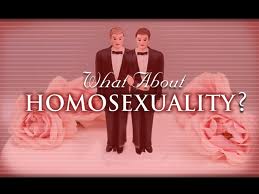
Framing the Church’s homosexuality debate appropriately

HomosexualityRecently, I’ve seen more discussion than usual about the homosexuality debate in the church. Several sub-debates seem to rage on within this larger debate. I think many of those are doing more to distort and confuse the issue than they’re doing to help. They lead to a lot of talking past each other.

Though they break down into many smaller camps, there are generally two camps in the discussions I see: those who believe the church should be fully open to homosexuals, and those who don’t. I dislike all the typical terms used for these two groups, so here I’m going to refer to these groups as the Openness Camp and the Holiness Camp, respectively, based on the primary arguments I tend to hear from each side. [I’m trying to be neutral with these two identifiers. I’m open to suggestions of better terms and not trying to make any larger statement with them.]

Let’s try to properly frame the issues here.

Sexual orientation

Holiness Camp, you need to quit talking about sexual orientation in negative terms. Quit debating whether someone can be inclined to homosexual attraction from birth. And for Christ’s sake, don’t even think about excluding anyone from the church or Christian fellowship because of sexual orientation!

You begin with the premise that homosexual behavior is sinful. We’ll get to that later. But you’re doing incredible harm and creating a logical inconsistency for yourselves when you assume that anyone of LGBT orientation needs to be “fixed” or should be excluded from church membership or leadership based on sexual orientation.

Attraction isn’t the issue here. If you exclude everyone who is attracted to someone whom they shouldn’t have sex with, you’ll just about empty the church. Nor is the issue about an inclination to do something you believe is sinful. Some people are born inclined to compulsive consumption of alcohol. We call that alcoholism. Some are born with a unique urge to steal. We call that kleptomania. Surely the church doesn’t exclude anyone with these inclinations. Inclinations and sexual orientation aren’t the issue.

Hospitality

Openness Camp, you need to drop the hospitality rhetoric. Stop saying things like, “The church should be open to all people.” You don’t mean it, and you’re going to back yourselves into an uncomfortable corner.

First, if being open to all people means “regardless of sexual orientation,” then I think we should all be able to agree. Yes–full membership and leadership in the church should be open to people of all sexual orientations. See above.

Second, if being open to all people means “regardless of sexual behavior,” then I don’t think you really mean it. Will you allow full membership and leadership rights to someone who openly has one-night stands every week? Yes, we believe God still loves this person. Yes, we believe final judgment belongs to God alone. Yes, we believe Jesus called us to love and hospitality and gave an example of such. But still, you probably won’t give this person full membership and leadership rights. You have lines, too. The “hospitality” and “love” arguments don’t hold up for you. It’s time to drop them (except when the Holiness Camp is violating what I asked them to drop above).

A pastor in the UMC just asked in a Time Magazine article, “If what you understand to be an act of love is declared a sin by the Church, what does that do to your soul, your understanding of morality and salvation?” This is a deeply flawed and unserious question. The Church would say that many things dubbed as “acts of love” are sinful. Extramarital affairs, polygamy, incest… Yes, many people engaging in these things may deem them “acts of love,” but does that mean the Church should be silent about them, or endorse them?

The Real Issue

Openness Camp, some of you were just offended that I used one-night stands in analogy to homosexual practice. That’s likely because you don’t believe homosexual behavior is sinful (many of you would qualify that to say, “if it’s in a committed, monogamous relationship”), but you believe one-night stands are. And that leads us to the two real issues–how the church handles sin and whether homosexual practice is sin.

Let’s handle the easier one first. The church cannot be fully open for membership and leadership to those who don’t earnestly repent of their sins. Persistent, willful sin can’t be ignored. There are thousands of sub-debates that can ensue. “What makes one sin worse than another?” or “Who made you judge?” or “Sounds like a witch hunt.” Yet I think those are mostly red herrings. Go back to the example above of the promiscuous person. Will you allow that person to be your pastor? That persistent, willful sin was judged problematic enough that almost everyone will exclude that person from leadership, possibly membership (an issue to get into more later). So I think we’re nearly all on the same page here. Persistent, willful sexual sin should at least prevent someone from being in leadership in the church. Yes, I said “sexual sin.” I say that because I know of no churches that will stand for their pastors committing obvious sexual sin (e.g. one-night stands or adulterous relationships). My hope is that we’ll go well beyond “sexual sin,” but it seems there’s at least already a line in the sand here.

This leads to the more difficult issue: is homosexual behavior sinful? And for this, we have to do the hard exegetical and hermeneutical work. We need to look at Scripture and the Church’s tradition. I’m not attempting that in this post. But I believe this must be the framing issue for the discussion.

If we call homosexual practice sinful, then the arguments about hospitality and God’s love only come to bear in determining how we remain hospitable and loving in the face of sin. And the Openness Camp must admit that they don’t fully open membership and leadership rights to everyone, regardless of sins they are committing.

Openness Camp — you’ve got to quit accusing others of lacking love or hospitality. You disagree on an exegetical issue, not on love. And your demeaning attitude toward them is, well, less than loving.

If we don’t call homosexual behavior sin, then all the rest is void. If this is acceptable behavior in light of Scripture and the orthodox faith, then it should have no bearing on full membership and leadership opportunities.

Holiness Camp — you’ve got to quit accusing others of turning a blind eye to sin. You disagree on an exegetical issue, not on whether sin is a big deal. And your demeaning attitude toward them is, well, sinful.

For any of you who really are doing what you’re doing because you don’t care about love or hospitality or sin… you’re wrong. But I don’t think many of you will claim that as your position.

This may all strike you as rather obvious. Yet I think it’s necessary to emphasize a proper framework here, since it seems that the discussion keeps ending up chasing the rabbits of hospitality and sexual orientation–or even worse, making appeals to what our culture thinks is best or arguing about how our secular government should rule on gay marriage.

I’d like to hear your thoughts on whether I’m framing this correctly.

BIG NOTE: I don’t want the comments turning into a fight over whether homosexual practice is a sin. I want to know what you think about the framework. I will DELETE any comments that turn the argument here into the question of whether this is sin.

Related articles

  • Why The Church Is So Concerned With Same-Sex Marriage and Homosexual Ordination – Tim Tennent wrote this excellent article to people who already believe that homosexual practice is incompatible with Christian teaching, explaining why the debate must be a big deal for them in the church, even if they don’t want it to be. You really should go read it if you’re among those who believe homosexual behavior is sinful.
  • Stealing – an attempt to show that whatever the issues are here, I don’t think they are about bigotry or inhospitality. At least, they shouldn’t be.

Framing the Church’s human sexuality debate appropriately

Human sexuality is a heavily debated topic in the church right now. Sadly, most of the debate involves directly talking past each other. People on opposite sides of the discussion focus on different aspects of the debate and rarely acknowledge they understand what’s being said from the other side.

Though they break down into many smaller camps, the discussions I see break into two primary camps: those who believe the church should be fully open to practicing homosexuals,[1. I use this language here, as it’s the language used in the United Methodist Book of Discipline, which I’m watching debated.] and those who don’t. I dislike all the typical terms used for these two groups, so here I’m going to refer to these groups as the Openness Camp and the Holiness Camp, respectively, based on the primary arguments I tend to hear from each side.

[I’m trying to be neutral with these two identifiers. I’m open to suggestions of better terms and not trying to make any larger statement with them. These terms are not meant to suggest that any camp doesn’t care about openness or holiness. They’re simply to represent the primary argument the group is making.]

Let’s try to properly frame the issues here.

Sexual orientation & Scriptural authority

Holiness Camp, you need to quit talking about sexual orientation in negative terms. Quit debating whether someone can be inclined to homosexual attraction from birth. And for Christ’s sake, don’t even think about excluding anyone from the church or Christian fellowship because of sexual orientation!

You begin with the premise that homosexual behavior is sinful. We’ll get to that later. But you’re doing incredible harm and creating a logical inconsistency for yourselves when you assume that anyone of LGBTQI orientation needs to be “fixed” or should be excluded from church membership or leadership based on sexual orientation.

Attraction isn’t the issue here. If you exclude everyone who is attracted to someone whom they shouldn’t have sex with, you’ll just about empty the church. Nor is the issue about anyone’s inclination to do something that you believe is sinful. Inclinations and sexual orientation aren’t the issue.

Also, Holiness Camp, you’re not helping yourselves to argue that you believe in scriptural authority and the other side doesn’t. Most Openness Camp people will also claim Scripture as authority. They’re interpreting Scripture differently than you are, and that’s a fair debate to have. But don’t accuse them of “not believing the Bible.”

Hospitality/Exclusion

Openness Camp, you need to drop the hospitality/exclusion rhetoric. Stop saying things like, “The church should be open to all people.” You don’t mean it, and you’re going to back yourselves into an uncomfortable corner.

First, if being open to all people means “regardless of sexual orientation,” then I think we should all be able to agree. Yes–full membership and leadership in the church should be open to people of all sexual orientations. See above.

Second, if being open to all people means “regardless of sexual behavior,” then I don’t think you really mean it. Will you allow full membership and leadership rights to someone who openly has one-night stands every week?[1. A note: this is not to compare someone in a monogamous homosexual relationship to someone having one-night stands. This is simply to note that all of us deem certain behaviors–and even certain sexual behaviors–incompatible with leadership in the church.] Yes, we believe God still loves this person. Yes, we believe final judgment belongs to God alone. Yes, we believe Jesus called us to love and hospitality and gave an example of such. But still, you probably won’t give this person full membership and leadership rights. You have lines, too. The “hospitality” and “love” arguments don’t hold up for you. It’s time to drop them (except when the Holiness Camp is violating what I asked them to drop above).

A pastor in the UMC just asked in a Time Magazine article, “If what you understand to be an act of love is declared a sin by the Church, what does that do to your soul, your understanding of morality and salvation?” This is a deeply flawed and unserious question. The Church would say that many things dubbed as “acts of love” are sinful. Extramarital affairs, polygamy, incest…[1. For the sake of clarity, and at the risk of redundancy, this is not to compare a monogamous homosexual relationship to an extramarital affair. It is simply to acknowledge that all of us deem certain “acts of love” as sinful. We’re establishing common ground here. Now we’ll need to press into the harder work of identifying which “acts of love” we would deem sinful. But we all have a line somewhere…] Yes, many people engaging in these things may deem them “acts of love,” but does that mean the Church should be silent about them, or endorse them?

The Real Issue

Openness Camp, some of you were just offended that I used one-night stands in analogy to homosexual practice. That’s likely because you don’t believe homosexual behavior is sinful (many of you would qualify that to say, “if it’s in a committed, monogamous relationship”), but you believe one-night stands are. And that leads us to the two real issues–how the church handles sin and whether homosexual practice is sin.

Let’s handle the easier one first. The church cannot be fully open for membership and leadership to those who don’t earnestly repent of their sins. Persistent, willful sin can’t be ignored. There are thousands of sub-debates that can ensue. “What makes one sin worse than another?” or “Who made you judge?” or “Sounds like a witch hunt.” Those are mostly red herrings. Go back to the example above about the promiscuous person. Will you allow that person to be your pastor? That persistent, willful sin was judged problematic enough that almost everyone will exclude that person from leadership, possibly membership (an issue to get into more later). So we’re nearly all on the same page here. Persistent, willful sexual sin should at least prevent someone from being in leadership in the church. Yes, I said “sexual sin.” I say that because I know of no churches that will stand for their pastors committing obvious sexual sin (e.g. one-night stands or adulterous relationships). My hope is that we’ll go well beyond “sexual sin,” but it seems there’s at least already common ground here.

This leads to the more difficult issue: is homosexual behavior sinful? And for this, we have to do the hard exegetical and hermeneutical work. We need to look at Scripture and the Church’s tradition. I’m not attempting that in this post. But I believe this must be the framing issue for the discussion.

If we don’t call homosexual behavior sin, then all the rest is void. If this is acceptable behavior in light of Scripture and the orthodox faith, then it should have no bearing on full membership and leadership opportunities.

Holiness Camp — you’ve got to quit accusing others of turning a blind eye to sin and/or not believing the Bible. You disagree on an exegetical issue, not on whether sin is a big deal. And your demeaning attitude toward those who disagree with you is, well, sinful.

If we call homosexual practice sinful, then the arguments about hospitality and God’s love only come to bear in determining how we remain hospitable and loving in the face of sin. And the Openness Camp must admit that they don’t fully open membership and leadership rights to everyone, regardless of sins they are committing.

Openness Camp — you’ve got to quit accusing others of lacking love or hospitality. You disagree on an exegetical issue, not on love. And your demeaning attitude toward them is, well, less than loving.

For any of you who really are doing what you’re doing because you don’t care about love or hospitality or sin… you’re wrong. But I don’t think many of you will claim that as your position.

This may all strike you as rather obvious. Yet I think it’s necessary to emphasize a proper framework here, since it seems that the discussion keeps ending up chasing the rabbits of hospitality/exclusion and sexual orientation–or even worse, making appeals to what our culture thinks is best or arguing about how our secular government should rule on gay marriage.

I’d like to hear your thoughts on whether I’m framing this correctly.

BIG NOTE: I don’t want the comments turning into a fight over whether homosexual practice is a sin. I want to know what you think about the framework. I will DELETE any comments that turn the argument here into the question of whether this is sin.

————–