A friend dropped out of a project team this week because of a line in the sand. We actually agree on the issue, just not on where the lines go. He arrived at the point that he could no longer participate in good conscience.
Across the United Methodist Church now, I’m seeing a similar thing happen. People who had been united on a particular issue are dividing on how to handle it. When the question changes from “What do you believe about this issue?” to “What should we fight for and how?” the lines no longer cut so clean. Same for questions like “With whom will you associate and when?”
It would be easy to shake your head at new divisions––proof that settling one dispute only gives birth to three more. But it might get us further to acknowledge that we all have lines in the sand. All of us have some instance when we would say we can’t go along. We all have a time to tear and a time to mend, a time to be silent and a time to speak. But what time is it? That’s often hard to know and a new opportunity for conflict.
Polarization has made it easier for us to avoid these next questions. We align with our side and reject the other. This is why it’s so easy to put an (R) or (D) behind a name and assume we know everything we need to know. In the UMC, the letters behind the names could be (Prog) or (Trad). With these simple notations, we can identify allies and adversaries quickly.
But when we get to the other conversations, it turns out that you may be at odds with someone you thought was an ally. Sometimes in a surprising and personal way. That’s usually because they’re willing to tolerate less or more difference than you are. This is the even more challenging aftermath of polarization and division.
This kind of next-level division is likely to happen across the Methodist landscape in the coming years. Some people will have a high tolerance for working across the lines of division. Some will have almost no tolerance for it. Already, I’m aware of the potential to lose allies, partners, perhaps even friends—on one side because my lines in the sand are too far and on the other side because they’re not far enough.
After polarization, I expect some of our divisions to become more surprising, more nuanced, and more painful. The first round asked one question of us: “What do you believe about _______?” The next round will ask many. And that will force people still reeling from the first round to try to engage in new battles before the last wounds have even begun to heal.
As I watched that friend walk away this week from something that we had all believed in, I realized that at some point in the coming years, I’ll probably end up in the same position: having to separate from a dearly loved friend or respected partner because we can’t see a way forward together. I resolved that I want my primary stance through those difficult times to be one of grace and respect. Grace, rather than blame or disbelief, when a friend has to take a different course than I do. Respect, rather than scorn, when someone’s chosen path is one I can’t follow.
At some point, I’m likely to make the wrong choice in how I handle one of the many questions to come. I should expect others will, too. And it may take years or decades (if ever) before it comes clear to us what was good and wise. So I want to extend others the same grace and respect that I hope they’ll extend me as we try to make our way through an uncertain time.
John Wesley urged his people to have a “catholic spirit.” This is sometimes mistreated as indifference––tolerate all things and hold no firm beliefs or opinions. That’s nothing to do with what Wesley meant. (He took a lot of time in his “Catholic Spirit” sermon to say so.) What does a person with a “catholic spirit” look like, then? Wesley: “His heart is enlarged toward all mankind, those he knows and those he does not; he embraces with strong and cordial affection neighbours and strangers, friends and enemies. This is catholic or universal love. And he that has this is of a catholic spirit.”
The person with a catholic spirit may not be able to partner with all people at all times. But (s)he will extend grace and love to all people at all times. Though a time may come when we need to part ways, even with people we’ve long called friends or allies, I hope we can maintain this kind of catholic spirit. It may be after the polarization when that spirit is most needed.
Looking to have a good existential crisis? Let me recommend the book of Ecclesiastes. A quick read may convince you it’s the most hopeless, depressing book in the Bible. Written by someone who needs to get a grip.
Here’s the book’s delightful beginning:
“Meaningless! Meaningless!” says the Teacher. “Utterly meaningless! Everything is meaningless.”
Ecclesiastes 1:2
That opening line uses the Hebrew word hevel five different times. The word translates as “meaningless” here.[note]See only four here? It’s because that Utterly meaningless line uses hevel twice. You might also be able to say “Meaninglessly meaningless” here.)[/note] To give you a general sense of that word hevel, here are all of its uses in another bleak book, the book of Job (the translation of hevel in bold):
My days have no meaning.[note]Job 7:16[/note]
Why should I struggle in vain?[note]Job 9:29[/note]
How can you console me with your nonsense?[note]Job 21:34[/note]
Why this meaningless talk?[note]Job 27:12[/note]
Job opens his mouth with empty talk; without knowledge he multiplies words.[note]Job 35:16[/note]
It’s a word that sometimes is used to talk about things being a mere breath or vapor. A word that suggests emptiness. Empty talk. Empty action. Empty life.
In the book of Ecclesiastes, the writer comes back to hevel about every six verses. Think of your downer friend who only speaks up to make sarcastic comments about how GREAT it is that his job is miserable and he missed the fantasy football playoffs because of a Monday night fumble.
Except the writer of Ecclesiastes isn’t just a downer about his life. He sounds like a downer about life. He calls it all a “chasing after the wind.” A few things that he calls hevel:
Wisdom and Knowledge – So you thought maybe he’d just come after frivolous things? Sex, drugs, rock ‘n’ roll? But instead, the writer comes out––in a book that’s part of the Old Testament’s Wisdom Literature––and says wisdom and knowledge are empty pursuits.[note]See Ecclesiastes 1:16-17[/note] Hey You, pursuing your next degrees and reading philosophy in your free time … it’s all a waste. “With much wisdom comes much sorrow,” he writes, “the more knowledge, the more grief.”[note]Eccl 1:18[/note]
Pleasure, Laughter, Eating and Drinking – “What does pleasure accomplish?”[note]Eccl 2:2[/note] These are all meaningless, too, according to Ecclesiastes.
In my Wesleyan world, which can tend toward asceticism, maybe this one will be a bit easier to accept. Quit with all the indulgence and go do something!
While we might turn up our noses at delicacies, most of us would still say we delight in simple things—reading a good book, taking a walk, a coffee to start the day, time with friends talking and laughing.
Here’s something for you to try. Next time a friend posts a picture of friends on Facebook or Instagram and says something like, “Had a great time catching up with special people last night,” hit the comment button, hit your caps lock, and write MEANINGLESS!
Sounds like what Ecclesiastes is trying to do for us here.
Work and Success – For the people who were okay with pleasure being meaningless, the next one might hit harder. The writer talks about undertaking great projects, making gardens and parks and reservoirs. “Yet when I surveyed all that my hands had done and what I had toiled to achieve, everything was meaningless, a chasing after the wind.”[note]Eccles 2:11[/note]
We’re in full-on existential crisis here. And it’s part of sacred Scripture. Is this the Word of God for us?
Good or Meaningless?
My last post focused on the goodness of all created things. Sex is good. Food and drink are good. Work is good.
What do we do with a biblical book, then, that calls it all meaningless?
That word for meaninglessness that we keep seeing––hevel––is an interesting word. You saw how it’s used in Ecclesiastes and in Job. In the rest of the Old Testament, most of its uses are references to idols. When God says the Israelites have provoked him to anger with their idols, he literally says, “they have provoked me to anger with their hevels.”[note]Deuteronomy 32:21[/note] It fits. These idols they were worshiping were worthless, empty, meaningless. An idol is a nothing.[note]See 1 Corinthians 8:4[/note]
And look at what God says happens to these idol worshipers.
This is what the LORD says:
“What fault did your ancestors find in me, that they strayed so far from me? They followed hevels and became hevel themselves.”
Jeremiah 2:5
The NIV translates that as “They followed worthless idols and became worthless themselves.”
Rethinking Idolatry
We need to reconsider two of the common ways we think about the idolatry in the Old Testament.
First, we tend to think of idolatry mainly in terms of provoking God’s anger. We think of the outward damage idols caused between the people and God. That’s a real thing. We just saw it above, where God said, “They have provoked me to anger.”
But in my experience, we rarely talk about the inward damage that’s done. What happens when people worship these worthless, meaningless, empty things? God says they become worthless, meaningless, empty themselves.
Existential crisis.
Think of the blank stare of someone under the influence of certain drugs. Or the empty existence of people that Wall-E depicts. They followed worthless things and became worthless themselves…
What we pursue starts to define who we are.
Second, we tend to relate idolatry to primitive people who were silly enough to believe that something carved from wood or stone could actually be a god. We wouldn’t fall for this.
I wonder if the book of Ecclesiastes unmasks what idolatry is really about. Not just for us, but even back then for those primitive people. When you think about idols, don’t just think about carved wood and stone. Think about what’s behind those empty things. Think about what Ecclesiastes calls empty: wisdom and knowledge, pleasure and laughter and eating and drinking, work and success.
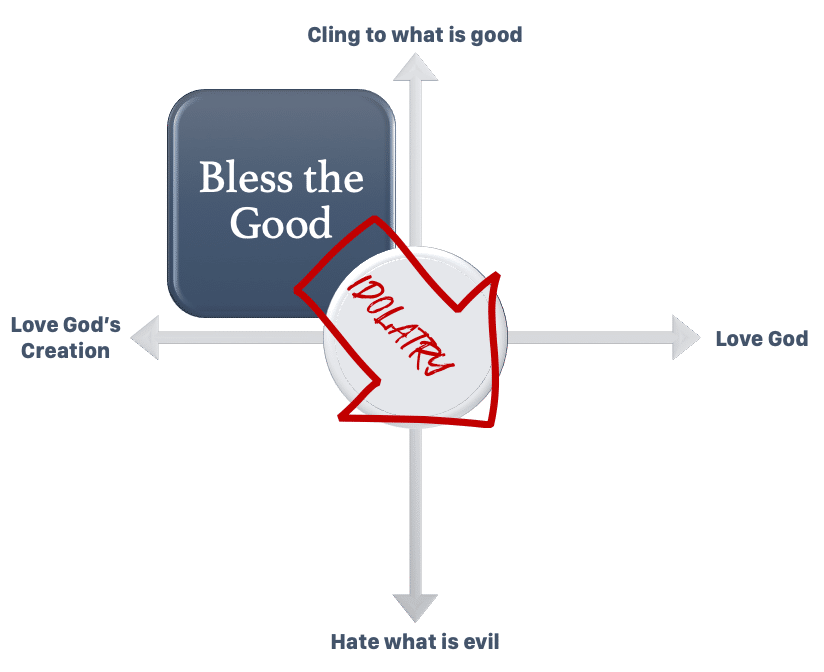
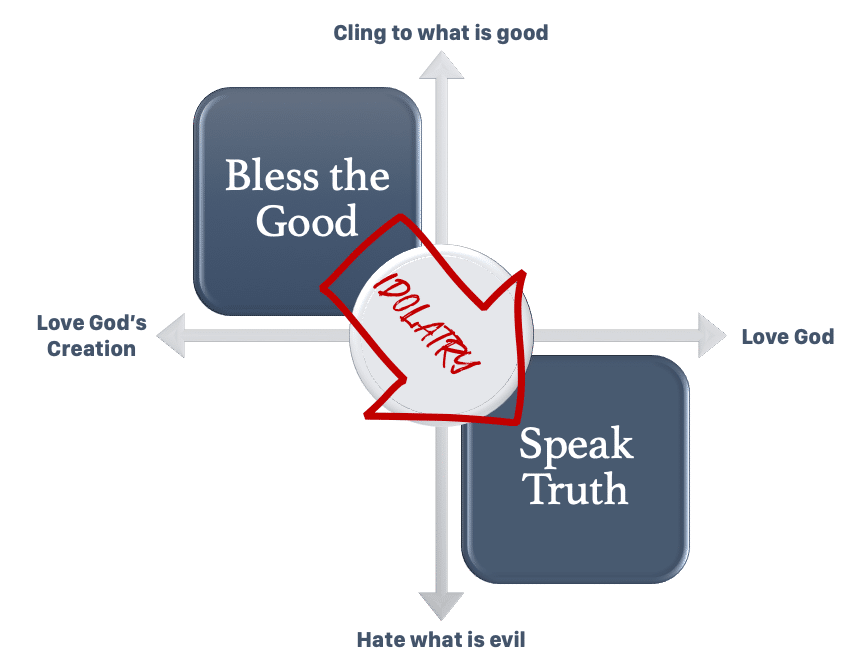
I want to suggest to you that idolatry is not usually about bad things. Idolatry is about good things that we have turned into gods. We are moving things from the category of God’s good creation, which we bless, to treating them as gods.
God and gods
Who is God? God is the one who gives our lives meaning. God is the one we trust and rely on to see us through our hardest times. God is our ultimate desire, the one we pursue because life would be empty without him. God is the one who tells us what is good (and we cling to it) and what is evil (and we hate it). God is our goal, our end, our reason for being.
Who are our gods?
They’re whatever we go to for our meaning and purpose in life. Ecclesiastes: “When I surveyed all that my hands had done […] everything was meaningless.”
They’re whatever we turn to in our hardest times. Ecclesiastes: “I tried cheering myself with wine.”
They’re whatever desires we pursue because we believe life would be empty without them. Ecclesiastes: “I denied myself nothing my eyes desired.”
They’re the ones we allow to tell us what is good and what is evil.
They’re our goal, our end, our reason for being.
The story of humanity’s idolatry is a story of people turning to God’s good gifts in the times that we should be turning to God himself. When we do, those good gifts turn out to be empty. Not because they’re entirely worthless, but because they’re unable to take the place of God.
Food and drink
What do you do when you receive bad news? When you’ve had a hard day? When you’re overwhelmed or scared?
In the book of Esther, a king issues an edict to have all the Jewish people in his kingdom destroyed. When the Jews learn about the edict, they respond with mourning, fasting, weeping and wailing.
In the book of 2 Chronicles, the king of Judah learns that “a vast army” is coming to attack the people. Rather than calling his army to take up arms, he resolves to inquire of the Lord and proclaims a fast for all Judah.
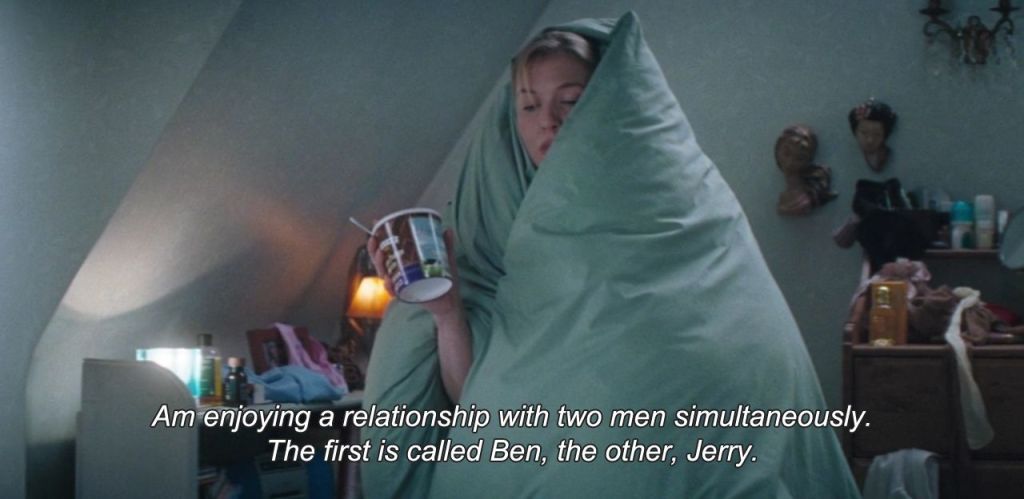
When some of the worst news comes, they respond with fasting. What a difference from some of our most typical responses! For many of us, with a hard day or bad news, we take the Bridget Jones path. We choose ice cream or vodka. Or maybe both. (Or whatever our food and drink choices are in these times.)
In their hardest times, Israel stops eating and drinking. In our hardest times, we often over-eat and over-drink. Why? We go to these for some sort of relief, some way of numbing ourselves to the hardship of life. Rather than turning to God in these times, we turn to food and drink. And at this moment, these stop being good gifts of God and become something they were never intended to be––our go-to in hard times. That’s God’s role. We could say that the good things have become gods.
Food and drink are good. The people of God gather for huge feasts throughout the Bible, complete with alcoholic beverages. But when people turn to them to fill a deeper longing that these were never meant to fill, it’s gluttony, a sign of idolatry.
Through the practice of fasting, I’ve learned about some of the unhealthy ways I’ve used food. I find myself up, walking around, looking for food, not because I’m hungry, but because I’m bored. Or frustrated. Or tired. I want a drink at night specifically because it has been a hard day.
The food and drink don’t solve the problems. They just numb us to feeling them for a moment. Follow these empty solutions for long, and we become empty ourselves. If you find yourself turning to food or drink to cover over other frustrations or anxieties, there’s a good chance it’s idolatry.
Sex
Sex is good. It’s a beautiful, mysterious creation of God. It should draw us closer, not just to each other, but to God.
When does sex become idolatry? When sexual identity is what gives our lives meaning. When we treat sexual activity as a necessary part of life, without which our lives would be empty. When we treat others’ bodies as cheap pleasure-delivery devices rather than as gifts for intimacy and procreation in marriage. Easy access to pornography (now not just in X-rated movies, but in “must-watch” TV series) is giving us easier ways both to hide and to justify this idolatry. But the ease of justification will leave us no less empty for it, and the ease of hiding it will put us in greater danger.
Sex has become not just a personal idol in our time, but a political idol. Other than partisan politics itself, the clearest dividing line we have between allies and enemies is often drawn according to views on human sexuality. For both sides, beliefs about same-sex marriage have become an easy shibboleth for friend or foe. Sexual politics have caused some religious people and groups to shun anyone who doesn’t hold to their standard or represent their position. This has been especially hard for celibate gay Christians. As one friend said to me, “Everyone has a problem with one of those words.”
Being a celibate gay Christian is like being an early preacher of a Christ who was crucified and rose from the dead. You represent something that seems mad, irrational, foolish to our culture of desire and sex. We are fools for Christ’s sake, weak and pressed at every side.
One of the deep kinds of vulnerability gay (celibate) people experience is called “apologetic objectification”: we are used to justify an ethic or virtue-signal progressive or conservative causes but not loved or known as sons of God. This is a problem I don’t know how to prevent
Sex is good. We don’t need to affirm its goodness in all instances to believe that it’s good. The demand for that blanket affirmation turns this good into a god, giving it a place God never intended in our world and in our lives.
Several others
I won’t go into detail on the many other ways goods things can become gods. A few brief words.
Work – It’s good. It’s meaningful. God puts Adam and Eve in a garden to cultivate it. Work becomes god when it defines us, when the meaning and value of our lives is defined by our accomplishments. When work becomes god, we trust in ourselves and the work of our hands rather than God. When work becomes god, we neglect other important relationships (to God and others) so that we can get more done. Though it may sound strange, this can be a manifestation of the vice of sloth––neglecting the hard work of love. You can be a workaholic sloth. It may also be about vainglory––the excessive need to be recognized, to receive others’ praise and applause. You’re likely under-recognized and under-appreciated (most people are), and you should receive some recognition for what you do. But when it becomes the thing you’re pursuing, it has become a god.
Money & Possessions – They’re gifts from God that can be used to glorify God. In the last article, I said that money is not the root of all evil. That idea comes from misquoting the Bible. Here’s the direct, extended biblical quote:
For we brought nothing into the world, and we can take nothing out of it. But if we have food and clothing, we will be content with that. Those who want to get rich fall into temptation and a trap and into many foolish and harmful desires that plunge people into ruin and destruction. For thelove of money is a root of all kinds of evil. Some people, eager for money, have wandered from the faith and pierced themselves with many griefs.
1 Timothy 6:7-10
If we find ourselves constantly agonizing over money, we may have given money and possessions a god-like place in our lives. If we find ourselves consistently discontent because we don’t have enough –– either not enough things, or not enough money to pay for our expenses (beyond simple basics) –– it may be the vice of greed. This is nothing new. Jesus warned, “You cannot serve both God and money.”[note]Matthew 6:24 and Luke 16:13[/note]
Politics – Politics are good. At root, the word is about providing structure and order for a particular body of people. But partisan politics has become one of the great idols of our time. Many of us have allowed partisan political parties to define good and evil for us, both in terms of issues and people. In the U. S., neither the Democratic nor the Republican party––neither Trump supporters nor never-Trumpers––look like the kingdom of God. We give these political parties (and their associated news channels, websites, and radio shows) a god-like status when we walk in lock-step with them in defining good and evil.
Even more, partisan politics are breeding hatred across our country. A claim I’ve made earlier: people are created in the image of God. They’re loved by God. All of them. Even deplorable sinners. (Jesus did not come to call the righteous, but sinners.) Even our enemies. Even our political enemies. Even Donald Trump. Even Hillary Clinton. When partisan politics turns people into objects of our scorn and wrath, it has likely become an idol.
Speaking Truth
We began with the book of Ecclesiastes. “Meaningless! Meaningless! Everything is meaningless!”
Is the book just a big existential crisis? It is at least that. For anyone who seeks meaning in life through any of these good things––work, pleasure, wisdom, etc.––the promised end result is emptiness. All of these, as final pursuits, are empty. They will not satisfy.
More than existential crisis, I think Ecclesiastes is a book on idolatry. Pursue these things as if they were your god, and your life will be meaningless. But it doesn’t conclude by calling life meaningless. In fact, it finds a clear purpose for life. Here’s how the book ends:
Now all has been heard; here is the conclusion of the matter: Fear God and keep his commandments, for this is the duty of all mankind. For God will bring every deed into judgment, including every hidden thing, whether it is good or evil.
Eccles 12:13-14
Life finds its deep meaning in loving, serving, and living in union with God. When anyone takes God’s good gifts and turns them into gods, they lose the meaning of life.
How should the Christian and the Church respond in times when people serve false gods? I believe our best approach is to do as the writer of Ecclesiastes did. I’m calling it “Speak Truth.” This involves two things:
Unmasking the idols of our world for what they are. How can we show people––gently, if possible––the utter emptiness of the things they’re turning to in place of God?
Pointing people to the true God. He is the one who redeems us from the empty way of life handed down from generation to generation.[note]See 1 Peter 1:18[/note]
Be slow to see this as a prophetic word delivered from people who call themselves Christians to people who do not. We should try to unmask the idols of our secular world and point it to God (again, gently where possible). But much of the truth we speak will be to others who already call themselves Christians. In fact, the first and most consistent truth we seek should be for ourselves. Most of us carry on with low-grade idolatries, unaware of just how much we are influenced by them. We would be better to recognize them for what they are, let the good things be merely goods, and let God be God.
This post builds on my new proposal on Christ and Culture. If you haven’t read it, it would be good to start there.
“God saw all that he had made, and it was very good.”
Everything God made was good. I think we in the church spend too little time on this point.
At least in the version of Christianity I grew up with, we gave more attention to holiness, truth, and justice than we gave to beauty and the goodness of God’s creation. My vision of eternal life looked like evacuation — getting out of this bad place to go to a good one with clouds and harp-strumming. I don’t know that I actually believed that was God’s intention for eternity, but whatever God’s intention, I didn’t consider that it would have much to do with this creation. One glad morning, when this life is over, I would fly away!
I was ready to dismiss most of the current creation as something to avoid, something that was thankfully going away. I was shocked when someone first pointed out that Adam and Eve were doing work before the fall. And that the popular Old Testament phrase “They will beat their swords into plowshares” suggests that work has a place in God’s new creation. I had seen it as a necessary evil until we were free from its drudgery.
And of course, any discussions of sex, alcohol, or money and possessions were all about dangers and avoidance. To be honest, as a foolish teenager, perhaps the warnings and fear were what I most needed.
But I’ve also seen how these messages have created a distorted worldview for people who grew up with them. Sex took on a shameful and dirty association for some people — one that has been difficult to shake, even after marriage, and left them to see themselves as irredeemable if they’d had sex outside of marriage. I actually remember writing a snide article in my high school newspaper mocking anyone who would drink alcohol, since we all know it’s disgusting and you would only drink to get drunk. (If you went to high school with me … sorry.)
In all, it was a rather dismal view of the world. “Do not handle! Do not taste! Do not touch!”[note]See Colossians 2:21 – then see the surrounding conversation.[/note] It was much more comfortable with John the Baptist, who came neither eating nor drinking, than it was with Jesus in his eating and drinking (surely only because the water wasn’t safe to drink, I would say).
Thankfully, I’ve had a shift in my mentality, and at least from my vantage point, other Christians are also seeing more of the goodness of God’s creation. In a variety of ways, we can celebrate God’s gifts by delighting in what he has given.
Sex
Our church’s retreat for 5th graders on sexuality begins with the creation account. “When God looked at everything he had made, including humans, God declared creation supremely good. You are supremely good. Your body is supremely good.” The first words kids hear about sex and sexuality on the retreat are “Our bodies, sexuality, and sex are all gifts from God—gifts which express God’s love and grace to us.”
From the earliest creation accounts, God gives sex as a means of union and intimacy and procreation. Robert Jenson’s brilliant commentary on the Song of Songs notes how intimacy and eroticism aren’t foreign to God. In fact, they give us a better understanding of God’s love. About the Song of Songs, he says:
“Israel does not here long for forgiveness of sin or rescue from disaster or for other gifts detachable from the Giver, as Western theology tends to conceive salvation, but simply for the Lord himself. Moreover, the longing is aesthetic rather than ethical; it is longing for the Lord’s touch and kiss and fragrance. The Lord is simply lovable, and salvation is union with him, a union for which sexual union provides an analogy.”
How about that? Sexual union as an analogy for union with God. That’s a much better starting point than shame, guilt, and rules.
Food and drink
One of the first uses of the tithe in the Old Testament was for people to gather food and drink and come together for a great feast. They would eat 10% of their annual food supply in nine days. And they were instructed to use money “in exchange for whatever your soul desires—for oxen, or for sheep, or for wine, or for other intoxicant, or for whatever your soul requests.”[note]See Deuteronomy 14:26[/note] Think of Thanksgiving, only for nine straight days.
The church doesn’t usually have trouble celebrating the goodness of food. We’re more known for our potlucks than our fasts. This is good. We need to have times for feasting together.
In many parts, our relationship with alcohol is more troubled. At the least, it should be more complex, given the great harm that alcohol has done to people, families, and communities. More on that in the next post. But have we overstepped when we consider any consumption of alcohol evil?
C. S. Lewis discusses this in Mere Christianity:
“Temperance [originally] referred not specially to drink, but to all pleasures; and it meant not abstaining, but going the right length and no further. It is a mistake to think that Christians ought all to be teetotallers; [Islam], not Christianity, is the teetotal religion. Of course it may be the duty of a particular Christian, or of any Christian, at a particular time, to abstain from strong drink, either because he is the sort of man who cannot drink at all without drinking too much, or because he wants to give the money to the poor, or because he is with people who are inclined to drunkenness and must not encourage them by drinking himself. But the whole point is that he is abstaining, for a good reason, from something which he does not condemn and which he likes to see other people enjoying.”[note]In Mere Christianity Book III, chapter 2.[/note]
Lewis distinguishes between abstaining from something because it’s bad, and abstaining from good things for good reasons. We have too often sounded like the former––condemning and self-righteous. We’d do better to act as the latter when abstinence is called for––prudent and righteous.
Many other things
We could add many more things to this list.
Money & Possessions: Money is not the root of all evil (more on that in the next post). We find the words abundance and prosperity frequently throughout the Bible as a blessing from God. We find people delighting in God’s good gifts.
Work: See those notes above about work in Eden and work in the new creation. Work doesn’t have to be seen as drudgery, a necessary evil, something to flee as soon as we can retire or die, whichever comes first.
Leisure: Those who highly value work and accomplishment might instead look down on leisure as a waste. But this, too, has its place in God’s creation. As Thomas Aquinas said it, “God plays. God creates playing. And man should play if he is to live as humanly as possible and to know reality, since it is created by God’s playfulness.”[note]From his Summa Theologica, as quoted in Craig Brian Larson and Brian Lowery’s 1001 Quotations That Connect, quotation 602[/note]
Beauty:We can rejoice simply in the beauty of creation. Whether it’s standing at the top of Red River Gorge on a fall day, delighting in a Shakespeare sonnet or Anne Lamott’s prose, or going on an art gallery hop, Christians celebrate the beauty of creation. And we have an opportunity to participate in it with our own creative work.
Creation and Creatures: Humanity has been given dominion over all of creation. Power can go to one’s head, and I’ve seen this power do some terrible things to distort a good gift by acting as if we can abuse or disregard it. Wendell Berry provides a better perspective: “The ecological teaching of the Bible is simply inescapable: God made the world because He wanted it made. He thinks the world is good, and He loves it. It is His world; He has never relinquished title to it. And He has never revoked the conditions, bearing on His gift to us of the use of it, that oblige us to take excellent care of it.”[note]In What are People For?[/note]
Competition (?): I heard a presentation recently on baseball in heaven. It was a deep and thoughtful consideration of what we should expect of God’s new creation. The speaker argued that we should expect baseball in heaven (he thinks more highly of it than I do), but he said there would be no score. It assumed that competition is bad, something that would have no place in God’s eternal kingdom. But I wonder if that’s necessary. Must we see competition as inherently bad? It gives us some of our greatest opportunities for improvement and celebration. Even as a long-time Kentucky football fan, I believe we can delight and grow from competition, that we can enjoy it as something good in God’s creation. Whether it’s sports, cards, or board games, I bet you have some fond memories of competition––in the thrill of victory and even, perhaps, in the agony of defeat.[note]This is a more speculative argument than the rest. It’s a topic of interest for me, so I may take time in the future to do some deeper work on it.[/note]
People
Finally, we come to the crowning point of all created things: humanity. Humanity is created in the very image of God. All of us. And so we delight in others. We give them our attention and recognition and praise. We seek to ensure that all people are treated with dignity.
I’ve been intrigued by the various ways that Mike Mather talks about seeing others, delighting in them, and blessing them (see our interview). His church hosts birthday dinners for teenagers and shut-ins to have others speak words of blessing to them. They talk about greeting people with the line, “I see you,” and the response: “It is good to be seen.” It is good! It is good to be noticed and valued and treated with dignity.
Of all the places on earth, the church should be a place that celebrates and blesses people like no other.
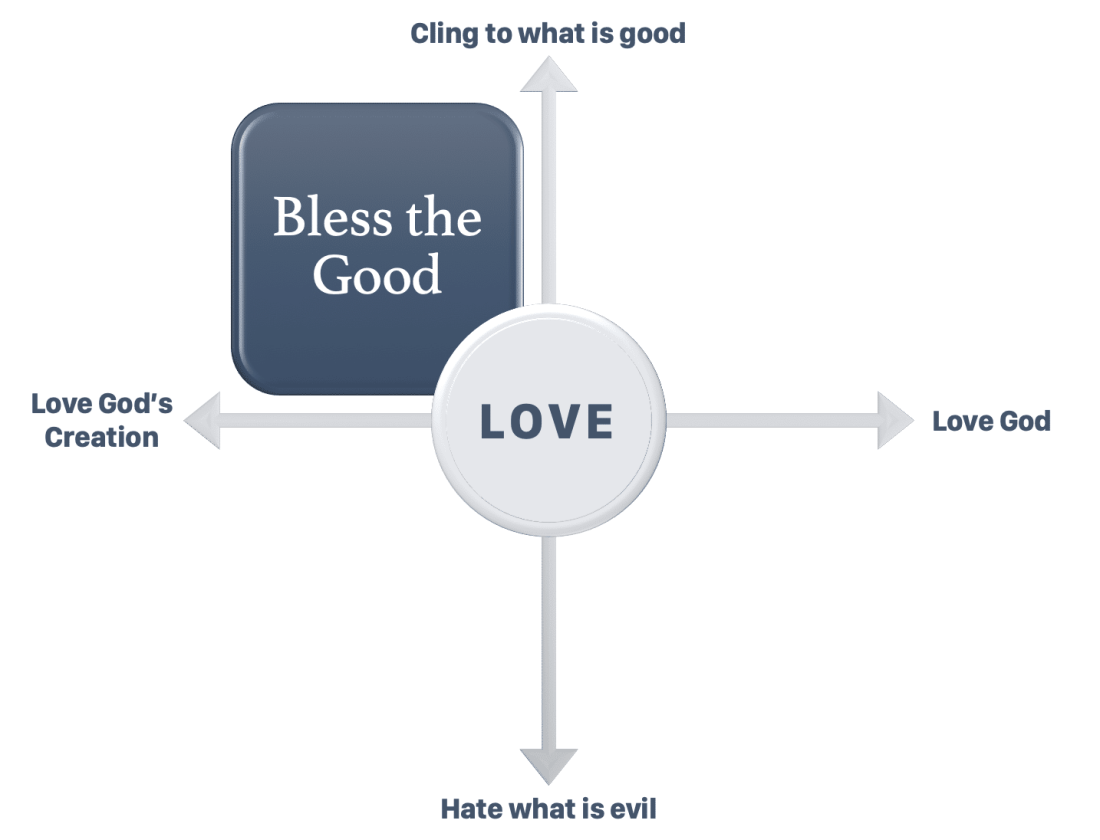
To Bless the Good
The church should have more parties. We should have big celebrations with lots of food where we speak words of blessing and praise and encouragement to particular people among us. Those blessings would be to members of our congregations and to people outside of them.
If we really mean it — that everyone is created in the image of God and has something of that divine image in them — should there be any bounds to the list of those we would bless? There would be bounds to what we would bless (i.e. we would not speak words of blessing over unholy decisions, behaviors, or systems), but not to whom we would bless. We would bless not only those we regard as saints, but those we regard as sinners, too. Not only our friends, but our enemies. Not only those whose positions and policies we support, but even those whose positions and policies we despise.
What if the church were known as a place of blessing? What if we were known as a place of blessing for all people?
And the church should have more artists and advocates and entrepreneurs. We should celebrate people who see opportunities to create something good and beautiful and then do it.
Yes, but…
As you’ve read, you may have wanted to say, “Yes, but …” “Yes sex can be good, but …” “Yes food and drink can be good, but …” “Yes we should bless people, but …”
In the next piece, we’ll deal with the buts. They’re real and necessary. But they’ve often led the Church to the point that we were unwilling to call good things good. Before we start dealing with our mishandling of God’s good creation, let’s stop for now to say, “It is very good.”





 teddy ray