If you read my recent post about Sunday School creating a theologically illiterate American Church, you may have had a different takeaway than I intended.
To the volunteer Sunday School teacher — I didn’t mean to tell you to stop teaching.
To the person considering volunteering — I didn’t mean to scare you off from it.
We need you! People willing to stand up and lead are at a premium in the Church. Thank you for being willing.
Now, if you don’t already have some good theological learning and training under your belt, let me suggest a crash course. I’ll give you reading here. It would be best if you found some others to talk with – especially if you can find someone who may have had some more theological training already. If you decide to work through anything below, I’d be excited to read and discuss along with you.
The resources I’m suggesting here will clearly show some of my Wesleyan leanings. If you’re in another tradition, you might ask your pastor what he/she would recommend. Or read this stuff anyways, and discover the beauty of Wesleyan theology.
Before you look through these, why don’t you SUBSCRIBE for e-mail updates. Whether you agree or disagree, I hope to provide lots more thought-provoking articles and helpful resources.
101 – Some Basics
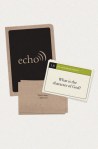 Echo: A Catechism for Discipleship in the Ancient Christian Tradition
I think this little resource is a great place to start. Yes, I’m biased. I’m one of the editors. But we created the resource for exactly this purpose. It will give you our most basic and important beliefs in 98 short (Twitter-length) questions and answers with Scripture references.
Though this can only offer the most basic points of belief, I’ve still found that it has new information for lots of people. What do we mean by the “invisible” and the “visible” church? The new creation? What are the sacraments and what do they mean? Use it as a basic reference or a jumping-off point for deeper investigations. Or see this schedule for preaching through the catechism.

 The Way to Heaven: The Gospel According to John Wesley by Steve Harper
A clear and accessible presentation of the core of Wesleyan theology. If phrases like “original sin,” “prevenient grace,” or “Christian perfection” are unfamiliar or a bit fuzzy for you, this book will be a great help.

 On the Threshold of Grace: Methodist Fundamentals by Donald Haynes
This book is very similar to the one above in its subject matter, but it’s a bit more of a “plain truth for plain people” approach, while the Harper book spends more time examining history. Only 96 pages and an easy read with illustrations and personal experiences. You could get through it in a sitting.
201 – A Bit Deeper
You don’t need to do the 101 books first. I break these down to show that this next level is a bit heavier and more technical. You’re probably ready for it, so long as you’re willing to invest a little more time and mental energy.

 An Introduction to Christian Theology by Justo Gonzalez and Zaida Maldonado Perez
In just 160 pages, you’ll get an overview of all the major themes of Christian theology and their historical development. A great place to start for some more serious theological study.

 Heresies and How to Avoid Them: Why It Matters What Christians Believe edited by Ben Quash and Michael Ward
You might be surprised to learn some of what Christians don’t believe — because these ancient heresies are actually prevalent in a lot of forms today. You’ll gain a deeper, richer understanding of the Christian faith in the process. Just 140 pages.
301 – Pretty meaty
These will really make you think. They’re no fast, easy reads. But they’re worth it if you’re up to it.

 Christian Theology: An Introduction by Alister McGrath
This book starts with a tour of historical theology to help you see how the Church developed and dealt with particular beliefs over the years. It goes on to present Christianity’s most important doctrines a bit more fully than the books above, but doesn’t require you to be a scholar to understand. This, more than any others I list, will also make you familiar with some of the most influential theologians of recent. It’s big – 460 pages.

 Introduction to Christian Doctrine by John Lawson
This was published in 1967, but a lot of people still think it’s worth your while. This covers all the essential topics of faith and presents you with the different traditions’ views of those topics. 270 pages.
401 – Big time
This is as serious and deep as I would recommend anyone start. You don’t already have to be a great theologian to read this, but it will challenge you.

 Classic Christianity: A Systematic Theology by Thomas Oden
Oden’s theology has been deeply transformative for me. This work is beautiful and rich. It has a good chance to make you fall in love with the early Church Fathers and want to hear more directly from them. It can be tough sledding in places, but if you’re up to the challenge, I think you’ll benefit immensely. And yes, it’s really big, about 850 pages.
So there they are. If you’ve been primarily exposed to Rick Warren, John Ortberg, and Francis Chan, you’ll find in these a whole new depth and richness to Christian belief. Seriously, if you’re interested in reading any of these with someone, I’d be happy to read along.
You might also be interested in my list of Top 10 Christian Classics.
Disclosure of Material Connection: All links to Amazon here are affiliate links. Feel free to buy elsewhere.


 One of the places where America began to become theologically illiterate was an odd one: Sunday School.
 teddy ray