2 more questions to ask and be asked every week

discussion

In my last post, I listed 4 questions I think you should ask and be asked every week. I gave some thoughts about what the first two mean. Here are some notes on the second two.

I hope you’ll see in these a spirit of prayer and support, not a time of guilt and condemnation. We know that everyone is at different places in their walk, and we don’t expect that anyone has everything just right. Our intent is to help each person, wherever he/she is, to continue growing in faith.

3 – How have you availed yourself of the means of grace?

My group has changed this to, “What Christian practices have you kept this week?” because they understand it a bit better. I think we may be losing something, though, by not always talking about these as means of God’s grace.

Either way, the intent is the same: we believe God transforms us through particular means of grace. If so, we want to encourage each other to participate in these.

Are you receiving the Lord’s Supper? Praying? Searching the Scriptures? Fasting? Participating in public worship? I believe all of these practices have the ability to transform you. For my Methodist friends, John Wesley specifically listed the first three as the “chief means of grace.” And he spoke strongly about the importance of fasting and attending the church service (regardless of how you feel about the church).

When I’m not doing well, I often don’t even realize it until my group asks me about these. There have been times that I have begun to share by describing some turmoil or restlessness or apathy in my soul. Then I get to this question and realize it may be because I haven’t availed myself of hardly any means of grace.

I’ve found that when people are keeping means of grace in their lives, they tend to be doing well, even if the circumstances around them aren’t great.

Again, the goal isn’t a spirit of judgment or shaming people. The spirit is of mutual encouragement.

4 – How can we as a group best pray for and support you?

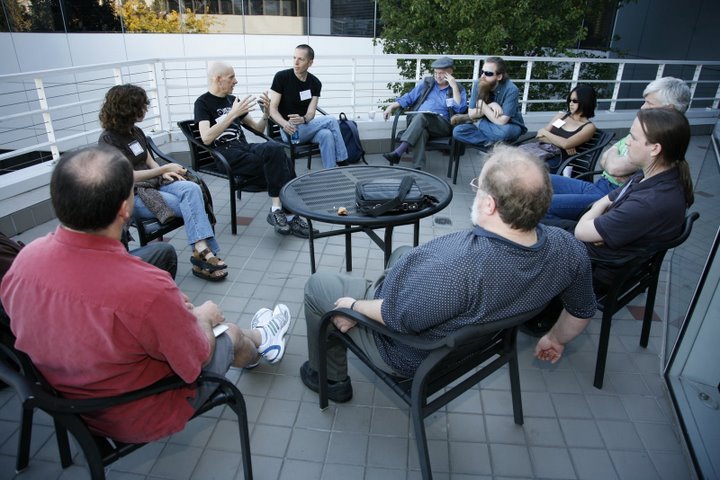
This is pretty obvious. It also gets to the core of what we’re trying to do in these groups. They are about spiritual support.

The group’s goal is not problem-solving or advice-giving. There may be occasions where that’s appropriate, but the main goal as a group is to listen, pray and support.

I recently spoke with someone who attends a daily Alcoholics Anonymous meeting. He said it’s important for him to be there every day because they ask how he’s doing and encourage him to keep going. They realize how dangerous alcoholism is, and they fight it daily by meeting to ask each other if they’re still on track.

In some sense, Christianity is a lifelong recovery plan. We realize how dangerous the devil’s schemes are and how easily sin entangles. As part of our fight against that, we meet with each other as a chance to share how our souls are, with opportunity to mourn or celebrate with each other.

We meet to discuss celebrations or struggles with good and evil, and to encourage each other to press on.

We meet to encourage each other in things like prayer, Scripture reading, and fasting, and to hear how those practices are transforming others.

And finally, we meet to pray for each other. Because we need it.

I hope you’ll consider finding a place to ask and be asked these questions weekly. I think it will do great things for your soul. If you have questions or thoughts, please let me know.

“How is it with your soul?”

community

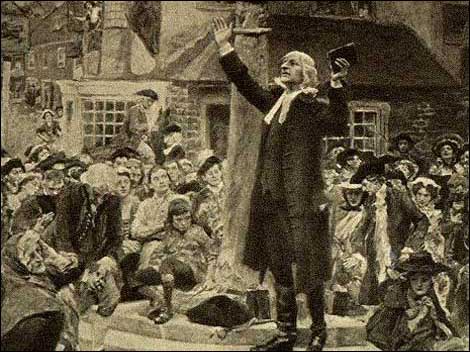
Something the early Methodists were most known for was their “class meetings.” Some people call these the original church “small groups.” Many believe that they were the key to the early Methodist movement’s success and spread.

I think you can gain a lot by being a part of a group like this today. It has been the most important part of my own growth in the past five years.

Pastor, I think your congregation can grow incredibly if you encourage them to participate in a group like this. Some think that these groups are a major key to renewal.

Here, I’d like to paint a picture for you to show how these groups can look.

In early Methodist class meetings, the leader asked everyone, him/herself included, about the condition of their souls. The groups I have led or participated in have used these 4 questions:
1 – How is it with your soul?
2 – Have you done all the good you could and avoided all the evil you could this week?
3 – How have you availed yourself of the means of grace?
4 – How can we as a group best pray for and support you?

[Edit: I originally said that these were the original 4 questions, but I can’t find firm evidence for their use in early Methodist history. Wesley required his class leaders to meet with each class member weekly to “inquire how their souls prosper,” but I can’t find a primary source showing that John Wesley ever asked Question 1. A Google search will turn up numerous hits saying that he did, but never with references or primary sources.

Questions 2 & 3 ask people whether they are keeping the 3 General Rules of the United Societies organized by Wesley, but I can’t show that they were asked every week to every member. Nevertheless, I believe these are still great questions and faithful to a Methodist ethos.]

You may use other questions if you find others that do a better job of driving at the core essence of what these questions are after. I’ve had a difficult time, though, finding any that truly get to the same essence quite as well.

The intent with these questions is to focus on the spiritual condition of each member. I’ll focus on the first two in this post and the second two in a later post.

1 – How is it with your soul?

This is a tough question. A lot of us don’t even know how to answer it today. At its heart, it’s asking about your experience of God’s grace and presence in your life.

I think the fruit of the Spirit is a good (though certainly not only) way of evaluating this question. “Do I have love? Do I have joy? Peace? …”

I remember a week when one of my men started by saying, “My soul is good! God has really given me a sense of peace this week.” And then he went on to describe a terrible week. He had some serious family issues, a rough week in school, and bad medical news for a friend. But it was well with his soul. He talked about the ways that he could truly sense God carrying him through.

Here’s an example on the other side. One week someone started by saying, “Well, my week has been just fine. Work is good. Things at home are fine. But it’s not well with my soul.” He went on to talk about a general restlessness, distraction from any sort of Christian practices, and noticing himself being short-tempered with some people.

2 – Have you done all the good you could and avoided all the evil you could this week?

If we don’t handle this question the right way, it could seem like it just leads to guilt and judgment. That’s not the point of the question, though. I hope you’ll understand its real intent and help others to see it with a different spirit.

We ask this because we want to cause ourselves to think a bit about whether we are doing the good God is calling us to do and avoiding evil. We ask because we know that we need help.

The point isn’t to have everyone share their laundry list of goods and evils. So for instance, we’re not looking for, “Well, I swore on Tuesday when I stubbed my toe.”

But I have heard someone appropriately share, “I’m realizing that my language hasn’t been good this week. When I’m around my co-workers it’s like I just join right in. But I need to stop. It would be a better witness if I stopped, too.”

Sometimes it’s when I begin answering these questions myself that I realize a great good I’m missing, or an evil I hadn’t even recognized was in my life. Sometimes the same happens when I hear others sharing about their own struggles. Sometimes I realize my biggest problem may be that I’m not even looking for opportunities to do good.

And sometimes this question leads to celebration. Some of my favorite times in meetings are when someone comes back with a celebration because they have managed to avoid an evil after a long struggle, or when someone shares about a way God gave them an opportunity for good and they took it.

See the second two questions here.

Do you have a person or group where you regularly ask these questions of each other? Is there a place you could find to do this? I’d love to help you get started!

Three perspectives on evangelism

Methodist field preacher

Since I’ve already admitted to being a terrible evangelist, I thought it might be better to start us thinking about evangelism with some other people’s wisdom.

Here are three good articles on evangelistic efforts from diverse perspectives. I hope you’ll take the time to read them.

  • Four Questions at the Heart of Evangelism – John Meunier draws four self-evaluation questions from a book on real life evangelism. These are hard hitting. “We cannot share what we do not have,” he says. How do you answer these four questions?
  • Re-building a vital congregation – Though he never uses the word evangelism, the work Don Haynes is doing in a small community is deeply evangelistic. He’s urging us to visit from house to house! Maybe there’s really something to it. I’m most interested in the “sitting where they sit,” “appointed to territory,” and “from house to house” sections. And by the way – though this is a small-church pastor doing these things, nothing is preventing all of us, regardless of occupation, from similar practices.
  • What happened to the missional impulse of the Methodists? – Steve Manskar shows how new church plants are using the practices of the early Methodists to reach new people. He laments that the Methodists have mostly forgotten these practices. Two men I deeply respect are reviving that impulse among Kentucky Methodists. Paul Brunstetter was the first person to help me understand that creating new places for new people–and raising up new leaders for those communities–may be the most effective and historic model of evangelism there is. Aaron Mansfield is the most die-hard, old-school evangelist I know. He’s showing us the importance of constantly going to people where they are, and then inviting them to faith and into the church. If you’re a Kentucky Methodist, you have reason to have hope. We Methodists must get our missional impulse back.

These three articles come at it from different angles, but all three lead us to the same place. How fervently do we believe the gospel, and how strongly have we experienced its power? Will we now go wherever people are to help them toward repentance, faith, and holiness? Will we be intentional about developing disciples, not mere converts?

Which of these challenges you the most? Are any of these ideas or perspectives new for you? Is this all church-talk, or can the average Christian take and apply these?

Subscribe by e-mail or RSS to get regular updates on theology, ministry, and life with God.