Pastors’ Salaries and Church Buildings

pastor salary

Last week, I began to discuss pastors and their relationship to “church business.” Some of you told me you have similar concerns. Let’s press a bit further…

Whenever the church begins handling money internally – rather than giving it away – we get into sticky matters. How does the church properly use charitably given money?

Let me show you a few examples from my own tradition. I think they’re universally applicable.

Pastors’ Salaries

When the Methodist movement was growing rapidly, people began to ask whether John Wesley was getting rich off the whole endeavor. That would be a serious accusation against the man who wrote, “If I leave behind me ten pounds (above my debts, and the little arrears of my fellowship) you and all mankind bear witness against me, that I lived and died a thief and a robber.” Look at his brilliant response:

I look upon all this revenue, be it what it may, as sacred to God and the poor; out of which, if I want any thing, I am relieved, even as another poor man. So were originally all ecclesiastical revenues, as every man of learning knows: and the bishops and priests used them only as such. If any use them otherwise now, God help them! (from “A Plain Account of the People Called Methodists,” XV, 6)

  • How did they view the collection of the church? As sacred to God and the poor.
  • How did they pay their workers? They took care of their basic needs even as another poor man.
  • How long had the church’s collection been used this way? The bishops and priests originally used all ecclesiastical revenues this way.
  • Who should know that? Every man of learning.
  • What of anyone who uses the church’s collection differently now? God help them!

What if we still followed Wesley’s understanding of church leaders’ pay and the sanctity of the church’s collection? What current practices would change or go away entirely?

A personal test for church leaders: Are you in it for the money?

Buildings and Debt

Look at this requirement of early Methodist pastors regarding their buildings:

It shall be the duty of every preacher belonging to this conference to use his influence against constructing expensive meeting houses. (1816 New England Conference of the Methodist Church)

What if this were still every preacher’s duty?

It might be worth noting that the American Methodist Church experienced its greatest growth while the above was the rule. It has experienced its greatest decline during the period where bigger sanctuaries, gyms, and fellowship halls has been the standard.

Why were those early Methodists so against expensive meeting houses? A great explanation from the first Discipline of the American Methodist Church (the Methodist book on how we function), 1784:

Let all our chapels be built plain and decent; but not more expensive than is absolutely unavoidable: otherwise the necessity of raising money will make rich men necessary to us. But if so, we must be dependent upon them, yea; and governed by them. And then farewell to the Methodist discipline, if not doctrine too.

How much better off I believe the Methodists would have been if we had never removed this from our Discipline!


Click here to subscribe. Go on, do it.

The Modern Pastor – Sent or Called?


This is the first of several posts on the Modern Pastor.

The methods we’re using to choose local pastors are a problem.

Most churches identify their pastors by some sort of “calling” method. That usually involves the equivalent of an extended job application process and some form of vote. If the church approves, they “call” the pastor. The United Methodist Church prides itself on “sending” pastors instead. We tout that as the better way, saying something like “pastors are called to be sent, not called to be called.”

Both methods have major problems and actually strike against the typical model found in the New Testament.

Whether a church’s pastor is identified by a “calling” model or a “sending” model, both tend to begin with the same assumption: the pastor is an outsider.

We start by assuming that whomever the church’s next pastor will be, he/she will come from somewhere else. We ask where a pastor is called to serve.

No Basis in the New Testament

The first major problem with this: it’s a model with no basis in the New Testament. From all that we see, we would reason that the local pastors mentioned in the New Testament (elders, sometimes called bishops) were existing members of a certain community who were appointed to give their community pastoral oversight. See Acts 14:23 and Titus 1:5. Scripture never suggests that one of these pastors is sent, or called, to another location.

A point while we’re on calling: no pastors in the New Testament are called. Calling is used in two ways in the New Testament. There are many references to the calling of all Christians, and twice, Paul writes about being called as an apostle. That’s it. We come across a number of elders and bishops, but never are they “called.” How much stock should we put in the pastoral “calling” that gets so much attention today?

Pastors as Outsiders

The second major problem: all of our pastors are outsiders. We have established a system where it is assumed that the pastor of a congregation is a temporary outsider. I recently heard someone tell the congregation’s pastor, “I was here before you got here, and I’ll be here after you leave.” She was right.

In the UMC, the pastor is not even considered a member of his/her local church. Therefore, the one providing our pastoral leadership is always someone sent from the outside and likely to be “sent” away from us. Someone who is specifically recognized as a non-member of the local community is sent to lead it. Is this a healthy system?

Furthermore, this system assumes that pastors are developed and come from somewhere else. What would it change if local congregations expected that their next pastor was someone in their midst? Would it give them an increased urgency to disciple and develop leaders?

Outsiders can certainly play an important role in the life of a community. They are able to see and speak from a different perspective. See Paul’s letters to the Corinthians and Galatians. The person from the outside with a certain prophetic authority is important. But that doesn’t negate the need for people who will shepherd a community from day to day.

Where Have the Apostles Gone?

The third major problem: we have lost the role of the itinerant apostle. Moving around is institutionalized in the UMC and relatively expected elsewhere, as pastors climb the proverbial career ladder (a whole other problem to deal with later). By making our pastors itinerant, we have not only lost the role of the truly local pastor, we have also forgotten the role of the itinerant apostle.

The roles of apostle and elder are distinct. Paul never claims the role of an elder. John Wesley noted that they were entirely separate roles, and claimed that his itinerant preachers were not pastors, but apostles who traveled “to proclaim glad tidings to all the world.”

Where are the true itinerant apostles in America today? Those who claim no pastoral authority over a particular congregation, but instead have the freedom to travel from community to community proclaiming good news? Those who are identifying and appointing local pastors to shepherd their communities?

The itinerant evangelist proclaims broadly. The local pastor disciples deeply. By taking these two roles and creating one hybrid itinerant pastor, what have we lost in the way of evangelism? What have we lost in discipleship?

What do you think? What questions or thoughts does this raise for you? Can the American Church re-embrace truly local pastors and traveling apostles? Should we?

Subscribe by e-mail or RSS to get regular updates on theology, ministry, and life with God.

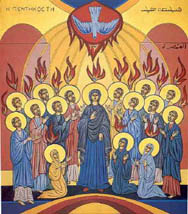
Pentecost Confession

My last post was about letting down our defenses so that we might be open to wounds in worship. The Prayer of Confession in our Pentecost worship this morning was particularly sharp for me. Give yourself some time to reflect on each of these confessions.

Spirit of Truth, we confess that we have not loved one another as you have loved us.

We are quick to find fault and speak ill of others, sins that undermine the fellowship of believers.

We have let strangers and seekers among us feel like outsiders.

We have not done our best to carry the Good News of Jesus Christ beyond the walls of the church.

Forgive our casual disregard of Jesus’ command to go and make disciples.

Forgive us for not using faithfully the powerful gifts of love and service you gave the church at Pentecost.

Renew a right spirit within us, that we may carry the love and mercy of Christ from this place into our weekday community and to the world beyond.

We pray in the name of Christ our Lord, who lives and reigns with you and the Father, one God now and forever. Amen

A word of assurance: In the name of Jesus Christ, you are forgiven.

And our petition in hope: Father, by your Spirit make us one with Christ, one with each other, and one in ministry to all the world, showing forth the fruit of the Spirit until Christ comes in final victory and we feast at his heavenly banquet.