Unity and Holiness

For churches and denominations that are wrangling over important issues, it would help to at least have some agreement about the most important questions.

For this, what if we listen to some wise people who came before us? I’m going to use an 1824 letter from the American Methodist Bishops as guide.[1. This was in their quadrennial address to the General Conference] I don’t want to bog you down in its unfamiliar grammar, so I’ll comment on some short extracts here, then provide the full paragraph at bottom.

“Who ever supposed […] that our system was designed, in any of its parts, to secure the applause and popularity of the world, or a numerical increase of worldly or impenitent men?”

Questions we can’t start with:

  • Will we lose members if we do this?
  • Will we lose giving/funding if we do this?
  • Will we lose [insert demographic segment] if we do this?
  • Will this make us out of step with cultural currents?
  • Will this be an unpopular decision?
  • Could the media have a field day with this?

“Holiness is the main cord that binds us together” “The original design of Methodism […] was to raise up and preserve a holy people.”

Questions that must take center stage:

  • What will help us be more holy?
  • What will help us raise up a holy people?
  • What will help us preserve a holy people?

We can only consider asking questions from that first list if we’ve already answered questions about holiness. And use caution. We’re quick to assume that many decisions are morally/theologically neutral. We often make a swift jump to strategy after giving ourselves a simplistic theological answer (e.g. “God wants us to reach people”). Our methods are as theologically significant as our goals.

If Methodists lose sight of this doctrine [of entire sanctification], they will fall by their own weight. Their successes, in gaining numbers, will be the cause of their dissolution.”

Oh, by the way, even if you temporarily grow in number because of your strategies, if you neglect sanctification/holiness, it will be your undoing.

For all the discussion of unity in churches and denominations today, there is no real unity without holiness. Any supposed unity that loses sight of holiness is a superficial and worldly unity.

————

The full paragraph: “If Methodists give up the doctrine of entire sanctification, or suffer it to become a dead letter, we are a fallen people. It is this that lays the axe to the root of the Antinomian tree, in all its forms and degrees of growth––it is this that inflames zeal, diffuses life, rouses to action, prompts to perseverance, and urges the soul forward to every holy exercise, and every useful work. If Methodists lose sight of this doctrine, they will fall by their own weight. Their successes, in gaining numbers, will be the cause of their dissolution. Holiness is the main cord that binds us together. Relax this, and you loosen the whole system. This will appear more evident, if we call to mind the original design of Methodism. It was to raise up and preserve a holy people. This was the principal object which Mr. Wesley, who, under God, was the great founder of our order, had in view. To this end all the doctrines believed and preached by Methodists tend. And the rules of our Discipline, and the peculiar usages of our Church, were all instituted with the same design. Who ever supposed, or who that is acquainted with it can suppose, that our system was designed, in any of its parts, to secure the applause and popularity of the world, or a numerical increase of worldly or impenitent men?”

————
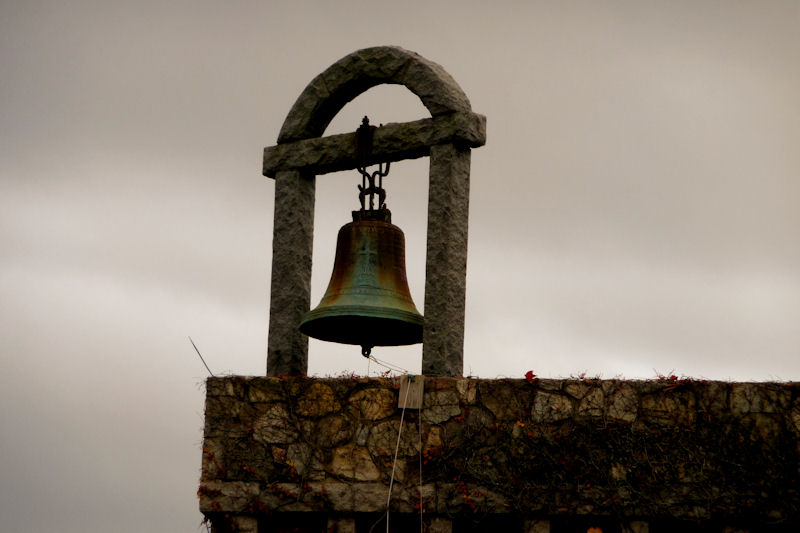
For whom the bell tolls – A word for Ash Wednesday

bell

“Remember that you are dust, and to dust you shall return.” That’s the somber reminder of Ash Wednesday.

“To dust you shall return” wasn’t the original intention for humanity, of course. At the crowning moment of creation, “God formed a man from the dust of the ground and breathed into his nostrils the breath of life, and the man became a living being.”[note]Gen 2:7 –– special note: This is not meant in any way to bias genders. The woman’s creation is every bit as much a crowning moment (some have argued more). But I’m talking about dust here…[/note] God only speaks those second words––“to dust you shall return”––as he later details the consequences of the man’s sin. The wages of sin is death…

At Ash Wednesday, and then throughout these forty days of Lent, we’re invited to take special account of our mortality and sinfulness. It’s a season of fasting. We fast when we recognize that things are not right. Throughout the Scriptures, people fast when they’re in danger, afraid, grieving, or have recognized their sinfulness.

John Donne’s famous piece below is fitting for the season. He wrote this in 1623 while recovering from a serious illness. The bell he refers to is a funeral bell.

Donne’s work reminds of two things:

  1. We may have judged our own state better than it is––“Perchance he for whom this bell tolls may be so ill as that he knows not it tolls for him.”[note]Donne wrote before gender-inclusive language. I’m sure he would have written more inclusively had he written this today.[/note]
  2. Our lives are all wrapped up in each other. No one is an island. This is what Donne means when he says we need not ask for whom the bell tolls, “it tolls for thee.”––“Any man’s death diminishes me, because I am involved in mankind, and therefore never send to know for whom the bell tolls; it tolls for thee.

I had to read this slowly and carefully to understand and appreciate. It was worth the effort…

—————-

From Devotions upon Emergent Occasions, Meditation #17 by John Donne

Perchance he for whom this bell tolls may be so ill as that he knows not it tolls for him. And perchance I may think myself so much better than I am, as that they who are about me, and see my state, may have caused it to toll for me, and I know not that. The church is catholic, universal, so are all her actions; all that she does, belongs to all. When she baptizes a child, that action concerns me; for that child is thereby connected to that head which is my head too, and ingrafted into that body, whereof I am a member. And when she buries a man, that action concerns me; all mankind is of one author, and is one volume; when one man dies, one chapter is not torn out of the book, but translated into a better language; and every chapter must be so translated; God employs several translators; some pieces are translated by age, some by sickness, some by war, some by justice; but God’s hand is in every translation, and his hand shall bind up all our scattered leaves again, for that library where every book shall lie open to one another; as therefore the bell that rings to a sermon, calls not upon the preacher only, but upon the congregation to come; so this bell calls us all: but how much more me, who am brought so near the door by this sickness.

[…]

No man is an island, entire of itself; every man is a piece of the continent, a part of the main; if a clod be washed away by the sea, Europe is the less, as well as if a promontory were, as well as if a manor of thy friend’s or of thine own were; any man’s death diminishes me, because I am involved in mankind, and therefore never send to know for whom the bell tolls; it tolls for thee.

—————-

Let’s have more “boring” testimonies

testimonyA friend just told me he has one of those “boring” testimonies. I told him that’s something to celebrate.

As a father, I’ll be thrilled if the story my kids have to tell about me in 20 years is “boring” in the same way. I would like nothing more than for them to say, “I’ve always known my dad loves me. I’ve never doubted that. Never rebelled against it. I just keep seeing his love for me in new ways and enjoying it. And I love him a lot…” (To be clear—I’m not suggesting there are no bumps along the way, just no dramatic rebellions.)

As a husband, my goal is for my wife to have a similar “boring” story about me when we’re old. No questions, no doubt, no extended periods of hostility. No breaches of faith.

In fact, those aren’t “boring” stories, are they? They can be beautiful stories of love and faithfulness, vitality and growth. These are stories about life change—not because of a drastic course correction, but because of steady, enlivening faithfulness.

Sometimes we downplay these stories because they don’t take a dramatic turn. They don’t excite us like a broken relationship repaired, a corrupt person redeemed. But they’re good stories.

What’s my greatest hope and prayer for my kids, and for all of the kids in our church? That they’ll have “boring” testimonies about their faith when they grow up. I’d love to proudly put one of them in front of the congregation each week to tell a “boring” story about faithfulness.

About how that congregation made a covenant to them 20-some years ago and kept it—a covenant to surround them with a community of love and forgiveness and pray for them, that they would become true disciples of Christ.

About how they had always known God’s love. Never doubted it. Never rebelled against it. Just kept growing in it.

Now I know I can’t control this. Not as a father, not as a husband, not as a pastor. I can influence these things (see especially “Finding a church for my kids”), but not control them. The enemy still leads people into rebellion, even from the best of circumstances.

And when that rebellion happens, we’ll seek out any lost sons or daughters and throw lavish parties for any who return. We’ll put them in front of the congregation to share their “less-boring” testimonies, and the extra drama of those stories may result in more tears and cheers than normal. We’ll probably rejoice more over that one lost sheep that returned than over the 99 who never strayed. And that makes sense.

But for me, I’d love to have more “boring” testimonies. I don’t think they’re really all that boring after all.