The Classical Pastor (pt. III, Threats, an addition, and does it scale?)

pastor and paper

1 – The greatest threat to the classical pastor

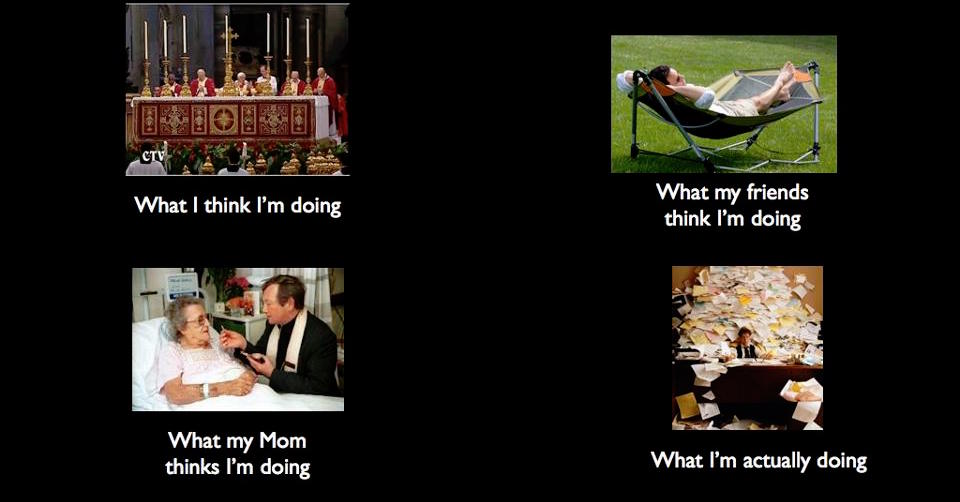
A pastor friend of mine has a mantra, “People over paper.” He reminds people of that because “paper” (i.e. all task-oriented work) has come to rule the day. We send emails, check off to-do lists, craft strategies, complete reports, and attend meetings. We can fill an entire week with nothing but those tasks. And still feel behind when it’s over.

Sometimes the “paper”-work consumes us because we react to the demands in front of us. We fail to set higher priorities.

Sometimes we allow the “paper”-work to consume us because it’s more comfortable. Easier to allow predictable busy-work to bury us than to face an unpredictable conversation. Easier to talk with people about strategies than to talk with them about their souls. More exciting to create plans for a big program than to do the routine work of visitation.

“Paper”-work is today’s greatest obstacle for the classical pastor. At every turn, it threatens to distract from worship and visitation.

If pastors believe in the slow, steady, deliberate work of the classical pastor, they must reduce the “paper”-work. Almost to the point of elimination.

“I can’t eliminate this!” you protest. I know. I haven’t eliminated it either. But if I treat “lead a fine worship” and “visit the people” as top priorities, little time remains for the rest. I used to allow all the “paper”-work to squeeze out worship and visitation. Now I’m allowing worship and visitation to squeeze out the rest. By doing that, I’ve realized that much of the “paper”-work was inessential. By limiting my time for these things, I’ve learned how to do what I must in shorter time and how to delegate the rest.

A good test for pastors––can you take a week or two away and actually be gone? Can you spend time away in peace? You don’t stress about what’s going wrong or put out fires from a distance all week?

If your day-to-day presence is so essential that you can’t get away in peace, something is wrong. And the problem may be you. Some of us need to be needed.

For the sake of any ongoing, legitimate ministry, we need to get over ourselves and let others do some of the work. For the sake of the most important things, we need to remove ourselves from every urgent, daily need. For the sake of our health, we need to delegate some responsibilities. For the sake of our humility, we need to recognize that other people can do things as well as we can, and often better.

Eliminate. Delegate. Say no. Ask permission to stop doing things. Have the courage to stop hiding behind these things.

I’m blessed to work at a church with a structure for this. Our pastors are free to be pastors. We have other staff and volunteers to administrate. We have great administrative assistants. They handle most routine, week-to-week needs so we can focus on pastoral work.

To the pastor who doesn’t have that, you need to look for those people and ask for those structures. To be sure, it may come at a cost. I’m still classified as part time. That keeps enough money free for us to hire administrative help. Most pastors need more help more than they need more money. The average United Methodist elder in Kentucky is in the top 15% of all U.S. income earners.[note]Average salary plus minimum housing allowance in Kentucky is $78,000. I’m not including our very generous pension and health benefits in the calculation. Use this nice tool to see for yourself.[/note] Given that astounding number, shouldn’t we be asking about the wisdom of some of our raises? Aren’t they robbing the church and the pastor of what they really need: more help rather than a more wealthy pastor?

2 – One other essential task for the classical pastor

I’ve based this series on a quote from Sam Stanley, who says, “There’s really only time for two things in ministry.” I know, but I’ll add a third. I don’t think I’m violating the spirit of Stanley’s advice. I think this one was implicit.

The classical pastor must devote time to study and prayer. One of my favorite responses from Stanley Hauerwas in our interview:

“I think it’s very important for people in the ministry to train their congregations on why, as ministers, they need to have time set aside to pray and to read. I know that sounds odd, because one says, ‘Well, they probably are doing that all the time.’ No, I just think you need time set aside for study, and study is a form of prayer.

As someone who talks to several pastors, I can tell you that pastors do not, as a rule, study and pray all the time. Many disregard these activities as less important than the other work of ministry. Others can never find time for them. Each new day’s demands crowd out prayer and study.

To lead worship well, to preach well, and to visit people well, we need to study. Seminary training is a good foundation for a pastor’s study. It’s a lousy conclusion to it. John Wesley scolded any preachers who weren’t reading enough. He said they were starving their souls and would be “petty, superficial preachers.”

I budget six hours per week for intentional study, outside of work specific to the sermon. That doesn’t feel like enough, but it’s something.

I’ve written much more about this. See my post “A pastor’s reading plan” for more detail.

3 – Does it scale?

Lead a fine worship and visit the people works well for a 50-person congregation. What happens if that congregation becomes 200, much less 1,000?

It would be most fair for me to say I don’t know. I’m the happy pastor of a small congregation, where I can still know every name and sit with every person. I haven’t experienced the demands of a 200-person congregation.

If I were deciding today, in a congregation of 200, I would seek out an assistant pastor. What would that assistant pastor do? Lead a fine worship and visit the people. They would help with the extra demands of a larger worship service and visit the people I couldn’t. Their work would be a direct extension of my work.

While this is theory for me, it also seems to be the classical pastor’s model in history. Look at what the brilliant Richard Baxter advised in The Reformed Pastor:

“If you have but a hundred pounds a year, it is your duty to live upon part of it, and allow the rest to a competent assistant, rather than that the flock which you are over should be neglected. If you say, that is a hard measure, and that your wife and children cannot so live, I answer, Do not many families in your parish live on less? Have not many able ministers in the prelates’ days been glad of less, with liberty to preach the gospel?”

And here we are, back at money again. We don’t ask these questions enough today. (And we’re not well-liked when we do!)

Baxter’s top priority: ensure care for the whole flock. Baxter was writing about this within a larger exhortation for his pastors to visit all the people. If they couldn’t do it themselves, they needed to get an assistant.

In both my theory and Baxter’s reality, this model scales. At least to a point. Can it scale to a 1,000-member congregation? Even in that large context, can we ensure that everyone is known––no one falls through the cracks? I would like to believe so, but I’m too far removed to answer with certainty.

I know that most of our 1,000-person models would need to change. You may say, “That’s why we do small groups ministry.” I hope you’ve seen here something that goes beyond that, though it could certainly include it. The mega-church I referenced in part II had a small groups ministry, too. A pretty good one. You may say, “Some people like to remain anonymous.” Perhaps so. That doesn’t mean we should let them.

Your thoughts?

I’ve shared plenty about this now. What do you think? Is Sam Stanley right that worship and visitation are pastors’ most important duties? Is he right that there’s not much time leftover once those are done? What are your biggest challenges for living in this model? Your biggest questions or disagreements?

See pt. I, Lead a fine worship, and pt. II, Visit the people.

And if you liked this series, would you consider sharing it with some others? Click to share on Facebook, share on Twitter, or send by email. Thank you!

—————

The Classical Pastor (pt. II, Visit the people)

pastor shepherdA friend who worked in a mega-church shared with me that they lost over 1,000 people after a church crisis. “But we don’t know where they went,” he said, “or even most of their names.” They only knew they had lost 1,000 people who used to take up seats.

To be clear, I’m not criticizing mega-churches hereI presume several of them are exempt. I’m noting something about this kind of church, of any size. The kind that produces good programs, attracts large crowds, then mistakes it for discipleship..

We can never divorce discipleship from relationship. That means people who know each other’s names… and much more. This criticism isn’t limited to mega-churches. It’s the kind of church that plenty of 50- and 200- and 500-member churches are trying to be. If someone is a “regular attender” in a church, they need to have a pastor who knows them.[note]Note: This doesn’t have to be the “Senior” or “Lead” Pastor. It doesn’t even have to be someone on staff. The question: has someone with a recognized pastoral role in the community spent time across a table or a living room with that person?[/note]

The classical model of pastoral ministry comes in here.

“There’s really only time for two things in ministry. Lead a fine worship. Visit the people. The program, leave to volunteers and gung-ho seminarians.” That quote from Sam Stanley has guided me in ministry more than any other. I discussed “Lead a fine worship” in part I. See it here.

“Visit the people” is no novel idea. It’s the classical model of pastoring. You won’t find anything extraordinary below. In fact, that’s the point.

Slow, steady, deliberate

When I was in college, I researched and got excited about several get-rich-quick schemes.[note]We’re not discussing here the merits of my desperate desire to get rich. You can search for “money” to see plenty more on that.[/note] None of those paid off. Wise and experienced people usually advocate a less exciting approach: slow, steady, deliberate investing. The person who had invested $6 per day in the stock market over the last 40 years would have $1 million today. The one who chased after each get-rich-quick scheme likely went broke or burnt out.

The key to physical fitness? It’s probably not in that new fad diet or pill or workout video. You’re more likely to find it in the same things that have led to good health for… all of human existence. Good exercise, good nutrition, good sleep. Slow, steady, deliberate. Your results may not rival The Biggest Loser one month in, but they’ll look better 5 years from now.

In the church, we can chase after our own versions of get-rich-quick schemes and fad diets. I hear constant talk about churches “in transition.” Is the ongoing “transition” because we’re looking for the next magic bullet? Are we looking for the next program or strategy or staffing move that will change everything? Are we in “transition” because the last magic bullet failed to deliver?

“Visit the people” is the church antidote to magic bullets. It focuses on people rather than any grand strategy or exciting new program. It’s slow, steady, and deliberate. The results will be better measured in years than weeks.

Visit the people

I take “visit the people” to mean three things.

Visit the Pastors and Leaders

In a church of even 50 members, no lone pastor can offer the full congregation the pastoral care they need. Moreover, (s)he shouldn’t. That robs the rest of the congregation of their privilege and calling to be in ministry. So I don’t give regular pastoral attention to most of our people. That comes from our other pastors.[note]We distinguish pastors and leaders by role. Our pastors have charge over people. They and I know the names entrusted to them. Our leaders have charge over areas—things like hospitality and outreach.[/note]

My first responsibility is to care for and equip our other pastors and leaders. How are their souls? What problems are they dealing with? What do they have to celebrate together? How can I better equip and encourage and resource them?

When I invest in the primary pastors and leaders of our community, I’m doing my most important work. More than anyone––myself included––these people determine where we go. I’m not in charge of anything outside of our worship. I don’t lead any meetings; our leaders do that. I receive few direct phone calls about crises; our pastors receive most of those, then call me. We live and die on our volunteer leaders.[note]As always, this is penultimate to our total reliance on God[/note] So I try to spend a lot of time with each of them.

Visit the Congregation

Most people today take “pastoral visitation” to mean hospital visits. Those are a part of what I mean here. For a community of our size, it’s important that I show up in those crisis times, if possible.

This section also includes meeting with people for pastoral counseling and spiritual direction. Because of time limits and the nature of these needs, I’m usually only involved with one or two people at a time. That’s okay, as we have other good pastors who can offer the same.[note]Although I believe these two areas need the highest degree of special training and preparation.[/note] But it’s important for me to continue having some of these appointments. They keep me in touch with a few of our people going through crisis or seeking spiritual growth.

Mostly, “visit the congregation” is about meeting with people and families in non-crisis times. Those visits allow me to ask people some basic questions about the state of their lives and their souls. I hope to sit with everyone once a year––in their living rooms, at our family’s dinner table, or in a coffee shop. About half of those conversations reveal nothing major. They’re an enjoyable time where I get to learn a bit more about the person/family I was with. These help me at least know our people better, even if nothing significant seems to come from that time.

In another half of those conversations, I learn something immediately important. I’ve learned about marriages in trouble, people out of work, and a family on the verge of leaving the church. And we’ve identified some of our best leaders because of these kinds of conversations. We may not have found our Executive Pastor without a fortuitous Christmas party conversation. It’s in these casual conversations that we learn about people’s backgrounds, interests and abilities.

These visits help me avert a lot of crisis visits. So often, we learn about a problem only once it’s a full-blown crisis, a point of no return. The divorcing couple has made up their minds. The upset family is leaving the church. In several instances, living room conversations have allowed me to get involved pre-crisis. That has been a gift.

Visit the Community

This is my biggest growing edge. The old, classical pastor knew his parish––not just the people in his congregation, but the people in his district or territory.[note]Yes, it’s not gender inclusive. But it’s mostly accurate. When people talk about today’s pastors, I’m glad they’ll be talking about men and women.[/note]

To be a church that continues to invite new people into its life, we must go to them. And as the leader of my community, that begins with me. Though people have become skeptical of visiting door-to-door, I think there’s still much to commend it. If I can’t find another way to engage the community well, I don’t think this is a bad option.

Other options for this kind of pastoral presence include crisis counseling and officiating funerals. Both of these have given me a chance to connect with people disconnected from the church.

What else?

“There’s really only time for two things in ministry…” You can see how lead a fine worship and visit the people can be plenty to fill all of a pastor’s time. And they nearly should be. These should receive such priority that they squeeze out time for most other things. But we must make room for one more item––one that informs and enhances the way we lead worship and visit people. I’ll share more about that in the following post.

I’ll also consider two important questions: What about all the other things? And does this scale? I can do it with a small congregation. But what happens with even a medium-sized congregation of 200? Or a church of 1,000?

See also pt. I, Lead a fine worship and pt. III, Threats, an addition, and does it scale?

—————-

The Classical Pastor (pt. I, Lead a fine worship)

pastor shepherdYears ago, I came across this brilliant advice from a man named Sam Stanley, “There’s really only time for two things in ministry. Lead a fine worship. Visit the people. The program, leave to volunteers and gung-ho seminarians.” That quote has been the most helpful guide for me in ministry. The closer I get to making that my true––and full––job description, the happier I am, and the better off my church is.

I’ve been calling this the “classical pastor” model. It’s classical because it follows the primary tasks of most pastors through history. It’s classical because it’s simple and restrained. It affords little time for today’s favored tasks: strategic planning, entrepreneurial leadership, and vision-casting.

JD Walt recently diagnosed the American Church’s problems this way: “We’ve mastered the art of growing churches that don’t grow people.” We should expect nothing less when our pastors become strategic-planning, vision-casting, plate-spinning entrepreneurs. An enterprise-oriented world designed these methods to grow enterprises that sell products or services.[note]Although even business books that church leaders love to read, like Good to Great, undermine this notion. Those “Good to Great” companies had a difficult time pointing back to their great, rah-rah, vision-casting turning point. Instead, they referenced a steady focus on what was most important. And church leaders, before you convene a strategic planning vision team to figure out what’s most important, here’s a simple head-start for you––it’s discipleship. Good to Great would suggest you spend less time casting some new vision for making disciples or getting everyone to memorize the new slogan, and instead just get seriously focused on making disciples. (Discipleship, as I’m using the term here, runs all the way from making people aware of God’s existence to commissioning and sending them into the world as pastors and apostles.)[/note] It didn’t design them to grow disciples or churches. Churches are organic units—families, communities, the body of Christ—not enterprises.

The “classical pastor” has two focuses. I’ll share about the first one here, the second one in a post to follow.

Lead a Fine Worship”

Sunday Worship

Corporate worship has come under a lot of fire recently. “We spend too much time on this one hour of the week, not enough time on all the others.” “Too much focus on attracting people to our worship, not enough on going out in mission to the world.” “We should cancel worship and go do service work!” Christian writer Donald Miller said last year that he doesn’t attend worship services often. He defended his position by saying, “Most of the influential Christian leaders I know (who are not pastors) do not attend church.”[note]Note: If you are being influenced by some “Christian leader” who doesn’t attend church, please don’t let them influence you about Christianity. They don’t understand it very well. Cyprian, a North African church father, has some advice for them: “You cannot have God for your Father unless you have the Church for your mother.”[/note]

To the contrary, I think of corporate worship as the most important time of the week for our community. Worship distinguishes the church as the church. It “bears the deepest faith of the church and forms us in that faith.”[note]From Simon Chan’s Liturgical Theology, quoting Gordon Lathrop.[/note]

The classical pastor gives a lot of energy and attention to corporate worship. I might adapt the original statement to say, “Lead worship with intentionality and care.” When we say “Lead a fine worship” today, we may stop at asking whether it was a good show.

For me, this includes meeting with a worship design team every other week to plan well for worship. We read books about worship, review past weeks’ services, and plan for upcoming weeks. We work out practical details (e.g. Should the musicians sit down or stay up front at this point of the service?) but try to give our better time and energy to a thoughtful discussion about the liturgy and its leaders.

As shared by Joy FM's Facebook page
As shared by Joy FM’s Facebook page

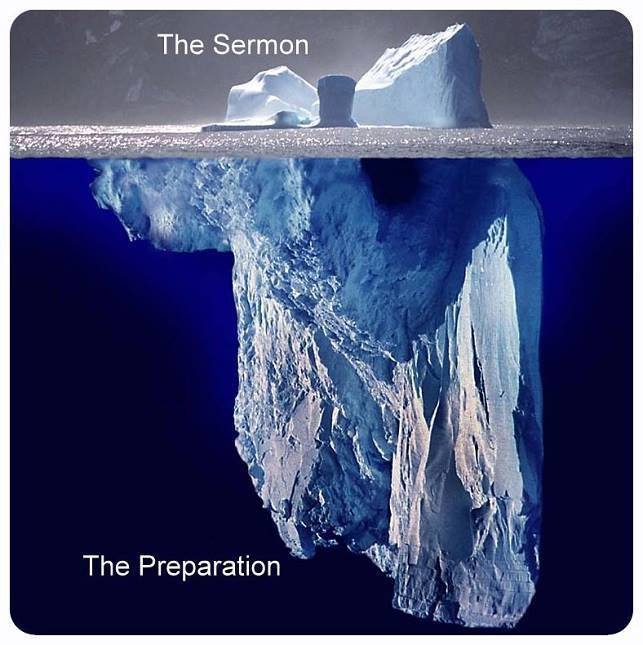
I also give a lot of attention to sermon preparation. D. Martyn Lloyd-Jones calls true preaching “the most urgent need in the Christian Church today […] and as it is the greatest and the most urgent need in the Church, it is obviously the greatest need of the world also.”[note]From Preaching and Preachers, p. 17.  If I would quibble with him, I’d add to this liturgical renewal, on the whole. But true preaching is no small part of true worship.[/note] Again, teams have proven invaluable here. I meet with a sermon preparation team every other week. We do something like what our worship design team does, but with preaching as its focus..

In all, I try to devote 15 hours per week to sermon preparation. I budget 5 hours each for research, writing and refining/rehearsal. That pales in comparison to the amount of time other speakers give to their talks. Most advice I see for TED talks suggests that you should rehearse at least 15 hours for a 15-minute talk. But it’s also much more than I used to devote, and the extra time investment has made a big difference. When I shortchange research, writing, or rehearsal time, there’s a noticeable difference.

Special Worship

“Lead a fine worship” also includes special services like Ash Wednesday and Holy Week, weddings and funerals. What a privilege to officiate at those special ceremonies! When they come, they should receive the same care and planning as Sunday services.

That’s the first part of what it means to be a classical pastor. It’s probably the part still more common today. In the following post, I’ll share about “visiting the people.” I’ll conclude with a third task the classical pastor must make time for, and thoughts about scale and viability in 21st century America. To be sure you receive those, join my email updates list.

And for other discussion on these topics, see the “Related Posts” below and the posts linked throughout this article.

Now see pt. II, Visit the people and pt. III, Threats, an addition, and does it scale?

—————