“If 50 times you don’t succeed…”: Intuition in Strategic Planning

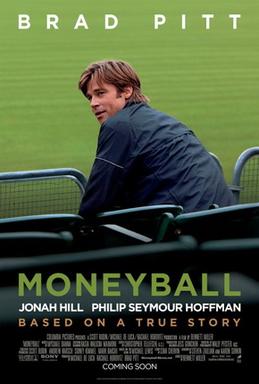
Theatrical release poster, found on Wikimedia. Qualifies as fair use.

Last year, I attended a conference where a leadership group shared about the massive failure of their church planting strategy over the past decade. Massive, in their case, was around $15 million spent with almost nothing to show for it.

This was at a conference about using statistical data to measure our outcomes. (A friend called it “nerd camp.”) It was refreshing to hear a group of leaders admit to their past mistakes –– well, the mistakes of the previous regime, but still…

Then the presentation shifted to their new plan. They talked about the millions of dollars they were planning to invest in new efforts. Fresh Expressions. Closing dozens of churches to create “vital mergers.” They spoke with assurance and excitement about the great things that were about to happen in their conference because of this grand new strategy. Most people in the room –– composed mainly of Conference leadership from across the United Methodist Church –– seemed inspired and excited by this bold new vision.

One question gnawed at me: A decade ago, couldn’t that previous team that blew $15 million have stood on stage somewhere and talked about their bold and exciting new vision to plant churches?

In fact, that leadership team a decade ago probably did just that. They probably shared their vision with leaders from other areas who walked away inspired and wishing that their leaders could dream such big dreams and cast such big visions.

So what made this new 2017 leadership team so confident that they would fare better? We were at a conference about using statistics, so perhaps they had better data. Their presentation revealed nothing of the sort. They used the statistics to prove what an epic failure the previous strategy had been. What did they use to prove that their new strategy would be an epic success? A charismatic presentation.

This was a group that believed in themselves. They believed in their intuition. They believed they had a better vision than the last group, a better plan than the last group (in UMC world, it all begins with a good Ministry Action Plan [MAP]), and better systems for implementation than the last group.

So a question I’ve begun asking in leadership rooms: “What if the people who were doing this eight years ago were just as smart and talented and driven as we are?”

And a statement I’ve begun making: “Until our track record improves, I refuse to trust our intuition.” (Another leader tells me I’m giving him a complex. He doesn’t trust anything he thinks anymore. I make no apologies.)

This presents an internal conflict for most leaders: We love our intuition. We believe in ourselves. We believe in our ideas. We believe we know what we’re doing.

So we spend $15 million on a big new strategy that we’re sure will work. Because we’ve read books about it and heard people talk about it at conferences. Because we’ve had long meetings (8 hours!) where we developed exciting mission statements and MAPs. Because we’ve heard ourselves casting that compelling vision, and it sounds pretty good.

When these strategies fail, it should be cause for us to question our intuition. We rarely do. Instead, we assume that the problem was that group’s intuition or talent or drive. With hindsight, we say, “They should have known.” Or, “They didn’t execute properly.”

And then we say to ourselves, “We’ll get it right this time.”

And then we give a new presentation about the exciting thing we’re about to do.

Something besides intuition

One of my favorite movies in the past decade was Moneyball. It showed its viewers just how silly some of our intuitive reasoning can be.

In Moneyball, we see baseball scouts evaluating players based on how attractive their girlfriends are, how their swings look, and what kind of confidence they project in the locker room. They prefer players who get to first base with a hit and dismiss those who get walked a lot. The based-on-a-true-story plotline is built on this line in the movie: “There is an epidemic failure within the game to understand what is really happening. And this leads people who run Major League Baseball teams to misjudge their players and mismanage their teams […] Baseball thinking is medieval. They are asking all the wrong questions.”

In Moneyball, the answer was to properly identify which results mattered and then to meticulously analyze what was enabling those results. They did not rely on their intuition. They relied on the cold, hard analysis. They did strange things like trading their only first baseman, trading away players everyone thought were stars for players no one had heard of. The person making all the trades didn’t even watch the games.

If my experience at the “nerd camp” conference was any indication, most of us would like to stick with the medieval thinking. We’re reluctant to do hard analysis and then go where it leads us. Why? Because it challenges our conventional wisdom. It limits our options and takes away our own decision-making control. It may not let us do what we want to do.

Most of our decision-making is comfortably intuition-based. Planning is easy –– and rather exhilarating sometimes. Just crafting that beautiful plan makes us feel like we accomplished it.

A brilliant man named Lovett Weems said at that conference: “If you have a proven track record, the path to success is simple:

Plan It –> Implement It –> Celebrate Your Success

“If you don’t have a proven track record, that strategy makes no sense.”[note] My best memory of his exact quote.[/note]

In the next post, I’ll ask about some areas where it might be time to stop trusting our intuition and try a Moneyball strategy instead. Namely, church planting, pastoral transitions, and our process for developing strategy in general.

Until then, how’s your track record? If it’s good, keep on doing what you’re doing. If you’re meeting because things haven’t been going too well, ask yourself, “What if the last group working on this was just as smart, talented, and driven as us?”

To be sure you get that next post, click here to subscribe.

“We’ve always done it that way” –– a phrase to celebrate

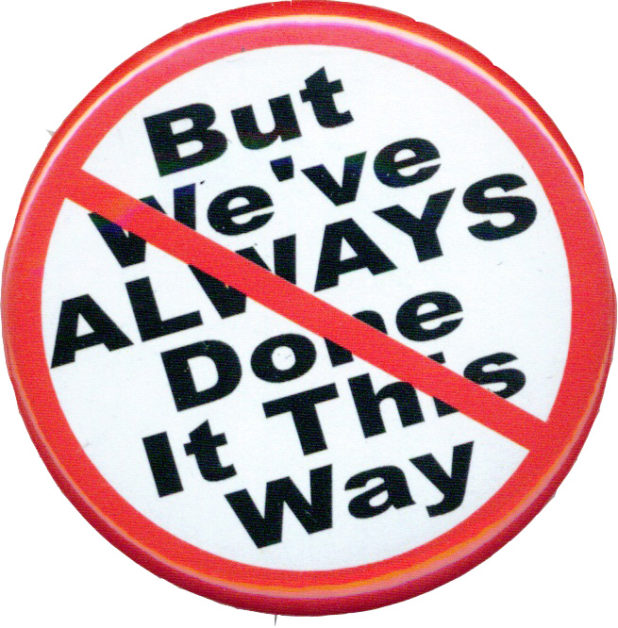
Done-it-this-way2
What if this didn’t have to be a bad phrase?

We’re in the last month of the year. People are paying closer attention to their bank and credit card accounts. Some are lamenting rampant consumerism in America. Others are already making plans for how they’ll handle their money well in 2018. In light of that, each week for the rest of the year, I’ll be sharing an article on generosity for your consideration. If you’ve followed this blog for several years, you may recognize some of these. They were helpful for me to review again. I hope they will be for you, too.

Did you make a New Year’s resolution? By the end of the year, research says there will be an 8% chance you’ve kept it.

Eight percent!

Why so low?

Because objects in motion stay in motion. Objects at rest stay at rest. To change their course or get them going, you need external force. And the bigger something is, the more force it requires. You’ve experienced this if you’ve ever tried to push a car.

The same is true of your resolutions. They require change, a new force, willpower. And that means working against nature, working against what you’ve become accustomed to.

They say one of the best times to change a habit is when you move. Why? Because you’re already undergoing major, unavoidable change. While everything is in motion, you can get that new habit in motion, as well. It’s a natural new start. And it’s easier to start that way, than to try to change later.

That’s an important general truth––it’s easier to start that way. Changing later is hard.

“Because we’ve always done it that way” is a common phrase in corporate culture and church culture. It’s usually derided as a bad answer. But it’s also human nature. When we start doing things from the beginning, we’re likely to continue doing them.

How to use “we’ve always done it that way” for good

While we usually sneer at “we’ve always done it that way” as an uncritical, unreflective response, it can be just the opposite. Whenever you start something new (job, friendship, marriage, etc.), you have a great opportunity. Ask yourself this question:

Ten years from now, what do we want to look at and say, “We’ve always done it that way”?

Let’s take generosity as an extended example. I’m going to start with a thought about churches and then say something about families and individuals.

NEW CHURCHES & GENEROSITY

Several years ago, I was with the leader of a new church start in another state. They were about two years old at the time. He talked about how they were still trying to get established and hoped to start giving to missions and our denomination’s ministry fund (called apportionments) soon. They weren’t yet giving anything externally. Actually, they were receiving external funds.

That’s not unusual. They were two years old and still trying to get their feet under them.

About five years later, that new church start was still going. They had grown and hired multiple staff. I saw their pastor and asked how they were doing. Not well, it turned out. They had just learned they were losing their external funding, and they weren’t sure how they could survive without it. They were still giving nothing to missions or the denominational fund and still relying on external support.

How does that happen? They had grown and looked to be thriving! But from the beginning they had required every penny for themselves––plus some outside funding. And when their resources grew, their internal need grew equally. So that great ideal of starting to give some away remained just an ideal.

For new church starts, a wild and unusual suggestion: Ask yourselves how you want to be giving ten years from now, and then start giving like that on day one. Because if you choose to use everything internally until there’s “enough to spare,” you’re likely to find yourselves ten years later with still nothing to spare. And if you choose to give generously from day one, in year ten you’ll be able to say, “we’ve just always done it that way.”

First UMC’s model

I’m going to take a moment and celebrate the church and community I have the privilege to be a part of. I don’t intend it to brag––they’ve done this long before I arrived and apart from any of my leadership. I intend it to share a model I’ve learned from and hope others will follow.

First UMC has always been a generous church, and a few years ago, the leadership decided to automate it––no questions asked about whether to be generous. In lean years and good years alike. The church puts 12% of every dollar given immediately into a fund for missions and puts another 13% immediately toward our denominational fund (the full amount requested for that fund) ––which goes to support important missions locally and around the globe. That’s 25% out the door to support missions external to us. It’s automatic, immediate, no questions asked. In a difficult financial year, we don’t make ends meet by cutting our external giving. Not an option for consideration.

Since my community at First UMC (called Offerings) started, our leaders have never wavered on this. 25% goes out the door from the very first day. They want extravagant generosity to be part of our identity, and they don’t want that to start later. If you think you’ll start later, you may never get around to it. Our leaders want to say, “We’ve always done it that way.”

To be certain, this involves sacrifice. If we kept that extra $35,000, I can tell you quickly how we would use it. If we had an extra $70,000, I can tell you how we’d use it. But isn’t that always the case? There’s always something more. Always something more we would like or could use or even think we need. And that’s why if you don’t start giving generously from the beginning, it’s likely you never will. Changing that pattern doesn’t get easier when you get bigger. Remember trying to push that car from stand-still?

FOR INDIVIDUALS

The same goes for individuals. So you’re just getting started at your first job, just barely scraping by? You couldn’t possibly be generous now. That’s for when you have more.

As your resources grow, so will your appetite. If you don’t set a pattern for generosity now, on that just-out-of-college budget, you’ll be shocked that you have just as little to spare on a nice 6-figure salary later. Even more, if you find that right now you need 110% just to get by (i.e. what you’re making isn’t quite enough to sustain, so you take on a bit of debt…), you’re likely to need 110% to get by, even when you’re making 6 figures. Even 7- and 8-figure earners aren’t immune. Sports Illustrated wrote here that 78% of NFL players were under financial stress within two years of retirement. Within 5 years of retirement, 60% of NBA players were broke.

Whether you’re just starting out, or just got a new job or raise… take advantage of anything new and ask whether you can start a new pattern now.

A big challenge for any of you who want extravagant generosity to be part of your identity… It’s 2017. What if you resolved to give away 17% of your income this year? And made it 18% next year? You see where this is going… If that’s impossible for you, then set your own numbers. If you go out for meals or Starbucks, have more than one TV / movie / music subscription, or stand in line for the newest iGadgets (as just a few examples), you should be able to aim for 10% minimum … or think about scaling back some of those other things. [This comes from my own convicting experience. See, “I wish I could give more.”]

Years from now, someone may ask how you––as a church, or a family, or an individual––can be so generous. And I hope you might be able to say, “I don’t know. We’ve just always done it that way.”

Preaching Question: “How do I stretch myself and avoid ruts in preaching?”

A fellow pastor asked how I stretch myself and keep from falling into ruts in preaching. It’s a great question. A predictable preacher is a boring preacher. I know I fall into predictable routines at times. It’s helpful to identify some of the ways to get out of those and continue developing.

Four practices have been most helpful for my continued development:

1. Lots of reading and lots of listening to different speakers and preachers.

When I’m keeping up with my reading plan, I rarely run dry, especially when I focus on critical / analytical reading (paying close attention to the main points and the structure of the story/argument).

I’ve also begun trying to watch TV shows and movies with that same critical awareness, especially noting structure. For what it’s worth, that hasn’t felt like it turned TV watching into “work.” I think it has enhanced the experience. Robert McKee’s Story is a great place to go for beginning to see some of those elements of story more clearly (if you don’t mind a big book).

I’ve noticed the same with listening to other speakers and preachers. I preach better, and with more variety, when I’m listening to others. I listen to Tim Keller and think about precision in structure and delivery. With just a few words, he can help me put language to something I’ve always known was there but couldn’t describe.

I listen to Jessica LaGrone and think about narrative and delivery. The way that she weaves a story together keeps me engaged every time. And she’s maybe the gentlest “power-preacher” I’ve ever heard because of the warmth and presence in her delivery.

I used to listen to Rob Bell and love how he would take me on a journey through his own exegesis. He was able to bring me to the “aha!” of the exegesis, even sliding in some Greek and Hebrew, and yet never made me feel like I was listening to a scholarly exegesis paper.

If I listen to one person long enough, I catch myself sounding more and more like that person—which is okay with me for seasons. But varying the preachers I’m listening to has helped me appreciate and try to imitate some of what each of them does best. Right now, I’m wondering if I could find a way to listen to more of Bishop Fairley’s preaching.[note]Leonard Fairley, Bishop in the Louisville Episcopal Area of the UMC[/note] I’ve heard him preach a few lectionary sermons now (lectionary! a Bishop!), and each one was riveting—deep, steeped in biblical thought and language, gospel-centric, powerful delivery.

The same goes for other speakers—paying attention to how they structure their content and how they deliver it. I love watching Jerry Seinfeld for the way that he builds something and the way he transitions. If you haven’t, you should watch the documentary Comedian. It gives a good behind-the-scenes look at his preparation.

2. Pastoral visitation

I preach better and with more variety when I’m spending more time with people. Specifically when I’m spending more time in spiritual conversations with people. I start to read the text differently and imagine different ways it can speak to people when it comes right after talking to someone about a miscarriage, or about how they’re struggling to find time for important self-care things, or how they’re thriving in something they didn’t expect (baby, career change, etc.)

Without that variety of what I’m hearing from other people, I tend to stay in my own, more limited life experience and catch myself repeating the same themes a lot.

3. Varying series

Some variety between scriptural and topical series has been helpful for me. A series that starts from a particular text sends me on a deep dive in that text first. One that begins with a topic sends me on a wide survey of that topic in Scripture and historical theology. Both kinds of series merit both kinds of study, but the starting points differ.

Within these, the larger series creates natural variety, too. We’re preaching through Exodus and a bit beyond right now––the OT lectionary passages. Because the series covers the big narrative, it seems to demand more than just a deep exegetical dive into each Sunday’s passage, but lots of awareness about the context. (All exegesis demands context work – but the nature of this series has made context a much bigger piece than at other times. We’ve been living with Moses and the Israelites for about 9 weeks now.) Then we go from this fall’s huge narrative arc to really tight and focused in January when we have a 5-week series on the Lord’s Prayer.

And of course, following the liturgical year adds natural variety, too. Take, for example, the Exodus 17 passage about Israelites grumbling for water to drink. That looked much different as part of our Exodus series compared to how it will look in Lent next year, when it’s an OT lectionary passage.

If you forced me to choose one way all the time, I’d choose to preach lectionary year-round. And there’s still plenty of variety there alone. But the occasional topical series or lectio continua series has been great to force me to think and prepare differently.

4. Varying preparation

I have a pretty defined preparation structure (seven 75-minute blocks) but I’ve left a lot of intentional variety in it. So I don’t handle the exegesis the same from week to week. After several readings of the text, I’ll choose one or two ways to start digging deeper into it, depending on what seems like it will be most helpful that time. Sometimes that’s Lectio Divina, sometimes it’s inductive Bible study, sometimes it’s doing a really wide contextual survey, and other times it’s focusing on a deep dive into translation. Each of those methods makes me think about the text differently. I know people who swear by one of them. For me, if I leaned on one every time, my sermons would end up having less variety. (And if I tried to do them all, I’d spend way more time on sermon preparation than I have to give.)

I also don’t handle the move from text to sermon the same every week. Sometimes I do an outline, sometimes a mind map, and sometimes I manuscript it. I had a good season where I used PowerPoint to story board my sermons like 3- or 5-act plays. I’ll occasionally do more than one of these, but again … time and other priorities. When I mind map, I notice that I tend toward a more narrative approach. When I manuscript, I tend to be more precise and nuanced and more linear.

Also, I keep a list of questions to ask that I reference each week, but I never reference all of them. There are too many. So picking different questions leads me in different directions. Some of those:
Doctrinal: What doctrine from the Echo catechism or a creed most relates to this?
Liturgical: What from our baptismal covenant, confession & pardon, Great Thanksgiving, or Lord’s Prayer most relates? Or from other liturgies (UMC Social Creed, marriage and funeral rites, songs, etc.)?
Moral: Which of the capital vices or virtues, beatitudes, or fruits of the spirit relates here?
News: What happening in the world right now relates to this?

At least once a month, I go back to Tom Long’s list of potential forms for sermons in The Witness of Preaching. I try to imagine how my sermon would fit in a few of those different forms. Even if I end up not choosing one, some of that imagining expands how I’m thinking about the sermon. And this keeps me from falling into a rhythm of always preaching a “hook – exegesis – application” sermon, or whatever other form I could fall into.

For me, it has been important to ask questions about delivery, too. “What if I don’t use any slides for this sermon? How would that change it?” Or “How can I get people actively involved –– engage some sense other than seeing and hearing?” I keep thinking about PechaKuchas — 20 slides, 20 seconds apiece. I’ve used these a few times in other settings. Would it ever be possible and make sense to do a PechaKucha-styled sermon? I don’t ever want to do something like that just for the novelty. But when I have to engage with a different set of rules, I think it helps me get more creative than if I just keep doing what’s most comfortable.

I can’t say that I’ve built all this in specifically for the sake of growth and staying out of ruts. I think some of it has been out of my own sense of restlessness. Follow the same routine too long and I get bored. Hopefully it keeps me from getting boring for others, too, and keeps me from being content at my present point of development.

—–