The Local Pastor and the Itinerant Apostle in Scripture

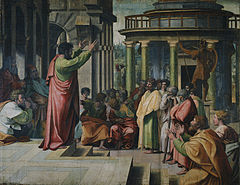
st paul preaching

This is part of a series addressing the problems with ministry structures in the American Church, and particularly with Methodist itineracy, and proposing change.

We need to re-evaluate our current ministry structures. Changes in the American landscape and problems in the church should be making us aware of that need.

Rather than proposing something entirely new, I’m going to start by looking back to ministry structures in the New Testament.

No One Model in Scripture

Let’s get this out of the way from the start: the New Testament does not prescribe one model for church order.

Brad Harper and Paul Louis Metzger said this well in a brilliant book, Exploring Ecclesiology:

We contend that the scriptures simply do not present a clear argument for any particular church polity. Thus, the most important issue for each church is not to reconsider the fidelity of its polity to scripture and church tradition, but to consider the strengths and weaknesses of its system as a means for ordering the people of God.

This isn’t just a position from some progressive Protestants. Avery Dulles, a prominent Roman Catholic theologian, makes a similar statement: “The New Testament usage [of terms for ministry roles] cannot be decisive of our terminology today, if only because the structure of ministry seems to have been different in different communities.” (emphasis added)

So I’m not exploring the New Testament texts to suggest that they prescribe one particular model. I want to demonstrate some possibilities they present, especially using texts that have been important for those denominations with a hierarchical structure and/or itineracy (i.e. pastors that travel from place to place).

Apostles and Elders

One important note that has been frequently overlooked: apostles (apostoloi) and elders (presbyteroi) are treated as two separate groups in the New Testament. Go do some searches on the two terms to see.

Paul is always identified as an apostle, never as an elder. Same for Barnabas. In fact, only Peter is identified as both apostle and elder.

Many today claim that apostleship was only for Jesus’ small group of disciples, plus Paul. When that group died, there were no apostles. What do you make of Barnabas being called an apostle, then? I think we can and should expect to have apostles today.

The New Testament apostles, such as Paul and Barnabas, are clearly itinerant. They do not provide day-to-day pastoral support for a congregation over the long-term. Rather, they travel from place to place, starting new Christian communities and providing encouragement and support for existing communities.

Meanwhile, elders are appointed to specific, local contexts. Scripture never suggests these elders are itinerant. Instead, I think we would have to reason that the elders appointed in the New Testament (see Acts 14 and Titus 1) are existing members of those local communities. When they are appointed, they are put in charge of regular leadership within their communities.

Elders are appointed (katastēsēs in Titus 1:5, cheirotonēsantes in Acts 14:23) to their positions by other leaders. The root for appointment, (kathistēmi) is used in other New Testament contexts in connection with appointment of high priests (see, e.g., Heb 5:1, 7:28, 8:3). It’s also used in secular situations when those in authority place other people in positions of authority (see, e.g., Matt 25:21; Luke 12:14; Acts 6:3).

From these examples, it seems clear that the New Testament usage of appointment has to do with giving a person authority and an assigned function within a community, not sending that person to a particular place.

We never see elders in the New Testament called or sent. Why are those our biggest talking points for people going into ministry today?

Though I want to be careful not to argue that the Scriptures prescribe a certain model, it is clear that they allow, or even typically suggest, a separation between the itinerant and the pastor. The itinerant apostle does not provide day-to-day oversight to a local community. That person travels for the purposes of evangelism and encouragement. Meanwhile, the elders are most likely permanent members of local communities, placed in charge of those communities’ day-to-day pastoral oversight.

There’s some New Testament support for what I’ll ultimately be suggesting. My next post will focus on my own tradition: how the early Methodists understood the need for local pastors and itinerant evangelists.

What thoughts does this provoke for you? Anything important that I’m leaving out here? Do you see anything different from me?

SUBSCRIBE by e-mail or RSS to get regular updates on theology, ministry, and life with God.

3 culture changes that should change how we handle Christian leadership roles

Many of our models for pastoral leadership today are based on recent history. We built them within a certain kind of culture, and some of them worked decently in that culture. Yes, they’re also based on Scriptural precedent and on older tradition, but much more loosely than many people think.

Here’s the problem for us: our cultural landscape is quickly changing. It’s changing enough that I think we need to reconsider how we’re structuring ministry roles.

Three specific issues we aren’t addressing well:

1 – Christianity has been the civil religion in America, but that is quickly collapsing.

We’ve never had a formal Christendom, where Church and State were joined. But America has historically assumed that most people are Christians. And that’s how most people would have identified themselves for the past two centuries. So Presidents swear on the Bible when they take their oath of office. Pastors open the U.S. Senate in prayer. Your grandmother may have never met a Hindu or Buddhist.

That’s all quickly changing, though. A Hindu priest recently led the opening prayer for the U.S. Senate. The Ten Commandments and “Christmas trees” in public have caused all sorts of debates. Tiger Woods appealed to his Buddhist faith when he was trying to get back into people’s good graces a few years ago. Asbury Seminary President Tim Tennent talks about a lot of this in the book Invitation to World Missions (affiliate link). You should read it.

Here’s why this matters for church leadership. In a culture that assumes most people already are Christian, or will seek out Christianity, the Church can focus on preserving and expanding the institution. Build it and they will come. So we “call” or “send” pastors to serve primarily as chaplains for existing local communities. Or if we’ve gotten really into the Enterprise mentality, we make our pastors into CEOs to expand the institution with great, visionary leadership.

In a culture that is no longer Christian, those old structures won’t work. Tim Tennent says it well: “We find ourselves standing in the middle of a newly emerging mission field.” (Click here to tweet that.)

There’s a new frontier! Sending leaders around from one institution to another as chaplains or CEOs won’t reach that field. It hasn’t been reaching it. Just look at all the numbers.

Look at those who were sent in the New Testament. They don’t just move around from one existing church to another – using it as some sort of promotional system, or way to infuse new ideas or energy into an existing group. Most of what they did was on a mission field, not in an institution. A different group of locals – called elders – took care of the local churches’ daily oversight. And there’s no indication that they ever moved. Methodists can look at our own tradition and see the same thing. I’m getting ahead of myself, though. We’ll look at all of that in more detail later.

2 – Family structures are changing

This is more specific to the structures of the United Methodist tradition, although I think it broadly applies to many in the U.S. When they get ordained, Methodists take a vow to go where the Bishop sends. That often (usually?) means that they’ll move multiple times in their first decade of ministry. Some seem to move every year, or two, or three. Some get in positions where they stay longer. Perhaps ten years or more, though that’s rare.

Moving male pastors around at will wasn’t as difficult a few decades ago. As late as 1978, only 1 in 5 women worked full-time out of financial necessity. Now over half of women work full-time, and most out of financial necessity (by their estimation, at least). At the same time, we have also drastically increased the number of female clergy, most with working husbands.

It becomes a lot more difficult to move a pastor when the spouse is also working. I just watched someone’s husband get moved 2 hours away from where they currently are. She feels a need to stay in her current job, so now they’re separated for part of the week and commuting to be together.

People don’t believe it, but we’re a less mobile society than back in the 1950s. That makes sense with two spouses working. It’s harder to move when two jobs are in consideration.

Also, this quote from Robert Putnam was challenging to me: “For people as for plants, frequent repotting disrupts root systems. It takes time for a mobile individual to put down new roots […] frequent movers have weaker community ties.” Are we harming pastors in their ministry and family life, regularly disrupting life systems, making it more difficult for them to develop community ties?

3 – We are lacking leaders

Many people in the UMC have lamented the deficiency of young clergy. Some have blamed low salaries. Honestly, I don’t buy that at all. I’ll try to stay off that soap box here.

A Bishop in Illinois said during his “State of the Church Address” a few years ago, “The single most damaging variable at work among us is the absence of a sufficient number of called, committed, creative, courageous, and well-trained clergy leaders.” He challenged churches to ask when was the last time they sent someone into ordained ministry. If not, why not?

Why not? In my opinion, we haven’t realized how harmful it is that our primary leadership always comes from somewhere else. No one in any of these churches is looking around the room and wondering who will lead them next. No one is urgently trying to prepare the next leader to take that role. Why? Because instead they’re looking to the system and asking, “Who will you send us next?” Or in a Baptist church, they’re inviting people to come and preach for them and voting on who they’ll take next.

Almost no one is assuming that their next leader will need to come from within! I think that’s wreaking havoc on our leadership development. Where is the urgency to develop good leaders when we never have to eat our own cooking, when we can always hire someone from somewhere else, or get someone sent to us? This is a model we have to change.

I think there are better ways to structure our understanding of ministry roles. Ways that take into account that we live on a mission field, that it may not be best for pastors to be uprooted and repotted every few years, and that we need to be raising up our own leaders. As I keep going in this series, I’ll begin making some proposals about those structures.

What do you think? Do the current leadership structures of our Church match the situation we find ourselves in? Are there any major issues I’m leaving out?

Next up: What the New Testament actually says about ministry roles.

Keep following to hear more. SUBSCRIBE by e-mail or RSS to get regular updates on theology, ministry, and life with God.

Relevance and Holiness

relevant

relevant

I recently heard a conversation about whether Christians should abstain from watching certain kinds of movies. The movie that started the whole discussion was The Hangover Part II (rated 10 out of 10 for sex & nudity, 7 for violence, 10 for profanity – see details here). One person was questioning whether someone “called to be holy” should be consuming these sort of things. The other was arguing that he wanted to remain “relevant and relatable” to others.

When does relevance win out over holiness?

Relevance is the regular reason Christians give to engage in less-than-holy behavior. How far should it go? One man’s “I watch raunchy movies to stay relevant,” is another man’s “I go to strip clubs so my friends don’t think I’m a prude.” Does it carry over to illicit drugs? Sleeping around? Doing dirty business if it leads to good money?

Here’s the point: at some point, you must forsake relevance for holiness. You cannot participate in everything the world has to offer, even though wherever you draw the line, it will make you less relevant/relatable.

So here’s my proposal: Draw the line at holiness every time. If you know you have a choice that affirms Christ’s lordship – even if it denies attractive worldly opportunities – make that choice every time.

Frankly, I don’t believe our world needs more “relevant” Christians, if by relevant, you mean living by the same standards as the rest of the world. I believe they desperately need more holy Christians. Don’t read that as self-righteous (acting morally superior to everyone else); read it as holy (fully consecrated to God).

Did you find this interesting? Join my e-mail subscriptions for more!