
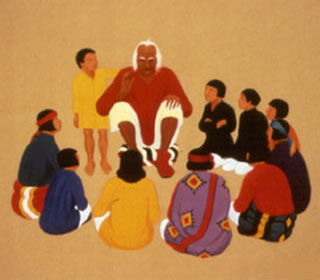
“Who will you tell this story to? Give a name.”
The first time someone asked me this question after discussing a Bible story, I stammered. Who would I tell it to? Well, no one. That’s who I was planning to tell it to. When was the last time that I told any Bible story to anyone – outside my official capacity as a pastor? I’m realizing what a problem that is.
The Bible was originally transmitted this way. People shared these stories from person to person, group to group. That kind of transmission continues today. In the places where the gospel is spreading most rapidly, people are hearing these stories, then going out to tell them to others.
Let’s sit on that together: In the places where the gospel is spreading most rapidly, people are hearing these stories, then going out to tell them to others.
Oral Bible Storytelling in Missions
Several missions groups are using oral Bible storytelling as a major piece of their evangelistic effort. They embrace these Bible stories as myths, in the best and truest sense of myth. These are stories that explain who God is and who we are, stories that give understanding to life at a deeper level than simple history.
In oral cultures, it seems that people are far more willing to share these stories with others. Storytelling is still a natural part of what they do. It’s no wonder, then, that the number of people coming to faith is growing rapidly in these places. The gospel elicits a response.
Western Evangelism with Stories
Is there a place for us to continue telling these stories in the West? I believe so. When people don’t hear the gospel, or don’t hear it as the gospel, we shouldn’t be surprised that so few are coming to faith.
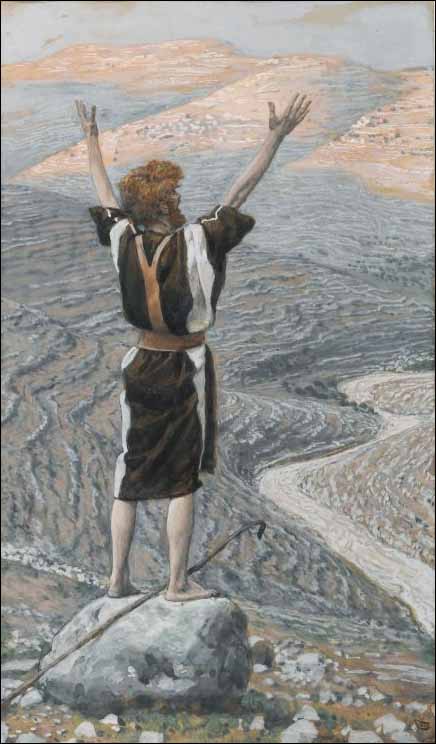
How, then, can they call on the one they have not believed in? And how can they believe in the one of whom they have not heard? And how can they hear without someone preaching to them? Rom 10:14
What is preventing us from telling the gospel story to others?
1 – We have exchanged myth for history. The post-Enlightenment West has become more interested in the historical and natural than the transcendent and metaphysical. As a result, we have looked to our Bible stories to answer questions about science and history rather than the deeper questions about God, humanity, creation, sin, etc.
So we are likely to bring up the creation account while discussing how or when the world was created but rarely bring it up to illustrate people’s purpose in life or value in God’s eyes. For many, our stories have become myths in the worst sense (false beliefs about history).
Disclaimer: I’m not disregarding the historical truth of large portions of Scripture. I would be willing to die for the belief that Jesus Christ historically was crucified, died, was buried, and rose from the dead. I wouldn’t die fighting for the historical accuracy of the creation account. I have many reasons. Let’s not derail here, though…
2 – Ours isn’t an oral culture. This is somewhat true. But the numbers I have seen still show that 30-40% are oral learners. Either way, it’s true that our culture doesn’t value oral storytelling in the same way as others. As a result, we either don’t think to tell stories from Scripture, or we feel like it would be unnatural and awkward.
3 – We think people already know the story. We believe the gospel story has been told so widely across the West that people don’t need to hear it again. We’re wrong about that, though. I’ve been experimenting by telling some Bible stories to regular church-goers. I’ve been amazed at how often people hear the story, then ask, “Is that really in there?” These are regular church-goers, or people who grew up in the church, hearing some of the basic stories of our faith. And they don’t fully know them! For that matter, I’ve been studying these stories so that I can tell them orally, and I’ve had several moments where I was surprised to realize that a particular detail was actually in the story.
Furthermore, as mentioned above, a lot of our stories have been used in different contexts in the West. When we tell them as good myths, people will hear them differently. Different points will stand out. Points that they’ve never given attention to before.
4 – We don’t know the stories. We don’t tell them because we don’t know them. Not well enough to feel confident telling. Try it. Try telling the story of creation, or the fall, or Abraham and Isaac, or Christ’s birth, or Christ’s death and resurrection. These are huge, high points of the gospel story. And yet when we try to tell them, we may realize how much we still don’t know.
We’ll stop there for now. I’ll pick up next time to have some conversation about how we can become better evangelists by becoming better Bible storytellers. I’d love to hear your thoughts. How do we overcome the above problems to tell the gospel story? Is this a fruitful direction for evangelism in the West, or am I barking up the wrong tree?
Subscribe by e-mail or RSS to get regular updates on theology, ministry, and life with God.
 teddy ray