I’ve been receiving various questions from readers. I promised to try to answer some of them in a series of posts. I chose two questions that are poles apart for part I. I’ll have several more to get to in part II. And please feel free to email me yours.
“My question is 3-fold:
1) Do you personally believe our salvation is conditional according to the Scriptures?
2) In your view, what Scriptures support this stance?
3) How to maintain our salvation then?”
Someone who says she has “just been persuaded of this position” sent that question. As a result, she said she joined the Methodist Church last week.
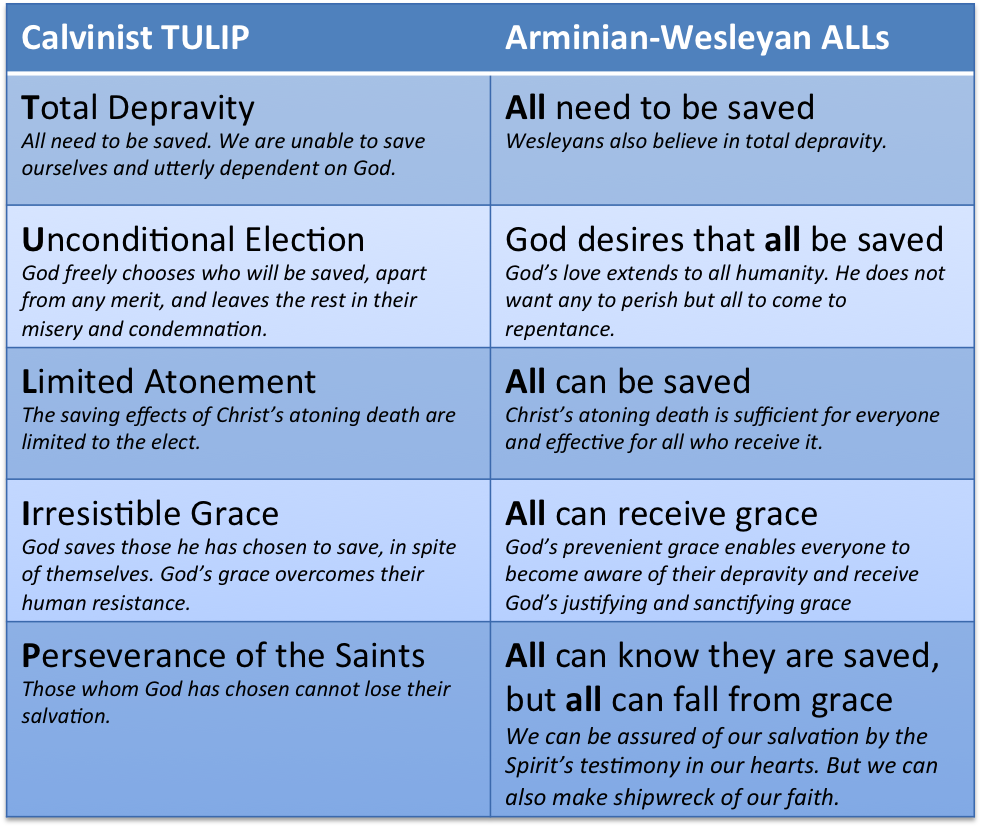
Yes! I do believe our salvation is conditional. In fact, I think that’s good news. This is a place where I disagree with my Reformed/Calvinist friends. (And yes, they are friends. We can disagree without animosity.)
No small amount has been written on this subject. Rather than write a whole booklet, as Wesley did, or an entire book, like this from Walls and Dongell, let me give you my simple version.
We start here:
1. God “desires everyone to be saved and to come to the knowledge of the truth” (1 Timothy 2:4).
My Calvinist friends begin to object here. They want to qualify that “everyone.” In their framework, God gets whatever God desires. It doesn’t make sense to them that an Almighty God could desire something that doesn’t happen. So they claim “everyone” means every people group, not every individual. But the same Calvinist friends also say that if you read the Bible at face value, you have to agree with them. So let’s acknowledge at the start that we’re all qualifying certain statements in Scripture. And to qualify “all” and “everyone” is no minor nuance.
2. Everyone can be saved. We have a mediator, Christ Jesus, “who gave himself a ransom for all” (1 Timothy 2:6) “so that by the grace of God he might taste death for everyone” (Hebrews 2:9). His atoning death is sufficient for all to be saved.
More of that pesky “all” and “everyone” language. See my note above.
3. Not everyone is saved. The biblical witness is clear on this.
I believe this is what has run aground several of my Calvinist friends. By their logic, God would save all whom he desires to save. That leads them to two options: universalism (everyone will be saved) or limited atonement (Christ did not die for everyone).
4. Everyone who believes is saved. Christ’s atoning death is effective for all who accept it.
That is to say, Christ’s atoning death is universallysufficient (see #2) but conditionally effective.
Here’s how Paul put that condition: “If you confess with your lips that Jesus is Lord and believe in your heart that God raised him from the dead,” [a break to note that this is, by definition, a conditional clause] “you will be saved” (Romans 10:9).
Paul lays out the conditions of salvation plainly in Acts 20:21: “turn to God in repentance and have faith in our Lord Jesus.” If we accept that much, we should spend some serious time looking into repentance and faith. What do those words mean in Scripture and the Christian tradition? I said “everyone who believes is saved” above. Please don’t accept that for the simple, “Sure, I believe in Jesus” faith common in our culture. Repentance and faith mean much more.
That’s a start. I could point to many more passages, along with most of the Christian tradition, on these points. My Calvinist friends will, of course, have opposing verses to share. I’ll not attempt a full defense of those here. They don’t deny #3 above, and I believe their arguments against #1 and #2 are strained. I believe the witness of Scripture, the Christian tradition, and our own experience all favor a view of salvation as conditional.
To your final question about how we maintain our salvation… Be alert, on guard, disciplined! Because the devil prowls like a roaring lion, looking for someone to devour. Practically, I’d especially encourage those means of grace encouraged throughout Scripture and church history: participate in the life of the Church and its sacraments, search the Scriptures, pray and fast.
The notion that we could lose our salvation may scare people. But it shouldn’t need to instill more than a healthy fear. God is good, and God is faithful. The faithful married person, for instance, doesn’t go around in constant fear that their loving spouse will leave them. But they also know that they’re not guaranteed security in that relationship if they’re unfaithful. Just as the devil can entice you to be unfaithful to your spouse, he can entice you to be unfaithful to your God. Both of those infidelities can lead to shipwreck. We need to be vigilant! But we needn’t be afraid.
“You’ve written several things about pastors’ salaries and talked about being paid part-time. But you also have a coffee shop where I assume you make money. For full-time UMC pastors, that’s not an option. Do you think that difference should be part of the equation?”
That’s a good point. I hear this has been a conversation for some pastors in my conference, so I think it’s best for me to be transparent. I know this kind of public discussion of personal finances can seem distasteful, so I’ve hesitated to do it. If it’s in bad taste to you, you might just stop now.
I am a partner in a coffee shop here in Lexington––a fun little venture. Two quick notes about your question, though: 1) I’ve been talking and writing about pastors’ salaries since before that shop existed, and 2) I’m not an employee. The UMC prohibits full-time pastors from working other jobs, but they don’t prohibit pastors from being partners. So that particular venture hasn’t influenced what I’m saying, and it’s a possibility for other UMC pastors, too. I’d encourage it for more pastors, actually. It has been a good learning opportunity and a different way to bless the community and be involved in it.
As for finances, between the church, the coffee shop, and a few other small sources of income, my total income is about $21,000 less than our conference’s minimum package.[note]That number will decrease next year––my church is giving me a generous raise.[/note] That coffee shop might be able to replace my income one day, and I’d celebrate that. But for now, it’s just a nice supplement.
I could stop there, but I should also acknowledge our family has had other advantages. Our parents have been very good to us––we rarely pay for babysitting, get to go on family trips that we don’t pay for, regularly receive clothes and other things for the kids, and even got our first mini-van from them. When we went to Spain, 40% of our cost for the year was covered by the generosity of our church, family, and friends. I was also able to work the whole time I was in seminary and paid as I went. No seminary debt has been a huge advantage.
We have a number of advantages and unique circumstances. In all, though, I don’t think our situation prevents me from being able to speak about clergy pay.
Note that I’ve never called anyone else to receive less than full-time minimum or claimed that our minimum-paid pastors are making too much. I have asked, for the sake of integrity, that we quit acting like our pastors live like paupers. Even our minimum-compensation pastors are in the top 27% of all U.S. income earners,[note]That figure includes their housing, as I’ve argued it should.[/note] with a very generous retirement and insurance plan on top. The average pastor in Kentucky is in the top 14%, and our director-level positions are in the top 8%. I would venture that never in Methodism’s history have our pastors been so highly compensated relative to our society.[note]I haven’t run all the numbers on this, but see the chart in my interview with Wesley Sanders for a representative sample.[/note]
Our pastors are good people. They work hard and have hard jobs. In the business world, many of them might be highly compensated for their work and talent. But the church is a different entity, and the church’s offering is no ordinary source of revenues. If John Wesley himself were among our highest-paid UMC pastors, I would be questioning his pay. Though I doubt I would need to. I think his voice on this issue would make mine sound weak and soft.
Dr. Guinness is one of our world’s most prominent social critics. He’s a devout Christian who seems equally comfortable assessing issues in the church and in the world. One of the things I love most about Guinness’s work is that he constantly points us back. Rather than creating new solutions, his work is about recovering what’s been lost.
Our interview covers apologetics and evangelism in the changing American landscape, errors in church growth, hypocrisy as a useful tool, and America’s historical near-sightedness. You can listen (right-click here to download), watch, or read the transcript below.
(My apologies for the *dings* you’ll hear if you listen. I’ll have those cleaned up before the next interview.)
Teddy Ray: I’m talking with Os Guinness today. Dr. Guinness is a prolific writer. He’s written and edited over 30 books. His most recent book is called Fool’s Talk: Recovering the Art of Christian Persuasion. Dr. Guinness, thank you so much for joining me today.
Os Guinness: Well, my pleasure to be with you.
TR: In this book, I’ll just jump straight to your main point. The main problem you’re trying to address is that you say we’ve lost the art of Christian persuasion.
Could you explain what you mean by Christian persuasion and then also how you think we’ve lost that art?
OG: Well obviously the passion to communicate, to share our faith with others so that they may know Jesus the way we know him, is at the very heart of the Christian faith.
But if you look, say, at America over the last 50 years, we’ve gone from a broad Christian consensus where everyone understood, even if they didn’t themselves speak Christian. We’ve gone to a world in which public life has grown infinitely more secular and many people are trying to drive religious voices out altogether. And private life has grown infinitely more diverse. People say everyone is now everywhere. Well in that world, we can’t communicate as we used to.
And far too many Christians, if they communicate at all, are using cookie-cutter recipe approaches, formulas, 1-2-3-4, and so on, which simply don’t work with people today.
And we’ve got to go back and really rediscover the Christian tradition, the Christian art of persuasion, which is in the gospels, in the New Testament, and certainly down through history. But we’ve lost much of it in America.
TR: Are you attributing so much of that loss to the fact that we were living in an easier time when we didn’t need to creatively persuade, and we just forgot how to do this in the process?
OG: Well that’s right. You just take one person, say, the Eisenhower era gave rise to Billy Graham. In the Billy Graham era, he was a magnificent preacher of the gospel and reached millions of people. But that was evangelism. And you can see that today, many people are hostile, indifferent, self-sufficient. They’re closed to the gospel.
So we need not only evangelism, sharing the good news straightforwardly. We need apologetics and the art of persuasion to people who are not open, not interested, not needy.
TR: And so because of that, you talk about this creative form of persuasion that starts where people are and helps them open up without their expecting to, as opposed to some of these techniques.
You talked about our left-brain schooling. We’re so well-educated in reason and logic and analysis, but without creativity and imagination and irony. Can you share your antidote to that? How do we get back some of that creativity and imagination?
OG: Well when we talk about this, a lot of people say, “Well obviously I haven’t been educated enough…” And I would argue no, that’s not the problem. The problem is too many of us, I include myself, we’ve been educated too much in an unbalanced, or the wrong way of thinking.
If you look at all the very best––and I’m not minimizing at all––of Western education, it’s rational, logical, critical, and all these good things. Which it should be. I’m not minimizing it.
But what it’s lacking is imagination and irony and creativity and things like this. In other words, we’ve got to fight ourselves out from the chains of much of how many of us in the best universities have been educated and go back to things that were actually much more human all along.
TR: You said that was the case for you, as well. Could you share some about how you made that transition or were able to be exposed to some of those things?
OG: I had the privilege of going to Oxford, which is certainly one of the best universities in the world, but very very heavy on rational, critical thinking, which is magnificent. But not quite so good in terms of the imagination and irony and creativity and things like that.
Whereas, when you look at subversive communication. People often say today, “We’ve got to use stories because we’re postmodern.” In other words, in the modernist world, you could talk logically, discursively and so on, but today in the post-modern world, we’ve got to use stories, narratives and so on.
Well that’s not the way the Scriptures put it. I’d put it somewhat differently. People are open. You can use tough-minded, logical thinking to take something like Paul’s letter to the Christians in Rome. That is very high reasoning, logical thinking, etc. But the Roman Christians were obviously open to what Paul was saying, so it’s thoroughly appropriate. And obviously many people’s sermons are like that.
But you look at our Lord. It wasn’t that he was a countryman talking to country people, as some people say very patronizingly. It’s rather that he was speaking to people—including the scribes, the Pharisees and others—who were dead-set against him. They were anything but open. And so his communication is thoroughly creative, subversive and so on. It’s indirect.
So we tell stories not because we’re post-modern. No, but because many of the people we’re speaking to are not open and stories are more subversive than statements in this case.
But as you know, I’ve got a chapter on all the different ways of communicating in Scripture that carry this particular creative subversion within them.
TR: Your references there, especially to David and then to the prophets and the ways they would approach these things were excellent.
You also mention people like Pascal and Dorothy Sayers and Chesterton and CS Lewis. Is there any living theologian today, or any few, that you would point to and say, “These are people who are doing it that way. They’re exemplifying what I’m talking about here”?
OG: Well I’m sure there are, but I’m not myself a theologian. I don’t move in the world of seminaries very much. I’m much more out in the culture on campuses talking with people who are trying to do apologetics.
One of my complaints in the book is there’s far too much thinking about apologetics rather than doing apologetics. We’ve got to get out there and actually do it.
Now when you come to the practitioners, this approach I don’t think is as strong or as common as I’d like it to be. Now I remember earlier on, Malcolm Muggeridge who came to faith in the Lord in his 70s. One of the reasons he loved the Christian gospel: it gave him a grounding for the way he saw the universe the way he did. It wasn’t just that he was a humorist and a comedian and he saw the world like that. No, no. He saw the gospel gave him a theological basis for that, which I love.
The gospel, put simply—and you’ve got to say it reverently—the gospel is closer to the dynamics of comedy than it is to the dynamics of tragedy. And we’ve got to recover a lot of this.
But I don’t know the world of the seminaries. That’s your world.
TR: And that’s quite all right. I think these, though, are excellent things to bring into that world. And you’re right. What you point out is that you see quite a bit more technique. Here are the four steps to take. Do this, this, this, and this. And this will work with everyone.
You’re saying, “No, every individual requires something different.” So I really appreciated your chapter on technique.
To bring it to church world in a bigger way. You related our obsession with technique to the way we’re starting churches now. I’d love you to say a bit more about that. How you’re seeing that happen and what you would advise.
OG: Well you can see in the last fifty years the popularity of church growth. But there was a very significant moment when Pete Wagner said, “We need church growth,” and I’m quoting now, “on new ground.” In other words, it wasn’t the power of the gospel, the word, the Spirit, and things like that.
It was management, marketing, sociology, psychology. I have nothing against those. My background is the social sciences in my own life. Nothing against them, but they should never replace theology. And I remember there was one book in the early days on marketing the church which made the point that in marketing the church the audience, not the message, is sovereign. I’m almost quoting exactly.
Now that’s a recipe for heresy. The message—the word of the Lord, the gospel itself—is always sovereign.
So yes, we listen to people, we get close to people. Paul says, “I’m Jew to the Jews, Gentile to the Gentiles.” So Gadamer the philosopher’s term of “fusion of horizons,” or what you might call identification. All these various words that come in.
We get as close to people as we can, but they don’t shape our message. We have the same message that brings them back to the Lord.
And so there’s a lot of thinking in the church growth movement that was very unntheological and very unwise. And you can see that just as the extremes of Protestant liberalism led us astray and virtually committed spiritual and institutional suicide over the last 200 years.
We’ve had varieties of some of the extremes of the church growth movement, or the extremes of the emergent church, that have done the same thing within evangelicalism. And that’s been extremely sad. Not nearly enough critical thinking.
TR: It’s funny to me that you say you’re not a theologian, but the ways you’re pointing us back to actual theology over all these other social principles, which you say is your world… I wish we had more people, whether we call them theologians or social sciences people, who would point us in these directions. I appreciate you doing that.
And actually, let me point to another piece of what I would call theological argument that you’re making. You talk about how Christians are inconsistent to our beliefs, too. We claim one thing and then we live differently. You talk about hypocrisy. You didn’t budge on that. You said, “Where unbelievers cannot be consistent, we should be.” Is part of our problem with Christian persuasion tied to holiness?
OG: Oh, absolutely. But I would say we have to appreciate the sting of hypocrisy.
Sadly, we’re at a place today, take, say, the New Atheists, where the main argument for atheism is the Christian faith. In other words, the corruptions and failures of the Christian faith, whether it’s the Inquisition, or the notion that error has no rights and all these things back in the medieval world, or Christians today.
And you can often see some moments in the lives of great atheists, say Bertrand Russell or whomever, where they were wounded by Christians and they never got over it. In other words, we have got to take hypocrisy very seriously. We have created many of the grounds for the objections against the Christian faith.
But as I was arguing, we shouldn’t be depressed by that. Because the simple fact is, people who get really angry about Christian hypocrisy, or any hypocrisy, they sound as if they have outrage on their side, but in fact they don’t have a standard or foundation for truth or for justice by which you can judge anything as hypocrisy, let alone have an answer.
And so I would argue that there is no greater counter-hypocrisy program in all history than our Lord’s, and he is the toughest person challenging hypocrisy, and of course, sadly that includes many of his own followers—us. So we’ve got to take it deeply seriously.
And while non-Christians can’t be consistent to what they claim they believe because it isn’t finally true, we should be! So every time there’s a charge of hypocrisy, we’ve got to say, “Lord, is it right?” And if it is, we’ve got to put something right in our individual lives or in the church as a whole.
Hypocrisy, understood properly, is a very useful accusation. It’s a stinging one, but a useful one.
TR: That’s a great word, and one we seem to miss. I’ve even seen the bumper stickers that say, “The Church—we’re full of hypocrites!” And it has become a celebratory point. “We’re full of hypocrites, and we could take one more, too!” Rather than saying, “No, we have to live differently!”
What you just did there, pointing back to our past, pointing back clearly to our Lord, seems to be a key theme that runs through almost all of your work. You point out a problem in the present, and rather than presenting a new solution, you’re presenting really old solutions. You’re constantly taking us back, even in your social critic work, you’re pointing back to the founding fathers, and in your works on the church, you’re pointing back to classical understandings.
Could you share some about that approach and why you lean on it the way you do?
OG: Well I just happen to have been brought up in England with a strong sense of history. The prime minister when I was a boy was Winston Churchill. You hardly heard a speech of his that didn’t sort of breathe the air of a thousand years of English history.
And you don’t understand anything today unless you understand history. Now I had that in my background, so when I came to faith, I wasn’t one of those who believed that we only discuss things today and we jump back to the New Testament, and know nothing in between. No, obviously the Scriptures for us are authoritative, and our Lord supremely.
But we thank God for every year of Christian history in between. Some of them sad, some of them incredible, some of them really bad. But we need to understand them all so we don’t make the same mistakes today.
So Americans often have a very short sense of history. For example, all the discussion of racism and slavery. I’ve even heard sermons in the last month that speak as if the 19th century––where you had the justification of slavery in the south––was the norm.
And they forget that the whole notion of freedom came from the freed slaves, the book of Exodus. And it was Christians, and long before the 19th century worst happened, Wilberforce— who was a friend of my great-great grandfather’s, who founded the Guinness brewery—Wilberforce had abolished slavery in the British empire. So the greatest reform in all human history was by an evangelical. And we should have some of these great historical perspectives in our mind when we tackle some of these issues today.
But many Americans are incredibly myopic when it comes to history.
TR: I have a friend who talks about “out-traditioning” the traditionalists. He says so often we grab onto the last 20 or 30 years and say, “This is who we are!” He says, “Let’s talk about who we’ve been over the past 200 or 300 years.”
OG: That’s right. You remember the phrase in the 1960’s, “Don’t trust anyone over 30.” And Tom Oden gave a brilliant answer to it: “Don’t trust anyone under 300.” And you can see today, that’s hitting the church and hitting America in what I call generationalism. We’ve narrowed and distorted the generations down to the cohort of shared experience.
And it’s become a new form of identity. “I’m a millennial,” “You’re a boomer…” She’s a this. He’s a that. And it’s become a new form of relativism. “Well of course, you wouldn’t understand, it’s a generational thing.” Now that’s actually crazy.
We see in Scripture the Lord is from generation to generation. Our Lord is the same yesterday, today, forever. So we’ve got to part with this generationalism, this incredibly myopic thinking, and recover a living sense of tradition. And the millennials have a very distorted view of that, as if all tradition is the dead hand of the past rather than safe-keeping from generation to generation.
TR: Yeah, there’s a much deeper identity there. A deeper rooting. That leads me to one final question I wanted to ask you. I wanted to point to one of your earlier books, The Call, because it’s been such a great guide for me. I think I’ve quoted it at least five times in the past year in sermons.
As I was working with a group through it last spring, we started recognizing how calling answers questions that everyone seems to be asking. Christian evangelism always used to start with sin and how you can be forgiven. And that seems to have made sense in earlier eras. But people aren’t asking about sin and forgiveness much in our culture.
They’re still asking a lot about calling and purpose. And that gives me a great chance to say, “There’s no call without a caller,” to quote you. So I’d just ask you if you think we were seeing things correctly. Is calling one of those natural entry points into Christian persuasion?
OG: Oh, absolutely. As you said rightly, calling is the ultimate answer to that human longing for purpose. And it’s one of those wonderful places where… I have this little apologetic principle, “Contrast is the mother of clarity.” And if you look at the other worldviews, religions, philosophies of life in comparison with the gospel, it’s dramatically different at that point.
I’m simplifying it drastically, but if you look at Hinduism and Buddhists, their essential answer to purpose, forget it. Why? To take yourself seriously as an individual is to be called into the world of illusion. And freedom in the East is freedom from individuality. Not freedom to be an individual.
Or if you look, say, at our atheist friends, secularists, agnostics, materialists, naturalists… You can put their position in three words: Do it yourself. In other words, there’s no meaning in the universe. So if you want meaning, you’ve got to create it. You know, Bertrand Russell, or the Greek giant Atlas with his own world on his own shoulders. Or Nietzsche, you’ve got to live to be able to say, “Thus I willed it.” Do it yourself! Frank Sinatra, “I did it my way.”
And you contrast that with the Jewish and Christian, the biblical understanding. There’s purpose because we’re created unique. So it’s, “Be who you are.” But not only that, “Become who you can become.” Because as you rise to follow the call of the Lord, you’re in touch with parts of yourself and things which he knows we can do, which no one else knows for us.
And so, not surprisingly, there’s no deeper sense of purpose in all human history than you have in the biblical understanding of calling.
TR: We had someone in our group… We asked everyone to interview someone about calling, and one of them intentionally interviewed a staunch atheist. And we said, “Well what an interesting thing that you chose a staunch atheist to talk to about calling!” And he said, “This is universal. This guy sat and talked to me about this great calling on his life, and I sat there and said, ‘So where did this come from? Where is the caller?’”
It was a brilliant moment. So I’m seeing how all your work on calling and your work on Christian persuasion come together there.
OG: Well, thank you. No, it’s a wonderful time.
Going back to something you said earlier, Teddy. Many of the of the deepest, profound problems today, whether philosophical or practical, social-political… they raise questions that are only answered in the profundity of the biblical answer. So it’s an incredible moment for us where we’ve got to go back to go forward.
TR: And that’s what you’ve done so well in this book. We’re out of time. Let me just commend to my readers—I would love for you to grab this book and take a look.
It really does counter a lot of our current notions about what evangelism is and really calls us back to something before evangelism and to something that has been lost in our history in a lot of ways. So grab this book if you can. I want to thank you for joining me today, Dr. Guinness. I appreciate your time.
OG: My privilege. Thank you.
TR: That was Os Guinness. His new book is Fool’s Talk: Recovering the Art of Christian Persuasion. You can see the link for it both on my site and on the video here. I’d love for you to pick it up. I hope you enjoyed this conversation. We’ll have more to come.
————–
To be sure you don’t miss the next one, subscribe here to receive future posts.
My deepest gratitude to Jason Huber for producing this. His studio, graphics, and detail work made it possible.
A pastor friend of mine has a mantra, “People over paper.” He reminds people of that because “paper” (i.e. all task-oriented work) has come to rule the day. We send emails, check off to-do lists, craft strategies, complete reports, and attend meetings. We can fill an entire week with nothing but those tasks. And still feel behind when it’s over.
Sometimes the “paper”-work consumes us because we react to the demands in front of us. We fail to set higher priorities.
Sometimes we allow the “paper”-work to consume us because it’s more comfortable. Easier to allow predictable busy-work to bury us than to face an unpredictable conversation. Easier to talk with people about strategies than to talk with them about their souls. More exciting to create plans for a big program than to do the routine work of visitation.
“Paper”-work is today’s greatest obstacle for the classical pastor. At every turn, it threatens to distract from worship and visitation.
If pastors believe in the slow, steady, deliberate work of the classical pastor, they must reduce the “paper”-work. Almost to the point of elimination.
“I can’t eliminate this!” you protest. I know. I haven’t eliminated it either. But if I treat “lead a fine worship” and “visit the people” as top priorities, little time remains for the rest. I used to allow all the “paper”-work to squeeze out worship and visitation. Now I’m allowing worship and visitation to squeeze out the rest. By doing that, I’ve realized that much of the “paper”-work was inessential. By limiting my time for these things, I’ve learned how to do what I must in shorter time and how to delegate the rest.
A good test for pastors––can you take a week or two away and actually be gone? Can you spend time away in peace? You don’t stress about what’s going wrong or put out fires from a distance all week?
If your day-to-day presence is so essential that you can’t get away in peace, something is wrong. And the problem may be you. Some of us need to be needed.
For the sake of any ongoing, legitimate ministry, we need to get over ourselves and let others do some of the work. For the sake of the most important things, we need to remove ourselves from every urgent, daily need. For the sake of our health, we need to delegate some responsibilities. For the sake of our humility, we need to recognize that other people can do things as well as we can, and often better.
Eliminate. Delegate. Say no. Ask permission to stop doing things. Have the courage to stop hiding behind these things.
I’m blessed to work at a church with a structure for this. Our pastors are free to be pastors. We have other staff and volunteers to administrate. We have great administrative assistants. They handle most routine, week-to-week needs so we can focus on pastoral work.
To the pastor who doesn’t have that, you need to look for those people and ask for those structures. To be sure, it may come at a cost. I’m still classified as part time. That keeps enough money free for us to hire administrative help. Most pastors need more help more than they need more money. The average United Methodist elder in Kentucky is in the top 15% of all U.S. income earners.[note]Average salary plus minimum housing allowance in Kentucky is $78,000. I’m not including our very generous pension and health benefits in the calculation. Use this nice tool to see for yourself.[/note] Given that astounding number, shouldn’t we be asking about the wisdom of some of our raises? Aren’t they robbing the church and the pastor of what they really need: more help rather than a more wealthy pastor?
2 – One other essential task for the classical pastor
I’ve based this series on a quote from Sam Stanley, who says, “There’s really only time for two things in ministry.” I know, but I’ll add a third. I don’t think I’m violating the spirit of Stanley’s advice. I think this one was implicit.
The classical pastor must devote time to study and prayer. One of my favorite responses from Stanley Hauerwas in our interview:
“I think it’s very important for people in the ministry to train their congregations on why, as ministers, they need to have time set aside to pray and to read. I know that sounds odd, because one says, ‘Well, they probably are doing that all the time.’ No, I just think you need time set aside for study, and study is a form of prayer.
As someone who talks to several pastors, I can tell you that pastors do not, as a rule, study and pray all the time. Many disregard these activities as less important than the other work of ministry. Others can never find time for them. Each new day’s demands crowd out prayer and study.
To lead worship well, to preach well, and to visit people well, we need to study. Seminary training is a good foundation for a pastor’s study. It’s a lousy conclusion to it. John Wesley scolded any preachers who weren’t reading enough. He said they were starving their souls and would be “petty, superficial preachers.”
I budget six hours per week for intentional study, outside of work specific to the sermon. That doesn’t feel like enough, but it’s something.
Lead a fine worship and visit the people works well for a 50-person congregation. What happens if that congregation becomes 200, much less 1,000?
It would be most fair for me to say I don’t know. I’m the happy pastor of a small congregation, where I can still know every name and sit with every person. I haven’t experienced the demands of a 200-person congregation.
If I were deciding today, in a congregation of 200, I would seek out an assistant pastor. What would that assistant pastor do? Lead a fine worship and visit the people. They would help with the extra demands of a larger worship service and visit the people I couldn’t. Their work would be a direct extension of my work.
While this is theory for me, it also seems to be the classical pastor’s model in history. Look at what the brilliant Richard Baxter advised in The Reformed Pastor:
“If you have but a hundred pounds a year, it is your duty to live upon part of it, and allow the rest to a competent assistant, rather than that the flock which you are over should be neglected. If you say, that is a hard measure, and that your wife and children cannot so live, I answer, Do not many families in your parish live on less? Have not many able ministers in the prelates’ days been glad of less, with liberty to preach the gospel?”
And here we are, back at money again. We don’t ask these questions enough today. (And we’re not well-liked when we do!)
Baxter’s top priority: ensure care for the whole flock. Baxter was writing about this within a larger exhortation for his pastors to visit all the people. If they couldn’t do it themselves, they needed to get an assistant.
In both my theory and Baxter’s reality, this model scales. At least to a point. Can it scale to a 1,000-member congregation? Even in that large context, can we ensure that everyone is known––no one falls through the cracks? I would like to believe so, but I’m too far removed to answer with certainty.
I know that most of our 1,000-person models would need to change. You may say, “That’s why we do small groups ministry.” I hope you’ve seen here something that goes beyond that, though it could certainly include it. The mega-church I referenced in part II had a small groups ministry, too. A pretty good one. You may say, “Some people like to remain anonymous.” Perhaps so. That doesn’t mean we should let them.
Your thoughts?
I’ve shared plenty about this now. What do you think? Is Sam Stanley right that worship and visitation are pastors’ most important duties? Is he right that there’s not much time leftover once those are done? What are your biggest challenges for living in this model? Your biggest questions or disagreements?

 1. God “desires everyone to be saved and to come to the knowledge of the truth” (1 Timothy 2:4).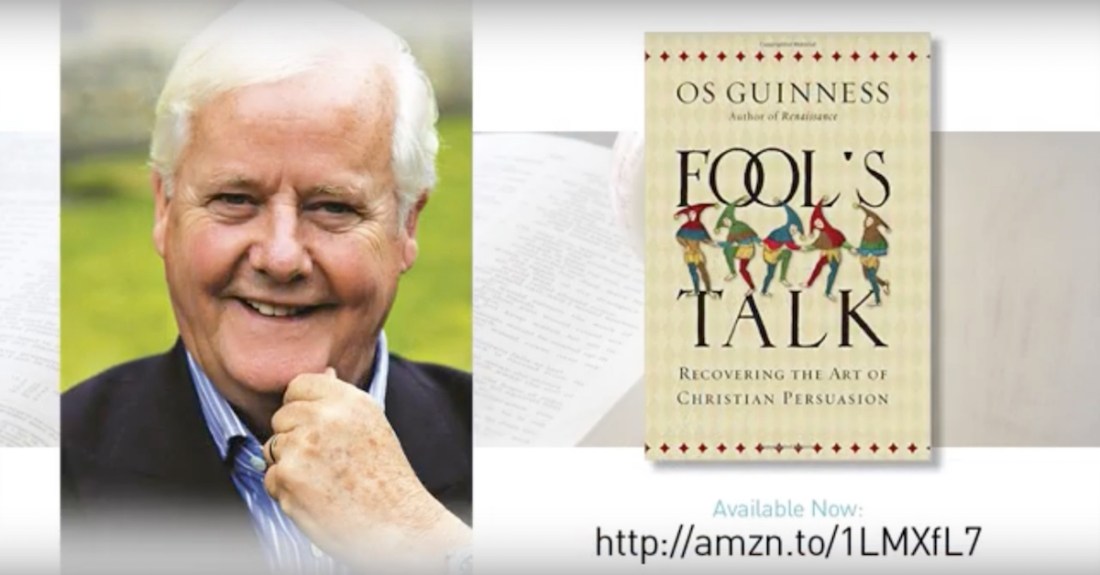

 teddy ray