The Classical Pastor (pt. II, Visit the people)

pastor shepherdA friend who worked in a mega-church shared with me that they lost over 1,000 people after a church crisis. “But we don’t know where they went,” he said, “or even most of their names.” They only knew they had lost 1,000 people who used to take up seats.

To be clear, I’m not criticizing mega-churches hereI presume several of them are exempt. I’m noting something about this kind of church, of any size. The kind that produces good programs, attracts large crowds, then mistakes it for discipleship..

We can never divorce discipleship from relationship. That means people who know each other’s names… and much more. This criticism isn’t limited to mega-churches. It’s the kind of church that plenty of 50- and 200- and 500-member churches are trying to be. If someone is a “regular attender” in a church, they need to have a pastor who knows them.[note]Note: This doesn’t have to be the “Senior” or “Lead” Pastor. It doesn’t even have to be someone on staff. The question: has someone with a recognized pastoral role in the community spent time across a table or a living room with that person?[/note]

The classical model of pastoral ministry comes in here.

“There’s really only time for two things in ministry. Lead a fine worship. Visit the people. The program, leave to volunteers and gung-ho seminarians.” That quote from Sam Stanley has guided me in ministry more than any other. I discussed “Lead a fine worship” in part I. See it here.

“Visit the people” is no novel idea. It’s the classical model of pastoring. You won’t find anything extraordinary below. In fact, that’s the point.

Slow, steady, deliberate

When I was in college, I researched and got excited about several get-rich-quick schemes.[note]We’re not discussing here the merits of my desperate desire to get rich. You can search for “money” to see plenty more on that.[/note] None of those paid off. Wise and experienced people usually advocate a less exciting approach: slow, steady, deliberate investing. The person who had invested $6 per day in the stock market over the last 40 years would have $1 million today. The one who chased after each get-rich-quick scheme likely went broke or burnt out.

The key to physical fitness? It’s probably not in that new fad diet or pill or workout video. You’re more likely to find it in the same things that have led to good health for… all of human existence. Good exercise, good nutrition, good sleep. Slow, steady, deliberate. Your results may not rival The Biggest Loser one month in, but they’ll look better 5 years from now.

In the church, we can chase after our own versions of get-rich-quick schemes and fad diets. I hear constant talk about churches “in transition.” Is the ongoing “transition” because we’re looking for the next magic bullet? Are we looking for the next program or strategy or staffing move that will change everything? Are we in “transition” because the last magic bullet failed to deliver?

“Visit the people” is the church antidote to magic bullets. It focuses on people rather than any grand strategy or exciting new program. It’s slow, steady, and deliberate. The results will be better measured in years than weeks.

Visit the people

I take “visit the people” to mean three things.

Visit the Pastors and Leaders

In a church of even 50 members, no lone pastor can offer the full congregation the pastoral care they need. Moreover, (s)he shouldn’t. That robs the rest of the congregation of their privilege and calling to be in ministry. So I don’t give regular pastoral attention to most of our people. That comes from our other pastors.[note]We distinguish pastors and leaders by role. Our pastors have charge over people. They and I know the names entrusted to them. Our leaders have charge over areas—things like hospitality and outreach.[/note]

My first responsibility is to care for and equip our other pastors and leaders. How are their souls? What problems are they dealing with? What do they have to celebrate together? How can I better equip and encourage and resource them?

When I invest in the primary pastors and leaders of our community, I’m doing my most important work. More than anyone––myself included––these people determine where we go. I’m not in charge of anything outside of our worship. I don’t lead any meetings; our leaders do that. I receive few direct phone calls about crises; our pastors receive most of those, then call me. We live and die on our volunteer leaders.[note]As always, this is penultimate to our total reliance on God[/note] So I try to spend a lot of time with each of them.

Visit the Congregation

Most people today take “pastoral visitation” to mean hospital visits. Those are a part of what I mean here. For a community of our size, it’s important that I show up in those crisis times, if possible.

This section also includes meeting with people for pastoral counseling and spiritual direction. Because of time limits and the nature of these needs, I’m usually only involved with one or two people at a time. That’s okay, as we have other good pastors who can offer the same.[note]Although I believe these two areas need the highest degree of special training and preparation.[/note] But it’s important for me to continue having some of these appointments. They keep me in touch with a few of our people going through crisis or seeking spiritual growth.

Mostly, “visit the congregation” is about meeting with people and families in non-crisis times. Those visits allow me to ask people some basic questions about the state of their lives and their souls. I hope to sit with everyone once a year––in their living rooms, at our family’s dinner table, or in a coffee shop. About half of those conversations reveal nothing major. They’re an enjoyable time where I get to learn a bit more about the person/family I was with. These help me at least know our people better, even if nothing significant seems to come from that time.

In another half of those conversations, I learn something immediately important. I’ve learned about marriages in trouble, people out of work, and a family on the verge of leaving the church. And we’ve identified some of our best leaders because of these kinds of conversations. We may not have found our Executive Pastor without a fortuitous Christmas party conversation. It’s in these casual conversations that we learn about people’s backgrounds, interests and abilities.

These visits help me avert a lot of crisis visits. So often, we learn about a problem only once it’s a full-blown crisis, a point of no return. The divorcing couple has made up their minds. The upset family is leaving the church. In several instances, living room conversations have allowed me to get involved pre-crisis. That has been a gift.

Visit the Community

This is my biggest growing edge. The old, classical pastor knew his parish––not just the people in his congregation, but the people in his district or territory.[note]Yes, it’s not gender inclusive. But it’s mostly accurate. When people talk about today’s pastors, I’m glad they’ll be talking about men and women.[/note]

To be a church that continues to invite new people into its life, we must go to them. And as the leader of my community, that begins with me. Though people have become skeptical of visiting door-to-door, I think there’s still much to commend it. If I can’t find another way to engage the community well, I don’t think this is a bad option.

Other options for this kind of pastoral presence include crisis counseling and officiating funerals. Both of these have given me a chance to connect with people disconnected from the church.

What else?

“There’s really only time for two things in ministry…” You can see how lead a fine worship and visit the people can be plenty to fill all of a pastor’s time. And they nearly should be. These should receive such priority that they squeeze out time for most other things. But we must make room for one more item––one that informs and enhances the way we lead worship and visit people. I’ll share more about that in the following post.

I’ll also consider two important questions: What about all the other things? And does this scale? I can do it with a small congregation. But what happens with even a medium-sized congregation of 200? Or a church of 1,000?

See also pt. I, Lead a fine worship and pt. III, Threats, an addition, and does it scale?

—————-
The Classical Pastor (pt. I, Lead a fine worship)

pastor shepherdYears ago, I came across this brilliant advice from a man named Sam Stanley, “There’s really only time for two things in ministry. Lead a fine worship. Visit the people. The program, leave to volunteers and gung-ho seminarians.” That quote has been the most helpful guide for me in ministry. The closer I get to making that my true––and full––job description, the happier I am, and the better off my church is.

I’ve been calling this the “classical pastor” model. It’s classical because it follows the primary tasks of most pastors through history. It’s classical because it’s simple and restrained. It affords little time for today’s favored tasks: strategic planning, entrepreneurial leadership, and vision-casting.

JD Walt recently diagnosed the American Church’s problems this way: “We’ve mastered the art of growing churches that don’t grow people.” We should expect nothing less when our pastors become strategic-planning, vision-casting, plate-spinning entrepreneurs. An enterprise-oriented world designed these methods to grow enterprises that sell products or services.[note]Although even business books that church leaders love to read, like Good to Great, undermine this notion. Those “Good to Great” companies had a difficult time pointing back to their great, rah-rah, vision-casting turning point. Instead, they referenced a steady focus on what was most important. And church leaders, before you convene a strategic planning vision team to figure out what’s most important, here’s a simple head-start for you––it’s discipleship. Good to Great would suggest you spend less time casting some new vision for making disciples or getting everyone to memorize the new slogan, and instead just get seriously focused on making disciples. (Discipleship, as I’m using the term here, runs all the way from making people aware of God’s existence to commissioning and sending them into the world as pastors and apostles.)[/note] It didn’t design them to grow disciples or churches. Churches are organic units—families, communities, the body of Christ—not enterprises.

The “classical pastor” has two focuses. I’ll share about the first one here, the second one in a post to follow.

Lead a Fine Worship”

Sunday Worship

Corporate worship has come under a lot of fire recently. “We spend too much time on this one hour of the week, not enough time on all the others.” “Too much focus on attracting people to our worship, not enough on going out in mission to the world.” “We should cancel worship and go do service work!” Christian writer Donald Miller said last year that he doesn’t attend worship services often. He defended his position by saying, “Most of the influential Christian leaders I know (who are not pastors) do not attend church.”[note]Note: If you are being influenced by some “Christian leader” who doesn’t attend church, please don’t let them influence you about Christianity. They don’t understand it very well. Cyprian, a North African church father, has some advice for them: “You cannot have God for your Father unless you have the Church for your mother.”[/note]

To the contrary, I think of corporate worship as the most important time of the week for our community. Worship distinguishes the church as the church. It “bears the deepest faith of the church and forms us in that faith.”[note]From Simon Chan’s Liturgical Theology, quoting Gordon Lathrop.[/note]

The classical pastor gives a lot of energy and attention to corporate worship. I might adapt the original statement to say, “Lead worship with intentionality and care.” When we say “Lead a fine worship” today, we may stop at asking whether it was a good show.

For me, this includes meeting with a worship design team every other week to plan well for worship. We read books about worship, review past weeks’ services, and plan for upcoming weeks. We work out practical details (e.g. Should the musicians sit down or stay up front at this point of the service?) but try to give our better time and energy to a thoughtful discussion about the liturgy and its leaders.

As shared by Joy FM's Facebook page
As shared by Joy FM’s Facebook page

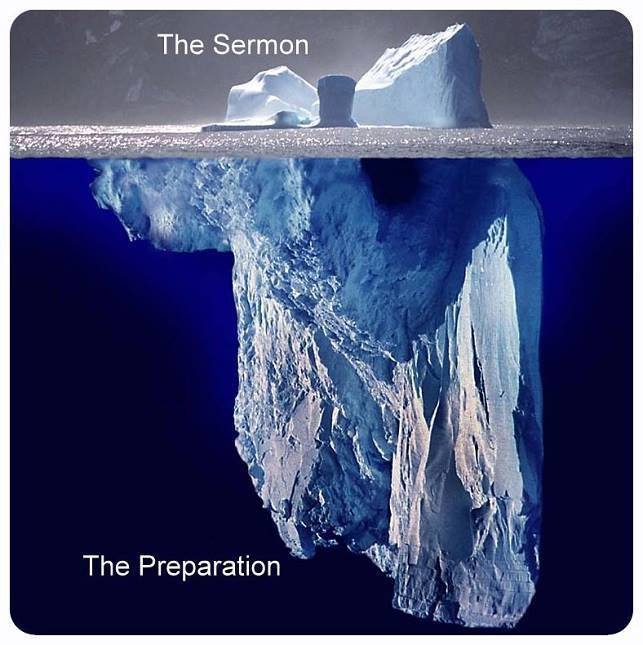
I also give a lot of attention to sermon preparation. D. Martyn Lloyd-Jones calls true preaching “the most urgent need in the Christian Church today […] and as it is the greatest and the most urgent need in the Church, it is obviously the greatest need of the world also.”[note]From Preaching and Preachers, p. 17.  If I would quibble with him, I’d add to this liturgical renewal, on the whole. But true preaching is no small part of true worship.[/note] Again, teams have proven invaluable here. I meet with a sermon preparation team every other week. We do something like what our worship design team does, but with preaching as its focus..

In all, I try to devote 15 hours per week to sermon preparation. I budget 5 hours each for research, writing and refining/rehearsal. That pales in comparison to the amount of time other speakers give to their talks. Most advice I see for TED talks suggests that you should rehearse at least 15 hours for a 15-minute talk. But it’s also much more than I used to devote, and the extra time investment has made a big difference. When I shortchange research, writing, or rehearsal time, there’s a noticeable difference.

Special Worship

“Lead a fine worship” also includes special services like Ash Wednesday and Holy Week, weddings and funerals. What a privilege to officiate at those special ceremonies! When they come, they should receive the same care and planning as Sunday services.

That’s the first part of what it means to be a classical pastor. It’s probably the part still more common today. In the following post, I’ll share about “visiting the people.” I’ll conclude with a third task the classical pastor must make time for, and thoughts about scale and viability in 21st century America. To be sure you receive those, join my email updates list.

And for other discussion on these topics, see the “Related Posts” below and the posts linked throughout this article.

Now see pt. II, Visit the people and pt. III, Threats, an addition, and does it scale?

—————

Dying Well

I know what you’re thinking… “Not another article about how to die well.”

No? We don’t talk about this much, do we? Death is a subject that’s generally avoided in our culture. Have any discussion about death, and someone’s likely to say something like, “That’s so morbid.” Which is usually to suggest that it’s not a pleasant or welcome conversation. It’s abnormal.

In our culture, we’re either privileged or burdened—depending on how you look at it—to be much further removed from death than most people across the world and throughout time. Here and now, people die mostly in institutions—hospitals and nursing homes—and “bodies are whisked out of sight from bed to morgue to funeral home, where morticians, not family members, prepare them for burial.”[1. Thomas G. Long, Accompany Them With Singing] And more and more often, we don’t view a person’s body, either at visitation or a funeral. That despite the fact that we’ve developed all sorts of practices to preserve and beautify people’s bodies with things like embalming and heavy face powder. When we were in Spain, we were surprised to see that most funerals take place within 24 hours of death. Embalming is a new and rare practice there, so you can’t wait five days to have a funeral.

We’re afforded a certain separation from death that most people in history haven’t had. And as a result, we’re able to avoid thinking about death in a way that most people have had to face.

A philosopher named Kerry Walters made an interesting comment about that. Here’s what he says:

“Many of us die badly not because we’re wicked or weak people, but because we simply haven’t been taught how to die well […] You can’t really prepare for something you spend a lifetime avoiding.” [1. From “The Art of Dying and Living” in Baylor’s Christian Reflection]

Now look at this as a contrast. A physician who treated several Methodists made this claim to Charles Wesley, one of the founders of Methodism:

“Most people die for fear of dying; but, I never met with such people as yours. They are none of them afraid of death, but are calm, and patient, and resigned to the last.”

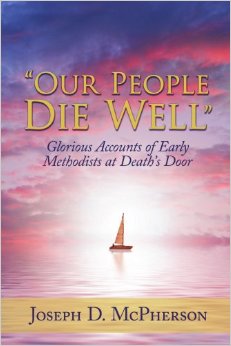
die wellThose early Methodists actually made it a practice to publish the stories of several people’s deaths. Some of their greatest testimonies were about how people died. So there’s a book out now with 98 different accounts of early Methodists’ deaths––the kind of book you can hardly resist buying, right? It’s titled Our People Die Well because the founder of the Methodist movement, John Wesley, said that one time about Methodists: “Our people die well.”

So what does that even mean? What is it to die well? And how can we prepare to die well?

Living for the Lord, Dying for the Lord

If you’ve been reading at this site for a while, you may know that I’ve had two very special people in my life die—and die young—in this past year. The first was Dori Deitrich.

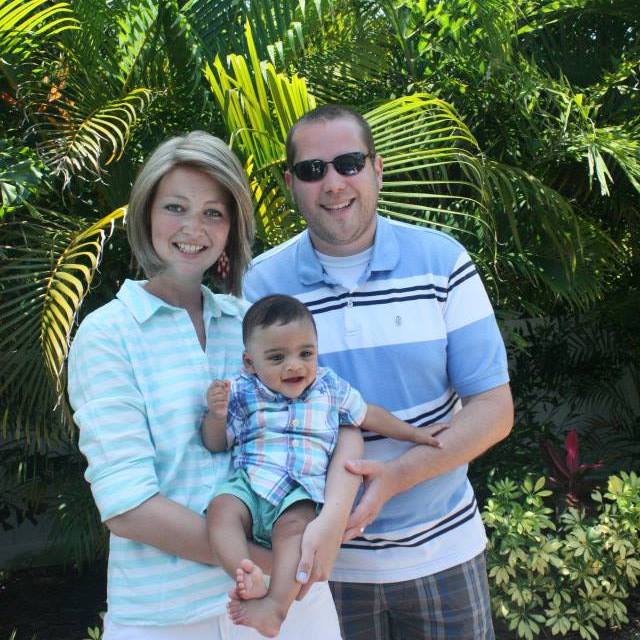
Dori, Matt, and Carter

Dori and her husband, Matt, were in my youth group several years ago. Theirs was the second wedding I officiated. Since then, they had become good friends. Youth ministers aren’t supposed to have favorites, but their two pictures never came off our refrigerator.

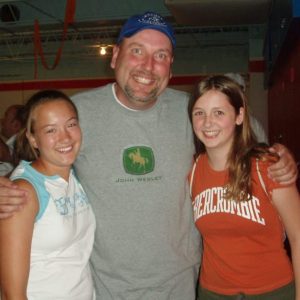
The other person was David Sparks. David was my youth minister when I was in middle school and had become a real friend and mentor of mine. Dori and David were both diagnosed with cancer back in 2013 and both died just about a year after their diagnoses.

Each of their deaths was difficult for me, but the way that they both died left quite an impact. As they were dying, these two were incredible models of strength. They were the ones comforting their own families. To be clear, they grieved and hurt and asked questions. But they were also willing to let go. I still remember Dori saying, “Everyone around me is treating death as this awful thing, but doesn’t this mean I get to be with Jesus?”

david
David

And David continued sending me text messages that were all gratitude and encouragement, even in his final weeks. They both died quickly, young, and with a lot still to live for. But they died with an amazing peace and a trust in God that was growing, not weakening, even in those times. That’s dying well. Though each of our deaths will be different—some of us old, some of us young, some long and drawn out, some quick and unexpected—this is something we all face (unless Christ comes again soon!), and it’s important to consider our deaths in light of our faith.

In Romans 14, the apostle Paul is writing to a group of Christians who have different practices. Some of them eat meat, some eat only vegetables. Some observe one day as more sacred than others while others consider every day alike. And rather than settling their dispute, he simply says, “Each of you is doing what you do for the Lord.” And then he makes this interesting comment, beginning at verse 7:

For none of us lives for ourselves alone, and none of us dies for ourselves alone. If we live, we live for the Lord; and if we die, we die for the Lord. So, whether we live or die, we belong to the Lord. For this very reason, Christ died and returned to life so that he might be the Lord of both the dead and the living.

If we live, we live for the Lord; and if we die, we die for the Lord. Your life is not your own. It’s a gift from God. Paul goes on to say in verse 12: “So then, each of us will give an account of ourselves to God.

Your life is not your own. It’s a gift from God. Whether we live or die, we belong to the Lord. Everything else below is some observations about what that means for us.

Living Well

A first observation: dying well begins with living well.

How could David and Dori die tragic, early deaths, and yet die with such peace? I would suggest it’s because they lived well.

At both of their graveside services, someone read over them this common passage from the Book of Revelation:

“Blessed are the dead who die in the Lord from now on.” “Yes,” says the Spirit, “they will rest from their labor, for their deeds will follow them.”[1. Rev 14:17] 

They’ll rest from their labor, for their deeds will follow them. That word that’s translated “labor” here isn’t just any work, it’s a reference to a faith that endures hardship, trouble, and difficulty. For those who live well, whose faith endures through storms–, God assures us both a great blessing and a rest from those storms in death.

For both David and Dori, their quantity of life was shorter than expected. But the length of our lives has no great or final significance. It’s the quality of how we’ve lived that matters.

A verse in the book of Hebrews might give the best one verse summary of what it looks like to live well:

Make every effort to live in peace with everyone and to be holy; without holiness no one will see the Lord.[1. Heb 12:14]

You’ve heard the stories of people who didn’t die well. Maybe you’ve been unfortunate to see some up close. The person who goes to their grave bitter, alienated and estranged. Or the person whose own vices took greater control the longer they lived.

This verse in Hebrews calls us to the opposite. To be people of peace and holy people.

A practical suggestion for you today… You want to die well? Is there anyone you need to reconcile with? Have you made every effort to live in peace? If not, can you go, before this week ends, and make every effort to reconcile?

To take that even a step further, away from just the negative relationships… Is there anyone you need to affirm? Anyone that, if you lost the chance, you’d be especially upset that you never said what you should have said? If so, is there a chance for you to do that this week?

And then a question from the other part of that Hebrews verse: are you living a holy life? Do you need to repent from anything? When we live disobedient to God, we alienate ourselves from him—not because God doesn’t want anything to do with us, but because we choose to estrange ourselves from God.

For Christians, right at the center of why we can die well, and why we should die well is this: If Christ is your Lord while you live, you can rest assured that he will be your Lord when you die, too.

Whether it’s with people or with God, to die well means to be reconciled in those relationships. We die well because we’re reconciled people.

Willing, Though Not Eager, to Die

Now a second observation about our life as a gift from God: dying well means being willing, though not eager, to die.

This was one of the most remarkable things about the accounts of those early Methodists’ deaths—and the same that I saw in David and Dori. They wanted to live, but they were unafraid to die.

We live in an unusual time. Our technology has advanced so much that we can keep the body alive, even when we maybe shouldn’t. We can fight and claw and preserve life, even if we shouldn’t. There are times that we can keep someone’s body alive, but their quality of life is so poor that we might ask if we’ve fought a battle that wasn’t meant to be fought. Are we clinging too tightly to life in some of these instances, refusing to give our lives over to God in death?

My wife works in a hospital, and she has seen several patients who are in their last days, but whose families refuse to sign a “Do Not Resuscitate” order. What that means: if a frail, 93 year-old woman’s heart stops, the medical staff are required to administer CPR. If they bring that person back to life, it will likely be with a number of broken ribs and some awfully painful days to come. Sometimes it takes the family seeing the pain that was caused before they’ll sign one of those orders.

Why? Why do we refuse to sign “Do Not Resuscitate” orders for people who we know are going soon? Because we keep wanting to cling to life, even when it’s time to allow someone to say farewell. We keep wanting more closure. But a brilliant theologian named Tom Long surprised me with this notion recently. He said that “closure” isn’t what we seek as Christians.[1. In The Good Funeral] Death marks a dramatic tension, but it doesn’t mark the end. Whenever we proclaim the Apostle’s Creed together, we say, “I believe in the communion of saints.” That claim says that for those who believe, there’s no “closure,” but unending praise and participation in God’s ceaseless creativity. We don’t need a full farewell. This isn’t the end. Just a transition.

If we’re honest, many of us are downright afraid of death. That was what that physician noted as the biggest difference between the Methodists he saw and those other patients. He said none of those Methodists were afraid to die.

This certainly isn’t the same as taking life for granted, or treating this gift of life with disregard. Actually, we might even say the opposite. If you’re afraid to die, you’re also going to have a hard time living well. I want to share a quote with you from a brilliant man named GK Chesterton. He said this in a book you really must read, called Orthodoxy. This is one of the longest quotes I’ve shared, but it hit me so square that I wanted to share it all with you:

‘Courage is almost a contradiction in terms. It means a strong desire to live taking the form of a readiness to die. “He that will lose his life, the same shall save it,” is not a piece of mysticism for saints and heroes. It is a piece of everyday advice for sailors or mountaineers. It might be printed in an Alpine guide or a drill book.

This paradox is the whole principle of courage; even of quite earthly or quite brutal courage. A man cut off by the sea may save his life if he will risk it on the precipice. He can only get away from death by continually stepping within an inch of it. A soldier surrounded by enemies, if he is to cut his way out, needs to combine a strong desire for living with a strange carelessness about dying. He must not merely cling to life, for then he will be a coward, and will not escape. He must not merely wait for death, for then he will be a suicide, and will not escape. He must seek his life in a spirit of furious indifference to it; he must desire life like water and yet drink death like wine.

No philosopher, I fancy, has ever expressed this romantic riddle with adequate lucidity, and I certainly have not done so. But Christianity has done more: it has marked the limits of it in the awful graves of the suicide and the hero, showing the distance between him who dies for the sake of living and him who dies for the sake of dying.’

He writes there at the end about the one who dies for the sake of living. He was talking there about Christian martyrs, people who loved God more than life and feared sin more than death. If life is a gift from God, this is the way we live—enjoying it, but not clinging to it at all costs.

And then that mention of suicide shows the other end of the spectrum. If life is a gift from God, we don’t actively bring about our deaths. There are cultures where suicide is considered honorable. Christians reject that notion. This life is a gift from God, and we will not actively end it.

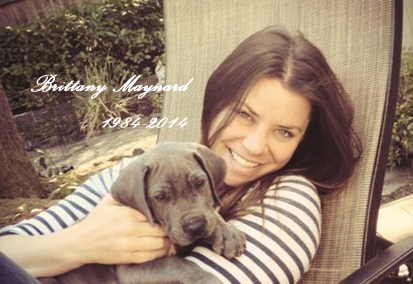
maynardThere’s a “dignity with death” movement that has gained a lot of traction recently. It’s about allowing terminally-ill people to request and receive medication that will hasten their deaths. You may have heard about this recently because of a young woman name Brittany Maynard. She was 29 years-old and learned that she had aggressive brain cancer. And so she decided that as she declined, she would take her own life rather than go through the suffering that comes with later-stage cancer.

Joining with Christ

Let me make a third observation that I think relates to Brittany Maynard’s situation: when we die, it’s a joining with Christ in his sufferings.

I say that relates because we have a Savior who did not, in any way, die an easy death on his own terms. So Paul writes to one group of early Christians:

I want to know Christ—yes, to know the power of his resurrection and participation in his sufferings, becoming like him in his death.[1. Phil 3:10]

For Christians, what if suffering doesn’t reflect a lack of dignity, but an actual becoming like Christ? Or maybe to ask it differently—even if we should lose some of our dignity in death, don’t we have a Savior who lost his dignity for us? For you who are baptized, that baptism was a preparation for your death. It was a sort of burial into Christ’s death—a death to self.

Though it may look undignified to our world, even our suffering can be beautiful and Christ-like.

Look at what another woman also dying of cancer, her name was Kara Tippetts, wrote to Brittany Maynard:

kara tippettsSuffering is not the absence of goodness, it is not the absence of beauty, but perhaps it can be the place where true beauty can be known […] That last kiss, that last warm touch, that last breath, matters — but it was never intended for us to decide when that last breath is breathed.

For some of us, dying well may mean suffering and difficulty and not having things on our own terms. But in that there’s a beauty—a joining with Christ and a participation in his sufferings, allowing God who has given us life to decide when it will end, as well.

Hope

And then, finally, one last observation about dying well. I just showed you Philippians 3:10. Let’s look at that again, but now also with the next verse:

I want to know Christ—yes, to know the power of his resurrection and participation in his sufferings, becoming like him in his death, and so, somehow, attaining to the resurrection from the dead.

When Paul writes about his death, he doesn’t stop with that. What’s the end point? “And so, somehow, attaining to the resurrection from the dead.” Dying well is dying with hope. Dying well is dying with this great assurance that just as we join Christ in death, we’ll join him in life, and life eternal.

Why do Christians die differently? Because we die with a great, eternal hope. Because Christ has gone before us. He’s made a way. He has suffered. He has died. And now he’s risen and lives forever to intercede for us. And for all who follow him, we’ll live and reign with him forever. That’s the hope we live with, and the hope we die with.

———–