For any of my preacher friends––or those of you interested in preaching––Seedbed just published a new article of mine, “Three People for Every Sermon.” When you prepare a sermon, who are you preparing for? These three people are my constant guide.
This is part of their new Preaching Collective. Lots of good material on preaching will be posting there soon.
For I resolved to know nothing while I was with you except Jesus Christ and him crucified. – 1 Corinthians 2:2
What does it mean to know nothing except Jesus Christ and him crucified?
That resolution comes from the Apostle Paul, who wrote in another letter: “I want to know Christ—yes, to know the power of his resurrection and participation in his sufferings, becoming like him in his death, and so, somehow, attaining to the resurrection from the dead.”[1. Philippians 3:10-11]
I’ve resolved to floss more this next year, and eat more vegetables. Good things to do. These certainly aren’t things I need to neglect for the sake of knowing Christ.
But what if my primary resolution were to know nothing except Jesus Christ and him crucified?
What does it mean to know Christ, the power of his resurrection, participation in his sufferings?
It surely means inward transformation for a godly life.[1. 2 Peter 1:3]
And it’s consistently linked with bold testimony and suffering for the gospel.[1. 2 Timothy 1:7-8]
If I’m honest, I haven’t been bold enough in my testimony to know if it would lead to suffering for the gospel. That confession troubles me. More than flossing or eating vegetables in 2015 (though I hope to do both), I want to conclude the next year without the sense that I’ve been too timid in my testimony about Jesus Christ and him crucified.
The Spirit God gave us does not make us timid, but gives us power, love and self-discipline. Oh, that I would have a greater measure of that Spirit in 2015.
A few applicable links as we move into the New Year:
In July, I’ll be returning from a sabbatical year to be the lead pastor of the Offerings Community at First UMC in Lexington. I’m sharing some pastoral letters with them in advance of that return. Though some notes here are specific to that congregation, the letters are a broad attempt to share a pastoral theology.
In two years’ time, the lead pastor position in Offerings has moved from 1/4-time to 3/4-time. I’m thrilled about this and what it can mean for our community.
I’ve thought and prayed a lot about how we need to use this position most faithfully. What does our community need most from the lead pastor? And what are the best contributions I can make?
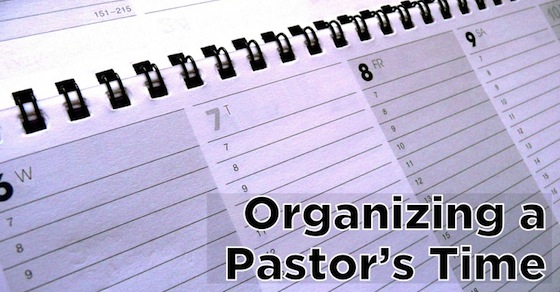
How we spend our time says a lot about our values, so I’m sharing this as a way of showing you my values. I also think it’s important for you to know what I’m doing with the time you’ve given me.
Though no single week will look exactly like this, here’s a general sketch of how I plan to spend my time:
1 – Preaching and Writing
In my first letter, I said the gospel is the primary thing that motivates everything I do in ministry. I think preaching and writing are our best broad opportunities to proclaim the gospel.
Several people have told me they think one of the greatest strengths of Offerings is faithful preaching. We need to continue that. I want to invest the time to do it well.
I love that we have a preaching team. It gives us a chance to hear a number of voices and perspectives. So my “preaching and writing” time will also include working with our other preachers––helping each other refine and improve our preaching.
I’ve also discovered what a great pastoral opportunity writing is. It affords a reach beyond what Sunday morning allows. It can focus on issues that wouldn’t be appropriate preaching topics, allows people to read in their own time, and can be passed on to other people.
In all, I plan to spend about 15 hours per week on preaching and writing. My best preaching requires about 15 hours of preparation—roughly what I’ve seen other preachers recommend. When I prepare less, it’s noticeable. For the weeks I’m not preaching, I’ll devote the extra time to writing and to working with our other preachers.
2 – Pastoral Visitation
Pastoral visitation is my best opportunity for deep connections. In that first letter, I also told you that I believe in you. Visiting with people is one of my best chances to invest in all of you.
I’m planning to meet individually with all of our leaders several times per year in addition to leadership team meetings. I also hope to visit each of you—as an individual or a family—once per year, preferably in your home. This category also includes visiting new guests, pastoral counseling, door-to-door visits in our neighborhood, and special need visits (people in the hospital, new babies, etc.)
Investments in these relationships are the best extension of myself—the best way to encourage and equip our leaders, and the best ways to make sure people are receiving good pastoral care and to encourage them to take next steps in discipleship. In all, I hope to spend about ten hours per week in various forms of visitation with people and leadership teams.
3 – Administration
Again, in that first letter, I said I believed in the church—and specifically in First UMC. Because of that, I’ll make a priority for First UMC administrative, staff, and pastoral meetings. It’s important for Offerings to be well-represented in those meetings and well-connected to the larger church. And it’s important for us to make a good contribution to the big church’s direction.
We also have plenty of administrative needs for Offerings. I’ve loved being able to count on a weekly email this past year and plan to continue those, along with any other things we need to do to ensure good communication. Faithfulness in small things—quick responses to calls and emails and taking care of any paperwork—help keep everything moving smoothly. I want to take care of those well.
As we explore moving into a new location, the details associated with that will take a lot of extra attention to administrative details. In all, I expect our administrative needs to require about ten hours on most weeks, and probably more than that at first.
4 – Connecting with area leaders (especially other church and nonprofit leaders), reading and research
I plan to keep regular calendar space for meeting with area leaders. That’s an important investment in our community’s relationships to other churches and agencies. I also plan to set aside regular time for reading and research (you can always see what I’m reading on the right sidebar of my blog).
These are the extremely important but not at all urgent. No one will require them of me or immediately notice whether they’re happening or not. It’s a lot like exercise. If I skimp on it for a few weeks or months, people probably won’t notice a difference. But the results in a few years’ time will be drastically different.
For my effectiveness as a preacher, leader, and pastor, there will be major dividends or major holes in the years to come based on whether I’m diligent about these things. I think it’s crucial that I carve out and protect regular time for them.
I hope to spend about six hours per week on this networking and continuing education. I also know, though, that these will be the first things to go when administrative and pastoral demands require more time. Because of that, I’ll be diligent about carving out and protecting regular time for these on my calendar and only back off them when another need is exceptionally important and urgent.
Modeling with my schedule
We’ve talked a lot in Offerings about our pastors’ lives reflecting our values. I think it’s important for me to do that with my schedule. Two specific ways that I’m trying to model important values with my schedule:
1 – I try to limit myself to 45 hours each week except for in rare emergencies—emergency to be read as the kind of thing that happens once or twice a year, not every other week. At my family’s current stage, I don’t think I can stay healthy (physically, spiritually, and emotionally) and take care of my family if I exceed that time.
There are always more things to be done. I would love to devote 30 hours per week to each item listed above. I want to do my best to name the most important things and always take care of them, but some things will inevitably go un-done. I’ll ask for your grace and help in those things.
I’ve seen a lot of people—pastors and other professionals—disregard health and family because there’s always more to do at work. I don’t want you to be one of those people, and I want to model a healthier way with my schedule.
2 – I don’t count my Sunday morning time or my time in a catechesis group, or things like personal devotional time, as “work time.” Those are things I expect all of us to do outside our jobs. I count them as something I do because I’m a Christian and part of the community, not because I’m on payroll.
I hope this helps. I think it’s important for you to know what I’m doing with the time you give me. And thank you for giving me the time to do these things!



 teddy ray