
How the Church Grows (pt. II) [Pastoral Letters]

In July, I’ll be returning from a sabbatical year to be the lead pastor of the Offerings Community at First UMC in Lexington, KY. I’m sharing some pastoral letters with them in advance of that return. Though some notes here are specific to that congregation, the letters are a broad attempt to share a pastoral theology.

how the church grows

Last week, I shared part I of “How the church grows” (see it here). Here’s the second part…

Service

Our service is an essential part of the church’s growth. I mentioned staff positions last week, but no matter how much money we have, we never plan to “hire” most of the work we have to do as a church. We’re a body, and we all have a part to play in this.

We grow when you serve within the church—when you change diapers in the nursery or greet people at the doors or show up with meals after someone has been sick. On any given Sunday morning, the number of people we rely on to serve is amazing. This past Sunday, nearly one-third of the people in attendance were formally listed as serving somewhere. And a lot of the rest of you were serving in some unofficial capacity.

This isn’t just about keeping the machine running. This is about caring for people well, doing the small things that create an environment for relationships to grow, for people to worship without distraction, for people to hear a word from God.

We grow when you serve outside the church, too—when you show up at Room in the Inn to share a meal and fellowship, when you fly to Haiti to help in an orphanage, when you go across the street to mow an elderly neighbor’s lawn.

Maybe it’s less obvious how those things affect our growth, but I think they’re crucial to it. These are the things that remind us we’re a sent people.

I believe God calls out to the world, calling people to come into the church. But God also calls into the church, calling us to go out to the world.

The story of a lot of declining American churches is about churches that got self-absorbed and forgot their calling to go out into the world. If we ever forget that calling, we’re bound to shrink away. And no one else will much notice or care.

So I urge all of us to serve. Specifically, if we can, to find two ways to serve—something in the church, and something out in the world. How can you take some of the time and talents and energy and passion God has given you, and put it to use within our community? And where can you do the same out in the world?

Witness

For a lot of us, this one is the hardest. I would guess it’s the one least practiced. But we must do it! The church grows when we share the good news—when we’re bold and passionate enough to point to Christ and tell people that he’s King, and that he’s changing our lives.

Our lives are a witness themselves. Our lives reveal God’s work in us when faith sustains us through hard times, or when faith leads us to make hard decisions, or when the love of Christ shows through us.

Our witness at least includes having lives that reveal Christ as our Lord. But I think it needs to mean more, too. It needs to mean a clear invitation.

Maybe that’s an invitation into the church community—I hope someone who takes you up on that invitation will encounter God in our midst.

Maybe that’s an invitation to believe the gospel. I met someone recently who shares a simple version of the gospel and invites people to believe several times a day. And usually at least one person responds each day. Do all of those people remain in the faith? I don’t know. But none of them would if they were never invited in the first place.

As we consider moving to a new location, we have to keep this in mind. “If you build it, they will come” made for a great movie, but in real life it’s usually untrue. A new worship space won’t automatically bring new people. The vast majority of people who come will come because we invited them.

From our time in Spain, I learned a couple of things about invitation:

I learned that more people are interested than I thought. People I had become friends with were very open to an invitation into the church. Some people I was worried about hassling came back later and told me how much they appreciated the invitation.

I also learned to keep inviting. No one responded to the first invitation. No one. It was the second or third or fourth invitation that they responded to.

Let me urge us all to be considering our witness. Who are you inviting into the life of faith? Who are you inviting into the church? Can you make a list of 5-30 people you can pray for and commit to giving some sort of invitation (better, several invitations) in the next few months?

Regular, Scheduled, Disciplined… and Spontaneous

If you haven’t recognized them yet, these are the vows we all take when we join a United Methodist congregation—to support the church with our prayers, presence, gifts, service, and witness. If each of us who took those vows would be diligent about them, I think we would experience an incredible revival.

I’ve learned in my own life that good intentions don’t usually get me far. When I resolve to start spontaneously doing things that I don’t normally do, it doesn’t last long. The things I do most regularly are the things I also do spontaneously—eat, check Facebook, imagine creating awkward social situations…

For things I’m not already doing naturally, I need them to be regular, scheduled, and disciplined. If I do them like that long enough, over time I find them happening spontaneously, too.

For any of these that you don’t already find yourself doing on a consistent basis, how can you find a regular, scheduled, disciplined way to do them?

Can you name a certain time to pray each day? When you do, please pray for our church and our community.

Can you commit to making worship attendance a priority and ask about joining a catechesis group?

Can you take a look at your giving and commit to something regular?

Can you identify one place in the church and one in the world where you will serve on a scheduled, consistent basis?

Can you make a list of people whom you’ll commit to telling about your faith or inviting to worship?

When we do these things regularly, I think we’ll also start finding ourselves doing them more spontaneously.

All by the grace of God

And please remember my first note on prayer. None of this happens by our own strength. It happens by the grace of God and the work of the Holy Spirit. It happens in ways that will shock and amaze us. Our role is secondary, but that doesn’t make it unimportant. God invites us to be co-workers in his service. What an invitation!
Three things I believe in [Pastoral Letters]

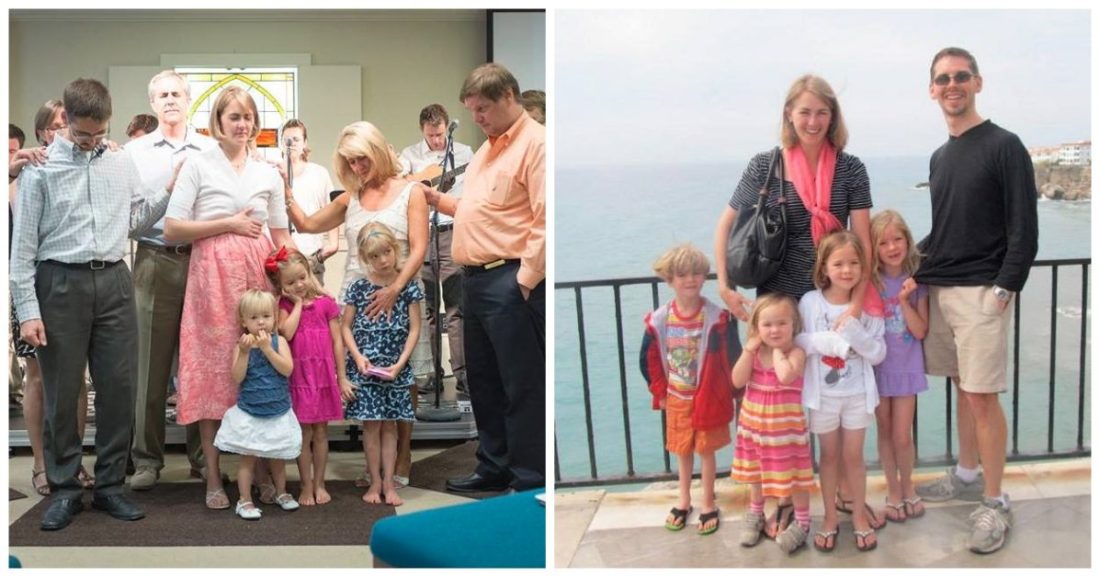
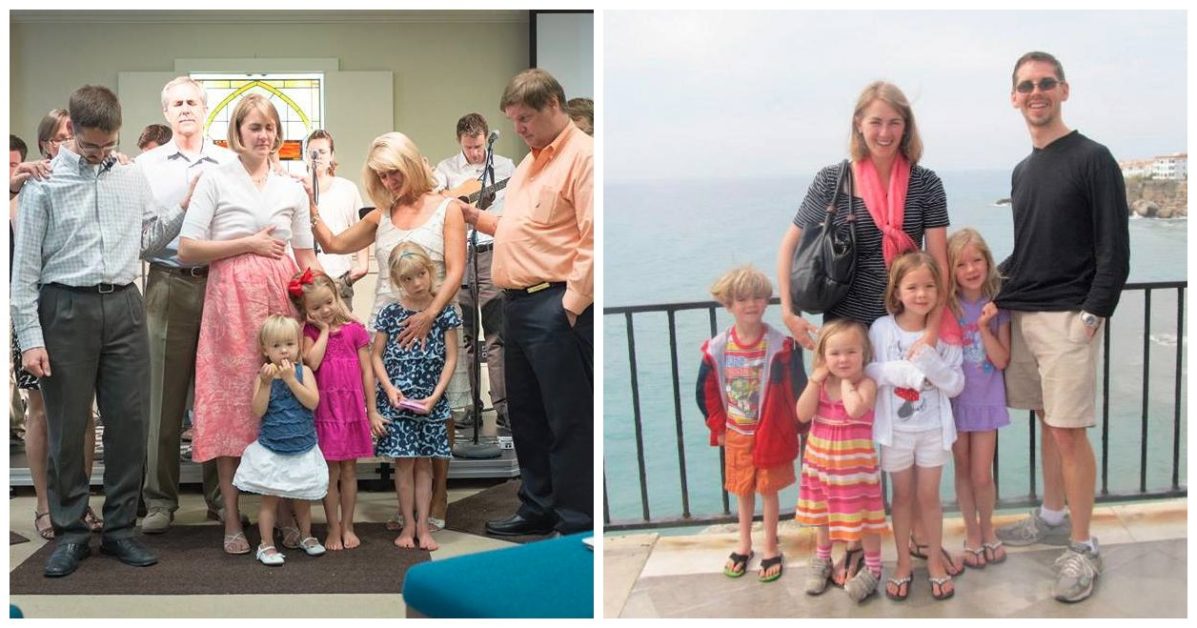
Left: Our family being commissioned by the Offerings Community before coming to Spain. Right: 10 months later in Spain.
Left: Our family being commissioned by the Offerings Community before coming to Spain.
Right: 10 months later in Spain.

In July, I’ll be returning from a sabbatical year to be the lead pastor of the Offerings Community at First UMC in Lexington, KY. I’m sharing some pastoral letters with them in advance of that return. I wanted to share them with you. Though some notes here are specific to that congregation, the letters are a broad attempt to share a pastoral theology.

Three beliefs motivate everything I do in ministry… 

The Gospel

I believe God’s grace is our only hope. I believe God so loved the world that he gave his one and only Son––Jesus Christ, God in the flesh––that whoever believes in him shall not perish but have eternal life.[1. John 3:16] I believe Christ has died, Christ is risen, and Christ will come again. 

I believe in the gospel because it’s “the power of God that brings salvation to everyone who believes.”[1. Romans 1:16] By the grace of God, we’re forgiven for our past sins, given power over present sin, healed from our brokenness, and collectively made into the body of Christ in the world.

I believe all this because I’ve experienced it. God’s grace has transformed my life. Despite my own insecurities, I have a great assurance of God’s love. Despite my own past sins, I have a great assurance of God’s forgiveness. Despite my own doubts, I’ve seen God answer prayers.

I believe all this because I’ve seen it in so many of you. One of the greatest privileges of pastoral ministry is the front-seat I’ve had to the transformation in some of your lives. I’ve seen some of you receive forgiveness and know it was real after you had thought you’d never get past the guilt of something in your past. I’ve seen some of you freed from sins you thought would keep you enslaved the rest of your lives. And I’ve seen some of you become great ministers––hands and feet of Christ to others––when before you could barely keep yourselves together. What a privilege to see the gospel at work in you!

The apostle Paul wrote, “If Christ has not been raised, our preaching is useless and so is your faith.”[1. 1 Corinthians 15:14] I agree with him. If the good news about Christ’s death and resurrection isn’t true, and if the grace God offers through Christ isn’t transforming us, we’re all wasting our time.

The Church

I hear a lot of people today criticize the church. They call it irrelevant and unnecessary. They say they can be “spiritual” without “institutional religion.” They say they can be “Christian” without having to “go to church.” 

First, full disclosure: I’ve seen a lot of ugly things about this institution we call the church. I can’t disagree with a lot of the criticisms I’ve heard. Yet I believe in the church.

I believe in the church because the Bible tells us “Christ loved the church and gave himself up for her.”[1. Ephesians 5:25] I believe in the church because it’s called the body of Christ––“the fullness of him who fills everything in every way.”[1. Ephesians 1:23] How humbling that such a flawed and wayward community would still be the community that Christ loved and gave himself up for, the community that would be called the very body of Christ!

Despite our many problems and all the ways we fall short, I believe God still uses the church. I believe the church is still God’s primary means of offering his grace in the world––the fullness of Christ in the world.

Specifically, I believe in First UMC of Lexington. I love our emphasis on making disciples “across the street and around the world.” I love the way we’re trying to start new worshiping communities in new places so that we can reach new people. I believe in First UMC because I’ve experienced what this church can do. This is my home church, and for over 30 years, they’ve surrounded me with a community of love and forgiveness, supported and encouraged me, and helped me grow into the person I am today. Is First UMC perfect? Far from it! But I believe God loves this church and is using us to proclaim and live the gospel. In our failings, I trust that God is at work to transform us into a church that looks more like her Savior.

Even more specifically, I believe in this Offerings Community. I love our emphasis on spreading scriptural holiness, our focus on making disciples who become pastors and apostles, our desire to start more communities in the future. I believe in this little community because you’ve surrounded me and my family with a community of love and forgiveness. We know God’s love better because of you. Is the Offerings Community perfect? Far from it! But I believe God loves this community and is using it in powerful ways. In our failings, I trust that God is at work to transform us into a community that’s the body of Christ for our world.

You

I believe each of you is an essential member of the body of Christ. I believe God has given each of you special gifts––gifts that we need to minister to each other and to our world. I believe in you.

At a time when so much of ministry is “professionalized”––left to the church staff––I love the way this community values shared ministry. If you’ve been around for long, you’ve already seen the priceless contribution that so many people bring to this community. And I think we’re still only scratching the surface.

I believe great things are ahead for us, and that God will use you to do those things. Some of you have a great gift of faith, and we’ll be sustained by your prayers. Some of you have the gift of evangelism, and we’ll share the gospel with new people because of you. Some of you have a special gift for generosity, and your giving will sustain our budget. Some of you have special gifts for spiritual encouragement, and you’ll be pastors to others. Some of you don’t even realize that you have those gifts yet, but you will.

What’s the hope for our world? The gospel. 

How is our world most likely to see and hear and receive the gospel? Through the church and through you. 

Those beliefs motivate everything about ministry for me.

—————

Sloth isn’t what you think it is –– or, The workaholic sloth

slothWe tend to equate “sloth” with laziness. The slothful person can be found asleep on the couch, or playing hours’ worth of video games, or sleeping until noon.

Those images aren’t necessarily wrong, but they’re not the full picture.

Sloth isn’t a denial of work, it’s a denial of love. Sloth doesn’t choose the couch instead of the to-do list. It chooses anything (perhaps the couch, perhaps the to-do list) to avoid the hard work that loving relationships require.

Sloth as a denial of “Love your neighbor” and maybe of “love yourself,” too

Some examples:

You know you need to have a hard conversation with someone––to apologize, to confront, or to bring up a topic that might create conflict. You don’t want to do it. Who likes these? So you put it off. Maybe you hide behind your work. Maybe you hide behind laziness.

You have some pain in your past that you know you’re still dragging around with you. You keep pushing it down and avoiding it. Easier than the hard work of resolution.

You avoid reading a certain book or watching a certain movie because you know you’ll be convicted about something. “I know that movie will make me feel like I should ______, and I’m just not ready for that right now.” If the movie is a wrong-headed or unnecessary guilt trip, that’s one thing. If you know it’s right, and you just don’t want to be confronted with the facts, that’s another…

You ignore any injustice in society or say the issue is too big for you to do anything about.

You avoid any stand on an issue that might cause you to change what you buy or where you buy it.

You don’t do serious romantic relationships––perhaps intentionally, perhaps not. The initial rush of a new relationship is fun, but once things get serious, you prefer to move on rather than fight through the tough parts.

In all of these, you see the denial of love toward others (and ourselves). Love is hard. This is why those supposed “love at first sight” relationships are so fun… and so fleeting. Because growth requires energy and effort, and usually some hardship along the way.

Sloth as a denial of “Love the Lord your God”

If you’re a Protestant, you may be most at risk of a certain slothful mentality. In fact, I’ll single out my Reformed friends for a moment. I’ve seen this line of thinking come out of the Reformed wing of the Church most often. Calvin’s brilliant theology didn’t require this. It’s a distortion of his theology, not a continuation of it. [i.e. This isn’t an attack on Reformed theology. It’s an attack on bad Reformed theology.]

Protestants celebrate that we’re saved by grace alone. We don’t earn salvation, we receive it. But many Protestants have jumped so hard on that side of the ship that they’ve tipped it nearly over. They’ve confused earning with effort.[1. I take this from Rebecca DeYoung’s great line in Glittering Vices: “Sanctification is about effort—but not earning.” And again, more ideas in this post have come from DeYoung than I can probably even recognize. You’ve ordered the book by now, haven’t you?] In their zeal to emphasize that we don’t earn salvation, they scorn any talk about human effort in our faith. At the beginning of Lent, I watched Twitter and Facebook light up with comments about not giving up anything for Lent from people who “don’t have to earn God’s favor.”

God’s favor isn’t earned. But along with receiving and celebrating God’s unmerited favor, we’re told to love God.

We can’t love God without following Jesus––without becoming his disciples. And discipleship inherently suggests discipline. Sloth happily accepts God’s saving grace without making the costly effort of discipleship. Dietrich Bonhoeffer famously called this “cheap grace”:

Cheap grace is preaching forgiveness without repentance; it is baptism without the discipline of community; it is the Lord’s Supper without confession of sin; it is absolution without personal confession. Cheap grace is grace without discipleship, grace without the cross, grace without the living, incarnate Jesus Christ […]

[God’s grace] is costly, because it calls to discipleship; it is grace, because it calls us to follow Jesus Christ. It is costly, because it costs people their lives; it is grace, because it thereby makes them live. [Discipleship, Fortress Press, pp. 44-45]

Two questions that sloth hates

For the past several years, I’ve had to regularly answer two questions that force me to recognize my own slothfulness.

1 – “Have you done all the good you could this week?”

That question doesn’t expect a laundry-list response of all the things I did, or should have done. It doesn’t suggest that I should forsake all leisure since there’s always some other good act I could do.

The question expects me to share whether there’s any good thing I knew I should do, and whether I did it. Sometimes it makes me realize I’ve been avoiding something––apologizing to someone and requesting forgiveness, or forgiving someone and not continuing to think and act toward them with anger.

Sometimes it makes me realize I’ve been too apathetic. I can’t think of anything good I did during the week. Not because I avoided it, but because I just didn’t notice anything. In a world with so much pain and injustice, if I can go a whole week without recognizing something good I can do––some act of compassion or advocacy––I don’t care enough.

If we’re avoiding good things we know we need to do, or we’re too apathetic to notice them in the first place, sloth may be at root. Our first step should be to ask God to change our hearts. To help us to see people with his love. To have enough love for people that we overcome slothful avoidance and apathy and commit ourselves to the effort of loving others.

2 – “What Christian practices have you kept this week?” or “How have you availed yourself of the means of grace this week?”

God has commanded us to keep certain practices––things like fasting, reading Scripture, praying, and receiving the sacraments. These aren’t just things we do to say we’ve done them. These are spiritual disciplines that transform us into better lovers of God.

I prefer to talk about these as “means of grace.” It’s not simply that we grow through these disciplines. We grow because these disciplines are means of receiving God’s grace. When we do these things, we avail ourselves of the ways that God transforms us by his grace.

Are you availing yourself of these means of grace?

Some people say they only want to do these if their “heart is in it.” I understand the desire for authenticity that may produce that thought, but I disagree with it. If you’re an athlete, do you show up for practice only when your heart is in it? No! I’d expect that you progress faster when your heart is in it, but the discipline of continuing to show up is important. A baseball player may not have his “heart into” a particular batting practice, but he shows up because he wants to get better.

Sometimes we need to keep showing up in these spiritual disciplines––keep availing ourselves of God’s means of grace––even when it’s difficult. We do this because we want to grow in our love of God, even if we don’t want to fast this Friday.

Others avoid these disciplines. The problem isn’t an apathy toward God but a fear of what might happen. A friend told me recently that he doesn’t want to fast because he thinks his “true self” gets exposed too much when he’s hungry. Sloth doesn’t like to have these areas exposed. It prefers a shallower, as-you-were relationship with God over something deeper that would demand transformation.


We’re saved by the grace of God––praise be to God! His grace, gift, and favor are free and unmerited. May God’s free grace not become cheap grace to you, leading you to sloth and complacency. Instead, may God’s grace empower you for full obedience to his command:  “Love the Lord your God with all your heart and with all your soul and with all your mind [… and] Love your neighbor as yourself.”[1. Matt 22:37-40]

————