
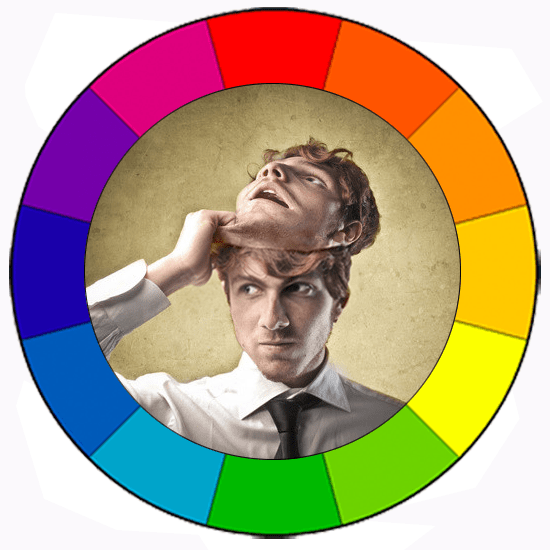
 I’ve talked with several people who were turned off to Christianity because Christians seem fake to them. In the cases I’m considering, they think our faith tells them to change their personality. To them, there’s a particular personality type that Christianity prescribes, and they don’t think it fits them.
What most of these people seem to be looking at is a “shiny happy people” sort of Christianity. They see a classic Christian personality type—the meek and mild lover of puppies and rainbows who’s just outgoing enough to welcome new visitors at church services—and it seems fake to them, inauthentic about life with an insincere smile as cover.
Maybe you’ve seen a different sort of personality type expectation. Perhaps the gregarious, fun-loving, charismatic type. Or the introspective, solemn type who spends most of her time fasting, praying, or reading Scripture.
Other people––those who have struggled with issues like clinical depression or anxiety or eating disorders––have been told that there’s no place for those things in the life of a Christian. Christians have too much cause for joy to be depressed, too much hope to be anxious, too much self-control and self-esteem to be bulimic. They must not have real faith if they’re still dealing with these issues. Whatever part of their personality is causing these issues needs to change.
As a pastor, I’ve seen “personality” misused a lot––as the cause for conflicts, the reason to deny people certain roles, even the reason to tell some people they’re not suited for ordination. In most of these situations, attributing things to personality isn’t helpful. Sometimes it’s too broad; other times it’s the wrong category entirely.
Does God want to change your personality? Yes… and no.
What constitutes your personality?
I’m going to define personality here with three components.[1. The field of personality theory has seen plenty of research. I’m trying to offer a simple structure here to examine the issues I’m seeing most often. If you’ve studied a lot of psychology or psychiatry, I’d welcome your input.]
Personality = Disposition + Character + Mental health
Each of these components plays an important role, but the roles they play are different. In the times when we’ve done the most damage to ourselves and others, we’ve misunderstood these components or failed to differentiate between them.
Over the next few posts, I’m going to define what I mean by disposition, character, and mental health, suggest how we should understand each of them in light of our faith, and show the problems we cause when we misunderstand their roles.
Your Disposition
In the beginning, God created mankind in his own image, in the image of God he created them. No doubt, the effects of sin have seriously distorted that image of God. We’ll get more into that in the next two posts. But even after sin entered the world, God tells Noah that mankind has been made in the image of God (Genesis 9:6). Sin has distorted, not erased, the image of God in us.
At its root, your personality includes several inherent, God-given qualities—qualities that reflect the image of God in you. This is what I’m referring to as your disposition.
Maybe you’re naturally wired to take care of people or serve as the loyal guardian of an institution. You’re dependable, dutiful, and hard-working.
Or maybe you’re a natural creative type—spontaneous and inventive. You get restless when tasks are mundane and when life gets too routine.
Perhaps you’re more of a thinker—an analyst and planner whose head is often in the clouds.
Or you’re best described as an idealist. You’re naturally enthusiastic. You long for meaningful, authentic relationships.[2. These are broad descriptions of the four temperaments defined by David Keirsey. I’ve found them generally helpful. See more at http://www.keirsey.com/]
At least one of these probably sounds like you. A lot of us would aspire to be defined by all of these descriptions, but it’s doubtful that all four fit any of us equally. Of course, there’s much more to say about your disposition. These are just some generalizations.
The point: you have a natural disposition of some sort. Your environment has shaped that some, but there’s a lot that was inborn. Spend some time watching a room full of toddlers—even siblings who have grown up in the same home environment—and you’ll see a wealth of different dispositions already on display.
In this model, what I’m calling your disposition serves as the foundation of your personality. Those other two components—character and mental health—serve to amplify or distort. But regardless of good character or bad, mental health or mental disorder, you still have that same underlying disposition.
How to understand dispositions and our faith
Does God want to change your disposition? No![3. To qualify this just a bit: God can change your disposition. And perhaps this has even happened in the past. But I think it’s the rare exception to the rule.]
If dispositions reflect God-given qualities, then we embrace and celebrate them in all their diverse forms.
I love the way Paul uses the human body as a metaphor for the church in Scripture. Is the whole body an ear? Or an eye? Or a hand? Of course not! None of us can represent the whole. We’re each only a part, and those parts look different.
We see this even in creation. God creates mankind in his image, not an individual. “In the image of God he created them; male and female he created them” (Genesis 1:27). From the beginning, we see that none of us alone can fully reflect the image of God. We make a mistake when we try to squeeze everyone into our same mold of “Christian disposition.” In the process, we tell them that some of those God-given personality traits need to change.
Consider the apostle Paul. He was bold and assertive, feisty and determined. Some people might have described him as headstrong. Meek and mild aren’t the first words we think of with Paul. And he appears to have been wired this way before his conversion, too. Paul’s conversion didn’t change his disposition; it changed his allegiance and his character.
Problems when we misunderstand disposition
We must understand that disposition and character are different. With his bold and assertive disposition, I can imagine Paul was called arrogant a time or two. But you can be naturally assertive without being arrogant.
Other dispositions have had similar problems. The quiet thinker can be deemed standoffish and unkind, the gregarious socialite deemed frivolous and superficial.
Sadly, our world is often quick to look at people’s dispositions and pass character judgments. This is sometimes caused by jealousy, other times by ignorance. Regardless, Christians should strive to do better. We should embrace each quirky disposition as it is, celebrate their differences, and be slow to attribute character flaws to people who may just have different dispositions.
We also should be careful with ourselves––careful not to use our dispositions to excuse things that need to change. Just as the assertive person can be falsely accused of arrogance, the arrogant person can excuse himself too easily by saying it’s just disposition. I’ve heard anger excused this way often: “I just have a short fuse. I was born that way.”
We should recognize, too, that our different dispositions may lend themselves to certain character issues, even perhaps certain mental health problems. More on these in upcoming posts.
For now, take this with you: God doesn’t want to change your disposition. He created you with it, and he loves it. If we’ll allow it, some of the beauty of God’s people––the body of Christ––is all of the great diversity found within.
Did you enjoy this? Click here to receive new posts in your inbox.
Next: Can a good Christian be depressed? [Does God want to change your personality? pt. II]

 teddy ray