Library suggestions for leaders — Bible

booksI’ve been asked by several people to suggest some helpful reading on various ministry- related topics. Here’s an attempt at the books I most highly recommend in these areas, along with some that have come most highly recommended to me.

I write this with many of my own leaders in mind, so these lists assume I’m talking to bright, interested people, but not scholars or seminarians, necessarily. With that, I’m looking for works that I can feel confident putting in the hands of most of my people.

These suggestions are intended to give you a start. I’m not providing a full analysis here. Take a look at their tables of contents, sample some pages, and read some reviews to get a better feel for which is right for you. And, of course, I’m happy to talk to you more about what you’re looking for and what might be best.

Understanding the Biblical Narrative

For an introduction to the larger narrative of Scripture — something to give you a better handle on how the whole Scripture story weaves together, these two books will serve you very well:

Those are relatively short works. For a more detailed introduction, take a look at Introducing the Bible by John Drane. It’s big (736 pp.), but very reader friendly. You can also use the OT and NT sections in this as your introductory surveys for those areas.

Old Testament

For a general introduction to the Old Testament, these two books are where I’d start:

Relating the Old Testament to modern Christian ethical concerns is an ongoing challenge. If you’re dealing with those concerns, I’d suggest Old Testament Ethics for the People of God by Christopher J. H. Wright. It’s another big book, but very accessible. And though it’s worth reading front to back, you can also use it to just read up on a particular area.

New Testament

Whereas the Old Testament setting spans centuries – millennia even – the New Testament setting spans only a few decades. Because of that, it has been a bit easier for people to ask what “the setting” of the New Testament was. I’d go to a few books to help me understand that setting:

For a more standard survey of the New Testament, I might start with Mark Allan Powell’s Introducing the New Testament: A Historical, Literary, and Theological Survey.

And for all those tough ethical conundrums (divorce and remarriage, homosexual practice, abortion, violence, women in ministry) that we go to the New Testament hoping to understand, the book to go to is The Moral Vision of the New Testament: A Contemporary Introduction To New Testament Ethics by Richard Hays. He says you should read it in order – not jumping to the specific topics – and it’s probably better that way, but I think some of the individual chapters on various topics are quite good on their own. And his five pages on sharing possessions in the conclusion are perhaps the best part of the whole book.

General Bible Study

We struggle to understand how to go about reading and studying the Bible. Fortunately, there are some books out that I think are outstanding resources:

There’s a running start at some resources concerning the Bible. I’ll have future posts on theology, pastoral care, worship, discipleship & spiritual formation, Church history, and church & society issues. I’d love to hear your thoughts or questions about this list or future lists.

Disclaimers

  • I have read most, but not all of these. Those I haven’t read, I’ve skimmed through enough and heard enough good things from trusted people that I can recommend them with confidence.
  • All Amazon links are affiliate links. Feel free to buy wheresoever you please.

Shortcuts to studying Scripture – and why they take longer

inductive bible studyA note for anyone hoping to hear a word from God when studying Scripture – whether for personal study or for preaching and teaching: The shortcut often ends up being the long road.

An example from my own sermon preparation… Sometimes when I feel like time has been cut short and I need quick inspiration from the text, I skip my own study of the text and jump straight to secondary sources: commentaries, other articles and sermons on the same text, etc. Whenever I do this, I usually find myself reading commentary after commentary, sermon after sermon, looking for a nugget that hits home and is something I can work off of.

On the other hand, when I devote myself to actually studying the text – putting pen to paper, asking my own questions about what a particular word means or why a certain sentence structure is used – inspiration usually comes pretty quickly.

Then I go to those secondary resources with a purpose: to see if anyone else is seeing what I’m seeing, or can help give me a bit more context to understand it, or can tell me I’m way off base. When I go to the commentaries this way, I read sections I would have otherwise glazed past with great enthusiasm and interest. Now I know what I’m looking for help with – not just looking for something.

The Bible is an amazing book. The living word of God. I consistently find that when I approach it that way, I’m blown away.

Seminary-trained people, this is nothing new for you, right? You heard it time after time: “Do your own work, then go to the commentaries.” But you break the rules sometimes, don’t you? And usually because you’re out of time or energy. And unless you’re very different from me, I think it ends up costing you time – or enthusiasm about what you’re preaching – in the long run. You spend the time you would have spent doing your own study searching for someone else to give you something to say. And a lot of times it never becomes your own – you never internalize it. And that shows when you try to teach or preach it. Well, at least that’s how it works for me.

Some people struggle with how to go about studying the Bible on their own. I know it was a problem for me in the past. Without question, the most helpful method for me is “Inductive Bible Study” (IBS). If you’ll devote yourself to it, I think this method will blow your Bible reading wide open. Rather than try to explain IBS myself, let me point you to a good introduction someone else has put together, and then recommend a few resources.

IBS – An Overview

Check out this helpful and informative post by Eric Evans. It’s a good overview, with videos and all. IBS: An Overview and IBS: Step by Step

That was a nice overview, but don’t stop there. You should really take a look at these below.

IBS 101

Bible Study That Works by David Thompson.

If you’re not looking for academic-level reading, this is where I think you should start. Thompson makes IBS easy to understand and will show you its value. In just over 100 pages, he’ll teach you how to be a much better student of Scripture.

201

Inductive Bible Study: A Comprehensive Guide to the Practice of Hermeneutics by David Bauer and Robert Traina.

If you’re serious about IBS, this is the ultimate resource. It’s 350 pages, and you better be ready to seriously commit. But if you do, it will change your study. Traina is the grandaddy of IBS and Bauer is his favored son. There’s a lot to learn from them!

301

This isn’t necessarily Inductive Bible Study, but what I would consider an essential aid if you’re really serious about your study. You’ve got to learn the languages! My greatest moments of awe this week, as I prepared to preach Isaiah 60, came while translating. If you’re not reading the Greek and Hebrew, you’re missing a great depth and richness and nuance that no translation can fully capture. Seriously, consider it.

My own experience: finding a way to do inductive language learning (learning by being immersed in the Scriptures – very small bits at first – rather than starting with lots of memorization and tables) was much more enjoyable and helped me see much more quickly how important it is to know the languages.

For you who aren’t vocational pastors and aren’t seminary-trained: don’t think you can’t learn the languages, too. Elementary-aged children used to learn Greek, Hebrew, and Latin. Some still do. You can do it, too!

If you’re interested and want more resource suggestions, I’d love to talk. If you begin reading and implementing any of these, I’d love to hear about your experience.

All links are affiliate links to Amazon. Feel free to buy or borrow wherever you choose.

“What if I don’t believe the Bible?”

creation

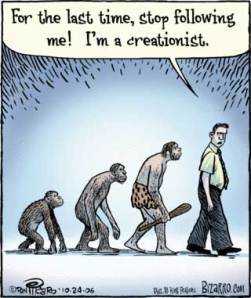
creationI’ve run into a number of people who are struggling with Christianity because they’re not sure they can believe the Bible. If you can’t believe the Bible, how can you be a Christian?

The struggle tends to revolve around a tension between faith and science. Can you be a Christian without believing God created everything in 6 days? What if you don’t even buy that those days represent six geological eras (after all, the sun appears after the earth and its vegetation)? What if you struggle to believe a man named Noah got two of every kind of animal onto a big boat?

Some people and groups will tell you that you can’t be a Christian – or at the least that you don’t have enough faith – if you don’t believe these things. Some simply reject science in favor of whatever the Bible “literally says.” Some have come up with clever ways to show that the Bible and science are compatible.*

At the end of the day, though, even the most loyal biblical literalists fail to believe the Bible literally. None of them believe that Jesus was a literal vine, or that his disciples were branches, even though Jesus referred to them that way. Few, if any, believe that the rivers literally clapped their hands or that the mountains and trees sang for joy, even though we see those things happening in the psalms.

Why don’t we believe Jesus was a literal vine, even if we fully believe the Bible? Because we understand how to read a figure of speech. When someone speaks metaphorically, we don’t have to believe them literally to believe what they’re saying. Actually, we’re likely to totally miss their point if we’re focused on believing them literally.

What if there were big debates among Christians today about whether Jesus was a literal vine? First, we’d look pretty silly and lose a lot of credibility. But second, and even worse, we would miss the real point of Jesus’ statement, “I am the vine; you are the branches. If you remain in me and I in you, you will bear much fruit; apart from me you can do nothing.”

I think much the same has happened in our faith and science debates – particularly regarding the early accounts in the Bible. 

I’ll come clean. I’m not sure I believe a historical couple named Adam and Eve were the first to walk the earth, that they encountered a serpent, ate fruit, saw that they were naked… Actually, I’m not sure a historical man named Noah ever took animals onto a boat and survived a flood.

Do I believe these things could have happened historically? Sure! I don’t question God’s power to have accomplished any of this historically. I just don’t believe that’s the point of the accounts. So I would say I believe these accounts deeply and fully for what they were intended to convey, even if I don’t necessarily believe them historically.

The early accounts in the Bible are written in a mythic fashion. Don’t take “myth” here to mean “false.” Ancient societies all had mythic poetic narratives that helped them understand who they were, who their gods were, and the purpose of all life. The first eleven chapters of Genesis – where we find creation, Adam & Eve, Noah, and the Tower of Babel – have the form of a mythic poetic narrative.

So what changes if we read the first eleven chapters of the Bible as mythic poetic narrative?

First, we stop fighting over whether it was six literal 24-hour days. Some people stop trying to prove how Noah got all those animals on that boat, while others stop worrying that they must not have enough faith because they don’t believe he did.

Second, we start believing the Bible in what I would call a deeper way:

  • We see that the creation narrative tells mankind shocking things – like that humanity was created in the image of a holy God (while most other cultures had less-than-holy gods who didn’t think very highly of humans)!
  • We are presented with one almighty God who created all things and called them good. A major contrast with the quarreling and only partially powerful gods of the surrounding cultures.
  • We see God’s deep anguish over humanity’s wickedness in the flood account, not the gods’ petty annoyance with humanity presented in other versions of that epic story.

[I’m not able to do justice here to a reading of these accounts as mythic poetic narratives. As I have seen them this way, they have become much more profound to me and important to my faith than when I simply believed them as history. Perhaps in the future I’ll try to give a more in-depth approach to them.]

If you have struggled to believe some of these early accounts as history, please don’t let that struggle prevent you from faith.

If you have fiercely supported the historicity of these early accounts, two things:

  1. I commend you for being dedicated to what the Bible says and believing it. I’m certainly not saying that you must stop believing these accounts as history to be a good Christian, or even to be right. I am asking you not to question others’ faith if they don’t call this history, though.
  2. Make sure you haven’t devoted so much attention to arguing that Jesus is a literal vine that you’ve missed the deeper point of “I am the vine; you are the branches.”

An important note here: I doubt that the first eleven chapters of the Bible are literal historical truth. I believe there are several pieces outside those first eleven chapters that may also qualify. I would insist, though, that the accounts of Christ’s incarnation, life, death, and resurrection are historical truth. I believe these were written to be understood as historical truth, and as the most important events of human history. I would be martyred for the belief that Jesus was historically crucified, died, and was buried. The third day he rose from the dead! I wouldn’t be martyred for the belief that the first woman was literally made from the rib of a man.

Was this helpful or interesting to you? If so, JOIN my e-mail update list.

____________

* Perhaps the most perplexing of these attempts, in my humble opinion, is gap creationism. The theory is essentially an attempt to squeeze a whole new narrative in between Genesis 1:1 and 1:2, all to allow people to believe in a literal six-day creation  and also believe scientists who say that the world is really very old. Gap theorists say there’s biblical evidence to suggest this gap. Oddly, though, no one had ever noticed that biblical evidence until geologists’ studies started to show that the earth is much older than previously thought. Hmmm….