The coming church budget crunch

budget squeeze

This is a revised version of a post from last year. I thought it appropriate as churches are beginning to budget for 2014.budget squeeze

I just asked a friend to run a quick analysis for me: “How much of your church’s contributions come from people age 55 and over?”

His number was 70%.

My friend was unflinching. “Isn’t it always that way? That’s the group that has the most to give, so they give most of the money.” His church looks healthy. The UMC would consider it a “vital congregation.”

But I wasn’t convinced, so I asked him to try a second analysis, if his software could do it. “How much of your church’s contributions 10 years ago came from people age 55 and over?”

This time, my friend came back concerned. Ten years ago, only 50% of contributions came from ages 55 and over. In ten years, giving from people age 55 and over went from 50% to 70%.

A few reasons I had this hunch:

  • If your church is at least 10 years old, it’s probably older now than it was 10 years ago. You may have anecdotal evidence to argue otherwise (that booming parents’ Sunday School class, the three infant baptisms last week…), but unless you can show me the numbers to prove it, I bet you’re older. The average age in the American UMC has gone from 30 in the 1950’s to 57 in 2008.
  • Most churches – even ones that look healthy – have been living off the leadership and giving of the Baby Boomers for a long time. The Baby Boomers are now ages 48 – 66.
  • The Older Boomers (those who were draft age during Vietnam) are all now 56 and older. They’ve been stronger leaders and contributors than the Younger Boomers.
  • The Silent Generation (whose youngest are now 67) were loyalists, committed to the Church, and committed to supporting it with their money.

This shows a fundamental non-shift taking place in our churches. As the Boomers and Silent Generation age, the younger generations aren’t shifting to handle more of the church’s financial burden. There are no signs they plan to fill that void.

We’re living off the fumes of earlier periods’ growth. Meanwhile, we have increased our debt, enlarged our campuses (and their accompanying maintenance and utilities costs), and inflated our staffs and salaries.

If giving from ages 55+ went from half of a church’s giving to 70% in the last ten years, what will happen in the next ten? Unless we experience major change, we’ll see a lot of budget reductions.

What I expect in the next ten years… Since we can’t reduce debt and building maintenance costs without serious consequences, the coming budget crunch will hit staffing, programming, and missions the hardest.

In the UMC, I expect many churches will cut their apportionment payments as they try to preserve ministry locally. Politics will ensue. I would be especially concerned if I were a Wesley Foundation or camp that still relies on money from the conference. Look at your recent conference budgets — what’s going up (e.g. directors’ salaries) will plateau, what’s already going down or plateaued will be decreased or eliminated.

I don’t write this to scare, but I do write it as a wake-up call. Most churches and conferences budget as if giving is going to increase in the next decade. They give raises, take on debt, and defer maintenance because they assume they’ll have enough money in the future to support these items. You might want to do more research before making those assumptions. Budgeting on hope and faith sounds nice, but plenty of churches have had to close after they spent their money on hope/faith rather than reality. Some of those churches even hosted Dave Ramsey courses…

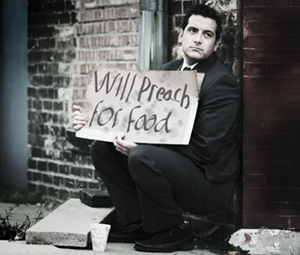
Church Staffing and Justice: Two stories, some numbers, and some questions

pastor salary

Two stories

1 – A friend of mine was recently offered a full-time children’s ministry position at a United Methodist Church in North Carolina. She was offered $24,000 and no benefits. No one seemed to blush at that. It’s what they had available.

2 – In another situation I heard about from a few different angles, a youth minister was let go by the UM church where he had worked for nine years. No poor performance was cited. Actually, they believed in what was going on. They just thought one of his assistants could be elevated to the top position and the church wouldn’t have to pay that person nearly as much. After nine years, the released youth minister had one of the higher salaries in the church (though his compensation was still less than 1/2 of the Senior Pastor’s, and without nearly the same benefits).

That was troubling to hear. I was aghast, though, to hear that the church compared his dismissal to the Methodist itineracy process. “Nine years is a long time. We believe in bringing in new leadership and letting leaders move on to other things.”

The not-insignificant difference: when a United Methodist pastor is told “nine years is a long time; it’s time to move on…” that pastor goes on to another guaranteed position, likely with even higher pay. This church kicked their youth minister to the curb and compared it to itineracy. That’s just shameful.

Some numbers

The argument I’m wanting to make here is that we have set up a considerable two-tiered disparity between how we treat Elders and how we treat church staff (often including deacons or part-time local pastors), at least in the world I see most often — the United Methodist world.

The average United Methodist elder in my state has a total compensation package of $101,780.

The minimum compensation package for UM elders in my state is $71,031.

See a larger breakdown of those numbers here.

I’ve heard no small amount of grumbling that our pastors don’t make enough. People have talked about how difficult it must be to get by for for any pastor who only receives the minimum compensation.

Some annual conferences are telling people that their minimally-compensated clergy qualify for food stamps if they have a family. A presentation at my last Annual Conference lamented that teachers in the state make more than our pastors. (Both of these statements ignore the minimum $16,000 in housing benefits that pastors receive.)

The problem

Here’s the problem, though: if we are really so concerned about our under-paid clergy, why is there not absolute outrage over the rest of the church’s employees?

At least from the people I’ve asked and the churches I’ve seen, a typical compensation package for a full-time youth or children’s worker may be between $30k and $36k. It’s quite likely that these positions will have no benefits. If they do, the benefits usually amount to less than $10,000. That makes for a total compensation package (including tax & Social Security payments) somewhere between $36,000 and $48,000.

Let me be quick to say that I’m not convinced that a $48,000 compensation package is bad. Not at all!

But if our leaders really believe that life is barely affordable on our clergy minimum compensation package, why aren’t they horrified that most of our other full-time workers aren’t making anything close to that level? Can it be anything short of hypocrisy for our leaders to lament (based on deceptive data) that some clergy qualify for food stamps, all the while knowing that nearly all of our non-clergy staff are compensated even less?

This is happening with lay employees, and it’s also happening routinely with deacons, since they have no minimum salary, nor are churches required to pay for their housing.

And I should mention that most churches opt out of state unemployment and disability programs. This means that the youth minister in story #2 above ended up without a job and without unemployment help. Meanwhile, the Sr. Pastor who laid him off and compared it to itineracy has a guaranteed appointment and a great disability insurance plan.

A Call to Church Leaders

Dear local church leaders, can I urge you to ask some honest questions and consider what would be truly just in these situations?

How about this: if any of your full-time employees have a compensation package that equates to less than “minimum compensation” as defined by your conference, why don’t you worry more about those employees than you worry about your far more highly-compensated elders? What if you were to require that all employees be brought to the conference’s “minimum level” package before you would consider giving anyone else raises? That’s package, not just salary. Children’s ministers need health insurance and housing, too!

Dear leaders within the larger United Methodist Church, can I urge you to consider these issues a bit more honestly, too? If you believe it’s difficult for your minimally-compensated clergy to survive on $34k + full housing benefits + medical insurance + a really nice retirement plan + a great disability plan, you surely must agree it’s difficult for a full-time youth minister to survive on $30k and no benefits.

Every time you go to a local church and pressure them to raise the salaries of their clergy, you squeeze the church’s personnel budget. When a church has constant pressure to give clergy raises, it’s hard for that church to help the youth minister whose compensation package is half of your approved minimum. What if you stopped focusing on how you can increase clergy salaries and began to look at how the church is treating everyone who’s not an elder?

What’s just in church staff compensation? Perhaps our minimally-compensated clergy really are struggling to provide (though that’s hard for me to believe). But if they are, we should be mortified by what we’re paying everyone else. Seems that there’s a much bigger issue of justice there.

Did you find this helpful or challenging? I write quite a bit about the Church, money, and Methodism. If you’re interested in any of those, click here to subscribe. I’d love to hear from you and continue some conversation.

——————

pastor salary

*Note: this doesn’t take into account that our elders pay self-employment taxes. But it also doesn’t take into account that their housing is exempt from income tax. And I include taxes paid on an employee’s behalf in any “total package” numbers. This also doesn’t take into account the cost for schooling. But I’m talking about disparities much greater than your typical student loan payment [edited after the helpful comments below]. Not to mention that many other church staff members have gone to school, too.

The most theologically destructive phrase uttered each Sunday

Offering plateIn many churches, just before the offering is taken up, someone says, “Now let’s give God his tithe and our offerings.”

Have you heard it before?

Do they say it in your church?

The idea is that 10% of what we earn (i.e. the tithe) rightfully belongs to God. It further suggests that anything “over and above” that 10% is your free decision. It’s God’s tithe, our offering.

This is one of the most theologically destructive phrases uttered each Sunday. If you’re using it, can I urge you to stop? If you’re a leader in a church that uses it, could you have some polite discussion with your pastor about it? And note: the people who are saying this are well-meaning, probably even fairly knowledgeable of the Bible. Don’t judge them or look down on them. Just ask them to stop.

Why it’s time to quit talking about “God’s tithe”

You don’t find the concept of tithing used positively in the New Testament or in most of Christian history.

The New Testament mentions the practice of tithing three times (Matt 23:23; Luke 11:42; 18:12). In all three, Jesus is speaking of hypocritical, legalistic Pharisees. Two of the three references begin with “Woe to you!” The other is a parable about a Pharisee who is not justified before God. In these cases, the Pharisees think they have been duly obedient because they have tithed – giving even a tenth of their spices and herbs!

Throughout Christian history, many of the great theologians reference the tithe as something that “even the Pharisees did.” Their point: tithing is no big deal, certainly not a worthy Christian standard. Only in the past few centuries will you begin to find pastors and theologians positively referring to the tithe as a Christian standard.

For the majority of Christian history, tithing was not at issue. If you had asked a Christian if he/she “tithed,” I think they would have looked at you strangely.

Yes, the Old Testament says that a tenth of all the Israelites’ produce and animals belongs to the Lord (see Leviticus 27:30-32). But this is neither the last word nor the most prevalent word in Scripture about our possessions and God.

Faithful stewards

Much more prevalent – even in the Old Testament, and certainly in the New – is that all we have is from God and belongs to God. We live by God’s constant provision (see, e.g., Deut 8:1-18; Ps 104:24; 1 Chr 29:11-12). As our material wealth goes, whether it be a few nickels in our pocket or a few million in investments, the consistent message of Scripture is that it all belongs to God and is given to us as faithful stewards.

The call to us – rich or poor – isn’t to “give back to God” 10% of our earnings and do what we please with the rest. The call is to take 100% of what we have and ask what God would have us do with it.**

If we understand ourselves as faithful stewards of God, our focus shifts from giving God the 10% he’s due to a focus on simplicity and generosity. That’s a much harder focus, I’ll admit.

The tithe allows you to do the math, give away what you’re supposed to give, and go ahead without more thought. Simplicity and generosity is a constant challenge. “What would God have me do with this? How would God have me use this?”

If you’d prefer to keep it clean and easy, stick with the tithe. If you want a living faith – something beyond mindless following of simple rules – start thinking in terms of full stewardship of your life and resources.

How this can be so destructive – an illustration

So you may (or may not) agree that this is a better way to look at things. But theologically destructive seems a bit much. I don’t think it is. An illustration…

Several years ago during a Q & A after a stewardship sermon, someone asked a mega-church pastor if any amount of excess or wealth was too much for a Christian to keep. His response:

No. As long as you give back 10%, anything else is at your discretion. That’s between you and God.

(For what it’s worth, his church didn’t do the “God’s tithes and our offerings” bit. They say something good about giving out of a spirit of generosity. But I think this quote and other things I heard from him revealed the same mentality.)

That same pastor resigned a year later after confessing to a lengthy (and continuing) affair.

I don’t think the affair and the view of giving are unrelated here. The pastor believed that as long as you gave God his 10%, the rest was left to personal discretion. And he handled his own life similarly. He publicly gave God his part each week – showing up to faithfully preach – and then went in secrecy to his girlfriend’s house on his own time. I think he continued living such a contradictory lifestyle because he had convinced himself that continuing to preach throughout the affair was good — that he was still giving back to God his 10%, even if he did what he wanted with the rest of his life.

That’s not to say that if he had answered that one Q & A question differently, none of the rest would have happened. Please don’t write in the comments, “Yeah, because he believed in the tithe, he had an affair. Makes total sense!” That direct cause and effect isn’t what I’m suggesting. I don’t believe these are unrelated, though…

One piece of cloth

Scripture shows us that our lives are one piece of cloth. We don’t tear out a piece and give it to God, then do as we please with the rest. That’s true of our money, our time, our actions, our thoughts… all of it.

When we tell people to give God “his tithe and our offerings,” we tell people there are two pieces to life: the part that’s due God, and the part that’s ours to do as we choose.

Yes, we see tithes and freewill offerings in the Old Testament, but frankly, I think something very different is happening there. The call to us now is to offer our bodies as a living sacrifice (Rom 12:1). We offer everything – all of it is a living sacrifice. That doesn’t make each moment or each dollar look the same. It doesn’t mean we spend all of our waking hours in worship services, or at outreach centers, or in Bible studies. And it doesn’t mean we put 100% of our earnings into an offering plate. But it means that all of it, in all of its variety, is God’s. And we handle all of it in that way — as stewards of what God has given, not as owners who choose to do whatever we feel like.

Living as if it’s all one piece of cloth is more difficult in some ways. It requires more discernment. It will probably involve constant reassessment. I don’t think my thinking and praying and struggling about how I should use the time and money God has given will ever end.

But this is also more freeing. Sometimes when something is ours, we hold it a bit more tightly. When it’s from God and belongs to God, we can give it back to God a bit more freely and fully. We can do what may be considered “radical” or “more than we have to do” with confidence and joy (and perhaps yet some trepidation) because they’re done as small responses to God’s already extravagant generosity.

So don’t give God his tithe and your offering. Offer all of yourself – your resources, your time, your body – as a living sacrifice, holy and pleasing to God. After all, it’s all God’s to begin with.

———————

** Some points I don’t have space to fully articulate in this post:

  • A call to simplicity and generosity would mean some people give away less than 10% — actually, that some people might be financial recipients rather than givers. You know that popular story about the widow’s mite (Luke 21)? I think Jesus is lamenting the devouring of this widow’s house, not celebrating her extravagant generosity. (This isn’t to discredit her great generosity, just to say that I think there’s a different point to this story.)
  • If abolishing a “tithe rule” excites you because it lets you off the hook, be sure to do some self-examination first. If you’ve recently eaten out, been to the movies, taken a trip, or have cable or Internet (just as a handful of examples), you might slow down before you say you just aren’t able to give any more…
  • If you’re a pastor telling people that you tithe, and they should, too, are you including your housing and utilities allowances in your own tithe calculations? If not, you’re either being deceitful, or you’re clueless about how the rest of your congregation lives.
  • I’ve heard many people say that our first giving must go to the local church. I don’t think that’s bad, but I’m also not convinced that it’s prescribed. If a church leader tells you the Bible (i.e. the Old Testament) clearly prescribes that our first 10% goes to the local church, ask them if they’re really ready for their local church to start handling money according to Old Testament prescriptions. (They’re not.)