
 A number of people have asked me what it takes for them to become a church member. Most recently, I talked to someone who was concerned she couldn’t become a member because we United Methodists believe a person can “make shipwreck of his/her faith” and lose salvation. She, on the other hand, believes once someone is saved, they are always saved. Did that disqualify her for membership?
What about the man cheating on his wife who wants to join the church? Can he join? A situation a friend of mine had a few years ago.
How about the nominal Buddhist, atheist, Mormon, or agnostic who wants to join to please a spouse?
If they’re willing to attend my membership 101 class, memorize the mission statement, and turn in a financial pledge, are they ready to join?
My answer to the question, “What does it take to become a member?” is the same for anyone. You must be baptized and be able to answer the questions we ask at baptism without winking.
The Questions we ask at baptism
On behalf of the whole Church, I ask you:
- Do you renounce the spiritual forces of wickedness, reject the evil powers of this world, and repent of your sin?
- Do you accept the freedom and power God gives you to resist evil, injustice, and oppression in whatever forms they present themselves?
- Do you confess Jesus Christ as your Savior, put your whole trust in his grace, and promise to serve him as your Lord, in union with the Church which Christ has opened to people of all ages, nations, and races?
- According to the grace given to you, will you remain a faithful member of Christ’s holy Church and serve as Christ’s representative in the world?
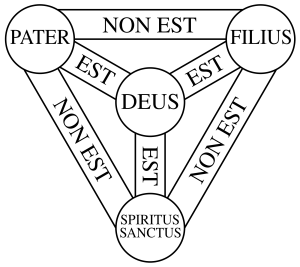
- Do you believe in the Father? Do you believe in the Son? Do you believe in the Holy Spirit? Candidate recites the Apostles’ Creed.
Three major things I see these questions asking:
- Have you turned to God in repentance?
- Do you share the historic Church’s faith?
- Will you be a faithful member of that historic Church?
Again, my standard: you need to be able to respond to all of the above without winking. Over this next series of posts, I’ll address those one at a time. I’m starting with question 2.
Do you share the historic Church’s faith?
Specifically, here I want to know if someone can make the claims of the Apostles’ Creed with integrity. They believe God is creator of heaven and earth. They believe Jesus Christ is his only son our Lord, who became human, lived, suffered, died, and was raised to save sinners. They believe in the Holy Spirit, who gives life to and empowers the holy catholic Church. And as the question above asks, the grace of Christ is where they put their whole trust.
Some people don’t think my standard for faith is enough. They want more specifics as far as someone’s beliefs.
Some churches want to know that you agree with them on the role of women in the church, whether the creation accounts are literal history, or whether certain individuals are predestined to salvation while others aren’t.
I’m okay admitting a staunch Calvinist, even though his beliefs about salvation aren’t in line with mine. We may disagree, but I believe we’re both still well within the broad stream of orthodoxy. I can do the same for someone who believes women shouldn’t preach, someone who believes the Lord’s Supper is a memorial only, or someone who believes in purgatory, even though I and my church hold none of those beliefs. This is why I use the Apostles’ Creed as a measure. It provides a great, concise standard for the Church’s historic, orthodox belief.
Others think my standard here is too rigid. From my above examples, I couldn’t admit the Buddhist, atheist, Mormon, or agnostic to membership. They can’t make it through that Apostles’ Creed without a lot of shrugs, winks, and qualifications. This would also be a problem for anyone who doesn’t accept the historic death, resurrection, and ascension of Jesus Christ. So if someone says the Jesus account is no more than a nice story or a great, figurative depiction of God’s power and love, I can’t in good faith admit her as a member. This isn’t just a disagreement in theology. From the standpoint of Christian orthodoxy, it’s heresy.
Some will call such a rigid standard closed-minded or bigoted. But I think this is more a matter of honesty and factuality. If you can’t hold to the Apostles’ Creed as it is, you’re not a Christian, in the historic sense of the word. And at least in the historic understanding of the Church, its members should be Christians.
So what do you think? Is the Apostles’ Creed as a standard of faith and a requirement for membership too much? Too little?



 teddy ray