2 more questions to ask and be asked every week

discussion

In my last post, I listed 4 questions I think you should ask and be asked every week. I gave some thoughts about what the first two mean. Here are some notes on the second two.

I hope you’ll see in these a spirit of prayer and support, not a time of guilt and condemnation. We know that everyone is at different places in their walk, and we don’t expect that anyone has everything just right. Our intent is to help each person, wherever he/she is, to continue growing in faith.

3 – How have you availed yourself of the means of grace?

My group has changed this to, “What Christian practices have you kept this week?” because they understand it a bit better. I think we may be losing something, though, by not always talking about these as means of God’s grace.

Either way, the intent is the same: we believe God transforms us through particular means of grace. If so, we want to encourage each other to participate in these.

Are you receiving the Lord’s Supper? Praying? Searching the Scriptures? Fasting? Participating in public worship? I believe all of these practices have the ability to transform you. For my Methodist friends, John Wesley specifically listed the first three as the “chief means of grace.” And he spoke strongly about the importance of fasting and attending the church service (regardless of how you feel about the church).

When I’m not doing well, I often don’t even realize it until my group asks me about these. There have been times that I have begun to share by describing some turmoil or restlessness or apathy in my soul. Then I get to this question and realize it may be because I haven’t availed myself of hardly any means of grace.

I’ve found that when people are keeping means of grace in their lives, they tend to be doing well, even if the circumstances around them aren’t great.

Again, the goal isn’t a spirit of judgment or shaming people. The spirit is of mutual encouragement.

4 – How can we as a group best pray for and support you?

This is pretty obvious. It also gets to the core of what we’re trying to do in these groups. They are about spiritual support.

The group’s goal is not problem-solving or advice-giving. There may be occasions where that’s appropriate, but the main goal as a group is to listen, pray and support.

I recently spoke with someone who attends a daily Alcoholics Anonymous meeting. He said it’s important for him to be there every day because they ask how he’s doing and encourage him to keep going. They realize how dangerous alcoholism is, and they fight it daily by meeting to ask each other if they’re still on track.

In some sense, Christianity is a lifelong recovery plan. We realize how dangerous the devil’s schemes are and how easily sin entangles. As part of our fight against that, we meet with each other as a chance to share how our souls are, with opportunity to mourn or celebrate with each other.

We meet to discuss celebrations or struggles with good and evil, and to encourage each other to press on.

We meet to encourage each other in things like prayer, Scripture reading, and fasting, and to hear how those practices are transforming others.

And finally, we meet to pray for each other. Because we need it.

I hope you’ll consider finding a place to ask and be asked these questions weekly. I think it will do great things for your soul. If you have questions or thoughts, please let me know.

“How is it with your soul?”

community

Something the early Methodists were most known for was their “class meetings.” Some people call these the original church “small groups.” Many believe that they were the key to the early Methodist movement’s success and spread.

I think you can gain a lot by being a part of a group like this today. It has been the most important part of my own growth in the past five years.

Pastor, I think your congregation can grow incredibly if you encourage them to participate in a group like this. Some think that these groups are a major key to renewal.

Here, I’d like to paint a picture for you to show how these groups can look.

In early Methodist class meetings, the leader asked everyone, him/herself included, about the condition of their souls. The groups I have led or participated in have used these 4 questions:
1 – How is it with your soul?
2 – Have you done all the good you could and avoided all the evil you could this week?
3 – How have you availed yourself of the means of grace?
4 – How can we as a group best pray for and support you?

[Edit: I originally said that these were the original 4 questions, but I can’t find firm evidence for their use in early Methodist history. Wesley required his class leaders to meet with each class member weekly to “inquire how their souls prosper,” but I can’t find a primary source showing that John Wesley ever asked Question 1. A Google search will turn up numerous hits saying that he did, but never with references or primary sources.

Questions 2 & 3 ask people whether they are keeping the 3 General Rules of the United Societies organized by Wesley, but I can’t show that they were asked every week to every member. Nevertheless, I believe these are still great questions and faithful to a Methodist ethos.]

You may use other questions if you find others that do a better job of driving at the core essence of what these questions are after. I’ve had a difficult time, though, finding any that truly get to the same essence quite as well.

The intent with these questions is to focus on the spiritual condition of each member. I’ll focus on the first two in this post and the second two in a later post.

1 – How is it with your soul?

This is a tough question. A lot of us don’t even know how to answer it today. At its heart, it’s asking about your experience of God’s grace and presence in your life.

I think the fruit of the Spirit is a good (though certainly not only) way of evaluating this question. “Do I have love? Do I have joy? Peace? …”

I remember a week when one of my men started by saying, “My soul is good! God has really given me a sense of peace this week.” And then he went on to describe a terrible week. He had some serious family issues, a rough week in school, and bad medical news for a friend. But it was well with his soul. He talked about the ways that he could truly sense God carrying him through.

Here’s an example on the other side. One week someone started by saying, “Well, my week has been just fine. Work is good. Things at home are fine. But it’s not well with my soul.” He went on to talk about a general restlessness, distraction from any sort of Christian practices, and noticing himself being short-tempered with some people.

2 – Have you done all the good you could and avoided all the evil you could this week?

If we don’t handle this question the right way, it could seem like it just leads to guilt and judgment. That’s not the point of the question, though. I hope you’ll understand its real intent and help others to see it with a different spirit.

We ask this because we want to cause ourselves to think a bit about whether we are doing the good God is calling us to do and avoiding evil. We ask because we know that we need help.

The point isn’t to have everyone share their laundry list of goods and evils. So for instance, we’re not looking for, “Well, I swore on Tuesday when I stubbed my toe.”

But I have heard someone appropriately share, “I’m realizing that my language hasn’t been good this week. When I’m around my co-workers it’s like I just join right in. But I need to stop. It would be a better witness if I stopped, too.”

Sometimes it’s when I begin answering these questions myself that I realize a great good I’m missing, or an evil I hadn’t even recognized was in my life. Sometimes the same happens when I hear others sharing about their own struggles. Sometimes I realize my biggest problem may be that I’m not even looking for opportunities to do good.

And sometimes this question leads to celebration. Some of my favorite times in meetings are when someone comes back with a celebration because they have managed to avoid an evil after a long struggle, or when someone shares about a way God gave them an opportunity for good and they took it.

See the second two questions here.

Do you have a person or group where you regularly ask these questions of each other? Is there a place you could find to do this? I’d love to help you get started!

Re-evangelizing America with changes in our ministry roles

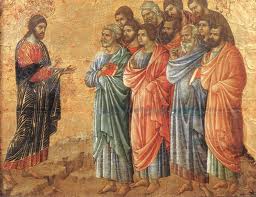
jesus pic

jesus picTo re-reach a changing American culture, the American Church needs a different understanding of ministry roles. I think that goes for the Baptists, the Presbyterians, and the non-denominationals as much as for the UMC.

No matter which (non-)denomination we come from, the assumption seems to be that called Christian ministers should all serve in some form of chaplain’s role. Or worse – as visionary CEO types or as entertainers.

If someone takes the role of evangelistic church planter, we expect that person to start the church and then become its chaplain (or CEO or entertainer).

What if we acknowledged, as the New Testament and early Methodism did, a distinction between the traveling preacher and the local pastor?

What is a Traveling Preacher?

The traveling preacher (you might also use the term evangelist or apostle) is always an outsider of sorts. An outsider who is intentional about knowing the community like an insider – caring about the people, understanding their language and customs. But still an outsider, because it’s known that he won’t be with the community forever. His role there is temporary, or more exactly, transient.

Paul traveled far and wide in the New Testament to fulfill his apostolic role. Early Methodist circuit riders were often assigned large territories and traveled hundreds of miles on horseback. Given the segmented nature of society today, a “traveling” preacher could never leave a particular city and yet move constantly between different people groups.

The preacher does not provide day-to-day pastoral care. (S)he preaches the gospel, leads people to Christ, and assimilates them into community (not necessarily in that order). In our shifting culture, this sort of work will require great courage (see this great charge to seminary grads by Tim Tennent). Those who have gone before us faced incredible challenges that most contemporary American preachers haven’t had to face.

She trains and appoints certain members of that community – we could call them elders – to provide the day-to-day pastoral care from there forward. And she probably continues to check in on them to correct, rebuke, and encourage.

What is a Local Pastor?

The local pastor, on the other hand, is an insider. Immersed in the community. No plans of leaving for anything bigger or better. It has a familial sense to it. When was the last time you saw someone leave their family for another because they got a more lucrative offer?

Family is about people, not systems. So it won’t do for someone to say, “The ____ denomination is my big family, and I go wherever I’m needed in it.” Sounds nice, but I’m not buying it.

I believe this is what we need. We have too few traveling, church planting preachers and too few local pastors.

You’re a “layperson” and wonder how any of this applies to you? We need you, too! And you don’t necessarily need to go to seminary or be ordained. In my Methodist tradition, the majority of John Wesley’s traveling preachers were unordained. And the UMC continues to train lay speakers and license local pastors.

If a particular organization puts up a bunch of red tape before you are allowed to proclaim the gospel, assimilate people into community, and teach them to worship together, I’d question which is more important, the organization or the task at hand.

We Need Traveling Preachers

So you say that you fit the traveler’s role? The reason that you move around from church to church is to provide an outsider’s perspective, to give encouragement, to train and support the local people who are really the lifeblood of the ministry. You might talk about how you never engage in a ministry that the “laity” aren’t doing side-by-side.

Great! We need you! Desperately.

You’ve acknowledged that you’re temporary, transient. You won’t be around for the long haul, so you’re helping others take on the bulk of the ministry. You’re ensuring that your people are providing each other with pastoral care and aren’t dependent on you.

Now one more thing: we need you to plant churches.

At least one every five years.

And I’m probably already shooting way low. I should have said every three years. Or maybe I should have said five new churches within eight months, and that before you get commissioned for ministry.

And we need you to do it while you continue those other roles of support, training, and encouragement for your existing congregation(s).

Too much? You’ve just said that the local people are doing the bulk of the ministry, that they’re not to be dependent on you. That can’t be your excuse.

Whatever the excuse is, we need you to get over it and plant new churches. Throughout history, church planting has without question been the most effective method of evangelism.

Just to sustain, a denomination needs to start new congregations each year equal to at least three percent of its current number of congregations. For the Kentucky UMC that would mean roughly 24 new congregations per year. And that’s to sustain!

I would take it this far… If you’re unwilling or unable to consistently (be it in five months or five years) plant new churches, I think you need to reconsider your role as a traveling preacher.

But maybe you say, “These aren’t excuses. Church planting isn’t my calling or gifting. I’m a pastor at heart.”

Great! We need you! Desperately.

Local Pastors

Be a local pastor. Immerse yourself in a community.

Make it clear that you have no intention of leaving. No larger paycheck, pulpit, or parsonage will convince you to leave this family for another. You are one of them.

Your leadership as an insider makes a difference. It makes an enormous difference to know that you aren’t just the pastor for hire until you get a different gig.

And you should probably work to have as many other local pastors on board as possible. This is no one-(wo)man show. This is especially important if we continue thinking this way. Who are your next day-to-day pastoral leaders? They are in your midst. Don’t wait for someone to be sent/hired from somewhere else.

My own Methodist heritage has great examples of how important a located pastor is. In a brilliant article (you must click and read in full), Don Haynes says, “The keys to our staying power were the located elders, local preachers and Sunday school superintendents.” He calls these local elders “the pillars and backbone of local churches.”

Some of you are in systems that will easily allow you to declare you’re with a local church for life. Others will have a harder time. But it’s not impossible.

“I gave my word to go where the Bishop sends,” says the Methodist elder, “I can’t tell my people I’m with them for good.”

You do have options. Is your character in good standing? Do you intend to discontinue service in the itinerant ministry? Then request honorable location — a remnant from our history of locating elders. See paragraph 359 of the Discipline.

We haven’t been using this to allow people to become “local elders,” but show me why it can’t be used that way.

Yes, you’ll create all kinds of problems for the system. People may refuse you. At the least, you certainly may not be able to keep the same sort of pay and benefits. (Were you expecting anything less?) But if your heart and gifting are truly about being a local pastor, why don’t you be one?

What do you think? Could this change in how we handle ministry roles help? Disagree and want to tell the world why? (Click here to share with people on Facebook, or here to share on Twitter.)