This is part of a series addressing the problems with ministry structures in the American Church, and particularly with Methodist itineracy, and proposing change.
We need to re-evaluate our current ministry structures. Changes in the American landscape and problems in the church should be making us aware of that need.
Rather than proposing something entirely new, I’m going to start by looking back to ministry structures in the New Testament.
No One Model in Scripture
Let’s get this out of the way from the start: the New Testament does not prescribe one model for church order.
Brad Harper and Paul Louis Metzger said this well in a brilliant book, Exploring Ecclesiology:
We contend that the scriptures simply do not present a clear argument for any particular church polity. Thus, the most important issue for each church is not to reconsider the fidelity of its polity to scripture and church tradition, but to consider the strengths and weaknesses of its system as a means for ordering the people of God.
This isn’t just a position from some progressive Protestants. Avery Dulles, a prominent Roman Catholic theologian, makes a similar statement: “The New Testament usage [of terms for ministry roles] cannot be decisive of our terminology today, if only because the structure of ministry seems to have been different in different communities.” (emphasis added)
So I’m not exploring the New Testament texts to suggest that they prescribe one particular model. I want to demonstrate some possibilities they present, especially using texts that have been important for those denominations with a hierarchical structure and/or itineracy (i.e. pastors that travel from place to place).
Apostles and Elders
One important note that has been frequently overlooked: apostles (apostoloi) and elders (presbyteroi) are treated as two separate groups in the New Testament. Go do some searches on the two terms to see.
Paul is always identified as an apostle, never as an elder. Same for Barnabas. In fact, only Peter is identified as both apostle and elder.
Many today claim that apostleship was only for Jesus’ small group of disciples, plus Paul. When that group died, there were no apostles. What do you make of Barnabas being called an apostle, then? I think we can and should expect to have apostles today.
The New Testament apostles, such as Paul and Barnabas, are clearly itinerant. They do not provide day-to-day pastoral support for a congregation over the long-term. Rather, they travel from place to place, starting new Christian communities and providing encouragement and support for existing communities.
Meanwhile, elders are appointed to specific, local contexts. Scripture never suggests these elders are itinerant. Instead, I think we would have to reason that the elders appointed in the New Testament (see Acts 14 and Titus 1) are existing members of those local communities. When they are appointed, they are put in charge of regular leadership within their communities.
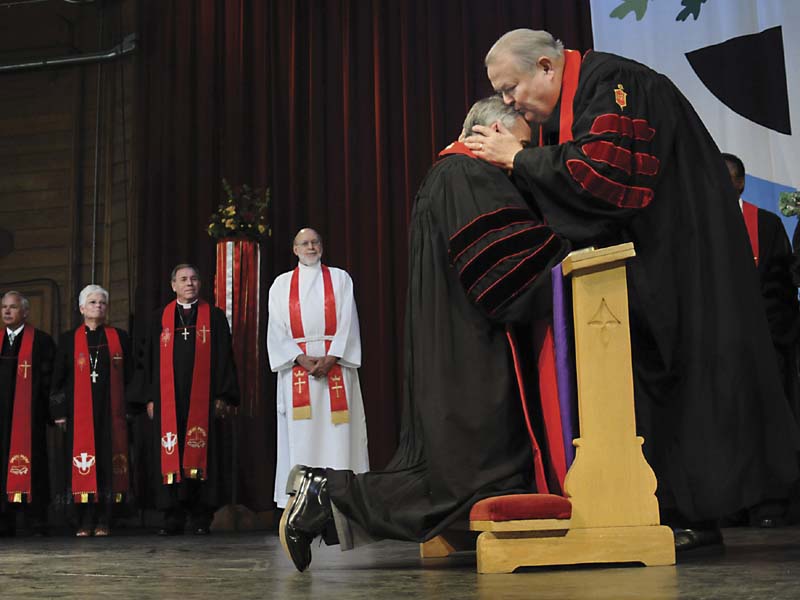
Elders are appointed (katastēsēs in Titus 1:5, cheirotonēsantes in Acts 14:23) to their positions by other leaders. The root for appointment, (kathistēmi) is used in other New Testament contexts in connection with appointment of high priests (see, e.g., Heb 5:1, 7:28, 8:3). It’s also used in secular situations when those in authority place other people in positions of authority (see, e.g., Matt 25:21; Luke 12:14; Acts 6:3).
From these examples, it seems clear that the New Testament usage of appointment has to do with giving a person authority and an assigned function within a community, not sending that person to a particular place.
We never see elders in the New Testament called or sent. Why are those our biggest talking points for people going into ministry today?
Though I want to be careful not to argue that the Scriptures prescribe a certain model, it is clear that they allow, or even typically suggest, a separation between the itinerant and the pastor. The itinerant apostle does not provide day-to-day oversight to a local community. That person travels for the purposes of evangelism and encouragement. Meanwhile, the elders are most likely permanent members of local communities, placed in charge of those communities’ day-to-day pastoral oversight.
There’s some New Testament support for what I’ll ultimately be suggesting. My next post will focus on my own tradition: how the early Methodists understood the need for local pastors and itinerant evangelists.
What thoughts does this provoke for you? Anything important that I’m leaving out here? Do you see anything different from me?
SUBSCRIBE by e-mail or RSS to get regular updates on theology, ministry, and life with God.


 teddy ray