
 The General Conference of the United Methodist Church officially begins on Tuesday, May 10. The conference takes place once every four years and is crucially important for setting the direction for our denomination.
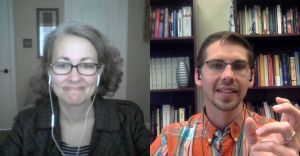
I recently had the privilege to interview Dr. Laceye Warner. I asked her to preview some of the major issues we’re likely to see discussed at GC. Dr. Warner literally wrote the book on United Methodist polity. She goes beyond dull political explanations, though, to explain how our structure relates to our mission. I specifically asked her to help the average person in the pew, or the average pastor, see how some of these issues coming at GC truly matter and affect the local church.
Some of the items we discuss:
- Talk of schism in the UMC
- Guaranteed appointments for elders
- Plan UMC Revised
- Are we actually able to accomplish anything at General Conference?
- Rule 44 and Holy Conferencing
- The role of local pastors in the UMC and our history
- Clergy compensation and how educational, social, and economic standards have affected our approach to ministry
Listen to the audio below or download by clicking here. Or see our transcript below. (Sorry that I don’t have video for this interview. I had a problem with the recording.)
—————–
This is Teddy Ray, and I’m with Laceye Warner today. Dr. Laceye Warner is the Associate Professor of the Practice of Evangelism and Methodist Studies at Duke’s Divinity School. She’s also the senior strategist for United Methodist collaborations there. She wrote a book back in 2014 called The Method of Our Mission: United Methodist Polity and Organization.
One of the things that I’m especially excited to have you on for, Dr. Warner, is that you connect our mission and our beliefs to the way that we’re structured as a church. I have a lot I want to discuss with you, especially leading up to General Conference. So welcome and thank you for being here.
Laceye Warner: Thank you. Thank you for the invitation. This is quite an honor.
TR: Good – thank you! I’ll jump right in with what you lead your whole book with, and what I think is your premise throughout everything else. You say, “Our roots as a missional renewal movement are at the heart of our ecclesiology.” You present Methodism as something very different from almost any other denomination. We come out not of doctrinal disputes, or anything like that, but we’re coming out of a missional renewal movement. Could you share a little about how that’s impacted the way that we organize ourselves and do what we do?
LW: Of course, this has evolved over generations so that the ways in which we’re organized now may seem a bit foreign to the ways in which John Wesley organized the early Methodist movement with his brother and other folks in the United Kingdom. However, there is a thread that links the different seasons together, and I think if we take just a little time to look––we don’t have to now!––but if as a church or as local communities we look, we can see how those pieces, those threads, weave together. We can see that the structure that we have put in place since 1968 and the amalgamation from the Methodist Church and the United Evangelical Brethren is an outgrowth of what we want to do in the world based on what we believe. That’s a start. I’m glad to talk about it more, but I’ll try to keep my answers relatively brief.
TR: You know, in relation to that, you mentioned that merger back in 1968, and now we’re at this weird and different point. The past few major structural changes for us have been mergers. And we’re now approaching a General Conference where the discussion isn’t merger but even possibilities of schism and how to handle that. You mention that we come from this renewal movement that eventually includes a break from the Church of England. In that, several things appear that are pragmatic decisions for the sake of evangelism in North America. And one of the big questions that I think we have to address is, “How do we prioritize items like maintaining ecclesial unity, on the one hand, and anything that we think may advance the mission of evangelism, on the other?” Is there a way that we think of these as being in competition or in cooperation with each other?
LW: Right. That’s a great question. Okay, so this is gonna be hard to be brief.
So we are as a church really more of a movement in terms of our DNA, and so like we’ve talked about, Wesley saw in the early Methodist movement both in the United Kingdom and then also in the United States that this movement of the spirit and establishing of classes and bands really needed ecclesial structure in terms of communion and then sacraments, baptism, etc. And so it evolved.
So my point here is that historically (I’m not sure Francis Asbury agreed) but there were folks, including John Wesley, that wanted the Methodist movement to stay within the Church of England. So the Methodist Church was really pushed out, I don’t think in an antagonistic way, but more in a passive, not encouraging sort of way.
And there was also the geography. So in terms of prioritizing, it wasn’t, in my view, necessarily a decision that was made all at one time, where people prayed and deliberated and then took a vote and said, “All right. We’re going to be Methodist. We’re not going to be Church of England.” It was a series of political, social, geographic developments that led to Wesley’s rationalizing, particularly based on several classic works of his time and earlier of his choosing to ordain folks.
So I’m not sure it’s helpful to blame it on the Church of England for letting us slip away, but I also want to say that there was a movement of the Holy Spirit that then leads. It wasn’t a leaving, so much as… Oh what’s a good metaphor? We moved the geography, and the politics all came to a relatively friendly division, if you will. So it is a division, but it’s not an estrangement.
TR: That’s a great way to put that. Division but not estrangement. And that’s because of bigger political and geographical things going on here, and we’re all okay with each other moving in these directions.
LW: And so in order to pursue the evangelistic missional purpose, these polity pieces take a back seat, but unity was still important. It was a unity of doctrine and there was still a warmth across. Though I’m sure we could find examples of folks not being nice to each other. That’s always easy.
I can remember Russ Richey teaching in class. He’s a very prominent especially American Methodist historian, and he talks about how the various splits of Methodist families throughout particularly the 1800’s result. If you look at all of those church bodies’ populations, they grow. And I can remember folks saying, “Oh, well then we should split, because that’ll make us grow.” No no no. That’s a different kind of growth. So it’s holding together the growth in numbers with the growth in spirit that makes it really complicated.
TR: So maybe to put it in some terms that I’ve been thinking in: structurally they divided, but they were still united in heart and spirit and mission. And they created separate structures that allowed them to do what they were doing. Is that a fair statement?
LW: I think it is fair. And there were also open doors (I didn’t want to overuse that metaphor!) but there were entry points so that the ecclesial bodies could rejoin. And I’m not completely clear on how obvious that was initially, but it did evolve over time and as distance changed. So there was always a constructive perspective to look and say, “Hey, we’re still all Methodist, or of a Wesleyan family. Are there ways for us to partner?” And then that partnership, as the collaboration built, allowed them to come back together in particular polity-structural ways.
TR: So you go all the way from that history and the ways that we’ve split and rejoined and we get to where we are now with our General Conference. For the average person in the pew, for the most part people say, “I’m not sure if this affects us. I’m not sure how it affects us.” I’d love for them to be able to hear how this truly matters for us as a United Methodist Church. For the person sitting in the pew, how are you a part of this and why does it matter?
So why don’t we do this by looking at a few of the specific issues, and I’d love your take on how it matters, why it matters, and what we can expect as we go into General Conference this year.
The first two that I wanted to talk about are things that we thought we resolved at the last General Conference, and then our Judicial Council said, “No, you can’t do that.” The first one being guaranteed appointment for elders. Why does guaranteed appointment matter as part of our mission? And how do we think of now making the claim that we shouldn’t have guaranteed appointment?
LW: Guaranteed appointments are significant in light of our Methodist itineracy, for me mainly because of the covenant between Bishop, Board of Ordained Ministry, and a candidate for ministry. Methodists have been, if we haven’t been the first, we’ve been in the pack, if you will, in terms of encouraging and bringing into ministry women and people of color.
So in congregational-based networks of denominations, a church decides what pastor they’re going to invite, and then they work it out on their own. And Methodism, it’s a connectional system that covenants on these different levels, different components, of our polity. And so we trust the Holy Spirit, and we’re able to participate in the unfolding reign in ways that are really profound.
So guaranteed appointment allows for an accountability in a covenant that pulls us even further into God’s reign by encouraging pastors and congregations that might not have found each other on their own to work together and to see and participate in a Holy Spirit embodiment.
So guaranteed appointment has this historical, prophetic polity piece, but on the other hand we need assessment and accountability in terms of the competencies and the effectiveness of ministry. And so holding those two together is really important, and I think the legislation and the conversations around deconstructing guaranteed appointments is not to lose this prophetic, reign of God momentum, but to add to it.
I’m comfortable with measures of assessment, but to find ways to acknowledge growth in the spirit and effectiveness and faithfulness of ministry that are creative, that maybe aren’t so flat, that are all about numbers or about material and other sorts of worldly categories (not that the world is bad!) But not just worldly categories, but that have some complexity to it.
So I would like to see us hold on to guaranteed appointment, but only if there’s a way to help pastors and congregations continue to grow in our discipleship and our leadership and in fulfilling our mission.
TR: So this really began as something that’s a prophetic concern. It’s a concern for advancing justice in our denomination. And it has ended up being criticized for maybe doing that, but also allowing ineffectiveness to continue. And so now we’re looking at a structure that was intended for one thing, and we’re trying to figure out how it doesn’t enable something else that we obviously don’t want. Is that what we’re doing here?
LW: Yes, because regardless of demographic, if a pastor is ineffective, that’s not helpful to anyone. And if the congregation isn’t receptive to a pastor who is effective, that’s not helpful. And so it’s about reinforcing structures that are already present and then also improving. There’s always room for improvement. After all, we’re Wesleyan, and we go on to receive sanctification going on to perfection of a sort. There’s always room to continue to grow, and it’s a matter of figuring out how to do that. Because we want effectiveness, but we also want to maintain that God’s children are all made in God’s image. And so, how do we continue to witness and support folks who are called to ministry?
TR: Let me ask you about the other issue that we thought we resolved in 2012, which was Plan UMC. We thought we had restructured how we’re operating at a board and agency level, and then our Judicial Council came back and said, “No, you’re not allowed to do that.” So now we have a Plan UMC Revised that’s coming to this General Conference. Again, the same questions: how does this matter? Why should especially the average pastor or average person sitting in the pews care about this? And what do we need to know about it?
LW: I’m often surprised, I think is the word, because I work in the middle of the connectional structure, and almost to the side. So within theological education there’s the tie to Nashville through the General Board of Higher Education and Ministry. And then I have been fortunate— I’ve learned quite a bit serving on a number of other general church bodies that are mostly through the General Board of Higher Education and Ministry, but also Council of Bishops.
And so trying to get a sense of this structure, I feel like I have a window in that’s not necessarily only from the local church, which of course, is the most important window according to our mission. The general boards and agencies desire to be resourceful, responsive, helpful, and supportive in helping us all fulfill and pursue God’s vocation in mission for us as United Methodists and Christians. So helping delegates or those who are voting for the delegates think about what are the priorities and what is needed and how that can be structured is a significant conversation for local churches now. The difficulty is, it may not be the priority. Right?
There’s all sorts of other things that go on, from the furnace to baptism records, you know, there are just all sorts of things. But if there’s a way to carve out some time and to pull into some of those local church council and Charge Conference conversations to see where there are opportunities to take advantage of the resources that are being developed, I think that would help the conversation across to see how those general boards and agencies and the overall structure can be best aligned.
So it is significant for the local church, but it’s a matter of creating a complementarity of conversation, so that it doesn’t just feel like apportionments that get paid out and then are never witnessed or embodied in a way that can be real to them.
TR: So this particular Plan UMC or Plan UMC Revised — how do you see it helping any of that?Or hindering it?
LW: My sense of listening to the conversations and teaching the material—and what I mean by that is you’re trying to explain the legislative process and then this narrative of this particular piece of legislation–I’m wondering if it would be helpful for there to be more conversation or more exchanges, correspondence, written responses back and forth to detail how the general boards and agencies have responded to the possibility of the legislation over the last quadrennium or more.
Because there have been substantial changes. Most of the boards have streamlined. They have pursued cost-effectiveness. They have done reflection on their mission in particular as it aligns with the mission of the Church. So it may be that there’s more similarity, there’s more resonance between what the Plan UMC was trying to do.
And so I’m worried that the conversations are going past each other. We’re all in this together, so these general boards and agencies that are really very well represented at General Conference, they have a lot of information, they have a lot of data on assessing their work, but if people asked me––and I appreciate you asking me!––we need to line up what the goals and values are from the different parties. I think we may be further along, and then it might be helpful then to keep that going rather than to get stymied in a conversation that’s really just trying to explain each other’s hopes for the present when we’re already trying to move into the future. Does that make sense?
TR: It does. You actually use a helpful term there: “getting stymied.” Let me share some of my perception and even struggle with it, and I know others share it, so if I sound jaded, help me on behalf of all of us.
It feels like we have, number one, legislated ourselves into a corner. From my perspective, we did two significant things in 2012, and then we were told that neither of them were constitutional, and they were undone. And then on top of that, the argument or discussion about sexuality has taken so much attention and energy that it seems there are a number of things we’re not even getting to because all the air gets sucked out of the room on just this.
So for me and others I’m talking to, we’re saying, “Are we actually able to do anything? Or are we spending all this money and all this energy on a General Conference that won’t actually lead to anything new or significant or helpful?”
So am I jaded? Is that an accurate perception? What do we do?
LW: I’m going to project, but I mean this in the best possible way. I hear authenticity. I hear compassion and care and commitment. And so those questions are really important and I’m relieved that they’re being asked in such a wide arena. So in that way, jaded or cynical or critical or worried… I’m worried. I’m really worried. And maybe right there with you depending on what day it is and what time of day and how many emails or articles come through about it.
So here’s my hope… like a marathon, if we can push through with endurance, keeping the mission of the church in its best possible way, not in its political, “well I remember how it came to be, and then there was this, and I don’t like that part,” but just really our spirit-led desire to participate in God’s reign, make disciples, spread scriptural holiness… That if we keep those priorities then we can begin to legislate together.
I very much appreciate the Judicial Council’s care and the attentiveness and innovation and creativity and courage of the Call to Action––that took a lot of spiritual-emotional work, as well as other kinds of detail pieces to put together. But we need to look to cooperate with each other, not that anyone’s being uncooperative, but to collaborate in a way that allows for the conversation to happen while everyone’s still in the room, while the General Conference is in session.
I think there’s something about our morale that’s significant. And so what I’m trying to get at is, How do we maintain consistency of our doctrines and our polity that is aligned with our mission and seeking to fulfill it, but that also has a kind of constructive, interpretive charity that says, “The Judicial Council wants this to work out—wants something to work out”? For the various folks who have legislation, let’s get to the point where this is a win-win or a third way.
I think that is part of our DNA, as well. Wesley did get his preachers together and there was the one hundred and there was only the people he invited. But we have also times in our history where we fought fiercely, but as Christians, and brought people into the room that were previously not invited in some kind of mean ways. I’m thinking of women’s ordination, of the Central Jurisdiction. We have experienced a lot and we’ve sinned against each other pretty tremendously, but we’re still together.
Like a marathon, if we can endure and push through and try to hold these pieces together in 2020 and beyond with this global Discipline and the delegates from an international context, and then the meetings in international context, I think there will be an organic shift. Some of it may be pretty scary for us as folks in the United States, but I’m hoping that in principle there will be a flourishing and fruitfulness that also comes with it.
TR: What do you mean by, “Some of it may be scary for us in the United States.” Is there anything on your mind?
LW: Mainly, the letting go of control that we have. As a person in the United States and a person from a larger delegation, there’s a sense of knowing the ropes and the rules, but they’re unspoken. Or if they’re spoken, they’re unwritten. And so stepping back and saying, “I’m only one delegate, a part of one delegation.”
And allowing voices to be heard that may seem contrary to the mission but if we listen and work together might actually help us deepen and texture the mission. We don’t necessarily shift to say, “Okay, we’re wrong and they’re right,” but we come together in a different way, a third way.
So much of Wesley is that he could have been accused of either or. Was it grace or good works? Is it justification or sanctification? And he had a way of not compartmentalizing and holding together but actually integrating.
And my prayer and hope is that through conversation and immersion and holy conferencing, perhaps, that in our polity, we’ll be able to see the mission embodied and participate in a deeper and distinctive way that we’re not doing right now because we’re so compartmentalized.
TR: Now as you talk about a third way and holy conferencing, some people are talking about Rule 44. That’s the unofficial name for it. They’re seeing it as this possible third way, something different from Robert’s Rules of Order. Do you have any thoughts on Rule 44?
LW: Yes, I think in principle it’s an interesting and important and very thoughtful idea. I’m so detail- and task-oriented, I wonder how it’s going to work out having the practice of holy conferencing.
I don’t think I am good at holy conferencing. I don’t think that I’m practiced at it or that I have a deep trust or ability to really let go and be vulnerable and transparent and in that covenant and accountability. So I’ll just say that I want to, and I do in some circles, but it’s not a landscape across the denomination. And I don’t blame that on anyone. That’s on me.
So my worry about that is at the pre-General Conference gathering, there was a little bit of practice of the Rule 44 and talking to each other. Some people in groups never got to talk, other groups were dominated by one person or by one side. So we need some practice. We need practice. And so even if they’re at tables of people that we’ve known our whole ministries or longer, I still think we need practice, whether it’s people we don’t know or people that we do know (and we already know what they’re going to say, and we love them with the love of God!)
I just think there’s some practical challenges. I think for an emotionally intelligent, deeply doctrinal, and missionally-driven church, it’s a really interesting and important idea. But it’s hard to go completely flip over into a new polity process. Robert’s Rules is very efficient, so efficient, as a person who has chaired lots of meetings.
In voting there’s always going to be a winner and a loser. So I really like a consensus model. But how we do that will need some practice.
TR: That’s a good answer. And it’s a tough time to be trying to get practice right now. So many things feel inflamed and urgent and to practice long enough to get things right makes me wonder if we can make it.
We’re almost out of time, and I really wanted to ask you about two other things that you mentioned. I’m not sure if these are going to come up at General Conference, but they’re issues that are especially important to me and you made some interesting statements about them.
The first one is the local pastor and the itinerant preacher. I’m a licensed local pastor, and that has been something that came out of quite a bit of conviction and study for me, and I’ve tried to share a bit about this option to have the local pastor in the United Methodist Church, an option that seems very odd to a number of people. You talk about how local preachers lived in particular communities and provided consistent pastoral care and nurture, while the itinerant preachers traveled the circuits and presided at the Lord’s Table.
You say, “the local church, as a space for worship, sacraments, discipleship, and outreach, cared for by an ordained elder, is a somewhat recent development in the Methodist tradition.” I so appreciated that, because I’ve been trying to hold that up as a part of our history, and I feel like it’s been roundly rejected. Instead, we tend to think this is just how we operate. We have ordained elders who provide pastoral care and nurture. What do we do with that as a piece of our history, and something that is relatively distanced now from our normative life as a church? Is there anything to go forward with that?
LW: My interest and hope and a lot of my energy is across forming folks for ministry. So I’ve learned to find the local pastor schools and people who are teaching in them, and I’ve just become the regional director for the course of study at Duke, where local pastors can receive further credential, and then in seminaries with the M.Div.
So I think this has been happening and there’s always this shift, and I’m trying to learn more about it. There’s not a lot of data because our data tends to focus on elders and the cost and the economic model is, like it is for higher education, like it is for so many things, it’s broken for ministry. Bivocational is biblical! And also this model in between of the early Methodist movement that stretched way into the 19th century and even into the 20th. And so if we can map our ebbs and flows and our shifts, there are many folks going into ministry that have the educational background to go to seminary but are choosing not to.
I think we may have gotten caught up in the itineracy institutionalizing some social prescriptions around education and class that really shouldn’t define us in comparison with other denominations. And I’ll mention names: Episcopal, Anglican, or Presbyterian. We want to be an educated clergy. You see that on taglines across various groups in United Methodism and then in these other denominations.
So I’m really interested to see how I can participate but how as a church we can explore different entry points into ministry. There are as many entry points as there are candidates, or people who are practicing ministry. But to organize that in a way that’s more than just the three—the local pastor school, which usually goes into course of study, and then the seminary. But that we might have more like five.
The ministry study started to talk about this, and there was a little bit of energy around it but we’ve got to work through some polity pieces because, like you said, elder is the default, but that model is a product of our social and economic pressures.
It’s nice, but it’s not working. And so we need to learn from our past and then enhance our structures and our formation opportunities and learn from those folks that are really thriving—that they can innovate and we can follow those experiments. I get really excited about that and I know I answered more than your question.
TR: No, that’s helpful. It’s something I get pretty excited about, as well. And so even for me, I have an M.Div. I have the qualifications at least to be an elder. But I’m choosing to be a licensed local pastor because to me these local pastors in Methodist history served a different function than the itinerating preacher / elder. They were intentionally local, located.
Some people have said to me, “Well you found a loophole in the system.” And I’ve said, “I haven’t found a loophole in the system so much as I’ve found my place in the system.” Although I’ll tell you that some of my difficulty with it is in the way we segregate out ordination and our understanding of what a local pastor is. Really, we understand a local pastor as, “Well, you’re not educated enough and you’re not in the system enough, and so we’re gonna put you with some little congregation that we need help with.
We’ve segregated these out entirely the wrong way it seems to me. So I love some of the proposals about having located elders, or ordained local pastors, rather than segregating out based entirely on elder is itinerant and ordained, and the others are not.
LW: Yeah, we need to separate out ordination from the categories of appointment. And you’re going to be a local pastor, and then they talk about the reasons, and there’s no guile, right? There’s no criticism necessarily until they get into the system and realize that they have chosen a path that’s not entirely in favor. But we can be helping or supporting those folks through the process and allowing the process to help realize there’s an opportunity here.
So there are pockets and they’re growing, of realizing that ordination is this piece, and then there’s all of these different entry points into the different kinds of appointment and people have vocations. So if we can just describe with clarity and create streamlined processes, I think we would be even more vital because we would allow people to follow their vocations and have that be affirmed and we would have categories to affirm them and then support them in better ways. And of course, that’s not to say that it’s terrible now. It’s just that we can always be better.
TR: The last thing that I wanted to mention is specifically related to itineracy and clergy compensation, which you already brought up.
You said, “One issue intimately related to itineracy seems still blurred: clergy compensation […] Could it be that itineracy is no longer merely a faithful practice emerging from the pursuit of God’s mission for the church in the world? Instead, is it possible that itineracy has become captive to questions of clergy compensation such that its effectiveness in fulfilling God’s mission is obscured?”
That is certainly what I’ve seen. I’ve seen and heard about the pressures to churches. “If you want a good pastor, you better increase your compensation package.” And, “If you want to keep that pastor, you better increase your compensation package.” Where itineracy seems kind of like the bishop’s or the cabinet’s, “Hey, you better pay more or you’re not gonna have a good pastor.” What do we do about itineracy and clergy compensation?
LW: My first inclination is to ask the questions and to have the conversations and start naming the pieces and the difficulties and the opportunities. That’s my first inclination.
I think we’re so very embedded–in addition to these educational, social prescriptions—in today’s economic expectations, that it’s going to take a while to unpack. But because it’s broken or weakened in light of the situation of the church in some areas—that’s a sad circumstance—but it will press for innovation and for reflection on it.
I do want to remind us, and I know you know this and probably most of the folks that are listening, but the itinerant system was instituted in the early Methodist movement and initially there was no compensation, and then there was a flat rate compensation. It was a standardized salary. So circumstances would be different, but they would seek to maintain a particular standard, a minimum standard, but basically everyone received the same stipend (still do in the British Methodist Church).
I know that would be a revolutionary change and that would really shift things, and I know that there are consistently petitions to General Conference around these questions and proposing that in particular. When I was a student in Methodism, I might have participated in something like that.
But what are the steps to move in that direction or to move in a direction that is faithful and effective for our current landscape that’s shifting so quickly? While that sounds in one way so overwhelming and challenging, I think, How exciting that we could embrace the Holy Spirit’s calling and say, “Okay, things are changing let’s jump on board. Let’s figure out how we can do that and continue to be a vital, flourishing denomination, not just in the United States but across the globe.”
So yeah, it’s an issue and how we talk about it and how we start to approach it will be important. But I think it’s more important to approach it than not to.
TR: And these are some of the things that it seems like we’re not even discussing right now at General Conference level or giving very little time to, because everything else pushes it out. I would love to see us learn how to holy conference well enough to handle some of these issues really well.
LW: Yes, indeed!
TR: Well thank you! Is there anything else that you would want to add or say before we close here?
LW: Briefly to say how much I appreciate the opportunity to talk with you and how much I think in United Methodism and its related Wesleyan and Methodist denominations, and in the church in general, that there is always hope and there’s much hope and there’s much flourishing. There’s a lot of hard challenges, but that may mean that we’re up to something. So I have prayers of hope and thanksgiving and aspirations for the future.
So write those petitions and follow those blogs and let’s keep moving!
TR: For everyone listening I would highly recommend to you especially as we lead up to General Conference, or just period to understand who we are as Methodists and how we’re structured, Laceye’s book The Method of Our Mission: United Methodist Polity and Organization. It’s a concise book that I think can give you so much help in understanding how we’re structured and why we’re structured that way.
Dr Warner thank you again.
LW: Thank you!

 teddy ray