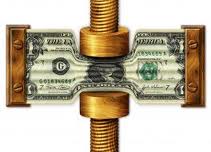
The coming church budget crunch

budget squeeze

This is a revised version of a post from last year. I thought it appropriate as churches are beginning to budget for 2014.budget squeeze

I just asked a friend to run a quick analysis for me: “How much of your church’s contributions come from people age 55 and over?”

His number was 70%.

My friend was unflinching. “Isn’t it always that way? That’s the group that has the most to give, so they give most of the money.” His church looks healthy. The UMC would consider it a “vital congregation.”

But I wasn’t convinced, so I asked him to try a second analysis, if his software could do it. “How much of your church’s contributions 10 years ago came from people age 55 and over?”

This time, my friend came back concerned. Ten years ago, only 50% of contributions came from ages 55 and over. In ten years, giving from people age 55 and over went from 50% to 70%.

A few reasons I had this hunch:

  • If your church is at least 10 years old, it’s probably older now than it was 10 years ago. You may have anecdotal evidence to argue otherwise (that booming parents’ Sunday School class, the three infant baptisms last week…), but unless you can show me the numbers to prove it, I bet you’re older. The average age in the American UMC has gone from 30 in the 1950’s to 57 in 2008.
  • Most churches – even ones that look healthy – have been living off the leadership and giving of the Baby Boomers for a long time. The Baby Boomers are now ages 48 – 66.
  • The Older Boomers (those who were draft age during Vietnam) are all now 56 and older. They’ve been stronger leaders and contributors than the Younger Boomers.
  • The Silent Generation (whose youngest are now 67) were loyalists, committed to the Church, and committed to supporting it with their money.

This shows a fundamental non-shift taking place in our churches. As the Boomers and Silent Generation age, the younger generations aren’t shifting to handle more of the church’s financial burden. There are no signs they plan to fill that void.

We’re living off the fumes of earlier periods’ growth. Meanwhile, we have increased our debt, enlarged our campuses (and their accompanying maintenance and utilities costs), and inflated our staffs and salaries.

If giving from ages 55+ went from half of a church’s giving to 70% in the last ten years, what will happen in the next ten? Unless we experience major change, we’ll see a lot of budget reductions.

What I expect in the next ten years… Since we can’t reduce debt and building maintenance costs without serious consequences, the coming budget crunch will hit staffing, programming, and missions the hardest.

In the UMC, I expect many churches will cut their apportionment payments as they try to preserve ministry locally. Politics will ensue. I would be especially concerned if I were a Wesley Foundation or camp that still relies on money from the conference. Look at your recent conference budgets — what’s going up (e.g. directors’ salaries) will plateau, what’s already going down or plateaued will be decreased or eliminated.

I don’t write this to scare, but I do write it as a wake-up call. Most churches and conferences budget as if giving is going to increase in the next decade. They give raises, take on debt, and defer maintenance because they assume they’ll have enough money in the future to support these items. You might want to do more research before making those assumptions. Budgeting on hope and faith sounds nice, but plenty of churches have had to close after they spent their money on hope/faith rather than reality. Some of those churches even hosted Dave Ramsey courses…
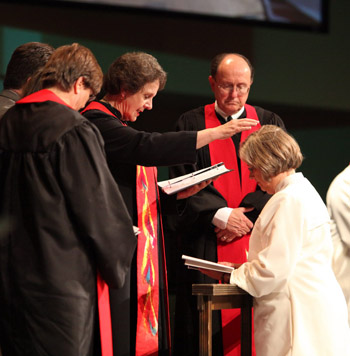
Why part-time local pastor?

ordination
Why not ordination?

I’ve been surprised by the number of messages I’ve received from people asking why I’m a local pastor — and why part-time. They want to know why I’m not pursuing ordination as an elder in the United Methodist Church. Or if not elder, why I wouldn’t be ordained as a deacon.

For me, making the decision to stop the process at licensed local pastor was a very intentional, theological, values-laden decision. Especially for those who are trying to discern their own place in this system, I’ll share some of my reasoning.

Why local pastor?

When Paul writes to Titus about appointing elders (presbuteroi — note that it’s plural) in every town, and when Paul and Barnabas appoint elders in each church, I suspect that those elders they appoint are existing members of those communities. What are the apostles doing, then? It appears that they are recognizing some of the people in those communities for their gifts and their calling to leadership within the community. Then they’re appointing leaders from within them.

I’m in a unique situation. The church I serve is the church I grew up in. That’s not really a coincidence so much as it’s an intentional decision. I’d go so far as to call it a very particular calling. As a lifelong member of First UMC Lexington, so much of my own understanding of ministry and calling has been to lead within my community. Not as a professional outsider, but as someone who might be similar to those presbuteroi whom Paul and Barnabas appointed.

Because of this understanding of calling and ministry, I haven’t been able to pursue ordination with integrity. Itineracy is at the heart of elders’ orders in the UMC’s current practice. For anyone who becomes an elder, it’s emphasized that they’re taking a vow to go wherever their bishop sends them.

I can’t vow with integrity to go where the bishop sends.

If the bishop came to me tomorrow and said, “I’m sending you to Owensboro,” I don’t think I would go. Yes, I’d pray about it. But that kind of role — going as an outsider to serve as a temporary chaplain — while it may be appropriate for many, just doesn’t fit my understood calling or function in ministry. Moreover, it doesn’t fit our family’s values.

Now I’ve heard more than a few dozen times that itineracy is a “consultative process.” As in, the bishop wouldn’t just call me tomorrow and tell me I’m going to Owensboro. There would be several conversations — with me, with the church where I am now, with the church in Owensboro. And I’ve seen that in action. I believe that’s (mostly) true. But at the end of the day, it’s still the decision of the bishop. And if I say no, it’s me who broke my vow. I can’t deal with that kind of breach of integrity. The truth is, even with a consultative process, I’m just not sure I can vow to go where a bishop sends me.

My District Superintendent was quick to remind me that local pastors are still appointed and can be moved, too. My response: “But if I choose not to accept that move, I won’t have broken my vow.”

The question that follows: “Is this an issue of submission? You’re unwilling to submit to the bishop?

No, that’s really not it. I do submit to my bishop. But my submission is about whether or not I’m allowed to lead my community. My bishop can come at any point and remove me from my position. I know that. And I submit to that. I’ve been reminded by several people that one of the downsides to being a licensed local pastor is that you can have your appointment removed at any time.

So in a peculiar way, I see my submission to the bishop as opposite that of ordained elders. An ordained elder with guaranteed appointment submits to where (s)he will serve, but not whether (s)he will serve. My submission is more similar to what I think was happening in those communities where Titus and Paul and Barnabas appointed elders. I don’t think Paul would have ever gone into Ephesus and told one of its elders to go be an elder in Corinth. But he may have gone in and removed an elder. So I’m submitting not to where, but to whether I will be an authorized pastor in my community.

And the one other question that I hear: “Why not be ordained as a deacon? Deacons don’t itinerate.

No, they don’t, but their ordination is also quite different. Deacons are ordained to word, service, compassion, and justice. Elders are ordained to word, sacrament, and order. I understand the latter to be my primary calling. I find the sacraments and ordering the life of the church for ministry right at the heart of my calling, so to be ordained as a deacon just doesn’t work. Fortunately for me, the UMC recognizes the licensed local pastor as one licensed to word, sacrament, service, and ordering the life of the local congregation. That fits.

To be clear in all of this, I believe the UMC’s system of itineracy and appointment is workable and faithful. It’s not that I don’t believe it’s a right way. I just don’t believe it’s the only way – or that it’s the way for me and my family. Serving as a local pastor has allowed me to find a place in the UMC.

(I’ve written a lot about the distinct roles of pastor and itinerant in Scripture and Methodist history. See “related articles” below.)

One final reason for being a licensed local pastor is that I’m able to be classified as “part-time.” That proves to be a big deal…

Why part-time?

A number of others have asked why I’m designated as part-time. (My job description lists me as full-time, and I work full-time, but I’m listed with the conference as part-time.) This is a much easier question to answer: I’m part-time because of money.

If I were declared full-time, it would cost my church $19,000 to bring me up to the minimum required for full-time local pastors (the minimum in the link is for elders – it’s $4,000 less for local pastors). My church would do that. I have no question about it. They have never pressured me not to be listed as full-time and have even pressured me to take salary increases at times in the past. But if you’ve read anything I’ve written about pastors’ salaries, you know I believe there’s a more faithful way to use the church’s collection. My wife works part-time, so we have other income, and we have never worried about meeting our needs. Perhaps that situation will change some day, but for now, I can’t justify taking any more from the church than I have.

For any of you who have shared my concerns about the church’s use of money, this could be a way for you to do something different. Our conferences set minimum requirements, and the only way to avoid them is through part-time status. I’m told some bishops use their appointive power as a way to make churches keep raising salaries: “If you don’t give him/her a raise, I might need to make a change.” The part-time designation can also avoid some of those politics.

I hope this is helpful to any of you who are considering your own role in this whole process. I’d love to answer more questions if you have them, or to hear your thoughts.

“How much do Methodist pastors make?”

pastor salaryI get regular search hits from people looking for statistics on how much money United Methodist pastors make. Since a lot of this is publicly available, and I just saw the most recent information, I thought I’d share it clearly…

The average compensation package for ordained elders in Kentucky:

Base salary: $61,055
Parsonage or housing allowance: $12,000**
**(this is minimum allowed — the average wasn’t listed)
Utilities and other allowances: $4,000 (also minimum allowed)
Retirement and life insurance contributions: $11,981
Health insurance provided: $12,744
Total package: $101,780 (assuming minimum-level housing and utilities allowance)

If you found this post by a search looking for Methodist pastor salaries, be sure to also check out the “Related Articles” listed at bottom. I hope you’ll especially go to “Church Staffing and Justice.”

To decipher pastors’ salary reporting, you may need to see “The Pastor Salary Fallacy.” Unlike everyone else, pastors don’t use any of their base salary to pay for mortgage, rent, utilities, or any other household expenses. The best apples-to-apples comparison with other occupations would probably need to add up salary, housing, and utilities, and compare that to others’ base salaries. In the above, that number would be $76,055. The benefits are another $25,000 — automatic contributions to a retirement plan (13% of salary + housing), life and disability insurance, and a really nice health insurance plan.

Our conference reports also set a new minimum compensation package for 2014, and provided a budget requesting raises for our 15 director-level conference positions. I’ll share those two to show you a bit of the range, though I should make it clear that the director-level positions are, by no means, the highest paid in the conference. Actually, someone in one of those positions recently told me that they’re viewed as middle-tier positions, in terms of pay.

The minimum compensation package for ordained elders in Kentucky:

Base salary: $34,195
Parsonage or housing allowance: $12,000
Utilities allowance: $4,000
Retirement and life insurance: $7,576
Health insurance: $13,260
Total package: $71,031

The compensation package for our director-level positions (assuming they receive proposed raises):

Base salary: $80,108
Parsonage or housing allowance: $14,000
Utilities allowance: $4,000
Retirement and life insurance: $12,807
Health insurance: $13,260
Total package: $124,175

I’m not including these directors’ travel and expense allowance, which averages $13,750 per person. That would increase the total package to $137,925.

For what it’s worth, the highest-paid position in Kentucky had a $166,000 package as of three years ago. I expect that has gone up since then, but don’t have more recent data.

All of this only represents ordained elders in Kentucky. I’ve heard that Kentucky has the second-lowest pay in the UMC in the southeast (a fact accompanied by no small amount of hand-wringing and pressure on churches to raise elders’ salaries), so if you’re looking in the southeast, assume these numbers are on the low side.

This also does not include deacons. Since deacons aren’t moved from church to church, there isn’t the same pressure on churches to raise their salaries or risk having them moved to another church. Many of our full-time deacons have packages much lower than the minimum listed above.

There it is. You asked; I answered. Questions? Thoughts?

If you found this helpful, you might enjoy several of my other UMC Posts or the related articles below.

Related articles