Unity and Holiness

For churches and denominations that are wrangling over important issues, it would help to at least have some agreement about the most important questions.

For this, what if we listen to some wise people who came before us? I’m going to use an 1824 letter from the American Methodist Bishops as guide.[1. This was in their quadrennial address to the General Conference] I don’t want to bog you down in its unfamiliar grammar, so I’ll comment on some short extracts here, then provide the full paragraph at bottom.

“Who ever supposed […] that our system was designed, in any of its parts, to secure the applause and popularity of the world, or a numerical increase of worldly or impenitent men?”

Questions we can’t start with:

  • Will we lose members if we do this?
  • Will we lose giving/funding if we do this?
  • Will we lose [insert demographic segment] if we do this?
  • Will this make us out of step with cultural currents?
  • Will this be an unpopular decision?
  • Could the media have a field day with this?

“Holiness is the main cord that binds us together” “The original design of Methodism […] was to raise up and preserve a holy people.”

Questions that must take center stage:

  • What will help us be more holy?
  • What will help us raise up a holy people?
  • What will help us preserve a holy people?

We can only consider asking questions from that first list if we’ve already answered questions about holiness. And use caution. We’re quick to assume that many decisions are morally/theologically neutral. We often make a swift jump to strategy after giving ourselves a simplistic theological answer (e.g. “God wants us to reach people”). Our methods are as theologically significant as our goals.

If Methodists lose sight of this doctrine [of entire sanctification], they will fall by their own weight. Their successes, in gaining numbers, will be the cause of their dissolution.”

Oh, by the way, even if you temporarily grow in number because of your strategies, if you neglect sanctification/holiness, it will be your undoing.

For all the discussion of unity in churches and denominations today, there is no real unity without holiness. Any supposed unity that loses sight of holiness is a superficial and worldly unity.

————

The full paragraph: “If Methodists give up the doctrine of entire sanctification, or suffer it to become a dead letter, we are a fallen people. It is this that lays the axe to the root of the Antinomian tree, in all its forms and degrees of growth––it is this that inflames zeal, diffuses life, rouses to action, prompts to perseverance, and urges the soul forward to every holy exercise, and every useful work. If Methodists lose sight of this doctrine, they will fall by their own weight. Their successes, in gaining numbers, will be the cause of their dissolution. Holiness is the main cord that binds us together. Relax this, and you loosen the whole system. This will appear more evident, if we call to mind the original design of Methodism. It was to raise up and preserve a holy people. This was the principal object which Mr. Wesley, who, under God, was the great founder of our order, had in view. To this end all the doctrines believed and preached by Methodists tend. And the rules of our Discipline, and the peculiar usages of our Church, were all instituted with the same design. Who ever supposed, or who that is acquainted with it can suppose, that our system was designed, in any of its parts, to secure the applause and popularity of the world, or a numerical increase of worldly or impenitent men?”

————

Victim or Recovery Expert?

healing

I have a good friend who hit rock bottom about four years ago. He’s a different person now.

He could have become a victim of circumstance and sunk deeper. Instead, by the grace of God – and through Alcoholics Anonymous, the Church, and some good mentors – he has been radically transformed.

His recovery didn’t come by his own power. It couldn’t have. But he had choices along the way and chose recovery over defeat.

A few weeks ago, I watched my friend give counsel to someone who had hit rock bottom four months ago. They had broadly similar stories: traumatic experiences that led to substance dependency that led to legal trouble. The counsel my friend gave was beyond anything I could have provided. In that situation, he was the far better-equipped pastor, and he rose to the occasion.

Your trials and hardships, whether self-inflicted or unavoidable, are making you into either a victim or an expert at recovery from them. Which will it be?

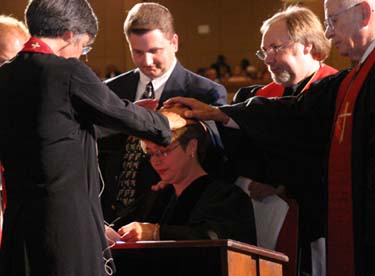
What does ordination mean?

United Methodist clergy are asked 19 historic questions at the beginning of their ordination. A good friend just asked me which of these are binding, and which are simply a nod to our history.

That’s a difficult question to answer when you look at them. I’ve just said that the biggest lie told at every UMC Annual Conference is when ordinands respond to the question, “Will you visit from house to house?” As I look at these other questions, I wonder how many of these we are telling the truth about.

How many pastors recommend fasting or abstinence by both precept and example? How many have avoided massive debt? How many actually approve our church polity and government?

Are any of these still standing but the first: “Have you faith in Christ?”

By winking and grinning at the other 18, are we compromising even the expectation of faith in Christ?

How do you think these historic questions should be used? Binding? Nod to history? Should we consistently evaluate whether clergy are adhering to any/all of these? Which ones?

The historic questions:

  1. Have you faith in Christ?
  2. Are you going on to perfection?
  3. Do you expect to be made perfect in love in this life?
  4. Are you earnestly striving after it?
  5. Are you resolved to devote yourself wholly to God and his work?
  6. Do you know the General Rules of our Church?
  7. Will you keep them?
  8. Have you studied the doctrines of The United Methodist Church?
  9. After full examination, do you believe that our doctrines are in harmony with the Holy Scriptures?
  10. Will you preach and maintain them?
  11. Have you studied our form of Church discipline and polity?
  12. Do you approve our Church government and polity?
  13. Will you support and maintain them?
  14. Will you diligently instruct the children in every place?
  15. Will you visit from house to house?
  16. Will you recommend fasting or abstinence, both by precept and example?
  17. Are you determined to employ all your time in the work of God?
  18. Are you in debt so as to embarrass you in your work?
  19. Will you observe the following directions? a) Be diligent. Never be unemployed. Never be triflingly employed. Never trifle away time; neither spend any more time at any one place than is strictly necessary. b) Be punctual. Do everything exactly at the time. And do not mend our rules, but keep them; not for wrath, but for conscience’ sake.

Subscribe by e-mail to get regular updates on theology, ministry, and life with God.

For more UMC-specific posts, go to my UMC Posts page.