Pentecost Confession

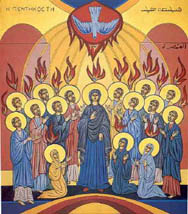
My last post was about letting down our defenses so that we might be open to wounds in worship. The Prayer of Confession in our Pentecost worship this morning was particularly sharp for me. Give yourself some time to reflect on each of these confessions.

Spirit of Truth, we confess that we have not loved one another as you have loved us.

We are quick to find fault and speak ill of others, sins that undermine the fellowship of believers.

We have let strangers and seekers among us feel like outsiders.

We have not done our best to carry the Good News of Jesus Christ beyond the walls of the church.

Forgive our casual disregard of Jesus’ command to go and make disciples.

Forgive us for not using faithfully the powerful gifts of love and service you gave the church at Pentecost.

Renew a right spirit within us, that we may carry the love and mercy of Christ from this place into our weekday community and to the world beyond.

We pray in the name of Christ our Lord, who lives and reigns with you and the Father, one God now and forever. Amen

A word of assurance: In the name of Jesus Christ, you are forgiven.

And our petition in hope: Father, by your Spirit make us one with Christ, one with each other, and one in ministry to all the world, showing forth the fruit of the Spirit until Christ comes in final victory and we feast at his heavenly banquet.

Encounter or Entertainment (pt. II): Worship and Wounds

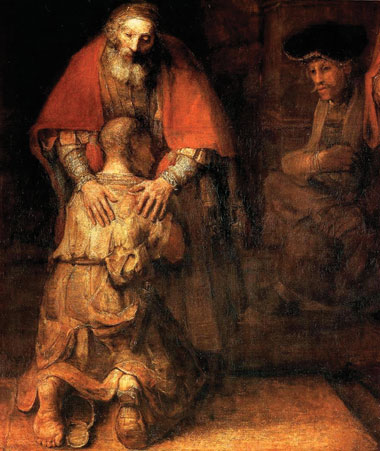
prodigalIn part I, I asked how worship transforms us. If we expect to encounter the living God in worship, we should expect to leave transformed, not merely entertained.

Transformation and Wounds

Wounds are an important part of our transformation. Most of us are aware of our own insufficiency. We know that we are not whole, that our world is full of pain and sorrow, grief and despair. And though we don’t enjoy the process, we have a certain longing to have our brokenness identified. Perhaps this is why the song “Sweetly Broken” became so popular a few years ago.

Rollo May gives a brilliant description of art and wounds that I think applies to worship:

Good art wounds as well as delights. It must, because our defenses against the truth are wound so tightly around us. But as art chips away at our defenses, it also opens us to healing potentialities that transcend intellectual games and ego-preserving strategies.

Do you come to worship willing to be wounded, willing to let your defenses down a bit? If a certain prayer or song or Scripture passage presents something that may not square with your life, are you open to asking why, or quick to write it off as something for another person or another time or place? How come we regularly interpret money as the rich young ruler’s problem, but never as our own?

Worship leaders, are you providing content and opportunity for God to chip away at those defenses? Some specific considerations:

1 – This probably doesn’t come from another “I’m going to step on some toes here” sermon.

2 – I think it comes powerfully when our leaders share their own struggle with a text. I will always remember my friend Jason preaching about the women who were first to see and tell of Christ’s resurrection, then apologizing to our community for neglecting our women as leaders. I was cut to the heart. I think all of our leaders were. That honest struggle with the text wounded us and has been transforming us as a community. When we lean into a difficult text rather than avoiding it, we have the opportunity to be beautifully wounded and forced to make a choice.

3 – Can you use formal prayers of confession? Informal opportunities for confession? Is there space in worship to take these slowly and allow these confessions the mental and emotional space they need. What happens when we give space to a confession like, “We have not loved our neighbors and we have not heard the cry of the needy”?

4 – Don’t shy away from difficult songs. The beautiful hymn “Be Thou My Vision” originally included a line that said, “Riches I heed not, nor man’s empty praise.” Later hymnals have almost universally purged that line!

5 – This is not self-help theology. Some of today’s pop-psychology preaching identifies what people want and five steps to get there. It assumes our worldview is fine and that we are up to the task. We just need motivation or direction. You can get that from Tony Robbins. To be broken and wounded by God involves some shattering of our preconceived notions or ideas of self-sufficiency.

After confession comes assurance. The point is not simply to wound and be wounded. The point is to be freed from our hardness of heart for joyful obedience. We pray for healing, and declare forgiveness in the name of Jesus Christ! Without praise and assurance, wounds lead only to despair. The repair of our wounds may be slow, but the assurance of healing is constant.

All of this deals with the wounds that happen when we encounter the living God. I believe another kind of woundedness is also important in worship: when we bring our laments before God and ask “Why?” Perhaps more on that later.

Encounter or Entertainment? (pt. I)

My last post considered style and content in worship. This post and the next will consider the function and purpose of our worship.

What do you expect when you come into corporate worship? Worship planners, what are you working toward when you plan?

A brilliant man named David Peterson says worship is essentially an engagement with God. If he’s right, we can’t enter worship merely expecting to be entertained or interested, to enjoy our time, learn something new, or even feel emotionally engaged. If we come to worship to meet with the living God, we should expect nothing less than to leave changed.

In a great, short article on the difference between art and entertainment, Jeff Goins shares the quote, “Entertainment gives you a predictable pleasure… Art leads to transformation.” I don’t want to get into whether worship is or isn’t art (you can use the comments for that if you’d like), but given this definition, I think our worship should be much more art than entertainment.

Goins says art transforms us by first surprising or wounding us. It evokes something within us and connects us to something that transcends us. Does our worship do the same?

Surprise

Do you find yourself surprised in worship? This is not the-pastor-just-rode-in-on-a-Harley-just-because. Surprise! That surprise doesn’t transform; it amuses.

This is the kind of surprise that comes when you hear a word from Scripture that catches you off guard, or you are suddenly overwhelmed by something about who God is or who you are in his eyes. This is the surprise that comes when you are amazed by how God still answers prayers and still works in our world, or the surprise of conviction and calling where you had previously been comfortable.

I remember hearing my friend Josh preach about Abra(ha)m’s incredible faithfulness before God: leaving his home to go wherever God was leading, and later preparing his only son to be sacrificed because God commanded it. I was overwhelmed at that kind of reckless trust and obedience before God. And then we sang “Walk by Faith.” I had heard the stories and sung the song plenty of times, but God encountered me in a surprising way that day in worship. I went home and followed through on some big commitments that I knew God desired and that I had been dragging my feet on.

For planners, how do you plan for surprises like this?

  • 1 – You don’t entirely. You aren’t in charge of the surprise. Worship is about an encounter with God, and we leave the surprises to him. We are facilitators. With that, we pray that the Spirit will move in such a way that people are overcome, overwhelmed, and changed.
  • 2 – Put yourself in position to be surprised and pass it along. I remember preaching on simplicity and generosity for about the fourth time in two years (yes, we preach that theme a lot) and suddenly being shocked to find the same Greek word used for both throughout the New Testament. It changed the way I understand simplicity and generosity. It changed the way I live. That was a great sermon to preach. It was like letting everyone else in on the great surprise God had just given me.
  • 3 – Allow others to lead in worship. As I have let go of control and involved more people in worship leadership, I have been more consistently surprised. Why? I’m getting to hear about God and his work in our lives from other perspectives. These are experiences I have never had and things I have never considered. If I were the only one leading, I wouldn’t have heard these and neither would the rest of our community.
  • 4 – Don’t waste all of your creative energy on entertainment surprises. The worship leader playing guitar while suspended from the ceiling may be neat, but it’s probably not more likely to lead people to a genuine encounter with God. Even more, that entertaining surprise may distract people’s focus from the truly transformational or train them to expect mere entertainment in worship.

Are we expecting and planning for predictable pleasure in our worship, or do we come expecting God to encounter and transform us?

More on wounds in worship and transformation next time…

What do you agree with? What do you disagree with? What questions does this raise for you?