Encounter or Entertainment? (pt. I)

My last post considered style and content in worship. This post and the next will consider the function and purpose of our worship.

What do you expect when you come into corporate worship? Worship planners, what are you working toward when you plan?

A brilliant man named David Peterson says worship is essentially an engagement with God. If he’s right, we can’t enter worship merely expecting to be entertained or interested, to enjoy our time, learn something new, or even feel emotionally engaged. If we come to worship to meet with the living God, we should expect nothing less than to leave changed.

In a great, short article on the difference between art and entertainment, Jeff Goins shares the quote, “Entertainment gives you a predictable pleasure… Art leads to transformation.” I don’t want to get into whether worship is or isn’t art (you can use the comments for that if you’d like), but given this definition, I think our worship should be much more art than entertainment.

Goins says art transforms us by first surprising or wounding us. It evokes something within us and connects us to something that transcends us. Does our worship do the same?

Surprise

Do you find yourself surprised in worship? This is not the-pastor-just-rode-in-on-a-Harley-just-because. Surprise! That surprise doesn’t transform; it amuses.

This is the kind of surprise that comes when you hear a word from Scripture that catches you off guard, or you are suddenly overwhelmed by something about who God is or who you are in his eyes. This is the surprise that comes when you are amazed by how God still answers prayers and still works in our world, or the surprise of conviction and calling where you had previously been comfortable.

I remember hearing my friend Josh preach about Abra(ha)m’s incredible faithfulness before God: leaving his home to go wherever God was leading, and later preparing his only son to be sacrificed because God commanded it. I was overwhelmed at that kind of reckless trust and obedience before God. And then we sang “Walk by Faith.” I had heard the stories and sung the song plenty of times, but God encountered me in a surprising way that day in worship. I went home and followed through on some big commitments that I knew God desired and that I had been dragging my feet on.

For planners, how do you plan for surprises like this?

  • 1 – You don’t entirely. You aren’t in charge of the surprise. Worship is about an encounter with God, and we leave the surprises to him. We are facilitators. With that, we pray that the Spirit will move in such a way that people are overcome, overwhelmed, and changed.
  • 2 – Put yourself in position to be surprised and pass it along. I remember preaching on simplicity and generosity for about the fourth time in two years (yes, we preach that theme a lot) and suddenly being shocked to find the same Greek word used for both throughout the New Testament. It changed the way I understand simplicity and generosity. It changed the way I live. That was a great sermon to preach. It was like letting everyone else in on the great surprise God had just given me.
  • 3 – Allow others to lead in worship. As I have let go of control and involved more people in worship leadership, I have been more consistently surprised. Why? I’m getting to hear about God and his work in our lives from other perspectives. These are experiences I have never had and things I have never considered. If I were the only one leading, I wouldn’t have heard these and neither would the rest of our community.
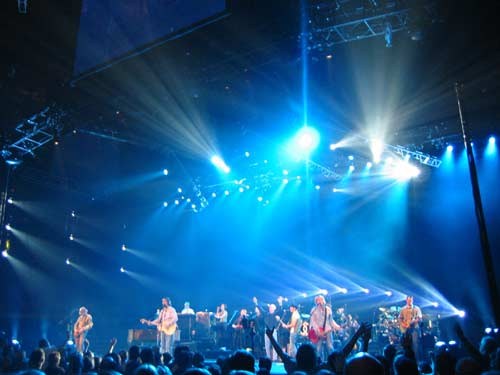
  • 4 – Don’t waste all of your creative energy on entertainment surprises. The worship leader playing guitar while suspended from the ceiling may be neat, but it’s probably not more likely to lead people to a genuine encounter with God. Even more, that entertaining surprise may distract people’s focus from the truly transformational or train them to expect mere entertainment in worship.

Are we expecting and planning for predictable pleasure in our worship, or do we come expecting God to encounter and transform us?

More on wounds in worship and transformation next time…

What do you agree with? What do you disagree with? What questions does this raise for you?

The Church and Money

I’m preparing an upcoming series on the Church and money. I would appreciate any of your thoughts, questions, stories, statistics, suggested reading, etc. Use the comments section, or e-mail them to me. Thanks!

What kind of worship service do you have?

I’ve been asked the question a number of times. “What kind of worship does your church do?” Sometimes the question is a bit more specific: “Do you do contemporary or traditional worship?” Several church signs I drive by indicate the times of their traditional, contemporary, and perhaps blended worship services. The most hip are now doing contemporvant.

It seems that the most important question anyone has about worship is whether the music is led by a band or a choir. I know that people have stylistic preferences. In honesty, I have my own. But I think other aspects of our worship are much more interesting and important.

Changing the Conversation

I’d like to change the conversation when it comes to what kind of worship we do. In fact, when people ask me the question, I tell them, “We do Word and Table worship.” That’s usually followed by a strange look. People aren’t used to descriptions of worship that have to do with its primary substance. But this is the best description I can give. In fact, it is the only description of our worship I can give and know will remain true.

Every week, we hear the Word of God. Week after week it comes to us to guide, rebuke, encourage, or correct. And every week, we come to the Table to commemorate Christ’s sacrificial death, participate in his body and blood, and receive the spiritual strengthening to do His will. Word and Table — these are the essentials of our worship and nothing else.

When some people in our community have asked how I describe our worship, I ask them, “Which would be more shocking to you: if a piano and choir were to lead our music one week, or if we were to simply sing, preach, and then give a benediction?” I suspect that I might not get a single question if we were to use the piano and choir. But if we didn’t come to the Table one week, I expect that the majority would be confused, disappointed, and perhaps distressed.

I expect the same would happen if we chose to have a reading and message from Aesop’s Fables rather than from the Word one week. How, then, is our worship defined? By the Word and the Table. Everything else may change, but these will always remain.

Hearing from Many Streams

Since the question about what kind of worship we do typically has to do with music – and sometimes other liturgical elements (i.e. whether we say any creeds, use drama, etc.) – I’d like to say a brief word on these elements of our worship. In most of my community’s worship services, a band leads the music. This does not mean that we sing exclusively – or even primarily – praise choruses written in the past ten years. We sing Appalachian spirituals, praise choruses, hymns, and Black gospel songs. We have chanted psalms and have even danced (or at least moved around a little) to African praise songs.

This variety is important to us. We believe Christians from many different places, times, and streams of influence have contributed something important. If we limit ourselves to one particular stream and style, we are likely to miss the great perspectives that have come from so many others.

I hope to embrace that same mentality when it comes to other elements of worship. We have a number of excellent elements to choose from as we worship each week – creeds, prayers, greetings and collects, drama and dance – and we would be remiss to neglect any of these. We do not consider any of these essential to our weekly worship – only Word and Table hold that distinction. So we don’t necessarily recite the Apostles’ Creed or say the Lord’s Prayer every week, but we make sure to incorporate these into our worship throughout different times of the year. The weekly presence or absence of any of these elements has also been a point of controversy in some churches, and I would again encourage us to focus on more important matters.

Let’s leave behind the battles about musical styles or secondary elements. Honestly, if you will only attend a worship service that uses a [insert instrument of choice], I would challenge you to re-consider your priorities in worship. If we contend for anything, let’s contend for the content of Word and Table in all of our worship, then embrace all of the great variety the Christian tradition has to offer when it comes to the other elements.