For churches and denominations that are wrangling over important issues, it would help to at least have some agreement about the most important questions.
For this, what if we listen to some wise people who came before us? I’m going to use an 1824 letter from the American Methodist Bishops as guide.[1. This was in their quadrennial address to the General Conference] I don’t want to bog you down in its unfamiliar grammar, so I’ll commenton some short extracts here, then provide the full paragraph at bottom.
“Who ever supposed […] that our system was designed, in any of its parts, to secure the applause and popularity of the world, or a numerical increase of worldly or impenitent men?”
Questions we can’t start with:
Will we lose members if we do this?
Will we lose giving/funding if we do this?
Will we lose [insert demographic segment] if we do this?
Will this make us out of step with cultural currents?
Will this be an unpopular decision?
Could the media have a field day with this?
“Holiness is the main cord that binds us together” “The original design of Methodism […] was to raise up and preserve a holy people.”
Questions that must take center stage:
What will help us be more holy?
What will help us raise up a holy people?
What will help us preserve a holy people?
We can only consider asking questions from that first list if we’ve already answered questions about holiness. And use caution. We’re quick to assume that many decisions are morally/theologically neutral. We often make a swift jump to strategy after giving ourselves a simplistic theological answer (e.g. “God wants us to reach people”). Our methods are as theologically significant as our goals.
“If Methodists lose sight of this doctrine [of entire sanctification], they will fall by their own weight. Their successes, in gaining numbers, will be the cause of their dissolution.”
Oh, by the way, even if you temporarily grow in number because of your strategies, if you neglect sanctification/holiness, it will be your undoing.
For all the discussion of unity in churches and denominations today, there is no real unity without holiness. Any supposed unity that loses sight of holiness is a superficial and worldly unity.
————
The full paragraph: “If Methodists give up the doctrine of entire sanctification, or suffer it to become a dead letter, we are a fallen people. It is this that lays the axe to the root of the Antinomian tree, in all its forms and degrees of growth––it is this that inflames zeal, diffuses life, rouses to action, prompts to perseverance, and urges the soul forward to every holy exercise, and every useful work. If Methodists lose sight of this doctrine, they will fall by their own weight. Their successes, in gaining numbers, will be the cause of their dissolution. Holiness is the main cord that binds us together. Relax this, and you loosen the whole system. This will appear more evident, if we call to mind the original design of Methodism. It was to raise up and preserve a holy people. This was the principal object which Mr. Wesley, who, under God, was the great founder of our order, had in view. To this end all the doctrines believed and preached by Methodists tend. And the rules of our Discipline, and the peculiar usages of our Church, were all instituted with the same design. Who ever supposed, or who that is acquainted with it can suppose, that our system was designed, in any of its parts, to secure the applause and popularity of the world, or a numerical increase of worldly or impenitent men?”
I know what you’re thinking… “Not another article about how to die well.”
No? We don’t talk about this much, do we? Death is a subject that’s generally avoided in our culture. Have any discussion about death, and someone’s likely to say something like, “That’s so morbid.” Which is usually to suggest that it’s not a pleasant or welcome conversation. It’s abnormal.
In our culture, we’re either privileged or burdened—depending on how you look at it—to be much further removed from death than most people across the world and throughout time. Here and now, people die mostly in institutions—hospitals and nursing homes—and “bodies are whisked out of sight from bed to morgue to funeral home, where morticians, not family members, prepare them for burial.”[1. Thomas G. Long, Accompany Them With Singing] And more and more often, we don’t view a person’s body, either at visitation or a funeral. That despite the fact that we’ve developed all sorts of practices to preserve and beautify people’s bodies with things like embalming and heavy face powder. When we were in Spain, we were surprised to see that most funerals take place within 24 hours of death. Embalming is a new and rare practice there, so you can’t wait five days to have a funeral.
We’re afforded a certain separation from death that most people in history haven’t had. And as a result, we’re able to avoid thinking about death in a way that most people have had to face.
A philosopher named Kerry Walters made an interesting comment about that. Here’s what he says:
“Many of us die badly not because we’re wicked or weak people, but because we simply haven’t been taught how to die well […] You can’t really prepare for something you spend a lifetime avoiding.” [1. From “The Art of Dying and Living” in Baylor’s Christian Reflection]
Now look at this as a contrast. A physician who treated several Methodists made this claim to Charles Wesley, one of the founders of Methodism:
“Most people die for fear of dying; but, I never met with such people as yours. They are none of them afraid of death, but are calm, and patient, and resigned to the last.”
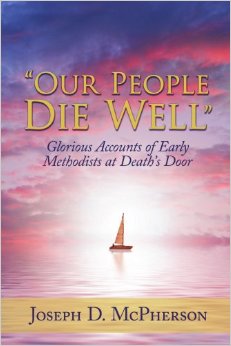
Those early Methodists actually made it a practice to publish the stories of several people’s deaths. Some of their greatest testimonies were about how people died. So there’s a book out now with 98 different accounts of early Methodists’ deaths––the kind of book you can hardly resist buying, right? It’s titled Our People Die Wellbecause the founder of the Methodist movement, John Wesley, said that one time about Methodists: “Our people die well.”
So what does that even mean? What is it to die well? And how can we prepare to die well?
Living for the Lord, Dying for the Lord
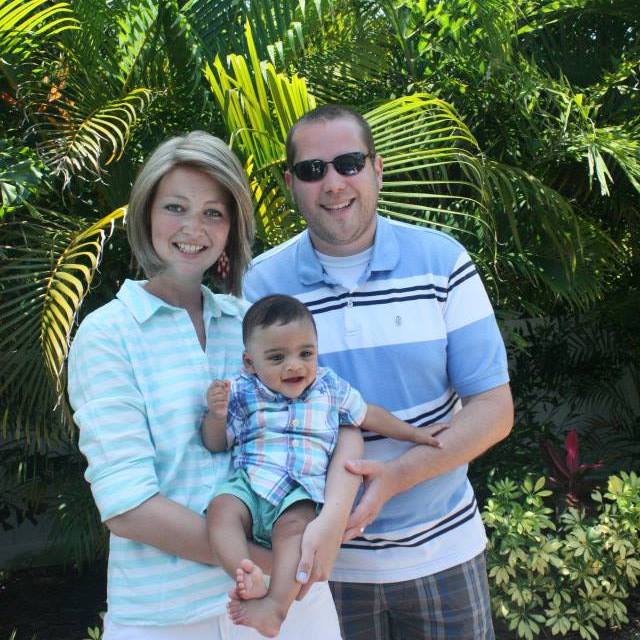
If you’ve been reading at this site for a while, you may know that I’ve had two very special people in my life die—and die young—in this past year. The first was Dori Deitrich.
Dori, Matt, and Carter
Dori and her husband, Matt, were in my youth group several years ago. Theirs was the second wedding I officiated. Since then, they had become good friends. Youth ministers aren’t supposed to have favorites, but their two pictures never came off our refrigerator.
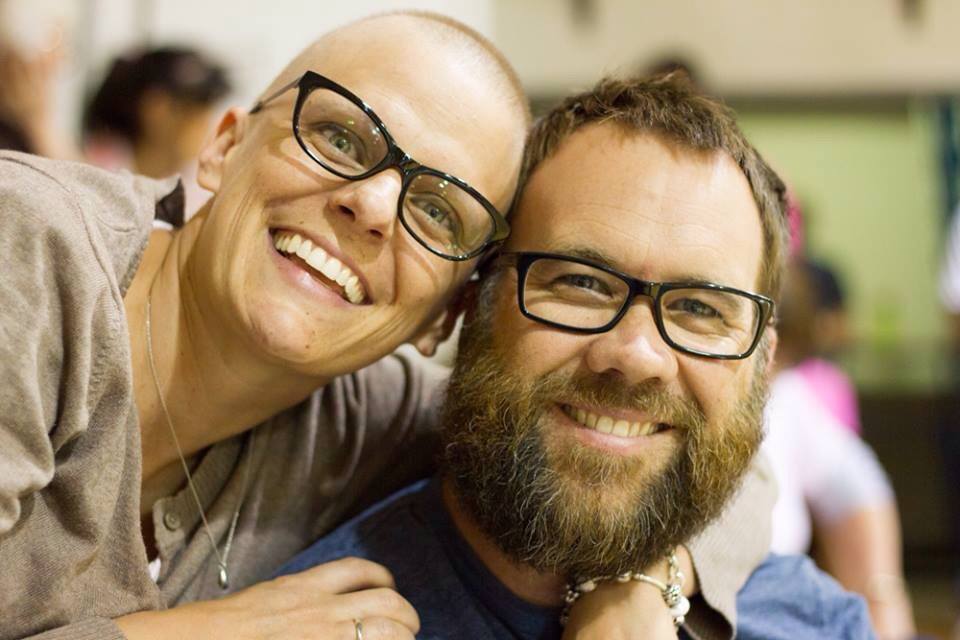
The other person was David Sparks. David was my youth minister when I was in middle school and had become a real friend and mentor of mine. Dori and David were both diagnosed with cancer back in 2013 and both died just about a year after their diagnoses.
Each of their deaths was difficult for me, but the way that they both died left quite an impact. As they were dying, these two were incredible models of strength. They were the ones comforting their own families. To be clear, they grieved and hurt and asked questions. But they were also willing to let go. I still remember Dori saying, “Everyone around me is treating death as this awful thing, but doesn’t this mean I get to be with Jesus?”
David
And David continued sending me text messages that were all gratitude and encouragement, even in his final weeks. They both died quickly, young, and with a lot still to live for. But they died with an amazing peace and a trust in God that was growing, not weakening, even in those times. That’s dying well. Though each of our deaths will be different—some of us old, some of us young, some long and drawn out, some quick and unexpected—this is something we all face (unless Christ comes again soon!), and it’s important to consider our deaths in light of our faith.
In Romans 14, the apostle Paul is writing to a group of Christians who have different practices. Some of them eat meat, some eat only vegetables. Some observe one day as more sacred than others while others consider every day alike. And rather than settling their dispute, he simply says, “Each of you is doing what you do for the Lord.” And then he makes this interesting comment, beginning at verse 7:
“For none of us lives for ourselves alone, and none of us dies for ourselves alone. If we live, we live for the Lord; and if we die, we die for the Lord. So, whether we live or die, we belong to the Lord. For this very reason, Christ died and returned to life so that he might be the Lord of both the dead and the living.”
If we live, we live for the Lord; and if we die, we die for the Lord. Your life is not your own. It’s a gift from God. Paul goes on to say in verse 12: “So then, each of us will give an account of ourselves to God.”
Your life is not your own. It’s a gift from God.Whether we live or die, we belong to the Lord. Everything else below is some observations about what that means for us.
Living Well
A first observation: dying well begins with living well.
How could David and Dori die tragic, early deaths, and yet die with such peace? I would suggest it’s because they lived well.
At both of their graveside services, someone read over them this common passage from the Book of Revelation:
“Blessed are the dead who die in the Lord from now on.” “Yes,” says the Spirit, “they will rest from their labor, for their deeds will follow them.”[1. Rev 14:17]
They’ll rest from their labor, for their deeds will follow them. That word that’s translated “labor” here isn’t just any work, it’s a reference to a faith that endures hardship, trouble, and difficulty. For those who live well, whose faith endures through storms–, God assures us both a great blessing and a rest from those storms in death.
For both David and Dori, their quantity of life was shorter than expected. But the length of our lives has no great or final significance. It’s the quality of how we’ve lived that matters.
A verse in the book of Hebrews might give the best one verse summary of what it looks like to live well:
Make every effort to live in peace with everyone and to be holy; without holiness no one will see the Lord.[1. Heb 12:14]
You’ve heard the stories of people who didn’t die well. Maybe you’ve been unfortunate to see some up close. The person who goes to their grave bitter, alienated and estranged. Or the person whose own vices took greater control the longer they lived.
This verse in Hebrews calls us to the opposite. To be people of peace and holy people.
A practical suggestion for you today… You want to die well? Is there anyone you need to reconcile with? Have you made every effort to live in peace? If not, can you go, before this week ends, and make every effort to reconcile?
To take that even a step further, away from just the negative relationships… Is there anyone you need to affirm? Anyone that, if you lost the chance, you’d be especially upset that you never said what you should have said? If so, is there a chance for you to do that this week?
And then a question from the other part of that Hebrews verse: are you living a holy life? Do you need to repent from anything? When we live disobedient to God, we alienate ourselves from him—not because God doesn’t want anything to do with us, but because we choose to estrange ourselves from God.
For Christians, right at the center of why we can die well, and why we should die well is this: If Christ is your Lord while you live, you can rest assured that he will be your Lord when you die, too.
Whether it’s with people or with God, to die well means to be reconciled in those relationships. We die well because we’re reconciled people.
Willing, Though Not Eager, to Die
Now a second observation about our life as a gift from God: dying well means being willing, though not eager, to die.
This was one of the most remarkable things about the accounts of those early Methodists’ deaths—and the same that I saw in David and Dori. They wanted to live, but they were unafraid to die.
We live in an unusual time. Our technology has advanced so much that we can keep the body alive, even when we maybe shouldn’t. We can fight and claw and preserve life, even if we shouldn’t. There are times that we can keep someone’s body alive, but their quality of life is so poor that we might ask if we’ve fought a battle that wasn’t meant to be fought. Are we clinging too tightly to life in some of these instances, refusing to give our lives over to God in death?
My wife works in a hospital, and she has seen several patients who are in their last days, but whose families refuse to sign a “Do Not Resuscitate” order. What that means: if a frail, 93 year-old woman’s heart stops, the medical staff are required to administer CPR. If they bring that person back to life, it will likely be with a number of broken ribs and some awfully painful days to come. Sometimes it takes the family seeing the pain that was caused before they’ll sign one of those orders.
Why? Why do we refuse to sign “Do Not Resuscitate” orders for people who we know are going soon? Because we keep wanting to cling to life, even when it’s time to allow someone to say farewell. We keep wanting more closure. Buta brilliant theologian named Tom Long surprised me with this notion recently. He said that “closure” isn’t what we seek as Christians.[1. In The Good Funeral] Death marks a dramatic tension, but it doesn’t mark the end. Whenever we proclaim the Apostle’s Creed together, we say, “I believe in the communion of saints.” That claim says that for those who believe, there’s no “closure,” but unending praise and participation in God’s ceaseless creativity. We don’t need a full farewell. This isn’t the end. Just a transition.
If we’re honest, many of us are downright afraid of death. That was what that physician noted as the biggest difference between the Methodists he saw and those other patients. He said none of those Methodists were afraid to die.
This certainly isn’t the same as taking life for granted, or treating this gift of life with disregard. Actually, we might even say the opposite. If you’re afraid to die, you’re also going to have a hard time living well. I want to share a quote with you from a brilliant man named GK Chesterton. He said this in a book you really must read, called Orthodoxy. This is one of the longest quotes I’ve shared, but it hit me so square that I wanted to share it all with you:
‘Courage is almost a contradiction in terms. It means a strong desire to live taking the form of a readiness to die. “He that will lose his life, the same shall save it,” is not a piece of mysticism for saints and heroes. It is a piece of everyday advice for sailors or mountaineers. It might be printed in an Alpine guide or a drill book.
This paradox is the whole principle of courage; even of quite earthly or quite brutal courage. A man cut off by the sea may save his life if he will risk it on the precipice. He can only get away from death by continually stepping within an inch of it. A soldier surrounded by enemies, if he is to cut his way out, needs to combine a strong desire for living with a strange carelessness about dying. He must not merely cling to life, for then he will be a coward, and will not escape. He must not merely wait for death, for then he will be a suicide, and will not escape. He must seek his life in a spirit of furious indifference to it; he must desire life like water and yet drink death like wine.
No philosopher, I fancy, has ever expressed this romantic riddle with adequate lucidity, and I certainly have not done so. But Christianity has done more: it has marked the limits of it in the awful graves of the suicide and the hero, showing the distance between him who dies for the sake of living and him who dies for the sake of dying.’
He writes there at the end about the one who dies for the sake of living. He was talking there about Christian martyrs, people who loved God more than life and feared sin more than death. If life is a gift from God, this is the way we live—enjoying it, but not clinging to it at all costs.
And then that mention of suicide shows the other end of the spectrum. If life is a gift from God, we don’t actively bring about our deaths. There are cultures where suicide is considered honorable. Christians reject that notion. This life is a gift from God, and we will not actively end it.
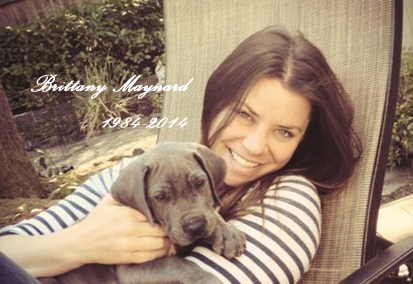
There’s a “dignity with death” movement that has gained a lot of traction recently. It’s about allowing terminally-ill people to request and receive medication that will hasten their deaths. You may have heard about this recently because of a young woman name Brittany Maynard. She was 29 years-old and learned that she had aggressive brain cancer. And so she decided that as she declined, she would take her own life rather than go through the suffering that comes with later-stage cancer.
Joining with Christ
Let me make a third observation that I think relates to Brittany Maynard’s situation: when we die, it’s a joining with Christ in his sufferings.
I say that relates because we have a Savior who did not, in any way, die an easy death on his own terms. So Paul writes to one group of early Christians:
I want to know Christ—yes, to know the power of his resurrection and participation in his sufferings, becoming like him in his death.[1. Phil 3:10]
For Christians, what if suffering doesn’t reflect a lack of dignity, but an actual becoming like Christ? Or maybe to ask it differently—even if we should lose some of our dignity in death, don’t we have a Savior who lost his dignity for us? For you who are baptized, that baptism was a preparation for your death. It was a sort of burial into Christ’s death—a death to self.
Though it may look undignified to our world, even our suffering can be beautiful and Christ-like.
Look at what another woman also dying of cancer, her name was Kara Tippetts, wrote to Brittany Maynard:
Suffering is not the absence of goodness, it is not the absence of beauty, but perhaps it can be the place where true beauty can be known […] That last kiss, that last warm touch, that last breath, matters — but it was never intended for us to decide when that last breath is breathed.
For some of us, dying well may mean suffering and difficulty and not having things on our own terms. But in that there’s a beauty—a joining with Christ and a participation in his sufferings, allowing God who has given us life to decide when it will end, as well.
Hope
And then, finally, one last observation about dying well. I just showed you Philippians 3:10. Let’s look at that again, but now also with the next verse:
I want to know Christ—yes, to know the power of his resurrection and participation in his sufferings, becoming like him in his death, and so, somehow, attaining to the resurrection from the dead.
When Paul writes about his death, he doesn’t stop with that. What’s the end point? “And so, somehow, attaining to the resurrection from the dead.” Dying well is dying with hope. Dying well is dying with this great assurance that just as we join Christ in death, we’ll join him in life, and life eternal.
Why do Christians die differently? Because we die with a great, eternal hope. Because Christ has gone before us. He’s made a way. He has suffered. He has died. And now he’s risen and lives forever to intercede for us. And for all who follow him, we’ll live and reign with him forever. That’s the hope we live with, and the hope we die with.
When today’s largest denominations were formed, they began as reform movements––zealots about particular aspects of Christian life and doctrine. Leon McBeth begins his sweeping history of the Baptists by noting that they “emerged out of intense reform movements.”[note]Page 21 of The Baptist Heritage[/note] John Wesley wrote of his fear, not that the Methodist movement would ever disappear, but that the Methodists would stray from “the doctrine, spirit, and discipline with which they first set out.”[note]From Wesley’s “Thoughts Upon Methodism,” August 4, 1786. Bicentennial Edition of the Works of John Wesley, 9:527[/note]
Our major denominations began with a common doctrine, a zealous spirit, and a particular discipline––a set of norms for Christian life, discipleship and mission. These were their unity.[note]Yes, the Church is ultimately united in Christ. But that’s the unity of the entire, catholic Church. For the exclusive unity of denominations, we can only go so far as doctrine, spirit, and discipline.[/note]
They developed structures to support that unity. These usually started with a set of articles of belief to identify the common points of doctrine, and often something like a handbook for how the movement functioned. In the Methodist tradition, we know this as our Discipline. The first American Discipline, approved in 1784, was 44 pages long. It reads like a leaders’ manual––in question and answer format––with questions like, “What general Method of employing our Time would you advise us to?” and, “How can we further assist those under our Care?”
Our denominations began with a united mind and purpose and supportive structures. Over time, we’ve become divided in mind and purpose. Our norms for discipleship and mission (e.g. an advised general Method of employing our Time) are much less clear. How are we united now? Chiefly by our structures. Those once-supportive structures now have a more coercive role. We think less in terms of norms and more in terms of rules, less about what is advisable and more about what is permissible. That once 44-page Methodist Discipline is now 804 pages long, and it no longer includes that advice about general Methods for employing our Time.
Fall
Structure is a great servant and a lousy master.
A friend recently asked me if denominations are fighting for a superficial unity. We have a paper unity, external and regulated. But do we have real unity of mind and purpose? The kind of unity that celebrates a common doctrine, spirit and discipline? Most of the denominational wrangling we witness today would suggest not.
Moreover, by my observations of the United Methodist Church (I’m not familiar with others enough to speak for them), the unity we have regulated and enforced is primarily a bureaucratic unity. Our churches and denomination have a particular way of conducting business. But we have done little to regulate a particular way of conducting worship and discipleship.[note]Yes, the UMC has a Book of Worship with Services of Word and Table. The vast majority of our churches don’t follow this order. Unenforced regulation is no regulation at all.[/note]
Compare this to the high church traditions––Anglicanism, Catholicism, and Orthodoxy––who hold to common liturgies. Why? Because of the principle of lex orandi, lex credendi (the law of praying is the law of believing). These traditions have a different sort of regulated unity. We could call theirs a confessional unity, a sacramental unity. These traditions are far from perfect. But they have a deep kind of unity, the kind that can persist under trial. I doubt the same for a bureaucratic unity.
The Rise of the Network and Coalition
What denominations have been doing since the Reformation is now happening in a different form. Those people united in mind and purpose are less likely to create a new denomination today. Instead, we’re seeing them come together in looser affiliation, in networks and coalitions.
In many regards, these look similar to those old denominational formations, but they’re not the same. Denominations are exclusive and centralized. You can’t be both Methodist and Baptist. You belong to one and are governed by its rules. The hierarchies are clear, the common purpose less so.
By contrast, these new networks are decentralized. The common purpose is easier to identify than the chain of command. The common documents look more like norms the group holds than rules to be enforced. I expect that where these networks and coalitions enforce anything, they’ll look much more like the high church traditions I mentioned above––focused on common belief and perhaps common practice, rather than common structures.
Nobody owns AA. Bill [its founder] realized this when the group became a huge success and people from all over the world wanted to start their own chapters. Bill had a crucial decision to make. He could go with the spider option [centralization] and control what the chapters could and couldn’t do […] Or he could go with the starfish approach [decentralization] and get out of the way. Bill chose the latter. He let go.
What does this mean for denominations?
They’re undoubtedly declining, wielding less influence than they did a few decades ago. I don’t know that they’ll cease to exist, but I expect that people within those structures will give their best energy to the cause of the networks they belong to. For those who crave a stronger ecclesiastical unity than networks provide, I expect a continued movement to Anglicanism, Catholicism and Orthodoxy.
I witnessed some of this at the New Room conference last year. The conference was for people in the Methodist/Wesleyan tradition. I was interested to see just how strong people’s allegiances were to those Wesleyan principles––particularly the doctrine of holiness and the discipline of catechesis. At the same time, I was surprised at how weak most people’s denominational allegiances were. Especially because I’ve written about the “local pastor option” in the UMC, I had no less than a dozen people ask me to talk to them about their ministry options in the UMC. They were all willing to serve in the UMC if they could get the shoe to fit. But they were determined to serve according to the principles of the Wesleyan tradition, wherever they were.
(A note to the UMC: these are great, rising leaders. Every single one of them wonders whether the UMC structure of itineracy fits their ministry values. Not because they’re selfish and want it their way. But because they want to do ministry as rooted insiders, not temporary outsiders. We aren’t losing our best leaders because the route to ordination is too long or hard. We’re not losing them because we don’t pay enough. We’re losing them because of itineracy. The UMC may be okay with that. But we should at least be asking whether our traveling pastor structure is of the essence of our church.)
To be sure, I’m happy to be a United Methodist. I expect to be one to the day I die. I believe I can live out the principles of the early Methodist movement from within the structure I’m a part of now. But it’s the Wesleyan/Methodist movement that holds my deeper allegiances. [edit: I wrote this in 2015, when I still believed the UMC could endure as the denomination that it looked like on paper––and in reality where I was. Sadly, I think the UMC as we know it is in its final days. Whatever it is I’ll be a part of, I don’t believe the UMC of the present will exist for me to continue in the rest of my life. I know the Wesleyan/Methodist movement will endure. And I absolutely expect to be a part of that in some form throughout my life.]


 teddy ray