I have eight categories in my reading rotation (see that whole neurotic system here). Here’s the best book I read in each category this year.
 Literature
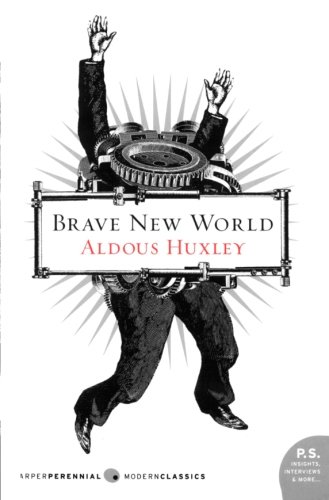
I finally read Brave New World by Aldous Huxley this year. Of the dystopian visions I’ve seen, his is the most chilling. I can’t say it better than Neil Postman, who compared it to 1984 this way: “In 1984, people are controlled by inflicting pain. In Brave New World, they are controlled by inflicting pleasure. In short, Orwell feared that what we fear will ruin us. Huxley feared that our desire will ruin us.” If you haven’t read this, you should. If you haven’t read it since high school English, I bet you’ll appreciate it more now.
 Bible
I read N.T. Wright’s mammoth (in size and scope) The New Testament and the People of God this year. I’m reading that whole series, so I’m going to hold the individual volumes out of my “best books lists.” Otherwise, Wright might dominate this category for years.
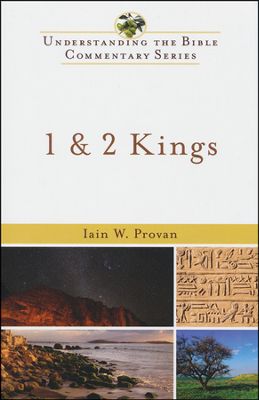
Instead, I’m choosing Iain Provan’s commentary on 1 & 2 Kings. Provan is consistently interesting. He’ll provide a different viewpoint than you may be used to. For instance, he has no kind words about Solomon from the start. Provan’s introduction—especially as he deals with what kind of literature the book of Kings is––is worth the price of the book. Along with some penetrating insights into the text, he provides personal reflections and application. You don’t need to be a scholar to read this commentary. Provan is a good communicator for general audiences.
 Philosophy, Psychology, and Other Religions
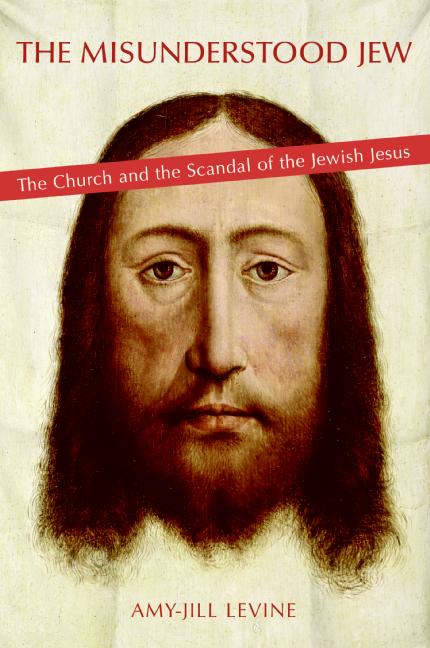
The Misunderstood Jew by Amy-Jill Levine is full of fresh and interesting insights about the New Testament. It’s a book about the historical Jesus from a Jewish scholar. She sets out to help us understand Jesus “through first-century Jewish eyes” and to hear him “through first-century Jewish ears.” She also shows the ways that we have misrepresented the Judaism of Jesus’ day to make it the perfect foil for Jesus, ignoring its complexity and depth for a cheap stereotype. A few arguments against Christianity I found unfair or overblown, but this was a very good book overall.
 Practical Theology
You need to read Glittering Vices by Rebecca Konyndyk DeYoung. I loved this book. It helped shape my articles on lust, gluttony, and anger this past year—the other 4 capital vices coming next year. DeYoung gives a historical look at the vices that gets beyond common surface-level treatments.
If you think you understand what the 7 capital vices (or deadly sins) are about, this book will shed new light on them. DeYoung’s treatment shows the depth of the theological tradition on these and provides helpful application. I also liked the way DeYoung situates pride at the root of all of them rather than as one of them. This would be a great book to read during Lent this year, or sooner.
 Doctrinal Theology
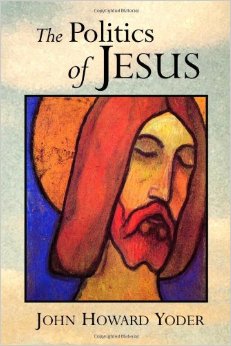
The Politics of Jesus by John Howard Yoder had been on my to-read list for years, and it didn’t disappoint. Some themes in this book don’t seem as groundbreaking to me as people have suggested. But that may be because of Yoder’s influence, especially noted in Stanley Hauerwas’s work. Perhaps I wouldn’t have already heard these perspectives elsewhere if it weren’t for Yoder.
If any of my posts on the church and ethics (e.g. “Church as Alternate Economy,” “Jesus and Politics,” “Absent from Flesh“) have piqued your interest, I’m wondering if many of those thoughts were due to Yoder’s trickle-down influence, even before reading him directly.
Yoder connects imitation of Christ to submission––both to God and the power structures of this world––which almost surely entails suffering. He shows the church’s very existence, as a true Christian community, as its primary purpose. How does the gospel transform our world? Yoder says the church is the primary social structure for that transformation. A helpful corrective to Christian views that seclude the church from the world or that try to use the world’s structures to transform it.
This is a difficult read, but much easier than some of the others I trudged through this year (I’m looking at you Hauerwas and D. A. Carson). If you want a simplified version, Nathan Hobby has created one that has received good reviews.
 General Christianity—History and Special Subjects
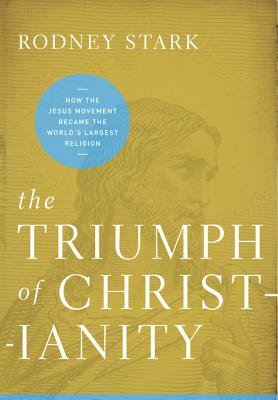
The Triumph of Christianity by Rodney Stark was excellent. It could be subtitled “Myth-busting Christian history.” Stark provides a sociological survey of some of the most important points of Christian history and debunks dozens of common myths about history along the way. His conclusions about how Christianity spread, the “dark ages,” the church’s role in the scientific “revolution,” the Spanish Inquisition, and religion in Europe—to name only a few—are convincing rejections of our popular notions.
Stark provides a social science survey that’s interesting and accessible. You should give it a try.
 Denominational Works
I was surprised by Bill Arnold’s Seeing Black and White in a Gray World. My surprise was because of the subtitle—“The Need for Theological Reasoning in the Church’s Debate Over Sexuality”—and the relatively small size of the book. I expected it to be a narrowly focused book on sexuality, specific to the United Methodist Church. In the end, I’d recommend it to people outside the UMC with no interest in that ethical debate. Though that debate is clearly where everything leads, this book was a concise and readable introduction to logic and theological method.
Earlier this year, I interviewed Dr. Arnold about the book and provided a two-part review.
 Other
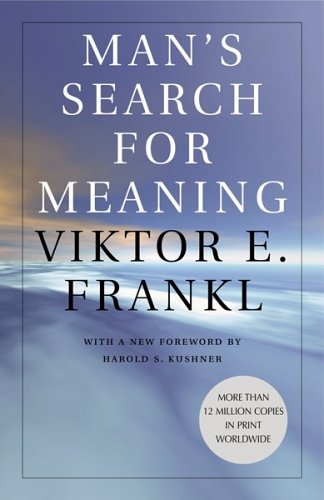
Man’s Search for Meaning by Viktor Frankl is the second book I’ve read from a Holocaust survivor. His account is horrific, but gripping. As much as I wanted to stop reading, I couldn’t. Frankl describes the concentration camp experience candidly––both the external realities and the common psychology of prisoners.
Frankl was a neurologist and psychiatrist, evident in his keen observations about his own, and others’ psychology. The second half of the book explains his psychological approach––logotherapy. He likens it to the work of an eye specialist rather than a painter:
“A painter tries to convey to us a picture of the world as he sees it; an ophthalmologist tries to enable us to see the world as it really is. The logotherapist’s role consists of widening and broadening the visual field of the patient so that the whole spectrum of potential meaning becomes conscious and visible to him.”
That was a helpful perspective in counseling for me.
For the comments: what was the best book you read this year?
See my 2013 edition of this list here
* Okay, technically this isn’t the best eight books I read. It’s the best book in each of eight categories. That title didn’t have the same ring, though.