Let’s have more “boring” testimonies

testimonyA friend just told me he has one of those “boring” testimonies. I told him that’s something to celebrate.

As a father, I’ll be thrilled if the story my kids have to tell about me in 20 years is “boring” in the same way. I would like nothing more than for them to say, “I’ve always known my dad loves me. I’ve never doubted that. Never rebelled against it. I just keep seeing his love for me in new ways and enjoying it. And I love him a lot…” (To be clear—I’m not suggesting there are no bumps along the way, just no dramatic rebellions.)

As a husband, my goal is for my wife to have a similar “boring” story about me when we’re old. No questions, no doubt, no extended periods of hostility. No breaches of faith.

In fact, those aren’t “boring” stories, are they? They can be beautiful stories of love and faithfulness, vitality and growth. These are stories about life change—not because of a drastic course correction, but because of steady, enlivening faithfulness.

Sometimes we downplay these stories because they don’t take a dramatic turn. They don’t excite us like a broken relationship repaired, a corrupt person redeemed. But they’re good stories.

What’s my greatest hope and prayer for my kids, and for all of the kids in our church? That they’ll have “boring” testimonies about their faith when they grow up. I’d love to proudly put one of them in front of the congregation each week to tell a “boring” story about faithfulness.

About how that congregation made a covenant to them 20-some years ago and kept it—a covenant to surround them with a community of love and forgiveness and pray for them, that they would become true disciples of Christ.

About how they had always known God’s love. Never doubted it. Never rebelled against it. Just kept growing in it.

Now I know I can’t control this. Not as a father, not as a husband, not as a pastor. I can influence these things (see especially “Finding a church for my kids”), but not control them. The enemy still leads people into rebellion, even from the best of circumstances.

And when that rebellion happens, we’ll seek out any lost sons or daughters and throw lavish parties for any who return. We’ll put them in front of the congregation to share their “less-boring” testimonies, and the extra drama of those stories may result in more tears and cheers than normal. We’ll probably rejoice more over that one lost sheep that returned than over the 99 who never strayed. And that makes sense.

But for me, I’d love to have more “boring” testimonies. I don’t think they’re really all that boring after all.

A note on bad theology—hand-washing or germaphobia?

sheldon germsGood theology is important. Saying true and good things—important. Doing things the right way—important. What we say and do should be thought out and thoughtful.

But if our greatest fear is that someone may say or do something theologically incorrect, we’ve gone too far. Such extreme fear creates a spirit of timidity—don’t do anything until you’re sure you’re doing the right thing. It enforces a sort of clericalism—only those with the most theological training should dare speak or act.

Do you think the disciples were fully equipped when Jesus sent them out in Matthew 10?

Now we should be prudent, not careless. This isn’t license to say and do whatever we please.

How do we know what’s prudent and what’s too much? Let’s compare avoiding bad theology to avoiding illness. Are we like the wise person who washes her hands at appropriate times, or like the germaphobe who won’t leave her home for fear of germs?

Some signs you may be a theology germaphobe:

  • You’re so concerned to speak with precision that non-scholars have a hard time understanding you.
  • You get anxiety about breaking free from a manuscript for fear of misspeaking. (Don’t confuse this with a general statement against manuscripts.)
  • You’re scared to let others lead unless you’re absolutely certain you can trust them.

Germaphobia seeks to avoid something bad, but in its hyper-vigilance, it does more harm than good.

So a word to any pastors or churches on the edge of germaphobia: loosen up. Things will be okay! Be prudent about what you say and do, but not paralyzed. And trust that God can (and has) overcome many errors.

Real Life Examples – David Sparks

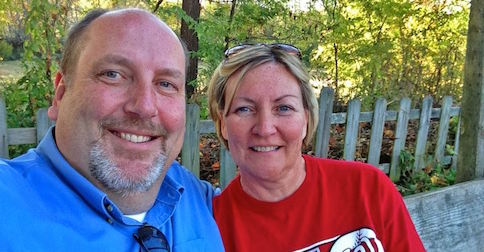
David and Dawn Sparks

I want to share with you a private note I sent last year to someone you may not know. His name is David Sparks.

I’m sharing this with you for three reasons. I’ll give the first reason here––the second two after the note.

First – we learn a lot from seeing other people’s examples. I want you to learn from David’s example.

To give some background to this note, David was my middle school youth minister. Several years later, when I became a youth minister myself, he was one of the first calls––calling to tell me I was the perfect person for the job, to tell me he’d do anything he could to support me, and to invite me to a weekly youth ministers’ breakfast at Bob Evans (which he started and kept going until he moved away from Lexington).

Here’s what I wrote to him last year…

David,

I’ve thought of you a number of times over the past several months. I think getting my head above the day-to-day workings of the church has given me a chance to see the bigger picture and especially to be thankful, and I wanted to send a quick note. 

You have been one of my most consistent supporters and encouragers for nearly 20 years now. You gave me some of my first real encouragement as a leader early on in middle school. You were probably my most consistent support throughout my first few years in youth ministry. Bob Evans breakfasts were a highlight in my week. And then as you took your conference position, you gave me opportunities to get involved at the conference level. Looking back, I know you went out of your way to accommodate me in some of my early learning, and even when I was stubborn or cynical. And you’ve continued to send random texts, tweets, etc. of encouragement….

I’m glad you’ve always considered yourself a youth pastor, regardless of the official role. I’d imagine there are many others that you got to know in youth ministry and then have continued to encourage. I’m sure they’re getting much of the same at Bethany [his current church] now. So thank you!

Oh – and thanks for twisting my arm to keep playing Fantasy Football when I wanted to quit. I’ve got a feeling this is my year. [It wasn’t.]

Teddy

You see a lot there about support and encouragement. David believes in people. Sometimes that’s all we need. Just someone to believe in us––to tell us we can do something, to challenge us to do it, to keep rooting us on. I think that will be David’s greatest legacy.

Why has he done that? I think it has to do with how David believes in God––that God has created each of us with incredible promise and potential, that God can use us beyond what we would imagine, that God doesn’t give up on us despite all our past failures. That makes me recognize just how ungodly are any of my cynical attitudes, when I fail to trust people or give up on them too quickly.

So I’m sharing this with the hope that the rest of us might follow David’s example. Who will be able to send me a note twenty years from now and say, “You never stopped encouraging me”?

The second reason I share this – I sent this note last year because I kept thinking about David’s influence on my life and started wondering whether I had ever expressed my gratitude to him. For someone who had been such a consistent support, I wasn’t sure he knew how much I valued it.

Is there anyone in your life who might fit that description? Can I urge you to jot them a short note before the end of this week?

The third reason I share this is to ask for your help. A month after I sent that note, David was diagnosed with renal cell carcinoma. Since then, he and his wife, Dawn, have been a model of hope and perseverance. Even the most discouraging bits of news have come laced with hope, often with a smiling picture of David (or even a joking video). See their Facebook Page –– “Dave and Dawn’s Army of Hope.”

Just today, they announced that David will be entering Hospice care.

I know that many of you don’t know David, but would you please consider doing two things?

1 – Would you pray for David and Dawn? I’ve made it my habit every time I receive a health update just to place my fingers on their heads on my screen––the closest I can come to laying on hands––and to pray for them. Would you do that, too?

2 – Would you consider making a donation? I hate that along with everything else, cancer can leave a family with an enormous stack of bills. Some friends have begun a YouCaring fundraiser for David and Dawn here.

That’s David Sparks. Real life example. May you follow that example. And thanks for your prayers and financial support for David and his family.