I hope you’ll read this…

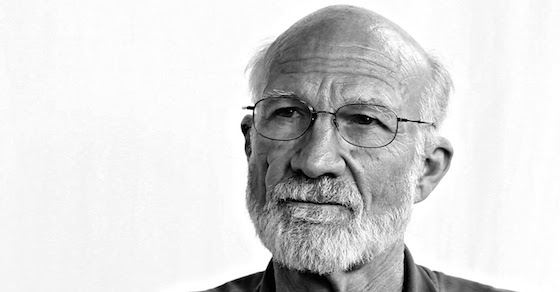
hauerwasI just came across Albert Mohler’s interview of Stanley Hauerwas, who may become regarded as the most important theologian of our generation. I would love for you to read the whole interview transcript [sadly riddled with typos, but still worth reading].

Hauerwas is deep and brilliant, and you’ll get a nice sample of his whole project in this interview. Mohler’s questions are helpful, and his critiques of Hauerwas are gracious and fair. I have frequent and profound disagreements with Mohler, so I was surprised to see his open engagement with Hauerwas’s work.

That interview is long and at times academic. So I’ll point you to John Meunier’s brief reflection on it (which is how I found the interview in the first place). Meunier’s reflection is honest and pastoral. Here, as usual, I find myself in agreement with him.

Everything should be made as simple as possible, but not simpler

You’ve probably heard the line before: “Everything should be made as simple as possible, but not simpler.”[1. Often attributed to Albert Einstein, but unverified. It’s, at the least, a pretty good definition of Occam’s Razor.] You may have seen people violate this in one of the areas you really know––politics, social issues, relationship dynamics… Our public versions are often simplistic and naive. They leave out all the complexity of the real situation. We try to simplify issues to make them easier to understand, but we often go too far.

I think Hauerwas’s critique of American evangelicalism may fit here. We’ve tried to define Christian faith and salvation as simply as possible, but we’ve gone too far (and if forced to choose, in the wrong direction). We’ve become simplistic and disregarded important nuances in the Christian faith. We’ve said yes/no when we should have said both/and.

When we’ve asked and answered––”Which faith saves? The faith of the individual or the faith of the church?”––I think Hauerwas might say that we’ve already made things simpler than we should.

Several of my articles are probably unwittingly influenced by Hauerwas and those who’ve echoed him. “Absent from flesh” and “Reaching out without watering down” are two recent examples. If those hit on something you’d like to hear more about, I recommend Hauerwas to you. If you didn’t understand what in the world I was doing in those, Hauerwas’s work at least explains me a bit more.

A few highlights

From Hauerwas:

[O]ne of the great problems of Evangelical life in America is evangelicals think they have a relationship with God that they go to church to have expressed but church is a secondary phenomenon to their personal relationship and I think that’s to get it exactly backwards: that the Christian faith is meditated faith [sic –– I think this should be “mediated faith”]. It only comes through the witness of others as embodied in the church. So I should never trust my presumption that I know what my relationship with God is separate from how that is expressed through words and sacrament in the church.

[T]here’s much to be said for Christianity as repetition and I think evangelicalism doesn’t have enough repetition in a way that will form Christians to survive in a world that constantly tempts us to always think we have to do something new.

[O]ne of the things I would have us to go [sic] is a much richer, liturgical life than I think is the case in many evangelical and Protestant mainstream churches. I think a recovery of the centrality of Eucharistic celebration and why it is so central is just crucial for the future of the church.

[R]emember one of the things that is so impressive about the Church Catholic is that it is the church of the poor. We Americans cannot imagine being a church of the poor; we can imagine being a church that cares about the poor but we cannot imagine the poor being Christians but Catholicism has done that in a way that is interestingly enough a very deep critique of empire.

From Meunier:

I think if forced to side, I’d have to say the participation in the body is primary [over personal relationship with Jesus] because it is the way by which we come to know who Jesus is and what it means to be one of his followers. The Holy Spirit works through means of grace that are in the stewardship of the church.

But then my “both/and” emerges because I also believe that Christianity is not something you get by osmosis. It is not a T-shirt you by [sic] at the gift shop. It is something that changes you. It is personal. And if it is not personal, it is ultimately incomplete.

If you find those highlights interesting, take the time to read the full pieces. The original interview here. John Meunier’s reflection here.

UPDATE: John Meunier has just posted a second reflection, focused on Hauerwas’s treatments of conversion, gospel, and forgiveness. Once again, I think I can say I’m in full agreement with John. He says here what I would say if I were more articulate and had more time to spell out my own thoughts

———————–

A world that wants Easter but needs to see Maundy Thursday

crossWhy have so many people given up on Christ, the Church, and Christianity?

Whatever their reason, I don’t believe it’s because they reject what Easter promises.

Easter celebrates that Christ’s followers went to a tomb that first Easter morning expecting only a corpse and instead found the living Christ.

Easter’s promise is that we continue to find life where we expected only death.

Our world craves that promise. I believe God has created us with that craving. This is why we cry and mourn at funerals. We love life and hate death. This is why broken relationships rock our lives the way they do. We crave reconciliation. This is why so many are plagued with guilt. We crave forgiveness. Everywhere that it feels like something has died, we long for new life.

In a world that craves the promise of Easter, why have so many given up on the Christ, and the Church, that offer that promise?

Could it be because they need to see Maundy Thursday and too rarely see it?

What Maundy Thursday is about

In a typical Maundy Thursday service, you might hear these words from the Gospel of John: “Jesus knew that the Father had put all things under his power, and that he had come from God and was returning to God.” He had all things under his power. That makes the next line startling: “so he got up from the meal, took off his outer clothing, and wrapped a towel around his waist.” And then he proceeded to wash his disciples’ feet.[note]John 13:3-5[/note]

Imagine that scene––the One who took dust from the ground and formed a man in the beginning was at his Last Supper, where he got up from the meal, knelt on the ground, and cleaned the dust off the feet of the ones he created!

And then, shortly after Jesus got up from washing his disciples’ feet, he said this: “A new command I give you: Love one another.”

But that wasn’t much of a new command. “Love your neighbor as yourself” had been around quite a while. What he said next makes it new: “As I have loved you, so you must love one another.” That’s the mandate that Maundy Thursday is named for.

Living the mandate of Maundy Thursday

To believe that Easter’s promise is true, it would help our world to see the Church live the mandate of Maundy Thursday.

For most, the problem isn’t that they need more “evidence that demands a verdict,” proving Christ’s death and resurrection. It’s that they need to understand Christ––to understand Jesus in all his divinity and all his humanity, to understand a God who humbles himself so low that he becomes obedient to death, even death on a cross.

Are his disciples today making that humility evident by loving, even as Christ loved us? Are his disciples found kneeling, a towel wrapped around their waists? Wherever we’re found instead jockeying for power and fighting for what we’re “due,” we may be the stumbling block.

This is why it seemed so right to us that Pope Francis left the comfortable confines of a Roman Catholic cathedral last year to wash the feet of a young incarcerated Muslim woman. Why it seems so right to us that Pope Francis refuses to live in the palatial residences offered him and prefers public transit to a limo.

To our world: if your impression of us, Christ’s followers, is that we spend more time arguing over who will be greatest than seeking to serve the least of these––I’m sorry. We’ve misrepresented our Savior often. Where you’ve seen us seeking greatness and riches, you’ve seen a Church that has not understood––or has not chosen to follow––its Savior.

But let me be clear about this, too… Christ’s disciples have been falling short since the beginning. At the Last Supper––almost immediately after Jesus washed his disciples’ feet and predicted his betrayal and death––what did they do? They began to fight over who was the greatest!

We come from a long line of disciples who have misunderstood or ignored Christ’s call to be found among those who serve. But that ignorance and misbehavior has never negated the promise of Easter. If you are refusing the promise of Easter because you aren’t seeing the Church take Jesus’ new command seriously, can I plead with you to reconsider? Christ’s promises are true, whether or not you see them lived out in those who claim him. Don’t miss the perfect goodness of Christ because of his Church’s flaws and failings.

And I should be clear about this, too… We, the Church, are flawed and often fail. But we are also, many of us, seeking Christ. We’re seeking to live according to his humility, his self-giving love, his grace and truth. I hope you’ve seen at least a bit of that. Where we fall short, bear with us in our attempts to get it right, as we trust Christ bears with us.

If you have been hurt by the Church, I apologize. I’ve been hurt before, too. Admittedly, some of the times I have been hurt were because of my own pride. At its best, the Church is full of grace and truth, just as her Savior is. And there are times that truth, even presented with grace, has a bite. At her best, the Church must continue to be full of truth, and we can’t apologize for that, but where you have heard truth with no grace––or supposed truth that was no truth at all––I apologize. Where you have heard a presentation of “truth” that was seeking power or status, rather than hoping for reconciliation, I apologize.

And so I plead with you again––if the promises of Easter are true, if they even may be true, don’t miss them because you haven’t seen the Church living out Christ’s new command.

To the Church: may we follow the command of our Savior. How can we be found on our knees rather than exalted? Serving our world rather than expecting to be served by it? Found among the least of these in our world rather than the greatest? How can Pope Francis’s example encourage all of us toward greater simplicity and generosity?

May our leaders be known for commonly rejecting privilege and power, wealth and prosperity, not for climbing ladders toward more power and more money. May we, as congregations, ask more questions about how we can serve the world than questions about whether we are being served properly.

May we be an Easter people––celebrating life where before there was only death––and celebrating that life best by joining our Savior on his knees and at the cross.

I lay out more specifically what I mean by Easter’s promise in the post Why I Love Wesleyan Theology.

————

Sloth isn’t what you think it is –– or, The workaholic sloth

slothWe tend to equate “sloth” with laziness. The slothful person can be found asleep on the couch, or playing hours’ worth of video games, or sleeping until noon.

Those images aren’t necessarily wrong, but they’re not the full picture.

Sloth isn’t a denial of work, it’s a denial of love. Sloth doesn’t choose the couch instead of the to-do list. It chooses anything (perhaps the couch, perhaps the to-do list) to avoid the hard work that loving relationships require.

Sloth as a denial of “Love your neighbor” and maybe of “love yourself,” too

Some examples:

You know you need to have a hard conversation with someone––to apologize, to confront, or to bring up a topic that might create conflict. You don’t want to do it. Who likes these? So you put it off. Maybe you hide behind your work. Maybe you hide behind laziness.

You have some pain in your past that you know you’re still dragging around with you. You keep pushing it down and avoiding it. Easier than the hard work of resolution.

You avoid reading a certain book or watching a certain movie because you know you’ll be convicted about something. “I know that movie will make me feel like I should ______, and I’m just not ready for that right now.” If the movie is a wrong-headed or unnecessary guilt trip, that’s one thing. If you know it’s right, and you just don’t want to be confronted with the facts, that’s another…

You ignore any injustice in society or say the issue is too big for you to do anything about.

You avoid any stand on an issue that might cause you to change what you buy or where you buy it.

You don’t do serious romantic relationships––perhaps intentionally, perhaps not. The initial rush of a new relationship is fun, but once things get serious, you prefer to move on rather than fight through the tough parts.

In all of these, you see the denial of love toward others (and ourselves). Love is hard. This is why those supposed “love at first sight” relationships are so fun… and so fleeting. Because growth requires energy and effort, and usually some hardship along the way.

Sloth as a denial of “Love the Lord your God”

If you’re a Protestant, you may be most at risk of a certain slothful mentality. In fact, I’ll single out my Reformed friends for a moment. I’ve seen this line of thinking come out of the Reformed wing of the Church most often. Calvin’s brilliant theology didn’t require this. It’s a distortion of his theology, not a continuation of it. [i.e. This isn’t an attack on Reformed theology. It’s an attack on bad Reformed theology.]

Protestants celebrate that we’re saved by grace alone. We don’t earn salvation, we receive it. But many Protestants have jumped so hard on that side of the ship that they’ve tipped it nearly over. They’ve confused earning with effort.[1. I take this from Rebecca DeYoung’s great line in Glittering Vices: “Sanctification is about effort—but not earning.” And again, more ideas in this post have come from DeYoung than I can probably even recognize. You’ve ordered the book by now, haven’t you?] In their zeal to emphasize that we don’t earn salvation, they scorn any talk about human effort in our faith. At the beginning of Lent, I watched Twitter and Facebook light up with comments about not giving up anything for Lent from people who “don’t have to earn God’s favor.”

God’s favor isn’t earned. But along with receiving and celebrating God’s unmerited favor, we’re told to love God.

We can’t love God without following Jesus––without becoming his disciples. And discipleship inherently suggests discipline. Sloth happily accepts God’s saving grace without making the costly effort of discipleship. Dietrich Bonhoeffer famously called this “cheap grace”:

Cheap grace is preaching forgiveness without repentance; it is baptism without the discipline of community; it is the Lord’s Supper without confession of sin; it is absolution without personal confession. Cheap grace is grace without discipleship, grace without the cross, grace without the living, incarnate Jesus Christ […]

[God’s grace] is costly, because it calls to discipleship; it is grace, because it calls us to follow Jesus Christ. It is costly, because it costs people their lives; it is grace, because it thereby makes them live. [Discipleship, Fortress Press, pp. 44-45]

Two questions that sloth hates

For the past several years, I’ve had to regularly answer two questions that force me to recognize my own slothfulness.

1 – “Have you done all the good you could this week?”

That question doesn’t expect a laundry-list response of all the things I did, or should have done. It doesn’t suggest that I should forsake all leisure since there’s always some other good act I could do.

The question expects me to share whether there’s any good thing I knew I should do, and whether I did it. Sometimes it makes me realize I’ve been avoiding something––apologizing to someone and requesting forgiveness, or forgiving someone and not continuing to think and act toward them with anger.

Sometimes it makes me realize I’ve been too apathetic. I can’t think of anything good I did during the week. Not because I avoided it, but because I just didn’t notice anything. In a world with so much pain and injustice, if I can go a whole week without recognizing something good I can do––some act of compassion or advocacy––I don’t care enough.

If we’re avoiding good things we know we need to do, or we’re too apathetic to notice them in the first place, sloth may be at root. Our first step should be to ask God to change our hearts. To help us to see people with his love. To have enough love for people that we overcome slothful avoidance and apathy and commit ourselves to the effort of loving others.

2 – “What Christian practices have you kept this week?” or “How have you availed yourself of the means of grace this week?”

God has commanded us to keep certain practices––things like fasting, reading Scripture, praying, and receiving the sacraments. These aren’t just things we do to say we’ve done them. These are spiritual disciplines that transform us into better lovers of God.

I prefer to talk about these as “means of grace.” It’s not simply that we grow through these disciplines. We grow because these disciplines are means of receiving God’s grace. When we do these things, we avail ourselves of the ways that God transforms us by his grace.

Are you availing yourself of these means of grace?

Some people say they only want to do these if their “heart is in it.” I understand the desire for authenticity that may produce that thought, but I disagree with it. If you’re an athlete, do you show up for practice only when your heart is in it? No! I’d expect that you progress faster when your heart is in it, but the discipline of continuing to show up is important. A baseball player may not have his “heart into” a particular batting practice, but he shows up because he wants to get better.

Sometimes we need to keep showing up in these spiritual disciplines––keep availing ourselves of God’s means of grace––even when it’s difficult. We do this because we want to grow in our love of God, even if we don’t want to fast this Friday.

Others avoid these disciplines. The problem isn’t an apathy toward God but a fear of what might happen. A friend told me recently that he doesn’t want to fast because he thinks his “true self” gets exposed too much when he’s hungry. Sloth doesn’t like to have these areas exposed. It prefers a shallower, as-you-were relationship with God over something deeper that would demand transformation.


We’re saved by the grace of God––praise be to God! His grace, gift, and favor are free and unmerited. May God’s free grace not become cheap grace to you, leading you to sloth and complacency. Instead, may God’s grace empower you for full obedience to his command:  “Love the Lord your God with all your heart and with all your soul and with all your mind [… and] Love your neighbor as yourself.”[1. Matt 22:37-40]

————