You probably don’t worry much about tuberculosis. Why you should care…

tuberculosisWhat do tuberculosis, malaria, and AIDS have in common?

Poverty is the leading risk factor for dying from any of these diseases. All three are preventable and treatable, yet over 3 million people died from them last year, the vast majority of those deaths in developing countries. As recently as 2002, these three diseases accounted for 10% of global mortality.

You know about AIDS, and you probably know something about malaria, but if you’re like I was until recently, you may not know anything about tuberculosis except for that pesky skin test you get at the doctor.

TB just hasn’t received the same attention as AIDS or even malaria, yet it’s the second most common cause of death due to infectious disease––just behind AIDS. Over 95% of those deaths occur in low- and middle-income countries.

What’s causing the problem? A few simple numbers:

  • Nearly 9 million people get sick from tuberculosis each year.
  • Without proper treatment, over half of those affected will die from the disease.
  • Our health systems are currently missing about 3 million people who get sick from tuberculosis (1/3 of the total).
  • That will lead to something around 1.5 million TB deaths (the number was 1.3 million in 2012).

Today is World TB day. You may see something about “Reach the 3 Million” today. That’s based on these numbers––the 3 million who are being missed each year by the health systems. If we were able to properly diagnose and treat these 3 million, we would save a lot of lives and slow the disease’s spread.

Fortunately, some organizations have already made great strides in prevention and treatment. From 1990 to 2012, the TB death rate dropped 45%.

Compassion on the harassed and helpless

Take a look at Matthew 9:35-10:1––

Jesus went through all the towns and villages, teaching in their synagogues, proclaiming the good news of the kingdom and healing every disease and sickness. When he saw the crowds, he had compassion on them, because they were harassed and helpless, like sheep without a shepherd. Then he said to his disciples, “The harvest is plentiful but the workers are few. Ask the Lord of the harvest, therefore, to send out workers into his harvest field.” 

Jesus called his twelve disciples to him and gave them authority to drive out evil spirits and to heal every disease and sickness.

The Bible consistently connects the coming of God’s kingdom to real, physical healing for people. Jesus talks about an anointing to proclaim good news alongside an anointing to proclaim recovery of sight for the blind and setting the oppressed free. Sometimes we “spiritualize” healings in the Bible and think that Jesus’ healings have to do with a healing of the soul; however, we don’t see only that sort of “spiritualized” healing throughout the Scriptures. Instead, Jesus has compassion on the harassed and helpless by healing every disease and sickness.

We believe that God continues to have compassion on the harassed and helpless. Furthermore, we believe that God continues to call out to his disciples today, “The harvest is plentiful but the workers are few. Ask the Lord of the harvest, therefore, to send out workers into his harvest field.” We usually take this passage to mean that we should go out and proclaim the good news with our words. In its context, though, Jesus’ call is equally that we might go out and have compassion through healing of real sickness and disease in the world. We proclaim the good news of God’s restoration powerfully when we join God in the work of healing and eradication of disease.

If you’re a United Methodist, you have cause to be proud about our role in this. The UMC has named as one of its four areas of focus “Combating the diseases of poverty by improving health globally.” We’ve backed that up with our money, pledging $28 million to the Global Fund––one of the leading organizations in the fight against these diseases of poverty.

We United Methodists aren’t usually too excited about the large chunk of our budgets that go toward “apportionments.” Today, take heart that some good things are happening with that money.


Reaching out without watering down

Me trying to establish some credibility

I need to start this by assuring you that I care about finding creative ways to share the gospel, opening up new conversations about my faith with people, being a “grace-bearer” to others.

I’ve tried in several ways to act on that. A few years ago I started meeting weekly with a group of men––especially focused on several who referred to themselves as “church dropouts”––to talk about the Bible, theology, and the state of our souls. This year my family moved to Spain to help with the start of a new church that is trying and praying hard to share the gospel.

I share that because I think several people view what I’ll say below as a refusal to be creative or an apathy about sharing the gospel.

Me fighting for the sanctity of sacred things

drive up weddingHow do you feel about drive-up weddings?

You have the bride, the groom, the vows about undying love, and the piece of paper that makes them official. Isn’t that ultimately what a wedding is about?

But something seems missing, doesn’t it?

Because a wedding is actually more than that. It’s not just about the bride and groom and the piece of paper. It’s also about the community of family and friends who come to witness and bless their marriage. It’s also about that larger liturgy––prayers of blessing over the couple, exhortations and encouragement from Scripture, and (at its best) receiving Holy Communion with family and friends as the first marital act.

The drive-up wedding misses all that. In the process, a sacred communal act gets watered down. It loses that corporate element and makes the wedding entirely about the couple (and the person at the drive-up window, I suppose). It loses the wedding liturgy, which frames the act of marriage within a larger context of prayer and Scripture and communion.

star trek weddingThe utilitarian says the bride and groom are married at the end of the day, regardless of the details. And (s)he’s right. I add, though, that the wedding ceremony is a not-insignificant rite that launches the couple into marriage. And the drive-up married couple has begun their marriage with a sadly watered-down understanding of marriage.

Now marriage doesn’t belong just to the Church. You can get married dressed as Klingons and get a “live long and prosper” benediction from your officiant, Spock. So I’m not going to fight against its watering down. That’s outside my purview (except for Christian weddings, which I hope we’ll keep sacred).

But I’m alarmed at the ways I see Christian leaders watering down the rites of the Church, in the name of outreach.

A popular youth ministry speaker used to speak with great passion about sharing the gospel with teenagers. He spoke with equal disdain for people who questioned the appropriateness of some of his tactics. I could nearly imagine him saying, “We used the communion elements for a food fight in the sanctuary, then a teenager gave his life to Christ… And would you know that our church council scolded me rather than throwing a party?!?”

He never said that––but he wasn’t far from it.

I commend that speaker for his passion for youth to know Christ. But I was somewhere between frustrated and appalled by his disregard for anything sacred. Yes, he was bringing teenagers into the great Body of Christ. But he was desecrating the things of the Body in the process.

[My disclaimer: some church rules are just silly. And we can get so worked-up over our “nice things” that we find no place for certain people in our buildings because they might get the carpet dirty. We need to re-examine our priorities in these cases.]

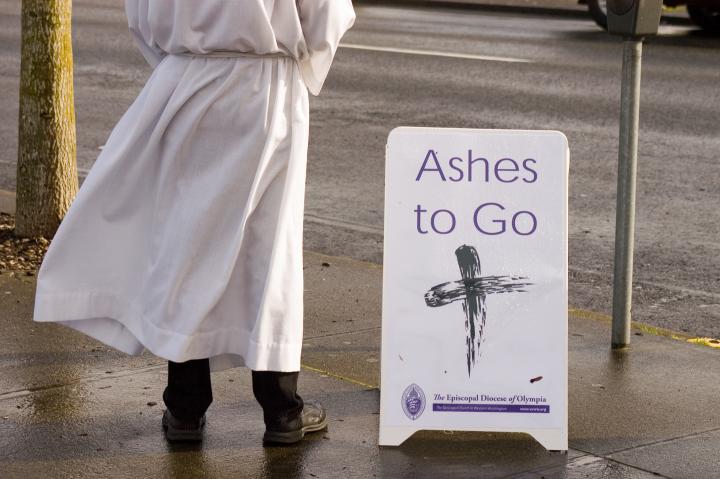
AshestoGo4Yesterday was Ash Wednesday, and I’ve seen several news articles and Facebook mentions about “ashes to go,” “drive-thru ashings,” and “ashes on the street.” I commend the people who did those things. They’re being creative, thinking about how to reach the “person on the street,” and surely starting some good conversations. Good people, good intentions, probably some good results.

But I wish they hadn’t done what they did. I commend them for a well-intended act, but I disapprove of the act itself.

When I shared that with a friend, he responded, “It would be great if uninterested people would come sit in a service for their first time but it isn’t reality. I guarantee offering ashes and prayer at a mall planted seeds in hearts that a service invite might not have and possibly opened a door to further conversation with people.”

I suspect that a growing number of church leaders are thinking like that today. I commend their desire to reach out, but I wish they didn’t use a drive-up wedding approach to do it.

The rites of the church are beautiful and sacred. I want to share them with the world. But I want to share them as the beautiful and sacred things that they are.

The ashes of Ash Wednesday aren’t just about the individual and the ashes. They’re about a community that comes together in prayer and confession. They’re given context by Scriptures that speak of our mortality and urge us to be reconciled to God. When we do drive-by ashings, we miss all of that.

I don’t doubt that practices like this can spark great new conversations, perhaps even bring new people to faith. Even yet, I wonder if we should be doing them. Can we bring people into the beauty of the Church without watering down its beautiful rites in the process?

We can plant seeds and open conversations by handing out wafers and juice at a mall, or doing baptisms in the mall fountain. Still, we might ask whether that means it’s the best thing to do. Do the ends justify any means?

Am I discouraging the Church from being “relevant”? I hope not. In their proper context, our most sacred rites are incredibly relevant. If the world won’t participate in the full, sacred rites, though, let’s not give them the drive-up wedding version. Let’s instead find other ways to be relevant to them, while inviting them into the larger life of the Church.

The Idealist’s Dilemma

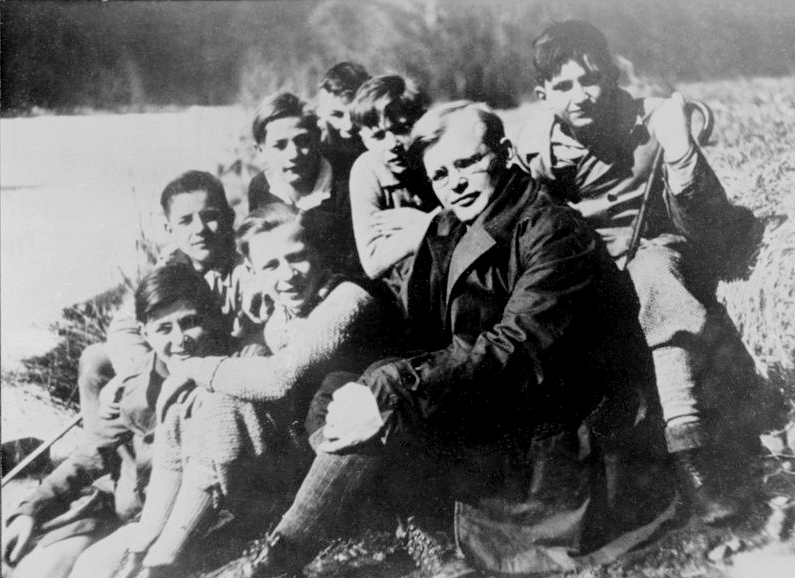
Dietrich Bonhoeffer in 1932

In 1933, Dietrich Bonhoeffer wrote about his strong opposition to German Nazis and, as a result, his opposition to the German Christian Church that had capitulated to them (or in some cases eagerly gone along with them):

I find myself in radical opposition to all my friends; I became increasingly isolated with my views of things, even though I was and remain personally close to these people. All this has frightened me and shaken my confidence so that I began to fear that dogmatism might be leading me astray—since there seemed no particular reason why my own view in these matters should be any better, any more right, than the views of many really capable pastors whom I sincerely respect.[1. from Eric Metaxas, Bonhoeffer: Pastor, Martyr, Prophet, Spy (Thomas Nelson. Kindle Edition, 2010), 197.]

He wrote that in a letter to Karl Barth––usually considered the greatest theologian of the past few centuries. Barth was one of the people who disagreed with Bonhoeffer’s stance, or at least found it too extreme.

Almost all of us would look back in history and say that Bonhoeffer was right. His beliefs led him to properly oppose the Nazis while many other “really capable [and respectable] pastors” were swept up by the current of the day, failing to see the injustice and heresy the German Church was permitting and promoting.

Bonhoeffer stood alone. In this, he wasn’t far different from Martin Luther before him. Nearly every voice around them told them to stand down, yet their consciences and beliefs wouldn’t allow it.

But for every Bonhoeffer and Luther, there are thousands of people whose dogmatism has truly led them astray. The voices around them are telling them to stand down––and those voices are right.

The idealist’s dilemma: how does one know if (s)he is another Bonhoeffer or Luther or one of the thousands who truly should stand down? The odds tell each idealistic, would-be reformer that (s)he is likely the latter. Stand down.

But if everyone listened to that advice, we would have no Bonhoeffers and no Luthers. That creates a dilemma for us all.

——————