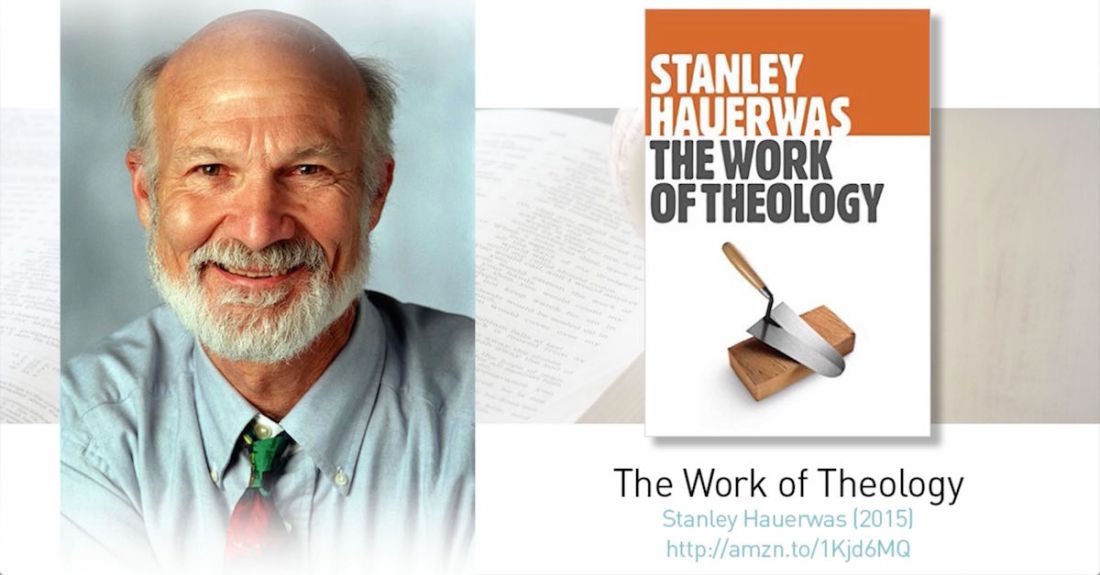
On The Work of Theology: An interview with Stanley Hauerwas

I recently had the honor to interview Stanley Hauerwas about his newest book, The Work of Theology

One reviewer has called Dr. Hauerwas, “probably the most creative, provocative, and exasperating theologian in the English-speaking world.”[1. from The Times Literary Supplement‘s review of his Blackwell Companion to Christian Ethics] This book continues to show off his creativity and shows how some of it has developed. It also serves as a response to those Hauerwas has provoked and a defense against those he has exasperated. I thoroughly enjoyed the book and enjoyed the opportunity to talk with him about it even more.

Our interview covers his responses to critics, why he gives so much emphasis to the church, and some advice for young pastors and their congregations. You can listen (right-click here to download), watch, or read the transcript below. [1. My deepest gratitude to Jason Huber for producing this. His studio, graphics, and detail work made it all possible.]

Interview transcript

Teddy Ray: Stanley Hauerwas was named the “best theologian in America” by Time magazine in 2001. Despite that, he’s also been accused of not caring about the poor, not caring about human rights, and not actually doing “theological” work. He thinks retirement is a bad idea, and he’s having some more time to reflect on that now that he’s retired. His newest book is called The Work of Theology, and I’m honored to have a chance to talk with him about it.

Dr. Hauerwas, thanks so much for your time this morning.

Stanley Hauerwas: I’m pleased to be here.

TR: I’m going to jump to the end of your book because it seems like something you say on almost the last page is the basis for a lot of the book. You say about doing theological work, “You finally cannot stop because what you have said makes it necessary to respond to the problems that are created by what you have said.” Is that what a lot of this book is?

SH: Yes. I think that’s a good… I hadn’t really thought about that as being a kind of summary of the book, but I think you’re quite right. That’s what the book’s about.

TR: In particular, I was struck by the way you kept coming back and saying, “Here’s what people have accused me of, and let me set the record straight. Or let me say a little more to try to help them understand what I’m really doing.” How do you, as such a public theologian, handle all of the different criticisms? You’re a big target, obviously. How do you handle those when people take you the wrong way, or when people say things that you feel like aren’t fair or aren’t true about you?

SH: Well, you’re never happy about being misunderstood, but you have to take responsibility oftentimes for being misunderstood, because you think you haven’t put it as well as it could be put. So even misunderstandings are a gift that make you think again about what you need to say, given that you’ve created this misunderstanding. Often, one of the problems that you confront when you’re trying to change the questions, not just the answers, is that people insist on interpreting you by saying that you must be meaning what they would mean if they said the kinds of things I said. And I’m not in the same position they are in. So it really is a mostly generational problem, just to the extent what I represent, I think, is a different set of considerations than have been characteristic of particularly American Protestant theology in the last fifty years.

TR: That’s interesting. So when you say you’re in a different situation, you’re really referring to people younger and people coming from different traditions—Nicholas Healy coming out of the Catholic Church—addressing different things than you’re trying to address.

SH: That’s some of it, though I think he is a very good critic, and while I’m not particularly sympathetic with every kind of argument he makes against me, I take him very seriously.

TR: Let me go to one of the quotes—I think I counted this at least 10 times in your book—and it seems to be one that people have especially come back to you about over and over. You say, “The first task of the church is not to make the world more just but to make the world the world.” Could you say more about that? Pastors and churches are told a lot of different things about their first task, and I’d love for you to say why that’s how you’re naming it.

SH: Well, of course, it draws on the Gospel of John. You don’t know that there is something out there called the world unless there is an alternative to that, and that’s called church. So the fact that there is a gathered body of people around the world that are interconnected through the Holy Spirit creates an alternative that is named world.

Now world is God’s good creation, that has taken the time of God’s grace not to be church. That doesn’t mean everything about the world is wrong, but it does mean that the world simply lacks the possibilities that the church has been given by God’s good grace. And that’s an eschatological set of judgments about why it is that God has called out a people from the world to be for the world, so that the world might know what it means to worship God.

TR: That’s great. I think you even said somewhere else that some of your critics have claimed your stress on the church tempts you and those influenced by you to ignore the world. From what I hear you saying and everything I’ve read, it seems that they’re confusing ignoring with being separate from the world. Is that a fair distinction?

SH: I certainly… Everything you do as church is to be a witness for the world. So you have to take the world very seriously, indeed.

TR: I think what I love most about reading your work is that you help me love the church more—as a pastor and as a worshiper. And it’s not just the church that could or should exist. It’s the church that actually exists.

SH: Well, I certainly hope so. People accuse me of having an idealistic view of the church, and I say, “How can that be? I come out of Methodism!” You can hardly have an idealistic view of the church. I go to a wonderful church, and I’m very happy that we’re there, but I don’t assume that we’re without blemish. We’ve got all kinds of problems.

TR: And by no means do you avoid those.

SH: No. I try not to.

TR: So for me, at least, what you’ve done for me isn’t so much to discourage me. It compels me to keep urging the church to be the church. And that’s what I appreciate. There’s this high, lofty thing, but it’s also to say, “This is who we should actually be, and let’s not give up on the church when we’re not that. Let’s keep striving to be that.”

SH: I keep saying, “It’s a miracle that the church exists.” I mean, that it just exists. What an extraordinary thing, in the world in which we find ourselves, that there exists a body of people set aside to worship God! I mean, that’s a miracle!

TR: That is very true. And I think with that, of everything in your book, the piece I loved most––and maybe it was because it spoke to me directly as a pastor––was chapter six on theology and the ministry. It seems like that’s where how we live as the church and how pastors pastor the church really come out. You emphasize the need for pastors and priests to be theologically astute, but you also acknowledge several times all the different demands of ministry and all the different directions we can be sent. A lot of the people I’m talking to are young preparing pastors and young pastors. What do you recommend for both them and for their congregations? How do we create that atmosphere for them to be the kind of ministers we need.

SH: I think it’s very important for people in the ministry to train their congregations on why, as ministers, they need to have time set aside to pray and to read. I know that sounds odd, because one says, “Well, they probably are doing that all the time.” No, I just think you need time set aside for study, and study is a form of prayer. And the congregation needs to value that in the minister as something that is crucial if they are not going to burn out.

TR: What do you recommend we do less of, then? For pastors to say, “I don’t have the time to do these things,” or “These shouldn’t be priority things so that we can actually prioritize prayer, study, and reading.”

SH: You have to visit the sick. You have to take the Eucharist to the sick. You have to care for the broken. No one knows, other than the minister, how many marriages are out there just hanging by the thread. And you can’t ignore that. It doesn’t mean that you’ve got to fix it. You’ve got to help people get places that can help them get it fixed.

I think people in the ministry have spent too much time being nice, in the sense they have to make sure they’re interacting all the time, and showing that they’re good people, and so on. And I think that takes a real toll after a number of years. I mean, who wants to go through life always being nice? And so I think that to claim that to be ordained sets you aside to have very particular commitments that require study and prayer is very important. I think the amount of time spent on preparing sermons is important.

TR: Yeah, you really emphasize that. You said, “One of the most fruitful genres for theology remains the sermon.” I love that you keep emphasizing the importance of your works that are sermons, and your Matthew commentary, that people don’t seem to be paying as much attention to as some other work, and you’re pointing to those as primary theological work.

SH: Right. No, I don’t think the Matthew commentary is read very much. I think it’s read by people that are ministers, which I am very pleased about.

TR: So when you say, “not read very much,” it’s not read by laity?

SH: It’s not read by other theologians.

TR: Oh, okay! That makes sense. They think there’s more serious work to be done in the theological books. I had somebody once tell me that if I really wanted to understand Augustine’s theology, I needed to read his sermons.

SH: That’s true! His sermons are terrific.

TR: So let me ask along those lines… Jaroslav Pelikan describes this movement in history, where most of the great early theologians were bishops, then there was a shift, and they were monks, and then after the Reformation, a shift to academics. If you accept his premise in the first place, do you think we’re poised for another shift?

SH: I think there’s a good possibility that that could occur. Obviously, the American university is increasingly secular. It has… What were once, quote, religious schools, have no place for theologians in the undergraduate curriculum. They might have a seminary, and they can exist there. But how long seminaries will be valued by secular universities is gonna be a real question. So my hunch is that theologians will increasingly come from out of the parish. And some of them may be ordained, some of them may not. But it’s gonna be a big change.

TR: Is that one that you would say you celebrate, or just one that you would say, “It is what it is.”

SH: It is what it is.

TR: There are so many other things I’d love to talk to you about. Let me ask just one last question, though. You said, “The theologian always begins in the middle and the theologian’s work is never finished.” Is there any work you’ve especially wanted to get to and it just seems you never get around to it, never get the time for it?

SH: It always seems like whatever you’ve done is only to scratch the surface. And you keep wanting to go back and say more about the virtues. You keep wanting to go back and say more about language about God, and why it’s so fragile. You keep wanting to go back and revisit questions about how the church can become a more disciplined community, and so on and so on. So it’s never over, and that’s great! I mean, just think about how boring it would be, if it was.

TR: That’s where I love how you present retirement. Now you just have more time to keep on working on those things. I don’t understand the concept of retiring and just quitting on things like that, either.

SH: I’m very fortunate to have a task that’s never over!

TR: The job is never done. Nice job security.

Well, Dr. Hauerwas, our time’s up. Thanks again for being so generous with your time this morning.

SH: Well, I was pleased to do it, and I wish you well.

Dr. Hauerwas’s most recent book is The Work of Theology. We’ve just barely skimmed the surface of so many topics he addresses there. For more, pick up his book. You can find it here.

I’ll have more interviews like this forthcoming. To see them all, sign up to receive my blog updates, along with other exclusive subscriber content.

————–

A pastor’s reading plan

Since I began posting the books I’m reading, and my best 7 or 8 books of the year*, several people have asked me how I read. How do I categorize and choose what to read? In an email last week, someone just finishing seminary asked:

“There are so many categories and so much I have saved, it is overwhelming. How do you categorize, organize, decide (whatever it is) what to read after seminary and in ministry?”

I thought an answer to this question might be helpful or interesting for several of you…

——-

So many books to read, so little time...
So many books to read, so little time…

That’s a great question!

Seminary was a good introduction to theological study for me. It gave me some critical tools for reading well and a great bibliography to work on. That has made post-seminary study a lot of fun. We do better when we think of seminary as the beginning of our theological education rather than the end of it.

You’ve opened up a pretty deep rabbit hole here. I’ll take you part of the way down…

Categories

I read in nine categories. I use Library of Congress classifications for those (you can find these at catalog.loc.gov and usually on the book’s copyright page). No category system is perfect, but I’m content with this one. It provides quick, broad categories. I asked myself what a well-rounded reading plan would be for my needs as a pastor. These were the nine categories I chose… 

  • BR books, as classified by Library of Congress. This includes some general Christian works and especially focuses on Christian history. It’s where you’ll find most of the writings from the first 1500 years of Christian history. The last thing I read in this category was a book of Augustine’s sermons. The next one I plan to read is a history of the development of Christianity in 18th and 19th century America.
  • BS – Books about the Bible. I’ll sometimes read a commentary front to back, but I usually read other books that will help me be a better, more informed reader of the Bible. I just finished a book of essays on the Psalms. I’m working through N. T. Wright’s monumental series, one volume per year.
  • BT – Doctrinal theology. You’ll find systematic theologies here, along with specific subjects in theology (e.g. the life of Christ, the Church, soteriology). I’m about to start Pelikan’s big series on the Christian Tradition.
  • BV – Practical theology. This includes most any book you read on the practice of ministry and most spiritual formation books. This can be the natural area for post-seminary pastors to spend all of their time. It’s the practical tools that immediately apply. Most of the other categories are slower to application. (How do you apply a history of Christian thought to your ministry this week?) My reading in those other areas is important, but not urgent. It shapes me in ways that affect everything over time, but not much immediately. Our catechesis groups were born from readings in early Christian history and Luther’s works. 

    So this system keeps me from reading only practical theology. Urgent needs could tempt me to stay put in this area. To be clear, these books have been great for me, and they’re more than 1/9th of what I actually read. Almost every book I read with ministry or pastoral teams is a BV book, so I’m always reading one or two on the side.

  • BX Denominational works. Most of my reading here is within the Wesleyan tradition. But I also go to other denominations for a different perspective, on occasion––Baptist history, Presbyterian polity, Roman Catholic theology. I better understand the nuances of our particular faith when I read in the Wesleyan tradition. I better appreciate the wider Christian movement when I read outside my own tradition. The former deepens my understanding, the latter widens my perspective. 
  • B-BQ – These are any other works that begin with B in the Library of Congress catalog. They get you into philosophy, psychology, ethics, and other religions. Right now, I’m reading Malcolm X’s autobiography (filed under BP for Islamic studies). Next I think I’ll be reading The Great Divorce by C. S. Lewis (under BJ for ethics). It’s a broad category.
  • Special Focus category – My focus this year is social sciences––any works categorized under H. I wanted to give some extra time to works on leadership, management, and global social issues. I’ll change this category next year (considering a focus on biographies or devotional classics). 
  • Other – If it doesn’t fit any category above, it’s “other.” These books keep me reading something outside of my typical “pet categories.” I’m planning to start a 3-volume biography of Teddy Roosevelt soon.
  • Wild Card – My ninth category isn’t really a category, but freedom to spend extra time somewhere. I use this to fill my most immediate needs or interests.

I keep these all in three rotations.[1. Since writing, I’ve re-worked this some. I still read three books at a time, but rotation 1 is BR, BS, Other B-, Literature. Rotation 2 is BT, BV, BX, Other. Rotation 3 is all wild card, all the time.]

Rotation 1: BT, BV, BX

Rotation 2: BR, BS, Other B-

Rotation 3: Special Focus, Other, Wild Card

So I have three books that I’m reading at any time. One from each rotation.

This doesn’t include fiction. I have a separate reading schedule for that. It also doesn’t account for any Bible/prayer book/devotional reading

All this is for systematic broad reading. I get into deeper, specific research when I prepare sermons and write. Some pastoral needs also dictate that kind of in-depth research. That research is usually article-length, not book-length. It comes as questions demand rather than systematically.

Selection

I compile my bibliography from a variety of sources. If a source I trust recommends a book, or if I see a book referenced enough times, I put it on my bibliography. If I then see any of those books available for cheap, I buy them. (ereaderiq.com is great for this with Kindle books.) The bibliography can be overwhelming. Mine makes me sad because I know I’ll never make it to all these books––2,558 at present.

So which book to actually read? My plan here doesn’t have much structure. When each category comes up in the rotation, I choose what most fills a current need or interest. Or I choose that book I know I should have read by now. The one systematic aspect to it is a few multi-volume series that I’m reading, one volume per year (Wright, Pelikan, and the Roosevelt biographies, all as listed above, and Wesley’s Works). So one book per year in each of those categories is pre-determined.

Actually Reading

I try to protect one hour of my daily schedule for reading. That’s not as much as I’d like, but it’s as much as I can manage, and sometimes I don’t get that. John Wesley scolded any preachers who weren’t reading enough. He said they were starving their souls and would be “petty, superficial preachers.” I understand why he said that. If I’m not reading, I’m not getting the ongoing guidance I need to be a good pastor, preacher or leader. 

So welcome to my neurotic rabbit-hole. I doubt this system could work, as it is, for anyone else. But I hope it provides some helpful insight for creating your own.

I’m glad you’re thinking about a post-seminary reading plan. Though the formal education may be over, it’s just a nice jump-start to a life of learning for ministry.

The best 8 books I read this year*

I have eight categories in my reading rotation (see that whole neurotic system here). Here’s the best book I read in each category this year.

brave new woLiterature

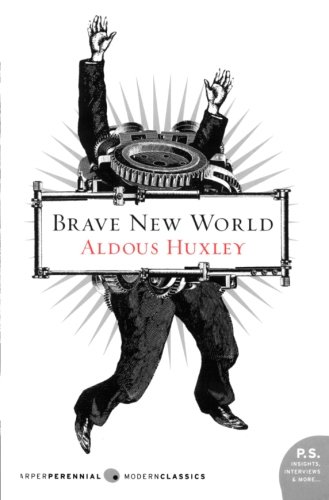
I finally read Brave New World by Aldous Huxley this year. Of the dystopian visions I’ve seen, his is the most chilling. I can’t say it better than Neil Postman, who compared it to 1984 this way: “In 1984, people are controlled by inflicting pain. In Brave New World, they are controlled by inflicting pleasure. In short, Orwell feared that what we fear will ruin us. Huxley feared that our desire will ruin us.” If you haven’t read this, you should. If you haven’t read it since high school English, I bet you’ll appreciate it more now.

1 2 kingsBible

I read N.T. Wright’s mammoth (in size and scope) The New Testament and the People of God this year. I’m reading that whole series, so I’m going to hold the individual volumes out of my “best books lists.” Otherwise, Wright might dominate this category for years.

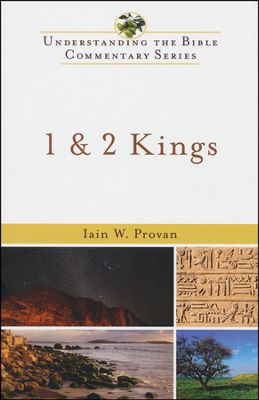
Instead, I’m choosing Iain Provan’s commentary on 1 & 2 Kings. Provan is consistently interesting. He’ll provide a different viewpoint than you may be used to. For instance, he has no kind words about Solomon from the start. Provan’s introduction—especially as he deals with what kind of literature the book of Kings is––is worth the price of the book. Along with some penetrating insights into the text, he provides personal reflections and application. You don’t need to be a scholar to read this commentary. Provan is a good communicator for general audiences.

TheMisunderstoodJewPhilosophy, Psychology, and Other Religions

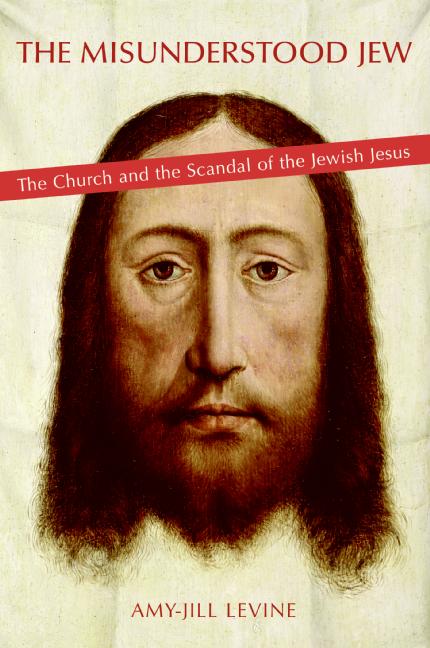
The Misunderstood Jew by Amy-Jill Levine is full of fresh and interesting insights about the New Testament. It’s a book about the historical Jesus from a Jewish scholar. She sets out to help us understand Jesus “through first-century Jewish eyes” and to hear him “through first-century Jewish ears.” She also shows the ways that we have misrepresented the Judaism of Jesus’ day to make it the perfect foil for Jesus, ignoring its complexity and depth for a cheap stereotype. A few arguments against Christianity I found unfair or overblown, but this was a very good book overall.

glittering-vices-a-new-look-at-the-seven-deadly-sins-and-their-remediesPractical Theology

You need to read Glittering Vices by Rebecca Konyndyk DeYoung. I loved this book. It helped shape my articles on lust, gluttony, and anger this past year—the other 4 capital vices coming next year. DeYoung gives a historical look at the vices that gets beyond common surface-level treatments.

If you think you understand what the 7 capital vices (or deadly sins) are about, this book will shed new light on them. DeYoung’s treatment shows the depth of the theological tradition on these and provides helpful application. I also liked the way DeYoung situates pride at the root of all of them rather than as one of them. This would be a great book to read during Lent this year, or sooner.

Doctrinal Theology

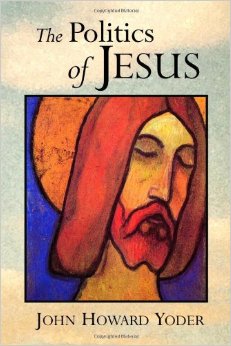
The Politics of Jesus by John Howard Yoder had been on my to-read list for years, and it didn’t disappoint. Some themes in this book don’t seem as groundbreaking to me as people have suggested. But that may be because of Yoder’s influence, especially noted in Stanley Hauerwas’s work. Perhaps I wouldn’t have already heard these perspectives elsewhere if it weren’t for Yoder.

If any of my posts on the church and ethics (e.g. “Church as Alternate Economy,” “Jesus and Politics,” “Absent from Flesh“) have piqued your interest, I’m wondering if many of those thoughts were due to Yoder’s trickle-down influence, even before reading him directly.

Yoder connects imitation of Christ to submission––both to God and the power structures of this world––which almost surely entails suffering. He shows the church’s very existence, as a true Christian community, as its primary purpose. How does the gospel transform our world? Yoder says the church is the primary social structure for that transformation. A helpful corrective to Christian views that seclude the church from the world or that try to use the world’s structures to transform it.

This is a difficult read, but much easier than some of the others I trudged through this year (I’m looking at you Hauerwas and D. A. Carson). If you want a simplified version, Nathan Hobby has created one that has received good reviews.

triumphGeneral Christianity—History and Special Subjects

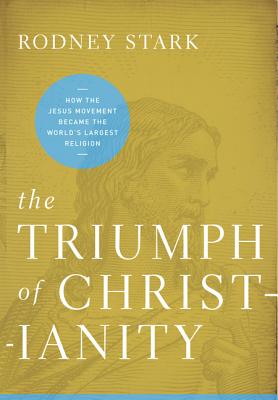
The Triumph of Christianity by Rodney Stark was excellent. It could be subtitled “Myth-busting Christian history.” Stark provides a sociological survey of some of the most important points of Christian history and debunks dozens of common myths about history along the way. His conclusions about how Christianity spread, the “dark ages,” the church’s role in the scientific “revolution,” the Spanish Inquisition, and religion in Europe—to name only a few—are convincing rejections of our popular notions.

Stark provides a social science survey that’s interesting and accessible. You should give it a try.

Denominational Works

I was surprised by Bill Arnold’s Seeing Black and White in a Gray World.  My surprise was because of the subtitle—“The Need for Theological Reasoning in the Church’s Debate Over Sexuality”—and the relatively small size of the book. I expected it to be a narrowly focused book on sexuality, specific to the United Methodist Church. In the end, I’d recommend it to people outside the UMC with no interest in that ethical debate. Though that debate is clearly where everything leads, this book was a concise and readable introduction to logic and theological method.

Earlier this year, I interviewed Dr. Arnold about the book and provided a two-part review.

mans searchOther

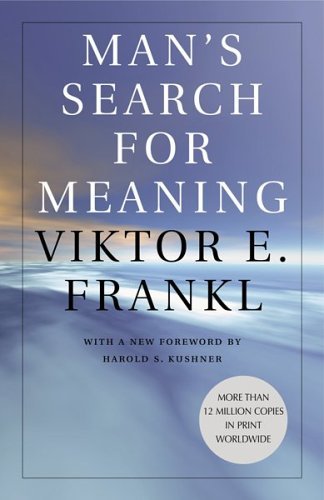
Man’s Search for Meaning by Viktor Frankl is the second book I’ve read from a Holocaust survivor. His account is horrific, but gripping. As much as I wanted to stop reading, I couldn’t. Frankl describes the concentration camp experience candidly––both the external realities and the common psychology of prisoners.

Frankl was a neurologist and psychiatrist, evident in his keen observations about his own, and others’ psychology. The second half of the book explains his psychological approach––logotherapy. He likens it to the work of an eye specialist rather than a painter:

“A painter tries to convey to us a picture of the world as he sees it; an ophthalmologist tries to enable us to see the world as it really is. The logotherapist’s role consists of widening and broadening the visual field of the patient so that the whole spectrum of potential meaning becomes conscious and visible to him.”

That was a helpful perspective in counseling for me.

For the comments: what was the best book you read this year?

See my 2013 edition of this list here

* Okay, technically this isn’t the best eight books I read. It’s the best book in each of eight categories. That title didn’t have the same ring, though.