“How do I become a leader?”

“How do I become a leader?” Several people have asked me that question. That’s usually in relation to the church, but has come in other settings, as well.

We use the word “leader” most often for two particular roles: (1) person who sits at the decision-making table, (2) person entrusted with the most visible and public roles.

And we often address the “become a leader” question with a program or an application. Attend this training, and you’ll become a leader. Or fill out this application to be on our leadership team. That has some merit to it. But it hardly guarantees that you’ll be a true “leader” on the other side. Nor does it guarantee that the people who went through the training or application process are the best people to put in decision-making or public positions.

My simple, two-step process to becoming a leader:

1) Participate

Leadership starts with participation. For a few reasons…

a) Participation itself is leadership training. Our community has discipleship groups called catechesis groups. We believe the primary training for leading a group is to participate in a group. Nothing will help someone understand the nature of these groups better than participating in one.

We see this in American society when we celebrate mailroom to boardroom stories. A friend of mine who started working at a bank said that his bank requires everyone to start as a teller. “You need to know how the front lines work before you do anything else.” Before someone is making important decisions for others or leading in a public role, it helps to know what it’s like to be on those “front lines.” This leads to the second reason…

b) Participation reflects buy-in. In our community, we wouldn’t consider having someone lead in a public role until we have seen a lot of behind-the-scenes faithfulness. Don’t ask to lead in worship if you haven’t put in some good time helping with worship setup, in the nursery, or in one of those other areas of high need. We expect our leaders to be servant leaders, and models of the kind of leadership we need. That means filling the most-needed roles before filling the most-coveted roles.

See “What are you passionate about?” for more along these lines.

c) Participation allows you to see places where you can lead. The more you participate, the more you see real areas of need and opportunity. You may be able to recognize these areas from the outside, but in several instances, your perspective will change once you get more involved. Once you’re participating, you may understand the reasons your ideas from the outside wouldn’t work. Or you may see the real needs, rather than just perceived, surface-level items.

2) Initiate

Leadership requires initiation. If you can’t initiate, you can’t lead. To be clear, that’s okay. If you’re great at taking a list of tasks and accomplishing them, you can be a great asset in a number of places. You are a highly valued servant/follower/assistant! We need many more people like you.

If you want to be a leader, that’s a good starting point. Can you be trusted to do a task you’ve committed to? If not, go back and start there. If you’re already a trusted servant/follower/assistant, now add initiative to it, and you’re becoming a leader.

Initiative in a few forms:

a) “I’ll figure it out.” Here’s simple initiative. One of our volunteers found me on a Sunday morning a few weeks ago and asked, “Do you know who’s picking up the donuts?”

I have no idea how donuts get to us every Sunday morning, but I stood up and grabbed my phone to try to find out. “No, sit down,” he said, “If you don’t know, I’ll figure it out.” I don’t know what he did after that, but I saw donuts later that day.

“I’ll figure it out” is initiative. It says that you’re willing to take responsibility for more than a checklist. You’ll take the next steps to find a solution.

b) Initiative also comes in this form: “Have we ever thought about _______?  I’d be happy to help make it happen, if you think it’s an option.” 

Sometimes it doesn’t even happen that clearly. It’s subtle, behind-the-scenes, almost-unnoticed culture shaping. Sometimes it’s a simple, “Here, I made this” (of course, only when it’s okay that you didn’t ask permission…)

I’ve told our community several times that our vision is limited right now. I don’t dare to paint too much of a vision about five years from now. Because our vision involves a community. It’s about all of us bringing together our passions and gifts. We are who we are today because of a number of people who aren’t even with us anymore. Their contributions outlasted their time with us. And who they made us is different than what we would have planned in a “strategic visioning session.”

We are who we are today because of Andrew’s desire to teach our kids to pray and worship together, and because of his desire for an adult in the community to speak to those kids each week as valued members.

We are who we are today because Jason and Sarah called us to be a community that made sure it included both genders throughout its leadership.

We are who we are today because Adam was determined to give people the warmest welcome possible and because Anna was determined to get them around a table together.

And we will be who our next leaders help us become.

c) If you’re at a loss for where to start, initiative can even come in this simplest of forms. It can be the initiative to learn from a mentor. “I want to grow as a leader. Would you help me find a mentor? I’m willing to do anything they/you think would be a helpful next step.”

And of course, if you’ve already been participating and initiating in a number of ways, but there are more leadership opportunities you aspire to, you can certainly initiate a conversation about those. Go to the right person and tell them you’re interested in more.


Essential Qualifications

These won’t make you a leader, but you can’t lead (or shouldn’t) without them.

  • Holiness – You can be the greatest speaker, decision-maker, creator, organizer, or motivator the world has ever seen, but if your life isn’t a model of holiness, you shouldn’t be leading. Not in the church, at least. An essential question for our leaders: “How is your heart today?”
  • Servanthood – Yes, the Bible refers to disciples and servants much more than it refers to leaders. And we need disciples and servants more than we need leaders. If you are not a model servant, don’t presume to be a leader. That is, if you haven’t demonstrated that you can care for others and set their interests above your own, you’re going to have difficulty being a good leader. At least in the church, when we say “leader,” we need to presume that “servant” is a part of the definition.
  • Trustworthiness – If we can’t rely on you to make your actions match your words (integrity) and to make your words match your actions (honesty), we can’t have you leading us.

How Should We Then Eat?

cowsLast Sunday, I began a preaching series on Old Testament ethics with a sermon titled “The earth matters.” How do we understand our relationship to God’s creation and creatures? You can find the sermon audio here.
A main part of that message was on humane treatment of animals. This isn’t just humane activity. It’s divine. It’s acting as the living image of God, God’s representatives on the earth. It’s caring for God’s creation and the creatures of the earth as the good gift that they are––not to be abused or disregarded. We especially focused on the living and dying conditions of most of America’s “food animals.”

A little secret I let my congregation in on: the preacher doesn’t already have all these things worked out. My family is no exemplar of care for God’s good earth and its creatures. This isn’t to say we do anything intentionally abusive or negligent, but we’ve just not given it much attention. Whether this sermon convicted anyone else, it at least convicted the preacher.

I thought I’d share with you some practical tools we’re finding to do better. These are all resources to help us buy from places with an eye toward humane treatment of animals, rather than from factory farms. For what it’s worth, in addition to the benefit to the animals, these practices may also include health benefits, environmental benefits, benefits to farmers, and provide better-tasting food.

There are so many things to think about, and wholesale change can be difficult. Not to mention that many of these new choices will be more expensive. For those who are just trying to take baby steps, I’ve talked to some people who have decided to focus on switching one meat meal per week to a free-range/grass-fed/organic option. Others have talked about reducing the amount of meat they eat per week, and still others about starting with a move to organic or free-range eggs.

Sadly, the environment has become a political hot button issue. The mere mention of the word is likely to get our backs up about as quickly as words like gun control, abortion, same-sex marriage or immigration. If you find yourself in lock-step agreement with a certain political party on all of these social/ethical issues, you might pause for some reflection. None of our political parties (so far as I know) are seeking first to govern according to the will of God. They have many other agendas. Donors, pressure groups and philosophical commitments all influence their social agendas far more than a deep reading of the Christian faith.

Some people want us to avoid these topics in the church for the sake of “keeping politics out of church.” But more than American political issues, these are ethical issues. The church must speak and act on these things, and we need to be able to do it without the suspicion that we’re doing something as small as promoting a political party’s agenda. Our task is different, and bigger, than any of theirs.

The best 7 books I read this year* – 2015 edition

I have eight categories in my reading rotation (see that whole neurotic system here). Here’s the best book I read in each category this year.**

Literature

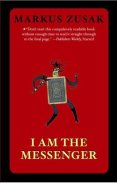
My book club had a selection from Young Adult (YA) books, and we chose I am the Messenger by Markus Zusak (best known for The Book Thief). This was a delightful read. I wonder if the YA genre would do better with a different name, or if more people realized that these books aren’t just good for young adults. It was probably our book club’s most-enjoyed book of the year.

The structure of the book was enjoyable, the protagonist was real and likable, it made me laugh out loud several times, and it was hard to put down. A fun book with lots to discuss.

Two Honorable Mentions:

Mosquitoland by David Arnold – David is a good friend, so I wasn’t sure I could give this my honest, unbiased “best book.” But I can say it was the most fun and funny book I read this year, yet also gets into several serious issues. Since I’m biased, check out the gushing reviews from the likes of USA TodayWall Street JournalEntertainment Weekly, and lots of Best-of 2015 accolades. (Though it’s called a YA book, read a bit before you run get it for your 12 year old.)

The Picture of Dorian Gray by Oscar Wilde – The rest of my book club loathed this book, but I enjoyed it. Wilde’s irony makes me smile. Even though they didn’t like it, we had a lot to discuss because the book is packed with important themes. You can see why it’s considered a classic.

Bible

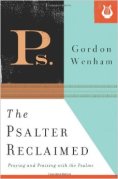
I under-appreciate the psalms and was looking for some help. The Psalter Reclaimed by Gordon Wenham was an excellent solution.

If you’re not familiar with canonical reading of Scripture, you should be. That kind of reading has opened a different and better world for my approach to the Bible. Wenham focuses on a canonical reading of the psalms. He gives penetrating insights to difficult psalms, like the psalms of lament and imprecatory psalms (all those psalms that sound like bitter complaints or that even call down curses on others).

This book should deepen your appreciation for the psalms and also provide an easy entry for anyone interested in canonical interpretation.

Philosophy, Psychology, and Other Religions

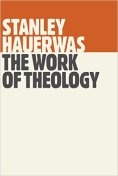
I interviewed Stanley Hauerwas earlier this year about his newest book, The Work of Theology. It goes here because most of Hauerwas’s books go in the broader “ethics” category. I thoroughly enjoyed the book.

Hauerwas reflects on, defends, and extends a lot of the work he has done. When I’m able to follow him, Hauerwas makes brilliant points and is very funny. For someone looking for an intro to Hauerwas, this could be a good start. His chapter on theology and ministry was outstanding. I wish more pastors would understand the points he’s making about ministry and the essence of the church. His chapter on retirement was also very good.

Honorable mention: The Autobiography of Malcolm X as told to Alex Haley – Rarely do you find a book where the author (or person featured, in this case) has a serious change of beliefs near the end, and yet preserves most of the book with their previous belief system intact. This was a fascinating account.

center-churchPractical Theology

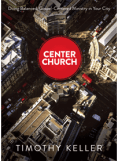
Tim Keller is so good. He’s an excellent writer and an excellent thinker. Center Church puts all of that on display with a systematic approach to ministry in cultural contexts.

Keller is great at providing categories. He gives helpful handholds for considering theology, church and culture interactions, and the tensions between movement and institution. His calls to the city and church-planting are compelling.

Keller’s Reformed influence comes out occasionally. This can tinge or water down some of his perspectives. His version of “sanctification” is weak, and I think he could see cities with more positive eyes if he were working with a solid doctrine of prevenient grace. Regardless, I’ve recommended this widely.

Denominational Works

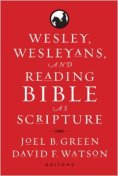
Another great introduction to canonical and theological reading is Wesley, Wesleyans, and Reading Bible as Scripture, edited by Joel Green and David Watson.

John Wesley revered Scripture as “a man of one book” but never laid out a clear doctrine of Scripture. Because of that, some people hijack his approach to make him a fundamentalist––affirming a modern version of inerrancy and a sola scriptura that rejects all other sources for the church’s belief and practice. Others make him a liberal by misunderstanding and overstating his use of “experience.”

This book provides a better and multifaceted perspective on Wesleyan reading of Scripture. It helps to understand Wesley’s approach in context and also suggests belief and practice for Wesleyans today. Even if you’re not a Wesleyan, read it for its take on canonical and theological reading. It’s uneven, as all essay books are, but worth reading.

starfish-spiderSocial Sciences

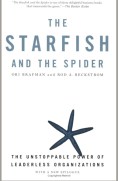
I chose social sciences for my special category this year (next year: biographies). The list this year included several excellent books on leadership. The most interesting and useful was The Starfish and the Spider by Ori Brafman and Rod Beckstrom.

What happens when you cut off a spider’s head? It dies. Cut off a starfish’s leg, and it grows a new one––and the leg likely grows a whole new starfish. The book helped me think about movements vs. institutions, especially in an age of new possibilities thanks to the networking power we have now. I wrote “The Rise and Fall of the Great Denomination” largely based on insights from here.

Most clear: creating a starfish organization requires letting go of some control. But it also has greater spreading power. This is a great systems-thinking book for people in business, ministry, or movement-making.

Other

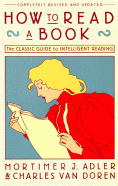
This category covers a broad range of books that don’t fit anywhere above. I decided to reread Mortimer Adler’s classic, How to Read a Book.

Adler says that if we walk away from a practical book and don’t do anything different, either it was a bad book or we were bad readers. I was a bad reader the first time––thinking it interesting, but not implementing much. This time, I decided to read books the way Adler suggests. My quick testimonial: that change has upgraded the quality of my reading tremendously. It may not be too much to say that it has doubled my comprehension and retention.

———-

See my 2013 edition and 2014 edition here

* Okay, technically this isn’t the best eight books I read. It’s the best book in each of eight categories. That title didn’t have the same ring, though.

** I only listed seven books for this year. I decided not to include anything from Doctrinal Theology. I thought about including Pelikan’s The Emergence of the Catholic Tradition (100-600), volume 1 of his esteemed series on The Christian Tradition. There were some brilliant parts, but just too many parts that I had to trudge through, or where I couldn’t follow his prose. I know I’ve already lost credibility in some of your eyes. Sorry. I’m still planning to read volume 2 next year.

Next year’s reading list will be about half from this category because of a research focus. So I’ll surely have something to recommend here then.