The best 8 books I read this year*

I have eight categories in my reading rotation (okay, nine if you count my “wild card” category). Here’s the best book I read in each category this year.
onwritingLiterature

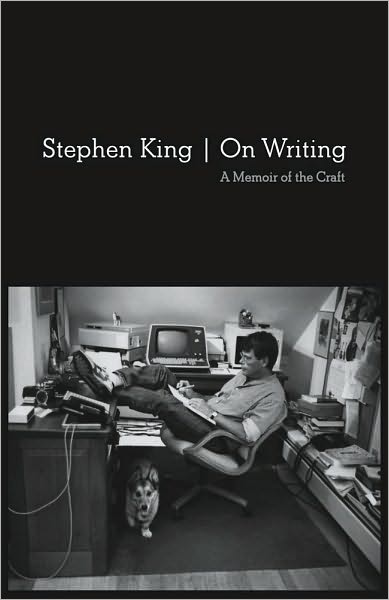
Usually, my reading in this category is fiction novels. But the best in the bunch this year was Stephen King’s On Writing: A Memoir of the Craft. I’m not a fan of horror books, so I don’t read much Stephen King. This book shows his brilliance as a writer. It was so enjoyable to read that I read it like you might read one of his thrillers –– sneaking a few lines at stop lights. The second half of the book is King’s advice to make good writers out of merely competent ones. If you aspire to be a good writer, you’ll benefit from this.

Scripture-and-the-Authority-of-GodBible

Scripture and the Authority of God: How to Read the Bible by N. T. Wright was the most helpful book I read about the Bible this year. I get a lot of questions from people about how to read the Bible, how to understand seeming contradictions, etc. I’ve referenced this book often in those discussions. Wright’s “five-act hermeneutic” has been especially helpful for people who are struggling to understand the difference between how we read the Old and New Testaments.

sabbathPhilosophy, Psychology, and Other Religions

Abraham Joshua Heschel’s little book The Sabbath changed my life. My family changed our approach to time as a response, and it has been one of the best things to happen to us. I usually highlight something every few pages in a book. In this one, I was choosing what not to highlight so that it wouldn’t all blend together. One quote to give you a taste: “We cannot solve the problem of time through the conquest of space, through either pyramids or fame. We can only solve the problem of time through sanctification of time. To men alone time is elusive; to men with God time is eternity in disguise.”
accompanyPractical Theology

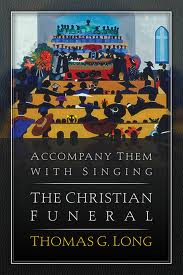
After a couple of deaths that were especially hard on me this year, I re-read Thomas G. Long’s Accompany Them with Singing: The Christian FuneralThis book offers a rich theology of death, dying and the afterlife that strikes against a lot of our modern treatments –– even in the Church, or perhaps especially in the Church. With this, Long shows us a way to approach funerals that’s different from what we typically see. I think I’ll forever grieve, mourn, and celebrate more deeply in the face of death because of this book. The book has also shaped how I preside over funerals. With that, I especially recommend it to pastors, but recommend it also for anyone trying to deal with death and dying.
discipleshipDoctrinal Theology

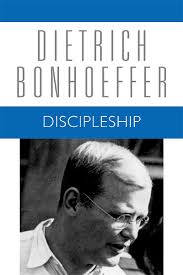
I re-read Dietrich Bonhoeffer’s Discipleship this year, this time the new (and improved, in my opinion) translation by Fortress Press. If nothing else, read his opening chapter. It’s one of the best chapters ever written. Bonhoeffer’s call to discipleship calls at once for entire obedience to Jesus and entire trust in him, leaving no room for faith without works, nor for works without faith. His depiction of the visible church-community is compelling and beautiful. Bonhoeffer achieves what I think Christ’s call intends –– an invitation to discipleship that demands everything of us and yet remains a light yoke, providing refreshment and peace for our souls.

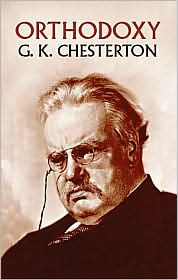
orthodoxyGeneral Christianity –– History and Special Subjects

Orthodoxy by G. K. Chesterton (free on Kindle!) was my favorite. An online reviewer may have said it best: “This book sends your head up into the clouds while driving your feet deep into the earth. It spins you dizzier than you’ve ever been, yet makes you walk straighter than you’ve ever walked.” The book is a sort of philosophy of religion, but rather than taking on a textbook form, it reads like Lewis Carroll or Oscar Wilde. Chesterton’s turns of phrase are witty and delightful, his reasoning so roundabout that at times you have no idea where you’re going or why it matters, but if you hang with him, he makes some brilliant points.

theology of the bodyDenominational Works

Most of my reading in this category tends to be Wesleyan and Methodist. But the best this year was Man and Woman He Created Them: A Theology of the Body by Pope John Paul II. This magisterial work was the defining theological contribution of John Paul II. I went to it when I was trying to work through a theology of sexuality and realized how impoverished and superficial most Protestant theologies are on this subject. For some of the reflections that came out of that study, see my posts “Sexuality and Webbed Theology” and “Sexuality and Theology — A running start.”

on writing wellOther

This category is for all the miscellaneous things that don’t fit above. On Writing Well: An Informal Guide to Writing Nonfiction by William Zinsser gets the prize here, which now makes for two writing books in this list. As they should be, people who write books about writing are great writers. That makes them enjoyable and easy to read. Even if I never wanted to write anything, I think I would have enjoyed this book. And it probably would have made me want to write.

Honorable mention in the “other” category goes to two self-help books — 1-2-3 Magic: Effective Discipline for Children 2-12 by Thomas Phelan and Getting Things Done: The Art of Stress-Free Productivity by David Allen. These respectively helped me improve my parenting and my workflow. (See a whole post on the workflow here.)

For the comments: what was the best book you read this year?

* Okay, technically this isn’t the best eight books I read, but the best book in each of eight categories. That title didn’t have the same ring, though.

All Amazon links are affiliate links. Buy from wherever you choose.
The best 8 books I read this year*

I have eight categories in my reading rotation (see the whole neurotic system here). Here’s the best book I read in each category this year.

onwritingLiterature

Usually, my reading in this category is novels, but the best in the bunch this year was Stephen King’s On Writing: A Memoir of the Craft. I’m not a fan of horror books, so I don’t read much Stephen King. This book shows his brilliance as a writer. It was so enjoyable that I read it like you might read one of his thrillers––sneaking a few lines at stop lights. The second half of the book is King’s advice to make good writers out of merely competent ones. If you aspire to be a good writer, you’ll benefit from this.

Scripture-and-the-Authority-of-GodBible

Scripture and the Authority of God: How to Read the Bible by N. T. Wright was the most helpful book I read about the Bible this year. I get a lot of questions from people about how to read the Bible, how to understand seeming contradictions, etc. I’ve referenced this book often in those discussions. Wright’s “five-act hermeneutic” has been especially helpful for people who are struggling to understand the difference between how we read the Old and New Testaments.

sabbathPhilosophy, Psychology, and Other Religions

Abraham Joshua Heschel’s little book The Sabbath changed my life. My family changed our approach to time as a response, and it has been one of the best things to happen to us. I usually highlight something every few pages in a book. In this one, I was choosing what not to highlight so that it wouldn’t all blend together. One quote to give you a taste: “We cannot solve the problem of time through the conquest of space, through either pyramids or fame. We can only solve the problem of time through sanctification of time. To men alone time is elusive; to men with God time is eternity in disguise.”

accompanyPractical Theology

After a couple of deaths that were especially hard on me this year, I re-read Thomas G. Long’s Accompany Them with Singing: The Christian FuneralThis book offers a rich theology of death, dying and the afterlife that strikes against a lot of our modern treatments––even in the Church, or perhaps especially in the Church. With this, Long shows us a way to approach funerals that’s different from what we typically see. I think I’ll forever grieve, mourn, and celebrate more deeply in the face of death because of this book. The book has also shaped how I preside over funerals. With that, I especially recommend it to pastors, but recommend it also for anyone trying to deal with death and dying.

discipleshipDoctrinal Theology

I re-read Dietrich Bonhoeffer’s Discipleship this year, this time the new (and improved, in my opinion) translation by Fortress Press. If nothing else, read his opening chapter. It’s one of the best chapters ever written. Bonhoeffer’s call to discipleship calls at once for entire obedience to Jesus and entire trust in him, leaving no room for faith without works, nor for works without faith. His depiction of the visible church-community is compelling and beautiful. Bonhoeffer achieves what I think Christ’s call intends––an invitation to discipleship that demands everything of us and yet remains a light yoke, providing refreshment and peace for our souls.

orthodoxyGeneral Christianity––History and Special Subjects

Orthodoxy by G. K. Chesterton (free on Kindle!) was my favorite. An online reviewer may have said it best: “This book sends your head up into the clouds while driving your feet deep into the earth. It spins you dizzier than you’ve ever been, yet makes you walk straighter than you’ve ever walked.” The book is a sort of philosophy of religion, but rather than taking on a textbook form, it reads like Lewis Carroll or Oscar Wilde. Chesterton’s turns of phrase are witty and delightful, his reasoning so roundabout that at times you have no idea where you’re going or why it matters, but if you hang with him, he makes some brilliant points.

theology of the bodyDenominational Works

Most of my reading in this category tends to be Wesleyan and Methodist. But the best this year was Man and Woman He Created Them: A Theology of the Body by Pope John Paul II. This magisterial work was the defining theological contribution of John Paul II. I went to it when I was trying to work through a theology of sexuality and realized how impoverished and superficial most Protestant theologies are on this subject. For some of the reflections that came out of that study, see my posts “Sexuality and Webbed Theology” and “Sexuality and Theology–A running start.”

on writing wellOther

This category is for all the miscellaneous things that don’t fit above. On Writing Well: An Informal Guide to Writing Nonfiction by William Zinsser gets the prize here, which now makes for two writing books in this list. As they should be, people who write books about writing are great writers. That makes them enjoyable and easy to read. Even if I never wanted to write anything, I think I would have enjoyed this book. And it probably would have made me want to write.

Honorable mention in the “other” category goes to two self-help books–1-2-3 Magic: Effective Discipline for Children 2-12 by Thomas Phelan and Getting Things Done: The Art of Stress-Free Productivity by David Allen. These respectively helped me improve my parenting and my workflow. (See a whole post on the workflow here.)

This is my 2013 list. See the 2014 list here.

* Okay, technically this isn’t the best eight books I read. It’s the best book in each of eight categories. That title didn’t have the same ring, though.

You don’t need a Bible-in-a-year plan, but you need a plan

oneyearYou’re setting some goals for 2014 right now, aren’t you? Maybe you’re too good for New Year’s resolutions. You laugh at the new people at the gym in January and wonder how many weeks they’ll make it. But still, you’ve probably given some thought to 2014, and you’re probably making some plans.

A lot of people start planning their Bible-in-a-year plan around now. This is the year that they’ll make it all the way through. Three or four chapters a day are all it takes.

Three points:

1 – If you’re planning to do this, I commend you. It’s a great goal. If you want to know about the God of Christianity, you must read (or hear) the Bible. There is no substitute.

2 – You should know that you’re headed for the same dangers as those new people at the gym. Unless you already do this regularly, you’re not likely to make it past February.

If you’re doing any of the most common plans, somewhere around the end of January, you’ll hit the end of Exodus and get thirteen chapters about tabernacle design, followed by a priests’ manual for animal sacrifices in the book of Leviticus. Don’t get me wrong––these are important passages. Leviticus is one of my favorite books of the Bible. But I know it’s also the book where a lot of Bible-in-a-year plans go to die.

3 – Reading the Bible this way isn’t necessarily the best, in my opinion. If you’re reading three or four chapters per day, you’re reading too much to devote a lot of attention to a small passage. You probably won’t stop and reflect on a particular phrase for ten minutes.

Similarly, you’re not reading enough at a time to really see the big picture. Several years ago, I began trying to read certain books of the Bible all the way through in one sitting. When I read Matthew or Leviticus in a single sitting (or even two or three, if necessary), I got a different picture of those books than when I broke them up in even chunks.

As you look toward 2014, you don’t need a Bible-in-a-year plan. It’s commendable if you believe you can truly do it, but it’s not your only option.

You do need a plan, though.

At least for me, the important things in life don’t all come automatically. When I don’t have a plan to exercise, I don’t exercise. When I don’t have a plan to eat healthy, I don’t eat healthy. When I don’t have a plan for reading the Bible, I read it haphazardly or not much at all.

Can I suggest you do three things for the coming year?

1 – Pick a plan. I just told you it doesn’t need to be a Bible-in-a-year plan. Here are some options:

  • First, you might consider choosing a plan to get you to Holy Week (beginning April 14). That’s not nearly as daunting as thinking about a plan for the rest of the year. If you do something daily, it’s just over 100 days.
  • Browse through the plans offered by YouVersion and choose one that suits you best. If you’re choosing to just plan for the first 100 days right now, you could consider The Essential 100, The Essential Jesus, or 100 Days of Discipline.
  • Practice Lectio Divina (click the link for an explanation). You could choose a book of the Bible to slowly work your way through, or you might use the passages from the Revised Common Lectionary for your readings each week.
  • Choose to go more intense. I have a few friends who have read through the whole Bible in 90 days several times now. They say that kind of immersion in Scripture and rapid reading has helped them see and understand the Bible differently. Do this, and you’ll have read the whole Bible before Holy Week. You could even take a day off each week. Here’s a link.
  • If reading Scripture is brand new to you and anything daily sounds too intense, think about naming something weekly. It would be better for you to choose something realistic and do it than to choose something too intense and quit.

2 – Pick a time and place. If you don’t name these, it’s probably not going to happen. Is there any time in your day that’s rarely interrupted? Or a place you can go to be left alone for 10-30 minutes?

3 – Get some accountability. That’s built-in on YouVersion. You can send updates to friends about your progress. Or you might find someone to follow the same plan as you and get together to discuss your reading each week. At the least, you could tell others what you’re doing. Just telling people makes you more likely to follow-through.

So here’s my plan. It’s actually a plan I’m continuing from the past few months. I’m reading 1-2 chapters of the New Testament and 1-2 chapters of the Old Testament each day, working my way all the way through. I’m reading slowly because I’m reading the New Testament in Spanish, which has helped me slow down and pay more attention to what’s happening.

I do my Bible reading (and a few other set things) from 3-4:30 pm. My three oldest kids are in school during that time while my youngest naps. This is also the typical siesta time in Spain, so I’m rarely interrupted.

Now it’s your turn. What are you going to do? If you want some extra accountability and also want to encourage some other friends to join you, share this article and tell them what you’re doing.