No more teaching pastors!

preach or teach?I’ve written a few times about the language we use for things. Most recently in a post about giving. You may think I’m making too much out of language. Our language shapes how we think about things, though, and it reflects what we already think about them. The group of people I want to talk to here knows just how important language is.

Why I loved teaching pastors

I have old business cards that show my title as teaching pastor. I chose that title after seeing it a number of other places. One of my real-life heroes then, Rob Bell, was a teaching pastor. In fact, it seemed that most of the pastors whose podcasts I would ever listen to were called teaching pastors.

One of the things I loved about Rob Bell and others like him was that when I listened to them, I felt like they opened my eyes to something new about the Bible and theology. Honestly, several sermons I had heard from “preachers” up to that point seemed as though they chose something they wanted to talk about and then found a Scripture that said something similar so that they could have a Scripture passage for their message. There wasn’t much evidence they had spent any time in real Bible study before they got up to preach.

Listening to some of these teaching pastors was a huge influence on me. Their devotion to serious study of the Scriptures has inspired me to do the same before I should dare to preach. They taught me that seeing Scripture more deeply can be a most spiritually enriching experience.

And so I remember a time when my primary goal for preaching (I called it “teaching” then) in worship services was for people to learn something new — for them to see the Bible with a greater sense of depth. Maybe this would include showing them a map so they could see just why Laodicea might be called lukewarm. Maybe it would involve showing people how the same Greek word is used over and over in the New Testament for both “simplicity” and “generosity.”

Making those teaching points wasn’t bad. Actually, they made for some of the sermons I still look back on as most impactful.

The problem

The problem is that my primary goal for the message in worship services was for people to learn something new. The standard of success I had set for myself was whether I tickled people’s brains, whether they walked away with new thoughts and new understandings.

By calling myself a teaching pastor and by calling what I did teaching, I taught my people that this was the standard.

The problem is that a proclamation of the gospel was a secondary goal. Now I think I usually met that goal, but it’s hard for me to look back now and think that it was only secondary. And it’s disappointing to realize that I gave more energy to making sure people learned something than I gave to making sure that people heard the gospel.

In Evangelism in the Early Church (affiliate link), Michael Green says three things characterized preaching in the early church:

  1. They preached a person. The message was plainly Christocentric, with the stress on “his cross and resurrection and his present power and significance.”
  2. They proclaimed a gift. “The gift of forgiveness, the gift of the Spirit, the gift of adoption, of reconciliation. The gift that made ‘no people’ part of the ‘people of God’, the gift that brought those who were far off near.” Two prominent aspects of that proclamation were pardon for the past and power for the future.
  3. They looked for a response. Specifically, they called for repentance, faith, and baptism. Though baptism is a one-time calling (in most traditions), repentance and faith are ongoing responses — responses that include our thoughts, our words, and our actions.

What great standards for our primary goals in preaching! [Use the comments to tell me whether you agree.]

In my humble opinion — which coincides with the humble opinions of most great theologians through history — a proclamation of the gospel is essential to a worship service. A Bible teaching is nice. It can often be a great aid to that proclamation. But it’s not essential.

And lest you think I’m saying that each service needs to be about an altar call for non-Christians… I’m not. I believe the strongest Christian in your congregation needs to hear a message about Christ, a proclamation of a gift from God, and a call to response. We all continually need to share in proclaiming and celebrating God’s love and grace and continually need to respond.

The “teaching pastor” title and the transition from “preaching” to “teaching” in worship services seems to have confused what’s essential and what’s helpful. In our pastors’ and congregations’ minds alike, we’ve formed the impression that the chief goal of the spoken word in worship is learning. We’ve created a frame of mind that doesn’t see a problem with a message that never mentions Christ, so long as it gives people a better understanding of the culture of the Ancient Near East.

The place of teaching

To be clear here, I love learning, and I love teaching. I think they have an important place. More often than not, I hope that my sermons will continue to teach. I think the gospel comes more alive as we learn more. I like the Jewish understanding of Torah study as worship.

I also think there are plenty of places where it’s fine to teach without preaching — Sunday School classes, Bible studies, seminary classes. (I didn’t take certain classes in seminary because they were so light on teaching and so heavy on “devotional” material. That’s not what I went to seminary for.)

And finally, if your “teaching pastor” is in charge of teaching classes, not speaking in worship services, then it’s a great designation. Let them teach!

But in our worship, a proclamation of the gospel is essential. Teaching is just one useful tool for that proclamation.

So let’s quit putting “teaching pastors” in front of the congregation in worship, and let’s start putting preachers back up there. If those preachers teach some along the way, that’s great. But if they’re not preaching, it’s not worship.

[A note: we’ve tended to misunderstand another role in worship, too. See a brilliant piece by Jonathan Powers, “Desperately Seeking Worship Pastors,” here. If he and I are right, a lot of churches are misunderstanding the two primary leadership roles in their worship services. That’s no small problem.]

Evangelism: approaching relationships with, or without, an agenda?

The relationship just isn't the same when it's all about the sale.
The relationship just isn’t the same when it’s all about the sale.

This is a reflection I originally posted on my family’s Sabbatical Year site. I’m posting a modified version here because I think it applies generally to conversations about relationships and evangelism. [To those who are on both mailing lists — sorry for the duplication. It will be rare.]

My family came to Spain seven weeks ago. We’ve met more new people in the past seven weeks than we had met in the past several years. I’m sure that’s usually true for anyone who moves to a new place. And the people have been wonderful. Kind, quick to welcome, quick to offer help.

We’ve already been semi-welcomed into what appears to be a fairly closed and tight-knit group of families in our neighborhood. They’ve invited us to one of their cookouts in a few weeks and have already told us to plan on being with them for their El día de Reyes celebration (that’s Three Kings day on January 6 — bigger than Christmas here).

On not having an agenda

When it comes to sharing faith and meeting people, there’s a lot of talk in church and missionary circles about not having an agenda. You don’t develop a relationship just so you can get someone to come to your church or get them to make a profession of faith. That’s not “relational evangelism.” It’s relational manipulation to achieve a result. It’s phony, and it devalues the person. The door-to-door salesperson is just off-putting when he acts like he wants to become my friend then tries to sell me a magazine.

[To be sure, I’m not totally knocking things like door-to-door evangelism here. Just don’t pretend like you’re interested in developing a relationship if your real interest is achieving an outcome. See “How to become an evangelist” for more.]

From our early experience in Spain, I can honestly say that we don’t have that kind of agenda with people. If we never expected to share about our faith with the people we met, and if we never expected any of them to follow Christ, we would still be forming the relationships that we are.

We would do that selfishly — because these are great, kind, hospitable people who have been a joy to meet. And they have been a blessing to us when we’ve needed help, while we may not yet have done more than provide some comedy for them.

We would do that altruistically, too, I hope — because these are people created in the image of God and loved by God. And so even if they weren’t great and kind and hospitable, I hope that we’d still be showing an interest in them and trying to develop relationships with them.

Our number one agenda is to meet and know and enjoy and bless the people God puts in our path during our short stay here. No relationship hinges on anything more than that.

On having an agenda

And yet I’d be lying if I said there were no further agenda — perhaps hope would be the better word — in these relationships.

Nothing has changed and enriched my life more than knowing God’s love, following Christ, and receiving the Holy Spirit. Neither marriage nor kids nor accomplishments nor other relationships has been as important – great as those all have been.

And so if I’ve truly found such treasure in this faith — and if I believe that treasure is available to everyone — wouldn’t it be uncaring for me to say that I don’t care if others ever receive it?

Moreover, I believe a final judgment awaits, and then a new heaven and a new earth. I don’t presume to know exactly who’s “in,” or who’s “out.” I think those things are a part of the judgment we’re to leave to Christ. But this I know: we can have assurance of God’s love and our redemption through Christ. Would it be anything less than cruel not to offer these to people?

So in that respect, we do have an agenda for those we meet. We want them to know Christ.

Would we be developing and nurturing these new relationships if we didn’t have that agenda? Absolutely! But we certainly hope and pray that the latter comes, too.

People in missions have called Spain a “missionary graveyard.” People have come with huge aspirations, then felt like failures when they had few, if any, conversions to report. In several parts of the globe, they measure numbers of people coming to Christ and numbers of new church plants by the week, the day, or even the hour. In Spain, these are more commonly measured in years and decades. This is why we’ve said before that they call Spain a “hard-soil” area. That’s actually one of the reasons we wanted to be here, though.

Could a revival break out in Spain? We certainly hope and pray so. And if there’s a part for us to play in that, we want to play it. But we’re not concerned to measure our “success” by any of these numbers. We have nothing to prove.

So we hope to share our faith and an invitation into the Church with many people here. We’ll do that out of a sense of gratitude, a sense of responsibility, and a sense of concern. The rest we’ll leave to God. And regardless of the rest, we’ll enjoy and hope to bless these beautiful people.

And a final note — This is no different in Spain than it should have been for us in the U. S. You may have had some of the same feelings wherever you are. These reflections are just highlighted because of all the new relationships we’re developing and the fact that we’re helping to start a new church here. I hope our attitude toward these things will always be the same: developing relationships out of our own desire to know and enjoy and bless people, but also sharing our faith out of a sincere hope that people might know our Lord and Savior.

Derivative art, rock and roll, teenage angst, and God

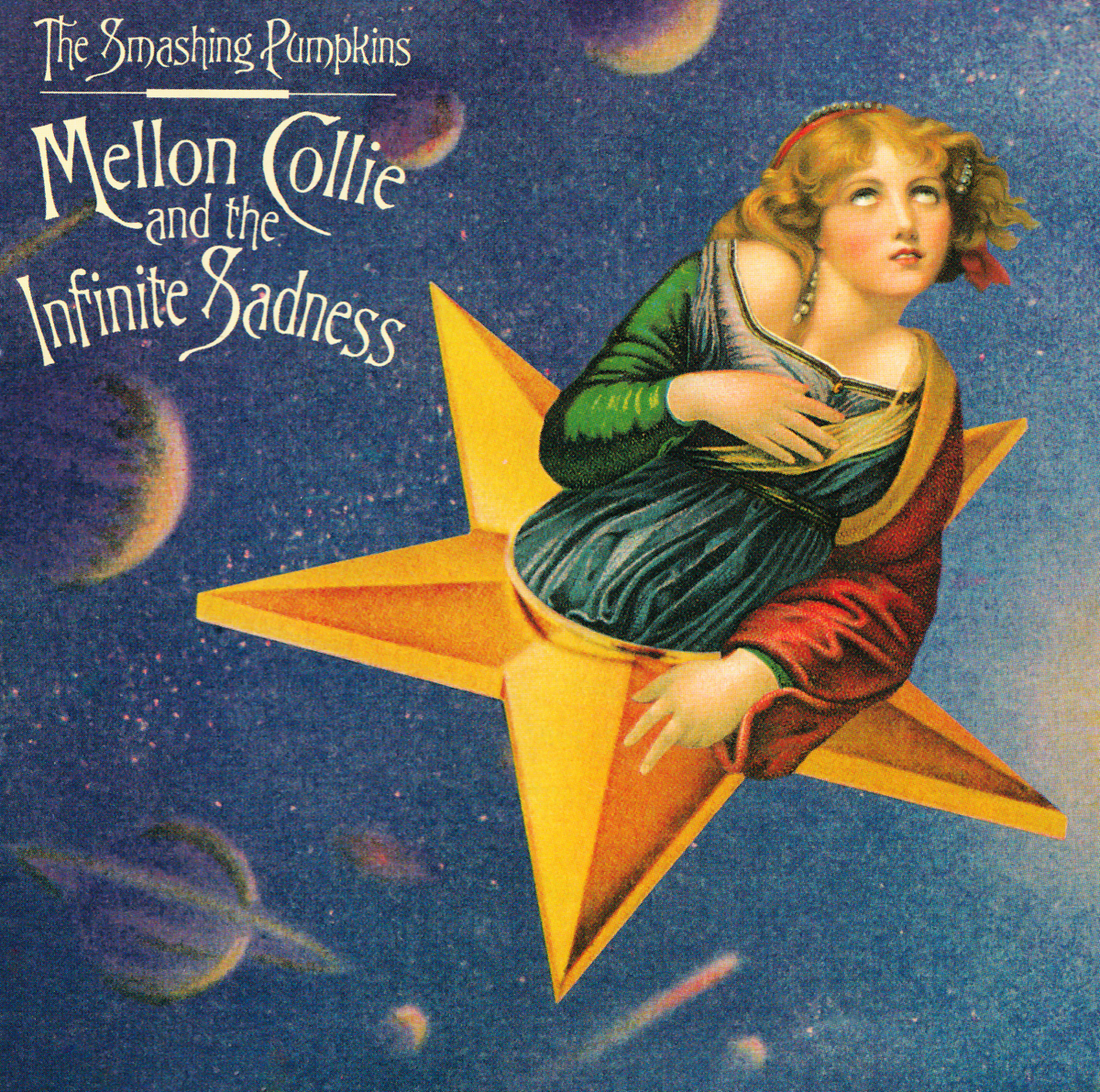
mellon collieI remember sitting with friends in 1995 and trying to name any “happy” songs. We came up with the Smashing Pumpkins’ “Today.” You know it: “Today is the greatest day I’ve ever known…” But then we learned it was a song about suicidal thoughts.

I remember listening over and over to the Smashing Pumpkins’ album Mellon Collie and the Infinite Sadness. It began with, “The world is a vampire // set to drain.” The whole album seemed to climax with, “Emptiness is loneliness, and loneliness is cleanliness, and cleanliness is godliness, and God is empty just like me.”

I would say that most of music while I was in high school could have been defined as “misery makes for great art.” If you grew up in the ’90’s, you surely agree. Wasn’t it just perfect for dealing with teenage angst?

It’s interesting how things can change with time. If you haven’t yet seen this clip from an interview with Billy Corgan [frontman of the Smashing Pumpkins], you should take 2 minutes and watch.

Some highlights from the interview with Corgan – nearly 20 years after the Mellon Collie and the Infinite Sadness album:

What are you exploring now?

God. God’s the third rail in rock and roll. You’re not supposed to talk about God. I think God’s the great unexplored territory in rock & roll music.

[…]

What would you say to Christian rockers, then?

Make better music… I think Jesus would like better bands.

Here’s a better quote: Hey, Christian rock, if you wanna be good, stop copying U2. U2 already did it.

I didn’t expect Billy Corgan to give some of the most interesting commentary on theology that I’ve heard in a while.

Two things I’d like to draw out:

1. One of the artists who made the most of misery is now talking about “maturing into the deeper work,” and the “deeper work” is about God.

What happens when you’ve explored misery and existential crisis, and are ready to mature and move into something deeper? Corgan says the natural place to go is to explore God.

A lot of our world wants to promote a sort of nihilism. All misery, no remedy. Just angst. The misery can lead where it led Corgan 20 years ago: “God is empty just like me.” Or it can lead where it’s leading Corgan today – to a deeper exploration of God. Perhaps God isn’t empty after all.

I think we’re seeing here what some have called the “God-shaped hole.” Less generically, I think we’re seeing how deep examination of life may lead us right in God’s direction. It may take us through a valley of despair first. In fact, the depth of that valley may have something to do with the extent of that next exploration: the pursuit of God.

Let me stop here, then, and give you an invitation. If you have been exploring the depths of emptiness, loneliness, and purposelessness, might it be that the only real answer is an exploration of God? Stop here, if this is you. Seriously – I don’t think the rest will apply. And if you’re interested in moving past exploration of misery, I’d love to help point you in same good directions. Those will vary a lot depending on where you are. Maybe we could start with an e-mail conversation?

This all leads to a second point for Christian artists and pastors…

2. It’s hard to fake depth.

In art terms, Corgan is calling out Christian music as derivative. They’re taking the template that U2 created, and they’re copying it.

Michael Gungor (a brilliant musician who you must listen to) says the same thing in a different way. He was trying to figure out how he’s so good at the game “Christian or Secular?” — a game where you listen to a few seconds of a song and say whether it’s Christian or secular. He said he realized the difference is that the Christian music doesn’t have a soul. He compares it to a zombie.

What Corgan and Gungor both seem to be saying to many (not all) Christian artists: you have it… but you don’t. There is no greater, deeper, and more profound subject of our art than God. But rather than actually engaging that subject, trying to catch her beauty in a new way, you’re just putting new wrapping on the work someone else has already done. And just as it’s hard to fake a good marinade, it’s hard to fake depth when all you’re doing is repackaging.

A plea for depth and originality in Christian art… and preaching and ministry

The lesson here isn’t just for Christian musicians. I think it goes to all Christians. God has revealed himself and continues to reveal himself. He is worthy of our deepest and most passionate pursuits. And as we explore God, it will radically transform us and thus what we produce.

This is an important note for all the pastors and youth pastors who go to mega-churches’ conferences each year to figure out the keys to building a mega-church or mega-youth-ministry. It’s an important note for the preachers who find their best material on desperatepreacher.com rather than in their own study and living.

Pastors — what we need is a church with leaders who have searched the Scriptures deeply and wrestled with the meatiest points of theology and considered how they speak to us and the Church and the culture. We need that much more than we need another Saddleback or Willow Creek imitation. And we should acknowledge that the imitators never really emulate the “success” of the originators. The wrapping may be similar, but the depth gained in getting there isn’t.

Now I’m not saying that technical, how-to help has no place. If you have something profound to say but haven’t learned how to communicate, it won’t have much effect. Sure, read an occasional how-to book and go to an occasional how-to conference. But read more Augustine and Calvin and Wesley and Barth and Bonhoeffer — oh, and more of the Bible!

Not shunning the past

Some people go the other direction with this. Billy Corgan tells Christian musicians to stop copying U2, so perhaps we should just trash anything that’s old and come up with our own, better, newer things. But I don’t think Billy Corgan is uninterested in those who have gone before him. Ask him, and I expect he would speak glowingly of Black Sabbath, Jimi Hendrix, and Cheap Trick. I doubt I would have listened to his music if all he did was play Jimi Hendrix covers, though.

New explorations aren’t about shunning the past. I presume that some of the world’s greatest artists and musicians and even athletes have been among the greatest historians of their trade. They have been deeply formed by watching, admiring, and learning from those who came before them. And out of that depth they have done something that reflects the past without mimicking it.