You are not alone…

different[Edit: I’ve changed “pragmatists” to “utilitarians” throughout. I think that better captures what I’m trying to describe there.]

I’m running into a growing group of Christians – especially pastors – who are trying to figure out where they fit. They find themselves in an awkward and unusual place in the Christian world.

Most Evangelicals (not to even mention the fundamentalists) are going to think they’re far too liberal because they’ll put up with the likes of Rob Bell and may not have a problem accepting theories of macroevolution.

Most “liberals” find them far too conservative because they actually believe that Christ rose and that the Bible has more than just moral or literary authority. And if these people hold that the practice of homosexuality is incompatible with Christian teaching, the liberals might as well write them off as full-blown fundamentalists.

Among the ministry utilitarians — who may fall anywhere on the “liberal” to “conservative” theological spectrum, or may just not care — these people are going to have an even harder time because they put theological integrity before results, something the utilitarians often can’t even comprehend. The utilitarians have focused so long on how to grow the church and get results that talking to them in nuanced theological terms is like Alton Brown explaining the science of making a perfect hamburger to a McDonald’s manager.

Are you one of these people — searching for where you fit? Does the below describe you?

You may find yourself at an evangelical Bible study where you’re clearly the “liberal” in the room who doesn’t take the Bible seriously enough (see, e.g., “What if I don’t believe the Bible?“), and then find yourself at a mainline Bible study where you’re clearly the “conservative” in the room who keeps wanting to talk about what God was intending to say through a particular passage. [I’m referencing theological liberals here. John Meunier and Roger Olson have both captured well why I’m not a liberal. You should read both of those.]

And then, in ministry circles that are more focused on “church growth,” you just seem like a nuisance because you keep pressing theological considerations at the expense of utility. (See, for instance, any of my attempts to talk about the church’s use of money, which are attempting to ask how our theology should influence our use of money, but are consistently refuted in utilitarian terms.)

Is this you? You don’t fit the “conservative” mold conservatively enough? You don’t fit the “liberal” mold liberally enough. And yet, you also wouldn’t say you’re a “moderate.” It seems a difference of category, not just degree.

You find yourself wanting to be more theologically faithful in the way you do ministry, even if the results might suffer. And you have a gut feeling that in the long-run, the results will be better. That we’re stifling the much greater growth that could take place if we would truly live according to the calling of Christ, even when it’s unpopular or ignores what Jim Collins would say we should do.

If this is you, you’re not alone. I talk to so many who think they’re nearly alone in this. Everywhere they look, they’re surrounded by people who just don’t “get” them. Indeed, all of our denominations seem overrun with utilitarians and conservatives, or utilitarians and liberals, or somehow in the case of the UMC, all three at once! And so wherever you are, it means you’re likely in the minority if you don’t fit nicely into one of these groups. But you’re not alone! There are others. Many others!

Perhaps you’re speaking up and making it known how out of place (out of line?) you are. Perhaps you’re staying quiet because you know it won’t go well if you speak up.

Is this you? I’d love to hear more about your experience, your thoughts, your stories, where you’re finding like-minded people, where you’re finding hope that this odd form of Christianity you represent can spread and grow.

How are you navigating situations where you know your position won’t be received well? Where your job might be at risk if you act on your beliefs? Tell us more in the comments. And if necessary, feel free to tell us anonymously.

See my follow-up: Liberal and Conservative theologizing — a caricature using song lyrics

And for more like-minded conversation, you should JOIN my e-mail update list.
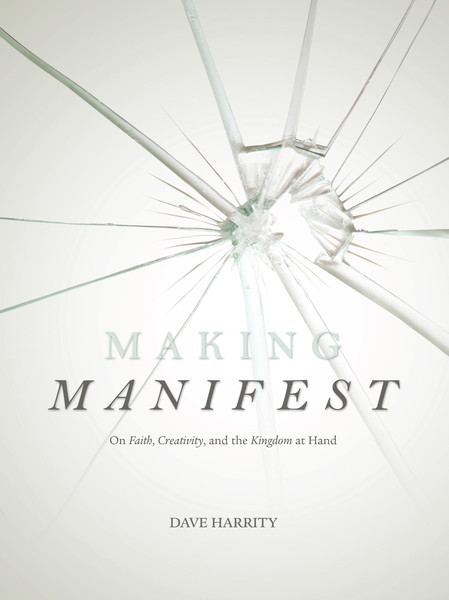
Opening our eyes to a world of possibilities

making manifestIn the beginning, God created the heavens and the earth.

God is the Creator of all things.

What do humans “create”? In a sense, nothing. All of our work is derivative. “Derivative work” is frowned upon pretty heavily in the art world. Quit imitating someone else and do something original! Contribute something new to the mix!

But in relation to God, it’s all derivative. At the root, the very act of creating is an imitation of our Creator. And it’s good.

When we create good things, we honor a God who placed humanity in a “good” garden and tells them to work it and take care of it. From the beginning, the story of God and humanity has been that God is the ultimate Creator, but then he entrusts his creation to us and tells us to keep working, keep producing, keep adding our own sweat and energy to the mix.

So while God finished all the work he had been doing in creation on that sixth day, he didn’t tell the man and woman to leave it alone because it was all perfect. He called them to keep working on it.

When we take the good things God has given, when we stop and notice the things in front of us, and then continue to work and create and produce, we imitate the Creator in a way that he seems to have intended from the beginning.

You may have experienced a certain connection with God in your own creating. You’ve felt a little more alive – like you were doing what you’ve been made to do – discovering a few of the endless possibilities in this world we’ve been given, and making a contribution.

The world is full of possibilities. Once we start creating, we start seeing more of them. The greatest artists and inventors in history haven’t run out of things to create — hitting their crowning achievement, then running out of ideas. They’ve run out of time. Because the possibilities are endless, and the more we create, the more we see down that endless stream of possibility.

We need yours. What is it you have to create? Will it be written word, visual art, video? A new small business or a charitable organization? Actual food from the ground or fruit from the tree? The possibilities are endless…

Whatever it is we contribute, it seems that the first steps are to know our Creator and his creation. And the more clearly we see each of these, the more clearly we see ourselves and those next possibilities for creation. Derivative creations, yes, but there’s no shame in imitating the Creator of all things.

Want a place to start? You really must check out Making Manifest, just out by Dave Harrity.

And watch this excellent video trailer:

Rob Bell vs. Tim Tennent

rob bellI haven’t read Rob Bell’s newest book, What We Talk About When We Talk About God, and I honestly don’t expect to anytime soon. Too many others on the stack that I need to get to.

The book is currently ranked #10 in Christian Theology on Amazon, though (behind 3 books on heaven, 5 books on apologetics, and an end-of-the-world book — oh my…), so I can assume a number of people are reading it or will be soon.

I did read Tim Tennent’s unflattering review of the book. Tennent has me worried that Rob has gone even further down a path I’ve feared for years he might be heading down — toward a New Age spiritualism with plenty of grace but very little cost. Toward a faith that seems to rely on or embrace the great, ancient Christian faith no more than it would any other religion or spirituality.

I wrote not long ago about what a profound, positive influence Bell has had on me. I defended him early on (and I believe rightly, at that time) against attacks from people who just seemed angry and narrow-sighted. I later squirmed when I heard him explain some difficult Old Testament passages as perhaps things that people just thought were a revelation from God, but really used to justify their own actions. And when I read Love Wins, I found myself frustrated because a lot of the argument just wasn’t well-conceived.

But I stuck with Rob, because I still was convinced this was someone intently pursuing orthodox Christian faith. Bell has always embraced a pretty wide orthodoxy, and I do, too, so I wasn’t concerned that he come down exactly where I did everywhere. I just wanted to know he was taking me down the paths he had taken in that pursuit.

My problem is that the things I’ve seen recently from Bell are making me wonder whether he’s really still taking me and others down that path, or whether he has veered off the path that pursues the heart of the ancient Christian faith — the path pursuing orthodox belief and life. Has he veered to pursue a more bland version of spirituality that gives precedence to an inward “stillness” over the ancient faith?

I haven’t read the book, but I would guess some of you have. Can you help me? Is Tennent right? Is this the path Rob is more consistently taking here?

It will be pretty upsetting to me if the person who helped me see much more depth, richness, and nuance in the Christian faith ends up offering a “less nuanced, more simplistic, more pluralistic expression of Christianity,” as Tennent suggests he’s doing.


The book link is an affiliate link. Feel free to buy wherever you choose.